Whether the Ocicat Used the American Shorthair
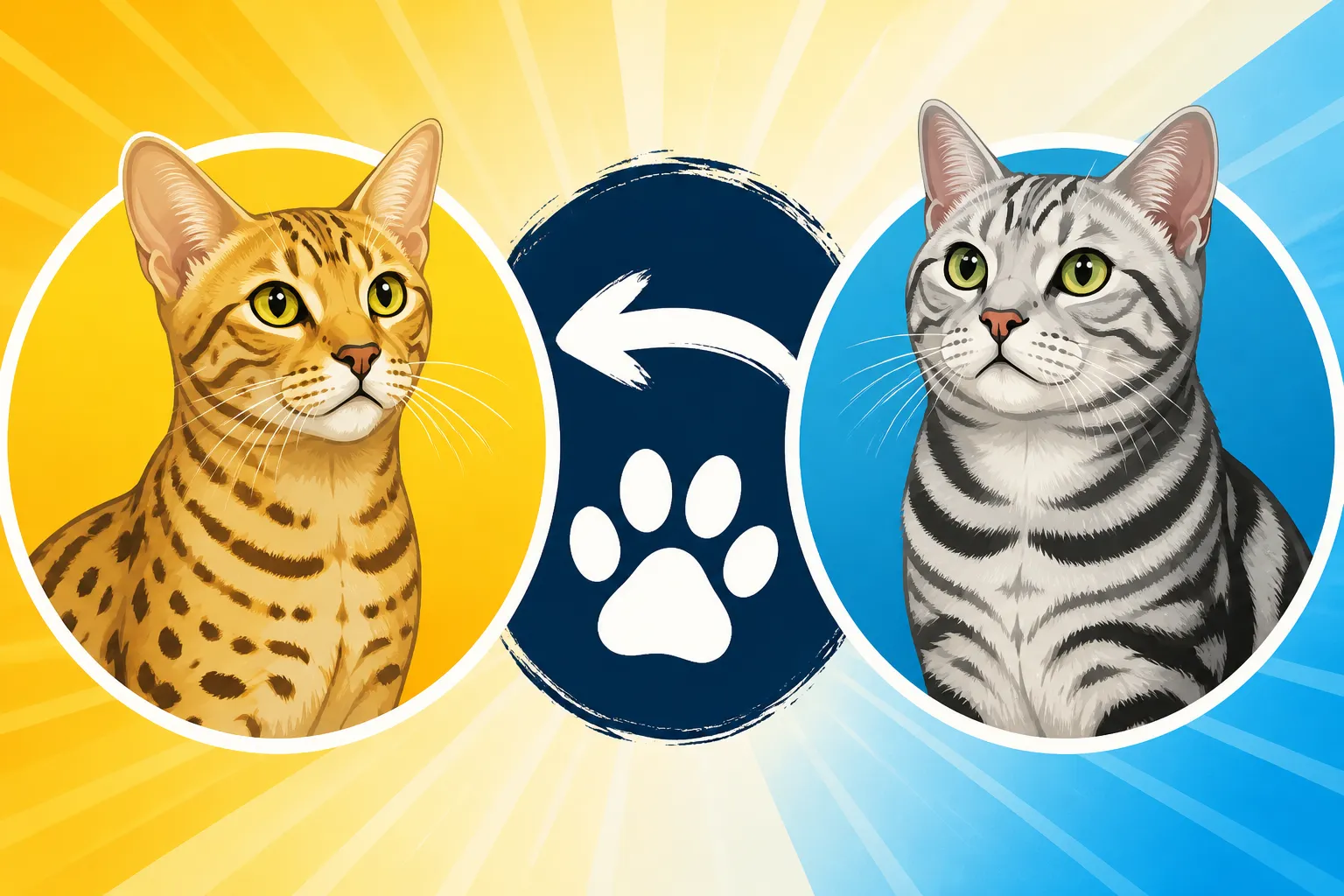
The Ocicat’s spotted coat can make people wonder whether it has wild ancestry—or whether the American Shorthair helped create it. The short answer is yes: American Shorthairs were used during the Ocicat’s development, but they were one part of a carefully managed domestic breeding program. Here’s what that cross contributed, what it did not mean, and how the two breeds are related today.
How the Ocicat Was Developed
The first Ocicat came from Siamese and Abyssinian cats
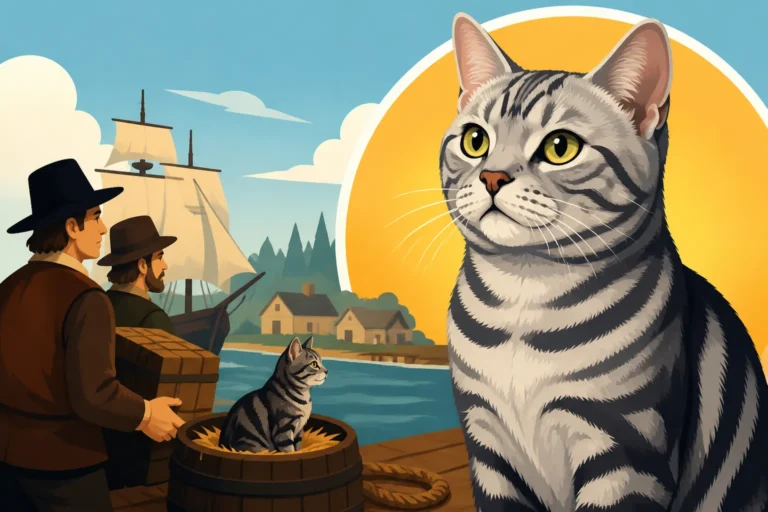
The Ocicat began as an experimental breeding project in the United States in the 1960s. Breeder Virginia Daly set out to produce a Siamese-type cat with the Abyssinian’s ticked coat pattern. The first-generation cross produced cats that were part Siamese and part Abyssinian; a later mating produced a kitten with the spotted appearance that inspired the breed’s name.
That kitten, named Tonga, became an early sign that the combination could create a striking domestic cat. He was not a wildcat hybrid, and the name “Ocicat” referred to his resemblance to an ocelot, not to a connection with one. This distinction matters because a spotted coat can look exotic without indicating wild ancestry. The Ocicat’s background is tied to domestic breeds and selective breeding, not to an ocelot.
For a wider look at the breed’s founding crosses and later development, see Which Breeds the American Shorthair Was Outcrossed To and How the American Shorthair Differs From a Domestic Shorthair. The first helps put American Shorthair outcrossing into context; the second clarifies why a named pedigree breed and a general domestic shorthair population are not interchangeable terms.
American Shorthairs entered the breeding picture later
American Shorthairs were introduced into the Ocicat’s development after the original Siamese–Abyssinian crosses. Breeders used them as an additional domestic breed in the program, helping bring traits such as a sturdier build and silver color into the Ocicat population. The Ocicat’s development was therefore not a simple two-breed cross from start to finish: its foundation began with Siamese and Abyssinian cats, and American Shorthairs were later part of the breed’s history.
It is easy to overstate what this means. The American Shorthair did not create the Ocicat’s spots on its own, nor does every Ocicat today have a recent American Shorthair parent. The breed’s recognizable appearance and pedigree developed through multiple generations of planned breeding. An individual cat’s ancestry depends on its particular family line, not just on the history of the breed as a whole.
The American Shorthair’s own history includes selective outcrossing and changing breeding rules, so breed development is rarely a single, simple event. Whether Outcrossing Is Still Allowed in the American Shorthair offers useful background on how outcrossing can be managed within a breed, while Which Cat Made the Silver Tabby American Shorthair Famous explores the role color and appearance have played in the American Shorthair’s public identity.
What the American Shorthair Contributed
A more robust domestic-cat build
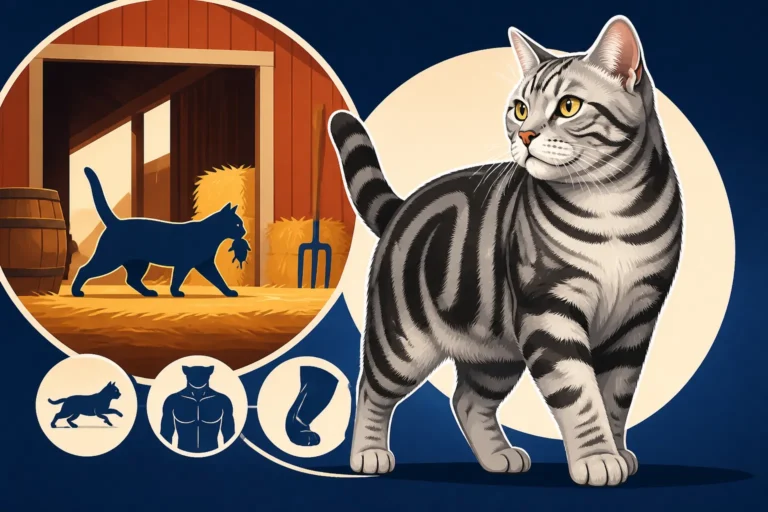
The American Shorthair is a medium-to-large, muscular cat with a substantial frame. In the Ocicat breeding program, introducing American Shorthairs helped support a sturdy, athletic body type. That is a plausible contribution to the breed’s development, but it should not be treated as a guarantee that every Ocicat will have the same size or build. Individual cats vary, and an adult’s body is shaped by many genes, as well as health, diet, and activity.
The Ocicat’s body is generally athletic and muscular, with a broad chest and strong legs. It is built to move and play rather than to look delicate. Those features can remind people of an American Shorthair, but similarity in body type does not mean the breeds are the same. Their coat patterns, breed histories, and standards differ. For more on the American Shorthair’s characteristic frame, see Why an American Shorthair Is Built Square.
A sturdy outline can also mislead new owners when they assess weight. A cat may look substantial because of its frame and muscle rather than because it is carrying excess fat, or a thick coat and pose may make body shape harder to judge. Whichever breed is in the home, it is more useful to track body condition and ask a veterinarian to assess the cat than to judge health from appearance alone.
Silver color and the spotted coat are different questions
Silver is one of the traits associated with American Shorthairs, and the breed’s use in Ocicat development is linked with adding silver coloration to the emerging breed. But the Ocicat’s spots are not simply “American Shorthair markings.” The spotted pattern became part of the Ocicat’s identity through its own breeding history and selection. Coat color and coat pattern are related but distinct features: a cat can have a particular base color and a separate pattern over it.
This is why the Ocicat can be spotted in several colors, while the American Shorthair is known for a wide range of colors and patterns, including the familiar silver tabby. A silver spotted Ocicat and a silver tabby American Shorthair may share a color impression at a glance, yet their patterns and breed types are different. What a Silver Tabby American Shorthair Is explains the American Shorthair pattern, while Which Patterns an American Shorthair Comes In gives a broader overview of its coat variations.
When looking at a cat’s coat, avoid using appearance alone to decide its breed. Many domestic shorthairs can have tabby markings, and a spotted coat does not automatically make a cat an Ocicat. Pedigree records and a cat’s documented background are more useful for breed identification than a visual resemblance. Whether Papers Are the Only Difference an American Shorthair Has discusses the wider question of what paperwork can—and cannot—tell you about a cat’s identity.
| Question | Practical answer |
|---|---|
| Did the Ocicat use American Shorthairs? | Yes. American Shorthairs were used as part of the breed’s development. |
| Were they the Ocicat’s original foundation? | No. The early breeding project began with Siamese and Abyssinian cats. |
| Did American Shorthairs create the Ocicat’s spots? | Not by themselves. The spotted Ocicat emerged through the broader breeding program and later selection. |
| Does every Ocicat have a recent American Shorthair parent? | No. Breed history does not tell you the exact ancestry of every individual cat. |
| Does the Ocicat have wild ancestry? | Its name and appearance are suggestive, but the breed is domestic and was developed from domestic cats. |
What the Cross Does Not Mean
An Ocicat is not an American Shorthair with spots
The two breeds have some historical overlap, but they are distinct pedigreed breeds with their own standards. A well-bred Ocicat is recognized for its spotted coat and athletic appearance. The American Shorthair standard describes a different overall type, including its characteristic rounded features and broad, solid build. A cat’s resemblance to one breed does not make it a member of that breed.
This also means you cannot infer an individual cat’s breed from a photo or a single feature. A shelter cat with spots may be a domestic shorthair, and a silver cat may have a pattern that resembles an American Shorthair without having a documented American Shorthair pedigree. For a closer look at how breed type is distinguished from general resemblance, see How to Tell an American Shorthair From a Random Bred Tabby.
The same caution applies to claims about temperament and health. A historical cross may help explain how a breed was shaped, but it does not predict the exact personality or medical future of a particular cat. An Ocicat’s behavior depends on its individual temperament, socialization, environment, and experiences. A breed label can offer context, not a promise.
The history does not make the Ocicat a wild hybrid
The Ocicat was named for its resemblance to a wild spotted cat, but it is a domestic breed. It was not developed by crossing domestic cats with ocelots. The wild-looking coat is the result of domestic-cat breeding, and the breed’s appearance should not be confused with the ancestry of actual wild-domestic hybrids.
That distinction is useful when evaluating dramatic descriptions in advertisements or casual conversations. “Wild-looking” is often a description of appearance, not a statement of lineage. If a breeder or seller makes claims about a cat’s background, ask for documentation rather than relying on a name or a striking coat. The same careful approach applies when someone describes a cat as an American Shorthair based only on its silver tabby pattern.
Breed labels can also lead people to assume that cats with similar looks need identical care. They do not. Feeding, activity, grooming, and veterinary decisions should be based on the individual cat, its health, and advice from a veterinary professional. If you are comparing breeds before adopting or buying, What an American Shorthair Standard Asks For can help explain the American Shorthair’s type, while the Ocicat’s own breed standard is the relevant reference for assessing an Ocicat.
What This History Means for Cat Owners
A breed’s origin is not a care plan
Knowing that American Shorthairs contributed to the Ocicat’s history can make the breed’s background easier to understand, but it does not tell you exactly how to care for a cat. An active, playful Ocicat may enjoy interactive games, climbing opportunities, and regular attention. An American Shorthair may enjoy those things too, but each cat’s preferences and energy level are individual. A cat that seems independent still benefits from routine play and a comfortable, engaging home.
If you are setting up a play area, it can help to compare sturdy wand toys, scratching surfaces, and puzzle feeders at retailers such as Chewy alongside local pet shops. Focus on whether a toy suits your cat’s size and play style, rather than choosing it because of a breed-history connection. Chewy can be one place to browse options, but the important thing is to select safe toys and supervise play when a toy has strings or small parts. If you’re unsure what your cat enjoys, rotate a few simple toys and watch which ones prompt stalking, chasing, and catching.
The same practical thinking applies to enrichment. A wand toy can encourage short bursts of chasing, while a puzzle feeder can make a meal more engaging. Some owners browse Chewy for these kinds of supplies, then compare them with products available locally. Whatever the source, remove damaged toys and avoid leaving small pieces where a cat could swallow them. The goal is not to recreate a breed’s working past; it is to give the individual cat safe ways to move, explore, and play.
Look at records for ancestry and a veterinarian for health
If you are trying to confirm whether a particular cat has Ocicat or American Shorthair ancestry, start with reliable pedigree records from the breeder or registry. A coat photograph, informal description, or resemblance to a breed cannot establish a cat’s documented lineage. If you are adopting, incomplete history is common; that does not make a cat less deserving of a home, but it does mean its breed background may remain uncertain.
For health questions, focus on the cat in front of you. Ask for veterinary records where available, arrange an examination after adoption or purchase, and discuss screening based on age, symptoms, family history, and the veterinarian’s assessment. A breed’s origin story is not a substitute for a medical history. Whether you are caring for an Ocicat, an American Shorthair, or a mixed-breed cat, changes such as reduced activity, appetite shifts, or new breathing difficulty deserve attention rather than assumptions based on ancestry.
Chewy may be useful to some owners for comparing everyday pet supplies, but it is not a substitute for a veterinarian when a cat has a health concern. A cat with a sudden change in behavior, signs of pain, or trouble breathing needs professional evaluation. Breed history can satisfy curiosity; clinical decisions should be made with a veterinary professional who can examine the individual animal.
Disclaimer
This article is for general informational purposes only and does not constitute professional advice. Laws, prices and regulations vary by location and change over time. Consult a qualified professional for guidance on your specific situation.