Whether an Unregistered American Shorthair Can Be Shown at All
A cat may look every inch an American Shorthair and still lack the paperwork needed to compete in a pedigreed breed class. That can be frustrating when you have put time into grooming and preparation, only to discover registration rules at the entry stage. The good news is that an unregistered cat may still have a route into some shows, depending on the event and class.
Can an unregistered American Shorthair enter a cat show
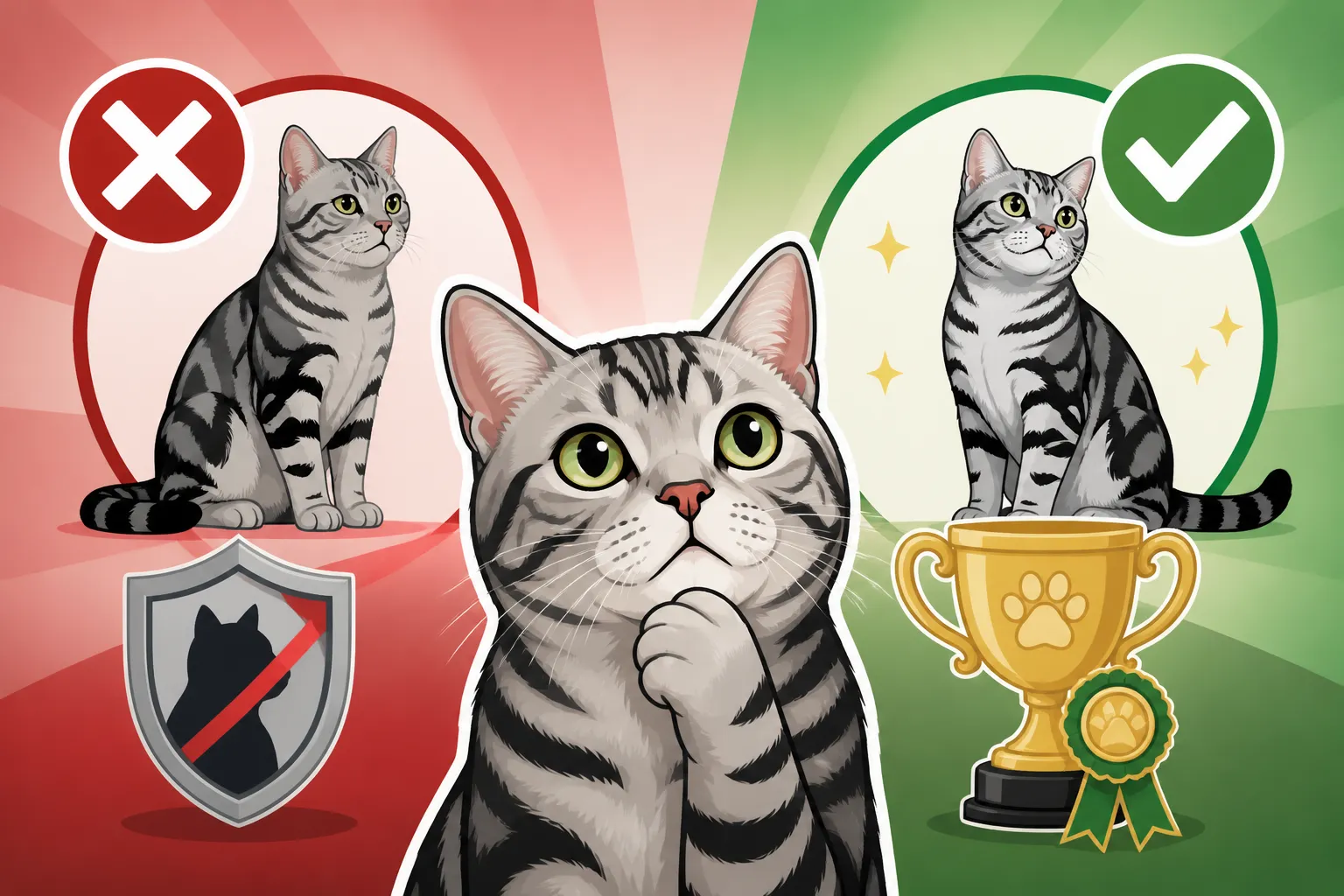
Usually, an unregistered cat cannot compete in a class reserved for registered American Shorthairs. Those classes assess cats against a breed standard, and registration helps show that the cat has an eligible pedigree.
But “showing a cat” can mean more than competing in a pedigreed breed class. Some associations and shows offer household pet classes for cats without recognized pedigrees or registration. Whether your cat can enter depends on the show’s rules, the cat’s eligibility, and the class offered.
Breed competition is different from household pet competition
In a pedigreed class, an American Shorthair is judged as a representative of its breed. Judges consider features such as body structure, head shape, coat, pattern, and overall condition in relation to the breed standard. To enter as an American Shorthair, a cat generally needs to be registered with the registry running the show and meet that registry’s entry requirements.
A cat that resembles an American Shorthair does not automatically qualify for that class. Plenty of domestic shorthairs share the breed’s sturdy build, round face, and familiar tabby markings. Appearance alone does not establish a documented pedigree. For a closer look at the distinction, see How an American Shorthair Differs From a Domestic Shorthair.
Household pet classes work differently. They are intended for cats that are not competing as a registered member of a particular breed. These classes may welcome cats of many backgrounds, including mixed-breed cats and cats whose owners do not have pedigree records. Judges may consider condition, grooming, temperament, and presentation under the show’s own criteria rather than comparing the cat with the American Shorthair standard.
That means an unregistered cat could be eligible to attend and compete at a show without being eligible to enter the American Shorthair breed class. The distinction matters: household pet entry is not the same as registering the cat as an American Shorthair, and it does not confirm the cat’s breed.
The rules depend on the show and registry
Cat shows are run by organizations with their own entry rules, class structures, and paperwork requirements. A show may offer household pet competition, while another event may not. Even where a household pet class exists, there may be conditions involving the cat’s age, health, neuter status, or other entry details.
Do not rely on a general statement you saw in a forum or on a show calendar. Check the specific event’s entry information and contact the show manager or entry clerk if anything is unclear. Ask directly whether an unregistered cat can enter, which classes are available, and what documentation is required. If your cat has a pedigree but is not yet registered, ask whether that affects eligibility or whether registration must be completed before the entry deadline.
| Your cat’s situation | Likely show route | What to confirm |
|---|---|---|
| Registered American Shorthair with eligible paperwork | American Shorthair breed class may be available | Registry, class, and entry requirements |
| Pedigreed American Shorthair with no completed registration | Breed-class entry may not be available yet | Whether registration can be completed in time |
| Unregistered cat with no pedigree records | Household pet class may be an option | Whether the show offers the class and accepts the cat |
| Cat that resembles an American Shorthair but has unknown ancestry | Do not assume it can enter as a pedigreed American Shorthair | Eligibility for household pet competition |
The word “may” is important here. Rules can differ, and show organizers can clarify how they apply to a particular cat.
What registration does and does not prove
Registration is a record maintained by a cat registry. For a pedigreed class, it connects a cat to recognized lineage and eligibility under that organization’s rules. It is not simply a certificate saying that a cat looks like a certain breed.
If your cat came from a breeder, start by checking the purchase paperwork and asking whether registration documents were issued, are pending, or were never completed. The details matter. A kitten may have a pedigree but still need an application processed, or the breeder may have placed the cat under terms that affect breeding or show eligibility. You can read more about the role of records in Whether Papers Are the Only Proof of an American Shorthair.
A household pet class, when available, provides another way to participate without claiming a breed identity. The cat can be entered on its own merits under that class’s criteria. It is a good fit for owners who enjoy the atmosphere of a cat show but do not have the paperwork needed for breed competition.
A resemblance or DNA result is not a substitute for show registration
A cat’s appearance can suggest a type, but it cannot establish a complete pedigree. American Shorthairs come in many colors and patterns, and domestic shorthairs can look remarkably similar. A silver tabby, for example, may resemble the breed’s familiar look without having documented American Shorthair ancestry. Learn more about the breed’s signature appearance in The Silver Tabby That Made the American Shorthair Famous.
Likewise, a consumer DNA report is not usually a replacement for registration records in a pedigreed show class. Registries set their own standards for accepted documentation and lineage. If you are considering testing, first ask the registry and show organizer whether a test is relevant to your specific situation. For the broader question, see Whether a DNA Test Tells an American Shorthair From a Moggy.
If your cat’s background is unknown, it is more straightforward and honest to ask about household pet eligibility than to try to prove a breed from looks alone. This avoids a stressful surprise at check-in and ensures the cat is entered in a class suited to its records.
A pedigree may not mean the cat is ready to enter
Even when a cat has an American Shorthair pedigree, several practical questions remain. Is the cat registered with the organization hosting the show? Does the registry recognize the paperwork? Is the cat eligible for the particular class? Are there any conditions tied to its registration or the breeder’s contract?
If you have lost paperwork, contact the breeder or the registry rather than assuming the record cannot be recovered. The registry can explain what documents it needs and whether it has a record associated with the cat’s registered name, litter, or identifying details. If you are still choosing a kitten, What an American Shorthair Pedigree Guarantees explains what a pedigree can establish—and what it cannot.
How to find out whether your cat can enter
Before buying show supplies or planning a trip, confirm your cat’s eligibility. A short email to the show contact can prevent a long day of travel ending with an entry problem.
Check the entry information first
Look for the event’s entry form and rules. Find the available classes and note how the organizer defines a household pet, an unregistered cat, or a pedigreed entry. If the event is affiliated with a registry, check that registry’s requirements too.
Then contact the listed show manager or entry clerk with a concise description: your cat’s age, whether the cat is neutered, whether you have pedigree documents, whether it is registered, and which class you hope to enter. Ask what paperwork must accompany the entry and whether any health or vaccination records are required. Keep the response so you can refer to it later.
If you have a breeder’s paperwork but no registration certificate, explain that clearly. “I have a pedigree but no registration” is more useful than simply saying “my cat is purebred,” because the organizer can respond to the actual documentation situation.
Prepare your cat for the experience
A show can be noisy and unfamiliar. There may be travel, other cats, bright lighting, and periods of waiting. Even a confident cat may find the setting tiring, so consider temperament and comfort before entering. A calm practice session in a carrier, short grooming sessions, and gentle handling can make the day easier.
Bring the supplies specified by the show, plus familiar items that help your cat settle. A secure carrier, water, and a clean resting surface are practical basics, but follow the event’s rules about what may be brought into the venue. If grooming tools or a suitable carrier are missing, retailers such as Chewy may be one place to compare options; choose equipment that fits your cat comfortably rather than buying a full show kit before confirming entry.
For an American Shorthair entered in a household pet class, tidy grooming and a clean, comfortable presentation are sensible goals. You do not need to reshape the cat into a breed standard it is not eligible to enter. The breed’s build and appearance are covered in What an American Shorthair Looks Like by the Standard, but household pet judging follows the class’s own criteria.
Common questions about showing an unregistered American Shorthair
Can I enter my cat as an American Shorthair if it looks like one
Not usually in a pedigreed American Shorthair class without the registration and documentation required by the show’s registry. A similar appearance is not enough to establish breed eligibility. Ask the organizer whether a household pet class is available instead.
This can feel unfair if your cat strongly resembles the breed, but the classes serve different purposes. Pedigreed competition evaluates documented members of a breed against its standard; household pet competition gives cats without that show status another possible way to participate.
Can I register my cat later
Possibly, if the cat has qualifying ancestry and the registry accepts the relevant records. The answer depends on the registry, the cat’s background, and the documentation available. A cat with unknown ancestry cannot generally gain a pedigreed registration simply because it looks like an American Shorthair.
If the cat came from a breeder, ask what registration steps remain and whether the breeder needs to provide information. If the cat was adopted or its records are missing, contact the registry before paying for applications or testing. The page Whether Registering a Shelter Tabby as an American Shorthair Is Possible discusses why appearance and registration are separate questions.
Is showing worth it if my cat can only enter as a household pet
It can be, if you and your cat enjoy the experience and the event offers an appropriate class. Some owners like meeting other cat people, learning about show handling, or simply giving a sociable cat a new activity. Others decide the travel and unfamiliar environment are not worth it for their particular cat. Both are reasonable choices.
Think about your cat’s response to carriers, crowds, handling, and other animals. Ask the organizer what the day involves and whether household pet entries are welcomed. If you decide to try it, keep the first event low-pressure and be ready to leave if your cat becomes distressed. A comb or grooming glove from a retailer such as Chewy can help with basic coat tidying, but the cat’s comfort matters more than elaborate preparation.
An unregistered American Shorthair look-alike may not be eligible for the breed class, but that does not necessarily mean the door to cat shows is closed. Confirm the specific event’s rules, enter only in a class your cat qualifies for, and let the cat’s well-being guide the decision.
Disclaimer
This article is for general informational purposes only and does not constitute professional advice. Laws, prices and regulations vary by location and change over time. Consult a qualified professional for guidance on your specific situation.