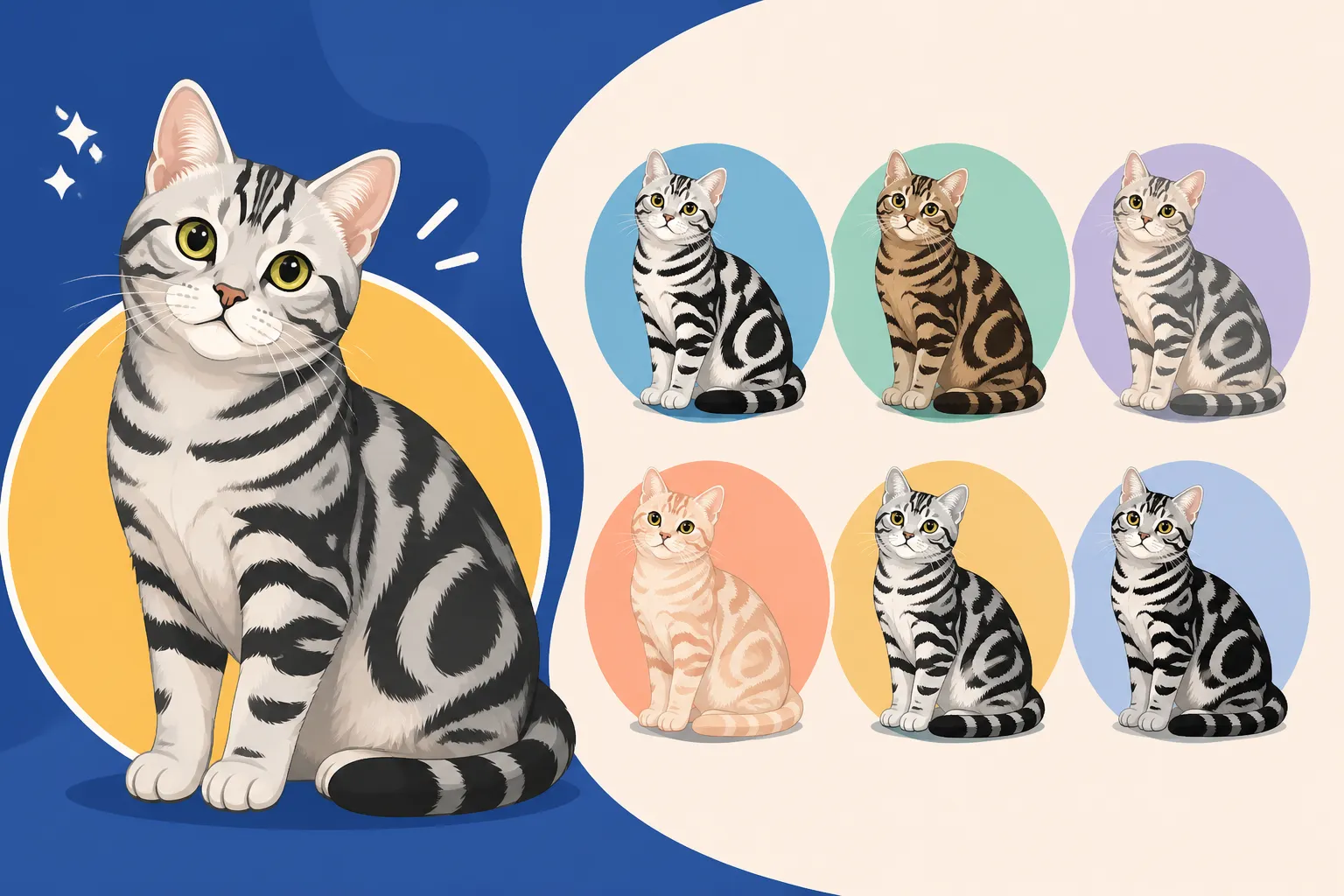
Which Patterns an American Shorthair Comes In
A silver tabby kitten and a brown tabby kitten can both be American Shorthairs, even though they look quite different. That variety makes breeder listings confusing: color, pattern, and breed are often used as if they mean the same thing. This guide explains the patterns American Shorthairs come in, how to recognize the main ones, and what a coat can—and cannot—tell you about pedigree.
Pattern and color are not the same thing
What a cat’s pattern describes
A pattern is the arrangement of color across a cat’s coat. A tabby, for example, has darker markings over a lighter background; those markings may form bold swirls, narrow stripes, or patches. A solid cat has a coat that appears one color throughout, while a bicolor cat has areas of white combined with another color.
Color describes the shades themselves: silver, brown, blue, red, cream, black, and white are examples. A single American Shorthair can have both a color and a pattern, such as a silver classic tabby or a brown mackerel tabby. The name often combines both pieces of information.
This distinction helps when you’re comparing kitten photos. “Silver” on its own doesn’t tell you whether the cat has tabby markings, and “tabby” doesn’t tell you whether the base color is silver, brown, or another shade. For a broader color overview, see Which Colors an American Shorthair Comes In.
Why a pattern alone cannot prove breed
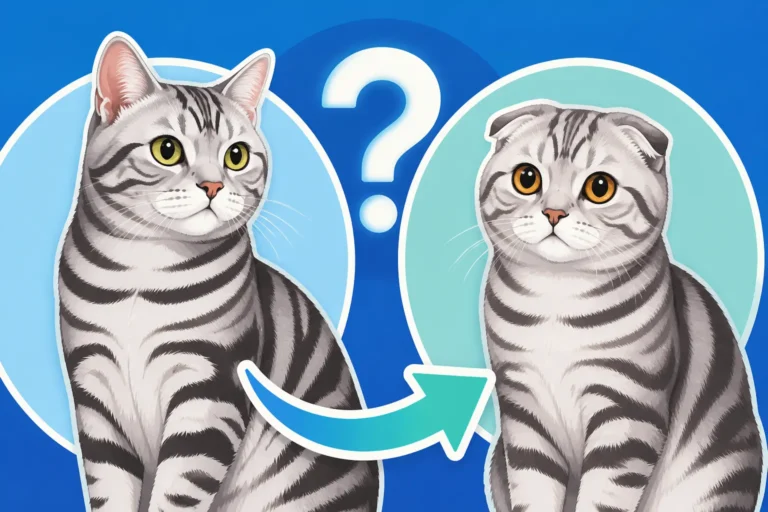
American Shorthairs come in many colors and patterns, but those looks are not exclusive to the breed. A domestic shorthair cat can also be a silver tabby, a calico, or a solid black cat. Seeing a familiar American Shorthair pattern does not, by itself, establish that a cat is a pedigreed American Shorthair.
If breed identity matters to you, look for pedigree documentation from a recognized registry and ask the breeder to explain the kitten’s registered name and parentage. A photo, a social media caption, or a retailer’s breed label is not a substitute for paperwork. A DNA test may offer information about ancestry, but it does not replace a documented pedigree. The distinction is especially useful when comparing a pedigree kitten with a cat that simply has a similar look; How to Tell an American Shorthair From a Random Bred Tabby covers that comparison in more detail.
Listings can use color language loosely. Descriptions you see on Chewy or another retailer’s site may be useful for identifying a coat shade, but a product or listing label should not be treated as proof of a cat’s breed registration.
The main American Shorthair patterns
Tabby patterns
Tabby is one of the most recognizable American Shorthair pattern families. The key feature is the contrast between a lighter ground color and darker markings. The markings may appear as broad curves, thin lines, or broken stripes, and many tabbies also have the familiar forehead marking often described as an “M.”
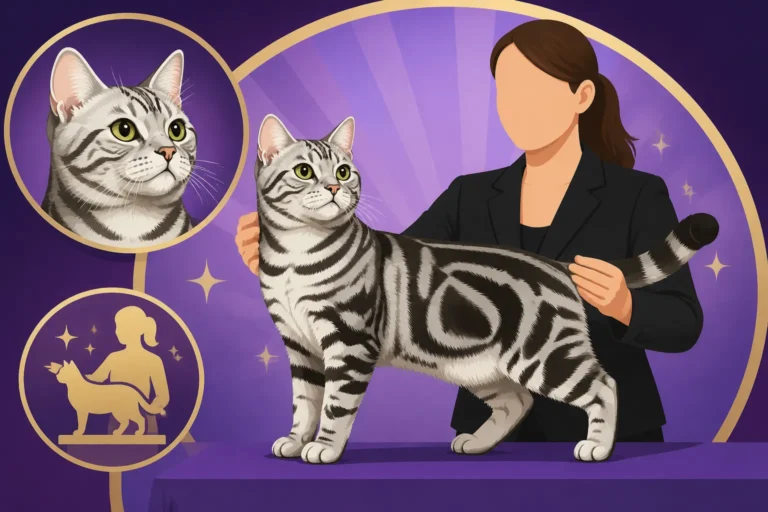
A classic tabby has broad, swirling markings along the sides, often creating a bull’s-eye or marbled look. The pattern can be striking, but the exact clarity and contrast vary from cat to cat. Learn more in What a Classic Tabby American Shorthair Is.
A mackerel tabby has narrower vertical stripes along the body, giving a more striped appearance than the classic pattern. The lines may be close together or more broken, so it can help to look at the whole torso rather than judging from a kitten’s face alone. See What a Mackerel Tabby American Shorthair Is.
Patch tabby, sometimes called torbie when combined with tortoiseshell coloring, has tabby markings alongside patches of different colors. The overall effect can look more mottled than evenly striped. A growing kitten’s coat may change in appearance as the adult coat comes in, so an early photo may not show the mature pattern as clearly as you expect.
Silver, brown, and other tabby colors
Silver tabbies have a pale, often cool-looking background with darker markings. The contrast can make the pattern look especially crisp in photographs, which is one reason the silver tabby is so closely associated with the breed. But silver describes the color effect, not the tabby arrangement: a silver cat may have classic or mackerel markings. For more detail, read What a Silver Tabby American Shorthair Is.
Brown tabbies usually have a warmer background with darker brown or black markings. Depending on lighting and coat development, a brown tabby can look golden, tawny, or quite dark. The name does not mean the cat is one flat shade of brown; the visible pattern is an important part of the look. What a Brown Tabby American Shorthair Is explains that coat type more closely.
Other colors can also appear with tabby markings. Red and cream tabbies, for example, tend to have softer, warmer contrasts than silver or brown tabbies. The exact registered color term can depend on the registry’s terminology, so it’s sensible to ask a breeder how a kitten is recorded rather than relying only on an informal description.
Solid, smoke, shaded, and white-patterned coats
A solid coat appears to be a single color from a distance, though close inspection may reveal subtle differences in shade. Black and blue are examples of solid colors. “Blue” in cat coat descriptions generally refers to a diluted gray shade, not a bright blue color.
Smoke coats can look solid at first glance. When the fur parts or the cat moves, a lighter band near the base of the hairs may show beneath darker tips. That contrast can be easier to see in motion or in natural light than in a posed photograph. For a closer look at this effect, see What a Smoke American Shorthair Is.
Shaded silver coats have a light base with darker color concentrated toward the ends of the hairs. This creates a soft, shaded appearance rather than distinct tabby stripes. It can be easy to confuse a shaded coat with a lightly marked tabby in a small or overexposed photo; What a Shaded Silver American Shorthair Is describes the difference.
White may appear with another color in bicolor patterns, and it also appears in calico and tortoiseshell coats. A calico typically has distinct patches of white, black, and red or cream. A tortoiseshell coat combines dark and red-toned colors, usually with less white than a calico. These patterns are most often seen in females, though unusual exceptions can occur. See What a Calico American Shorthair Is and What a Bicolor American Shorthair Is for more on those coat types.
| Coat description | What to look for | Common point of confusion |
|---|---|---|
| Classic tabby | Broad swirls or rounded markings over a lighter ground | Mistaking the swirls for an irregular solid pattern |
| Mackerel tabby | Narrow stripes running along the body | Judging the pattern from the face instead of the torso |
| Silver tabby | Dark tabby markings over a pale silver background | Treating “silver” as the pattern rather than the color |
| Brown tabby | Dark markings over a warmer brown-toned background | Assuming the whole coat should be one brown shade |
| Solid | A coat that appears largely one color | Overlooking subtle shading in different light |
| Smoke | Dark-looking tips with a paler base to the hairs | Assuming the cat is solid-colored |
| Shaded silver | Pale coat with darker shading concentrated toward the tips | Confusing soft shading with faint tabby markings |
| Calico or bicolor | Patches of white combined with other colors | Assuming any white patch makes a cat a calico |
How to identify a coat pattern accurately
Look at the whole coat in natural light
Photos can distort color. Warm indoor bulbs may make a silver coat look beige, while bright sunlight can wash out darker markings. A phone camera may also sharpen or soften stripes depending on focus and exposure. If you’re evaluating a kitten, ask for clear photos taken in ordinary daylight, including the sides, back, face, and tail.
Look for the placement and shape of the markings, not just their color. Broad side swirls suggest a classic tabby; narrow, repeated body stripes suggest mackerel. A coat that looks uniformly dark in a still image may show pale hair roots when the fur is gently parted. Don’t pull or handle a kitten roughly to inspect the coat; a breeder can demonstrate the color pattern safely.
Kittens can also look different as they mature. Their markings may become more distinct, and the adult coat can take time to develop. If the pattern is important to you, ask the breeder what they expect the coat to look like as the kitten grows and whether that expectation is based on the kitten’s current coat, the parents’ coats, or both.
Ask for the registered color and pattern
A useful question is, “What color and pattern will be recorded on the pedigree?” That invites a specific answer rather than a casual description such as “gray striped.” Ask to see how the kitten’s name and coat description appear in the registration or breeder documentation, and confirm that the paperwork refers to the kitten you are considering.
It’s also reasonable to ask what terms the breeder uses for the parents’ coats and whether the kittens’ pattern is still developing. Reputable explanations should be straightforward. If a seller insists that a coat pattern alone proves the cat is an American Shorthair but cannot provide pedigree details, treat that as a reason to ask more questions.
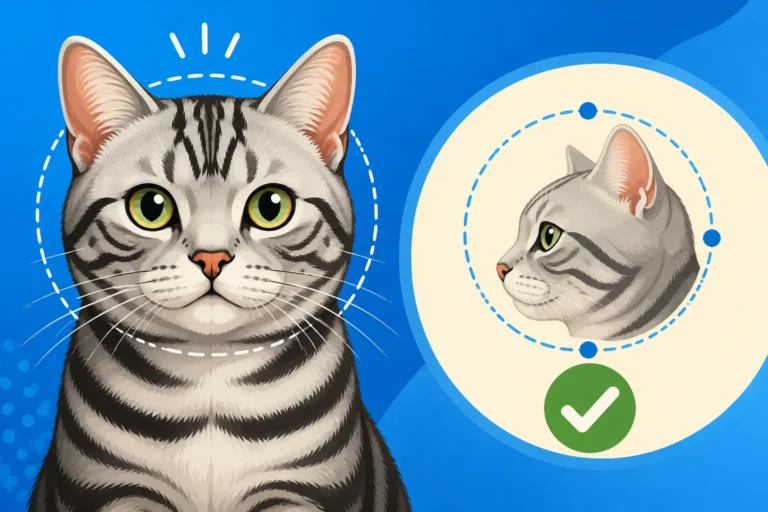
Registry standards and wording can differ, so avoid assuming that a term in an online advertisement has one universal meaning. The breed standard describes more than coat color: it also addresses overall type and structure. What an American Shorthair Looks Like by the Standard offers a broader picture of the breed’s appearance.
Separate coat preference from health and temperament
It’s completely fine to have a favorite pattern. Some people love the sharp contrast of a silver tabby; others prefer the soft look of a smoke coat or the patchwork colors of a calico. Still, coat appearance is only one part of choosing a cat. A particular pattern does not guarantee a specific personality, activity level, or health profile.
When comparing kittens, ask about their daily care, socialization, veterinary history, and the health screening of their parents. A beautiful coat is no substitute for thoughtful breeding practices and a good fit with your household. If you’re still comparing an identified pedigree cat with a shelter cat that has similar markings, Whether a Shelter Tabby Can Be Registered as an American Shorthair can help clarify the difference between resemblance and registration.
Choosing supplies for an American Shorthair coat
Most American Shorthair coat patterns do not require a special grooming routine. The breed has a short, dense coat, and regular brushing can help lift loose hair, especially during seasonal shedding. A soft rubber brush or suitable comb is often enough for routine care; the right tool depends more on your cat’s comfort and coat condition than on whether the cat is silver, brown, or solid-colored.
If you browse Chewy for grooming supplies, focus on the tool’s intended use and how gently it moves through a short coat, rather than choosing one because its packaging features a particular color or breed. Introduce brushing gradually: let the cat sniff the brush, start with a few gentle strokes, and stop before the session becomes a wrestling match. That makes it easier to build a calm routine.
Pattern also shouldn’t determine food choice. A silver tabby and a calico have the same basic need for a complete, age-appropriate diet and a healthy body condition. If you use Chewy or another retailer to compare food, base the decision on your veterinarian’s guidance, your cat’s life stage, and how well the food suits that individual—not on the coat description.
When buying essentials through Chewy, the same practical approach applies to beds, carriers, and other supplies: choose for your cat’s actual size and habits. Coat pattern is a lovely part of an American Shorthair’s appearance, but it won’t tell you whether a particular carrier is roomy enough or whether a cat prefers a covered bed.
Disclaimer
This article is for general informational purposes only and does not constitute professional advice. Laws, prices and regulations vary by location and change over time. Consult a qualified professional for guidance on your specific situation.