How an American Shorthair Differs From a European Shorthair
It’s a common misconception that a shorthaired tabby cat is just, well, a shorthaired tabby cat. And when you start looking into specific pedigrees, the waters can get even murkier! Many cat lovers, myself included, have found themselves wondering about the subtle (and sometimes not-so-subtle) distinctions between seemingly similar breeds. One question that often pops up is about the American Shorthair and its European cousin, the European Shorthair. While they share "shorthair" in their names and a common ancestry as working cats, these two breeds have distinct histories, physical traits, and temperaments that set them apart. This guide will walk you through exactly what makes each of these beautiful breeds unique.
Divergent Journeys: The Origins of the Breeds
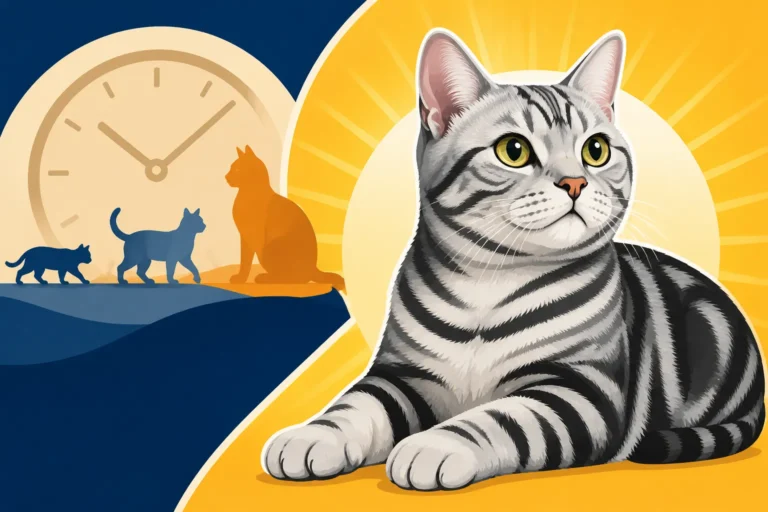
When you look at an American Shorthair or a European Shorthair today, you’re not just seeing a cat; you’re seeing centuries of history, migration, and very deliberate selective breeding. Both breeds started from humble beginnings as practical working cats, but their paths diverged dramatically once they landed on different continents and attracted the attention of dedicated fanciers. Understanding their roots is crucial to appreciating their present-day characteristics.
From Ship's Cat to American Icon
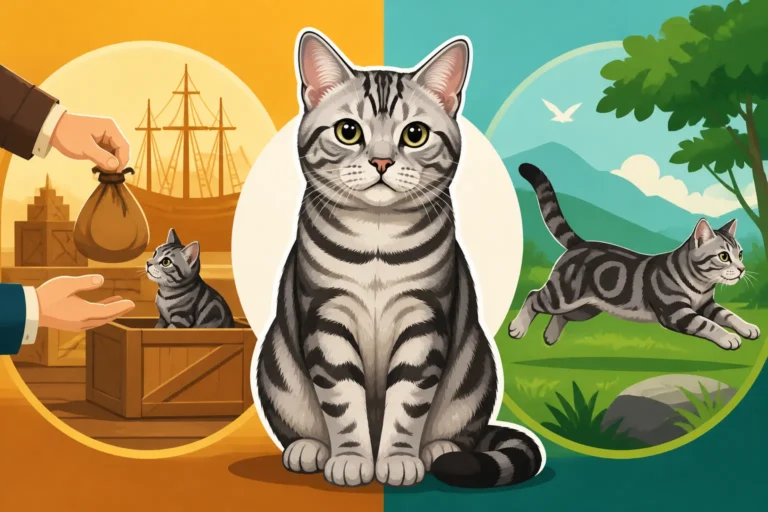
The ancestors of the American Shorthair were truly pioneers, much like the humans they accompanied. These were the hardy, resilient "ship's cats" that sailed from Europe to the New World with early settlers, tasked with keeping rodents at bay on long voyages and then in burgeoning settlements. Imagine these cats leaping ashore from the Mayflower, ready to tackle the wilderness! They weren't bred for looks initially; their value was purely in their working ability. This meant natural selection favored the strongest, healthiest, and most efficient hunters. Over generations, these cats adapted to the diverse climates and demands of North America, developing a robust build, keen intelligence, and a self-sufficient nature.
When cat fancy began to formalize in the late 19th and early 20th centuries, some enthusiasts recognized the inherent beauty and excellent qualities of these native American working cats. They sought to preserve the breed as it was, a testament to its functional past, rather than to radically alter it. Originally known simply as the Domestic Shorthair, the breed was one of the first five recognized by the Cat Fanciers' Association (CFA). It wasn't until 1966 that the name officially changed to American Shorthair, a move intended to distinguish it from generic house cats and to give it the prestige it deserved. This focus on preserving its natural, working heritage profoundly influenced its physical and temperamental standards. You can learn more about this journey in The Mayflower Cats Behind the American Shorthair and Why the American Shorthair Was Called Domestic Shorthair Until 1966.
The European Landrace Tradition
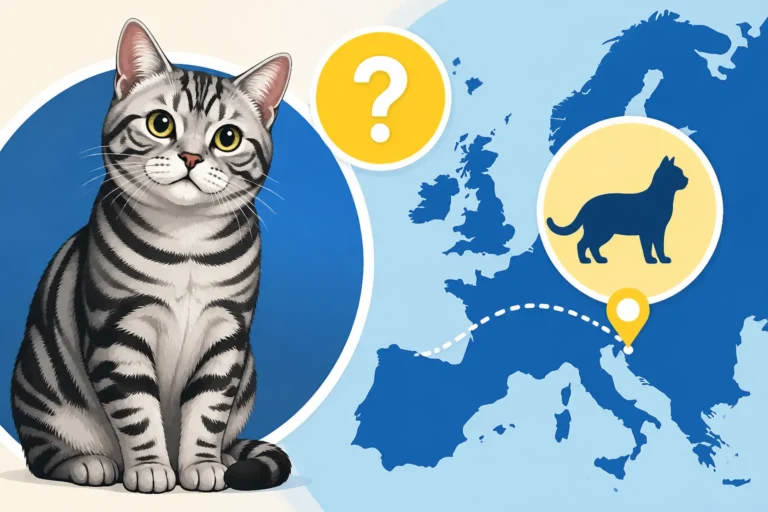
Across the Atlantic, the European Shorthair’s story mirrors that of the American Shorthair in its working-class origins, but its journey into a recognized pedigree breed took a different route. These cats are direct descendants of the common house cats of Europe – the very cats that the American Shorthair’s ancestors sailed away from. For centuries, they roamed European farms, villages, and cities, performing the same vital pest control duties. They were the ubiquitous moggies, known for their adaptability, sharp hunting skills, and hardy constitutions.
However, unlike the American approach, where a distinct "American" type was identified and bred, the European Shorthair as a pedigree breed is a more recent and specific creation. It was primarily developed in Scandinavia, aiming to standardize the look and temperament of the traditional European farm and house cat. The idea was to celebrate the natural, unexaggerated type that had thrived across the continent for so long. The Federation Internationale Feline (FIFe) recognized the European Shorthair relatively late compared to other breeds, with its standard carefully crafted to reflect this natural, functional cat. This means the European Shorthair is essentially a pedigreed version of the original common European cat, a testament to careful selection rather than dramatic alteration. They wanted to capture the essence of the resilient street cat and elevate it to show status.
Physical Traits: A Tale of Two Standards
While both are "shorthairs," a closer look at their physical characteristics reveals the nuanced differences that breeders on either continent sought to emphasize. These distinctions are enshrined in their respective breed standards, guiding breeders to maintain the unique identity of each cat.
The Robust American Shorthair Build
The American Shorthair is often described as a medium to large-sized cat, renowned for its strong, powerful, and well-muscled build. This is a cat built for function – a true athlete designed for agility and strength, perfectly suited for its historical role as a mouser. Its body is substantial, giving a sense of solidness and robustness. You’ll notice a broad chest and a heavily muscled neck, flowing into a back that is level and muscular. Their legs are of medium length, sturdy and well-boned, ending in round, full paws. This overall impression is one of durability and substance.
The head of an American Shorthair is typically large, with a full-cheeked, rounded appearance that many find incredibly endearing. Their muzzle is square, and their jaws are strong, reflecting their ancestry as skilled hunters. The ears are medium-sized, set wide apart, and slightly rounded at the tips. Their eyes are large, round, and wide-set, usually bright and alert, expressing a calm intelligence. The coat is short, thick, and even, with a hard texture that feels quite dense to the touch. This "hard" coat was a practical adaptation, providing protection from the elements. Colors and patterns are incredibly varied, with the classic silver tabby being perhaps the most famous and iconic. It's truly a working cat's frame, honed over centuries. What an American Shorthair Looks Like by the Standard delves deeper into these specific features.
The Sleeker European Shorthair Profile
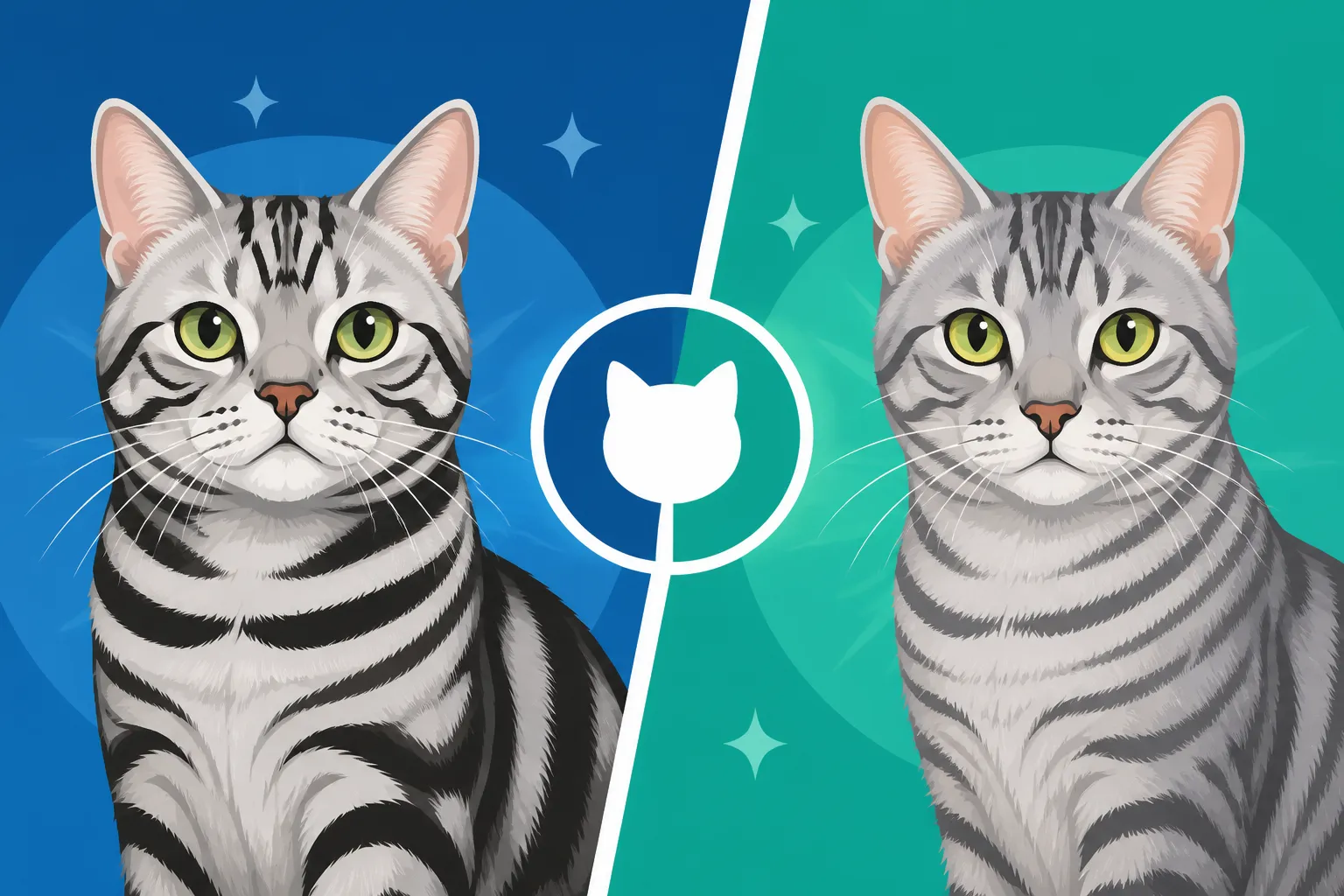
In contrast, the European Shorthair generally presents a more medium-sized and athletic build, often appearing a bit lighter and more elegant than its American cousin. While still muscular and strong, it typically lacks the sheer density and "squareness" that characterizes the American Shorthair. Their body is robust, but the overall impression is one of balance and agility rather than bulk. Their legs are strong and of medium length, with rounded paws. The emphasis here is on a natural, unexaggerated physique, reflecting the typical European domestic cat.
The European Shorthair's head is usually broader and more rounded than many other European breeds but is not as full-cheeked or square-muzzled as the American Shorthair. It often presents a slightly wedge-shaped appearance, with a firm chin and moderately sized, upright ears that are slightly rounded at the tips and set quite apart. Their eyes are round, clear, and expressive, set obliquely. The coat is short, dense, and glossy, without being plush. It's often described as resilient and weather-resistant, a practical trait for a cat that might have spent time outdoors. Like the American Shorthair, the European Shorthair comes in a vast array of colors and patterns, reflecting the genetic diversity of the European landrace from which it originated. They tend to have a less uniform "look" than the American Shorthair, which has been bred to a very specific type for longer.
Key Physical Differences in a Nutshell
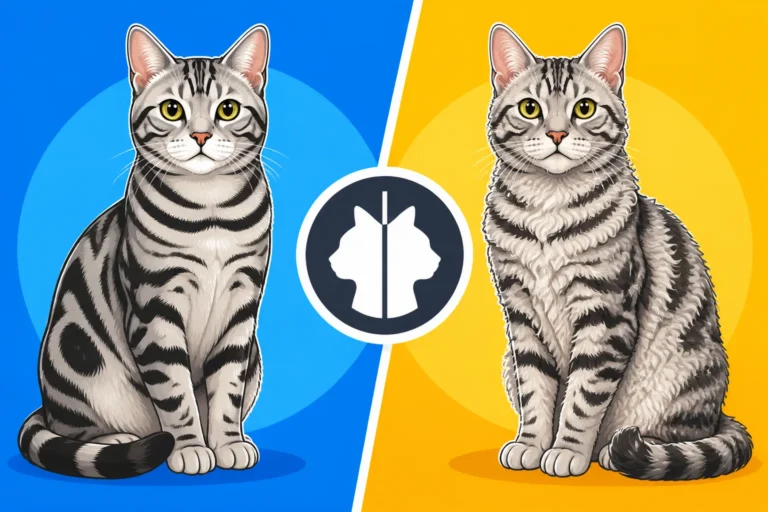
To put it simply, if you imagine a classic, sturdy American farm cat, you're likely picturing an American Shorthair. If you picture a typical, agile European street cat that's been brought into the show ring, you're leaning more towards a European Shorthair.
| Feature | American Shorthair | European Shorthair |
|---|---|---|
| Overall Build | Robust, powerful, muscular, "square-built" | Medium-sized, athletic, well-balanced, less bulky |
| Head Shape | Large, rounded, full-cheeked, distinct square muzzle | Broad, rounded, can be slightly wedge-shaped, firm chin |
| Ears | Medium-sized, wide-set, slightly rounded tips | Moderately sized, upright, slightly rounded tips, set apart |
| Eyes | Large, round, wide-set | Round, clear, expressive, set obliquely |
| Coat Texture | Short, thick, even, "hard" texture | Short, dense, glossy, resilient |
| Jawline | Strong, well-developed | Firm, strong |
| Body Length | Stocky, compact | Slightly longer, more lithe |
Temperament: The Echoes of Their Past
A cat’s personality is often as much a product of its genetics and historical purpose as its environment. Both the American and European Shorthairs were bred for practical jobs, leading to resilient and intelligent temperaments, but their specific histories have fostered some subtle differences in their character.
The Adaptable American Shorthair
The American Shorthair truly embodies a calm and collected demeanor, which is one of its most celebrated traits. These cats were bred to be independent and self-sufficient, capable of handling a variety of situations without excessive stress. They are often described as easy-going and adaptable, fitting seamlessly into many different household environments, whether bustling family homes or quieter single-person dwellings. This isn't a cat that typically demands constant attention or fusses over minor changes. They appreciate companionship but aren't clingy; they'll happily patrol their territory or nap in a sunny spot, only to appear for a loving head scratch or a play session.
Their hunting instincts, while still present, are usually channeled into playful behavior. They love interactive toys that mimic prey, making them great candidates for puzzle feeders or wand toys found on Chewy. Despite their independent streak, American Shorthairs are genuinely affectionate with their families. They enjoy being near their people, perhaps sitting beside you on the sofa or following you from room to room, supervising your activities. They are known for their quiet voices, communicating more through purrs and gentle rubs than loud meows. They tend to be patient and tolerant, which makes them excellent companions for children and other pets, including well-behaved dogs. Their calm nature makes them easy to live with, a testament to centuries of needing to "cope" on their own. Why an American Shorthair Fits Any Household explores this adaptability in detail.
The Alert European Shorthair
The European Shorthair, while also adaptable and generally good-natured, often possesses a slightly more alert and active temperament, reflecting its close ties to the un-pedigreed street and farm cats of Europe. They are known for being intelligent and observant, keenly aware of their surroundings. This keenness often translates into a curious and exploratory nature, and they enjoy investigating new sights and smells, whether indoors or, if safely permitted, outdoors. Like their American counterparts, they are excellent hunters, and this drive needs an outlet in playtime. Look for durable, engaging toys that challenge their minds and bodies.
European Shorthairs can sometimes be a little more reserved initially, especially with strangers, taking their time to assess a new person or situation before offering their trust. However, once they bond with their family, they are affectionate and loyal companions. They enjoy interaction and playtime, often initiating games or seeking attention through gentle nudges. They are generally patient and can get along well with respectful children and other pets, provided proper introductions are made. Their voices are typically moderate, and they are not known for being overly vocal, preferring to express themselves through body language. Their temperament often reflects a cat that has had to be a bit more street-smart and self-reliant, even if they've been pampered house cats for generations.
Breed Standards and Recognition: Different Paths to Pedigree
The journey from working cat to recognized pedigree breed is a fascinating one, and for the American and European Shorthairs, these paths were formalized by different organizations with distinct philosophies. This difference in recognition directly impacts how breeders approach their lines and what owners can expect in terms of pedigree validation.
American Shorthair's Broad Recognition
The American Shorthair enjoys widespread recognition in major cat registries, particularly in North America. The breed was one of the first five recognized by the Cat Fanciers' Association (CFA) in 1906, originally under the name Domestic Shorthair. This early recognition meant that the breed standard for the American Shorthair has been refined and upheld for over a century, contributing to its consistent type and widespread popularity. The CFA defines the breed's characteristics in meticulous detail, emphasizing the health, robust build, and good nature that harks back to its working origins.
Beyond the CFA, the American Shorthair is also recognized by The International Cat Association (TICA) and many other independent registries around the world. This broad acceptance means that finding reputable breeders is often straightforward, and pedigreed American Shorthairs typically come with extensive documentation and health clearances. The breed's standard celebrates a balanced, powerful cat with a sweet expression, and breeders strive to produce cats that perfectly match these guidelines. If you're looking for a cat with a well-established history and a clear lineage, the American Shorthair is a strong contender. Which Five Breeds Founded the CFA With the American Shorthair provides more context on this historical recognition.
European Shorthair's Specific Pedigree
The European Shorthair's recognition story is a bit different. While cats resembling the European Shorthair have existed across the continent for centuries, the formalization of the breed under a specific standard is more recent and largely driven by European registries. The Federation Internationale Feline (FIFe) is the primary registry that recognizes the European Shorthair. In fact, FIFe specifically aimed to standardize the ordinary domestic cat of Europe into a pedigree breed, making it unique in its goal to essentially 'pedigree the common cat.'
Other registries, particularly those in North America like the CFA and TICA, generally do not recognize the European Shorthair as a distinct breed. In these regions, a cat that might fit the European Shorthair description would simply be classified as a Domestic Shorthair. This distinction is crucial: a European Shorthair with FIFe papers might not have the same recognition or show eligibility in North American cat shows. This doesn't make the European Shorthair "less" of a breed; it simply highlights the different approaches and historical trajectories of cat fancy across continents. The FIFe standard emphasizes a strong, supple, and muscular cat with a rounded head, reflecting the quintessential European house and farm cat without exaggeration.
Understanding the Registry Landscape
The table below summarizes the key differences in how these two breeds are viewed and registered:
| Feature | American Shorthair | European Shorthair |
|---|---|---|
| Primary Registry | Cat Fanciers' Association (CFA), TICA | Federation Internationale Feline (FIFe) |
| Global Recognition | Widely recognized by most major international registries | Primarily recognized by FIFe in Europe |
| Breed Intent | Preserve distinct North American working cat type | Standardize the traditional European domestic cat type |
| History of Std. | Established early (1906, as Domestic Shorthair) | More recent formalization (mid-20th century) |
| Availability | Common in North America and globally | More common in Europe, rarer in North America |
When you're looking for a pedigree cat, understanding these registry differences is absolutely vital. If you’re in North America and looking for a "European Shorthair" with papers, you might find it challenging, as most reputable breeders would be working with other breeds or domestic shorthairs. Conversely, finding an American Shorthair in parts of Europe might require seeking out specific international breeders.
Health and Lifespan: Robustness from Working Stock
Both the American Shorthair and the European Shorthair descend from hardy working cats, a lineage that has blessed them with generally robust health and impressive longevity. Unlike some breeds developed with extreme physical traits, these breeds have largely retained their natural, functional attributes, contributing to fewer inherent health problems.
The Healthy American Shorthair
One of the great joys of owning an American Shorthair is their reputation for excellent health. Because they were initially shaped by natural selection and later bred to preserve their traditional type, they tend to be free from many of the breed-specific genetic conditions that can plague more intensively bred cats. Their strong genetic diversity, stemming from a broad foundation stock, has been a significant advantage. The breed's standard actively promotes a medium-sized, powerful body without any exaggerations, which inherently reduces the risk of structural health issues.
However, "generally healthy" doesn't mean "immune to everything." Like all cats, they can be susceptible to common feline ailments, especially as they age. One condition that has been observed in some American Shorthair lines is Hypertrophic Cardiomyopathy (HCM), a common form of heart disease in cats. Responsible breeders will screen their cats for HCM regularly through cardiac echocardiograms. Obesity is another significant concern, particularly for indoor American Shorthairs whose diets aren't carefully managed. Their strong appetites and naturally robust frames mean they can easily put on extra weight if not given appropriate portions and opportunities for exercise. A good diet and plenty of interactive play with toys from Chewy can keep them fit. With proper care, a healthy American Shorthair can easily live into their mid to late teens, with many individuals reaching or even surpassing 20 years. The Fifteen to Twenty Years the American Shorthair Was Given discusses their impressive lifespan.
The Resilient European Shorthair
The European Shorthair shares a similar reputation for hardiness and longevity, again thanks to its roots as a natural, un-pedigreed cat that thrived in various environments. The breed standard emphasizes a well-balanced, agile body that is free from extreme features, promoting natural health and resilience. This selective breeding for a natural type minimizes the risk of inherited structural problems. Their wide genetic pool, drawing from the diverse population of common European cats, also contributes to their overall vitality.
European Shorthairs are generally known to be strong and healthy cats. Like the American Shorthair, they are not prone to a long list of specific genetic diseases commonly associated with many pedigree breeds. However, also like their American cousins, they are not immune to common feline health issues that can affect any cat. Dental disease, kidney problems, and hyperthyroidism are examples of conditions that can arise in older European Shorthairs, making regular veterinary check-ups essential. Maintaining a healthy weight is also crucial for European Shorthairs, as their active nature can sometimes lead owners to overestimate their caloric needs once they become indoor companions. Providing plenty of enrichment, like climbing structures and puzzle toys, can help keep them mentally and physically engaged. A well-cared-for European Shorthair typically enjoys a lifespan similar to the American Shorthair, often living for 15 years or more.
Finding Your Feline Friend: Availability and Breeder Considerations
So, you're enchanted by the American Shorthair or the European Shorthair and are ready to welcome one into your home. The path to finding your new companion will largely depend on which breed you choose and where you live, due to their differing levels of recognition and popularity across continents.
Locating an American Shorthair
The American Shorthair is a well-established and popular breed, especially in North America. This means that finding a reputable breeder is generally a straightforward process. You can start by checking the websites of major cat registries like the CFA or TICA, which often list registered breeders. Attending local cat shows is another fantastic way to meet breeders in person, see the cats, and ask questions. A good breeder will be transparent about their breeding practices, health testing (especially for HCM), and will provide health guarantees and pedigree papers. They’ll also be keen to ensure their kittens go to loving, responsible homes, so expect them to ask you plenty of questions too!
Because of their widespread popularity, American Shorthairs can sometimes be found in rescue organizations or shelters, though usually, these are adult cats who, through no fault of their own, need a new home. While a registered American Shorthair kitten will have a purchase price that reflects the breeder's investment in health, care, and pedigree, they are often considered one of the more affordable pedigree cats to acquire initially. However, remember the long-term commitment. What a Pedigree American Shorthair Costs Against a Free Tabby gives more insight into the financial considerations.
Acquiring a European Shorthair
If your heart is set on a European Shorthair, your search might be a bit more focused, especially if you reside outside of Europe. As mentioned, the European Shorthair is primarily a European breed, with its main recognition coming from FIFe. This means that breeders are predominantly located in European countries. If you are in North America, you would likely need to import a kitten or find a specialized breeder who has imported lines, which can add significant complexity and cost. It's crucial to research import regulations and ensure any international breeder you work with is highly reputable and adheres to ethical practices.
Within Europe, finding a European Shorthair breeder will be much easier. Again, starting with FIFe-affiliated clubs and breeders' directories is the best approach. Expect the same level of due diligence from breeders regarding health, temperament, and ensuring good homes. Because they are less common globally as a distinct pedigree breed, the European Shorthair might have a different price structure than the American Shorthair, varying significantly based on region and availability. If you are outside Europe, what is often called a "Domestic Shorthair" in a shelter might physically resemble a European Shorthair, offering a wonderful opportunity for adoption if a pedigree isn't your primary concern.
Regardless of which breed calls to you, always prioritize finding a responsible breeder or a reputable rescue organization. A good breeder will ensure the health and socialization of their kittens, and a good rescue will ensure their cats are healthy, spayed/neutered, and ready for a loving home. Both options offer the chance to bring a wonderful feline companion into your life, whether it's the robust American Shorthair or the resilient European Shorthair.
Disclaimer
This article is for general informational purposes only and does not constitute professional advice. Laws, prices and regulations vary by location and change over time. Consult a qualified professional for guidance on your specific situation.