How Old the American Shorthair Breed Is
Many cat lovers find themselves captivated by the American Shorthair, a breed known for its robust health and easygoing nature, yet often wonder just how long this familiar feline friend has been a part of American households. It's easy to assume such a classic cat has always been around, but the journey from a common working cat to a recognized pedigree breed with a distinct history is quite fascinating and spans several centuries. This guide will walk you through the rich timeline of the American Shorthair, exploring its deep roots and formal evolution.
The Ancient Origins of the American Shorthair's Ancestors
When we talk about the "age" of the American Shorthair, we're really looking at two different timelines: the practical history of its ancestors as working cats in North America, and its formal history as a recognized breed. The former stretches back much further, reaching into the very beginnings of European settlement on the continent. These weren't "breeds" in the modern sense, but rather a collection of hardy, adaptable cats that proved invaluable to their human companions.
The European Roots and Maritime Journeys
Long before anyone even dreamed of a cat show or a pedigree certificate, the ancestors of what we now call the American Shorthair were simply working cats. They hailed from Europe, a diverse mix of domestic shorthairs that had evolved over centuries to be excellent hunters. These were not pampered pets; they were essential crew members, valued for their prowess in keeping rodent populations under control. Think about it: a long sea voyage meant stores of grain and provisions were constantly at risk from rats and mice. A good cat on board was literally a lifesaver, protecting vital food supplies and preventing the spread of disease.
When European settlers embarked on their perilous journeys to the New World, they didn't just bring their families and possessions; they brought these indispensable cats. It wasn't about choosing a specific "type" of cat for the journey; it was about bringing effective mousers. These seafaring felines, though unpedigreed, laid the foundational genetic material for the American Shorthair. They endured harsh conditions and proved their mettle on the high seas, an early testament to the breed's inherent hardiness and resilience. It's a common thought that The Mayflower Cats Behind the American Shorthair were among these earliest travelers, though specific records are scarce.
Arriving in the New World: Early American Settlers
Once ashore, these intrepid cats didn't suddenly get a promotion to household pets. Their job continued, albeit in a new environment. They quickly adapted to life in the burgeoning settlements and on the vast, untamed farmlands of North America. Here, their hunting skills were just as crucial, protecting crops in barns and food stores in pantries from rodents that could decimate a family's livelihood. This was truly a case of natural selection at play; only the most robust, intelligent, and effective hunters thrived and reproduced.
Over generations, these cats bred freely, creating a large, diverse gene pool. They weren't selectively bred for aesthetics or specific traits beyond their working ability. Instead, they were shaped by the demands of their environment: cold winters, hot summers, and the constant need to hunt for survival and to earn their keep. This period of natural development forged the well-muscled, agile, and intelligent cat that would eventually become the American Shorthair. Many believe Whether a Landrace Origin Explains the American Shorthair's Health, attributing their robust health to this long period of natural selection rather than intense selective breeding.
From Working Cats to Pedigree Status
For centuries, these cats were simply known as "domestic shorthairs" or "alley cats"—ubiquitous, useful, and largely unheralded beyond their practical contributions. It wasn't until the late 19th and early 20th centuries that a shift in perspective began, as people started to appreciate these cats not just for their utility, but for their inherent beauty and distinct characteristics.
The Undifferentiated "Domestic Shorthair" Era
For a very long time, if you had a cat with short hair in America, it was simply a domestic shorthair. There was no distinction between a street cat, a farm cat, or a beloved house cat; they were all functionally the same in terms of classification. However, keen observers began to notice that many of these cats shared common physical traits: a sturdy build, a round head, expressive eyes, and a practical, easy-care coat. They were healthy, adaptable, and had a generally pleasant temperament, even if they were fiercely independent. This period represents the bulk of the "age" of the American Shorthair's type in North America, a long stretch where the cat was present and essential but not formally recognized.
The cats were, in essence, the "control group" of cat breeding – healthy and well-adapted because no human intervention had attempted to alter them for extreme looks or specific, potentially detrimental, traits. They were the benchmark, the standard against which other, more specialized breeds would eventually be measured. People started to value their uncomplicated nature and inherent hardiness, recognizing a fundamental difference from the more exotic, imported breeds gaining popularity at the time.
The Dawn of Cat Fancies and Early Exhibitions
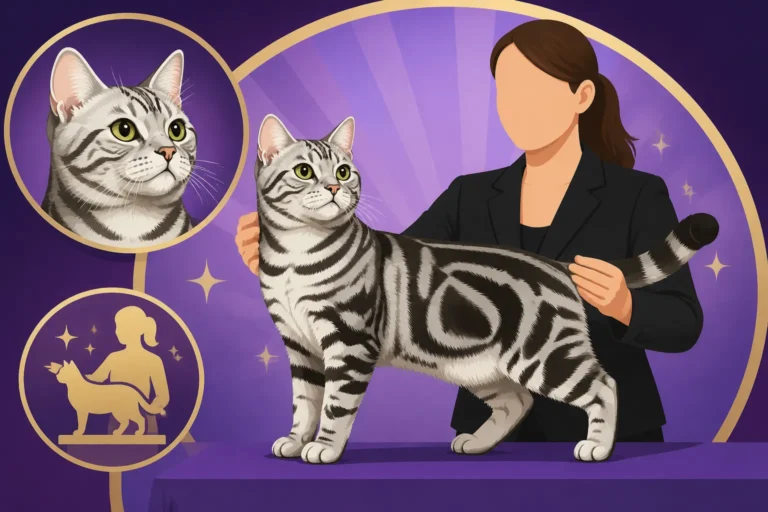
As the popularity of cat shows began to bloom in Europe and then in North America during the late 1800s, fanciers initially gravitated towards the more exotic, long-haired breeds like Persians and Angoras. These breeds offered a stark contrast to the common domestic cats, with their flowing coats and aristocratic airs. However, a growing number of American cat enthusiasts felt that their native working cats deserved recognition too. They saw the inherent beauty and distinct characteristics that had developed organically over centuries.
These early proponents weren't just admiring local tabbies; they were looking for specific qualities: strong, healthy cats with good conformation and pleasant temperaments that truly represented the American ideal of a working cat. The first cat shows saw a smattering of these "domestic shorthairs" entering, often struggling for attention against the flashier, imported breeds. It was a slow and steady climb, but the groundwork was being laid for formal recognition, setting the stage for the creation of an official breed that captured the essence of the American house cat. This period marked a critical turning point, shifting the perception of these cats from mere utility animals to potential pedigree stars.
The Early Days of Formal Recognition
The push to formally recognize the American Shorthair as a distinct breed was a testament to the dedication of early cat fanciers who believed in preserving the integrity and unique qualities of these native felines. This crucial period saw the establishment of breed standards and the initial efforts to differentiate these cats from their random-bred cousins.
The Founding of the Cat Fanciers' Association (CFA)
A pivotal moment in the history of the American Shorthair, and indeed, the entire cat fancy in North America, was the formation of the Cat Fanciers' Association (CFA). Established in 1906, the CFA quickly became a leading registry for pedigree cats. Significantly, the cat then known as the "Domestic Shorthair" was among the CFA's initial five recognized breeds. This inclusion marked the breed's formal entry into the world of pedigreed cats, moving it beyond being just a common house cat. It signified a commitment to preserving its traits and ensuring its future.
Being one of the founding breeds meant that dedicated fanciers had already been working to define its characteristics and advocate for its recognition. This was a monumental step, as it provided a structured framework for breeding, showing, and maintaining genetic records, distinguishing these cats from the vast population of unpedigreed domestic shorthairs. It wasn't just about a name; it was about a commitment to a standard and a lineage. For those curious, you can delve deeper into Which Year the CFA Recognized the American Shorthair to understand the specific timing and context of this groundbreaking event.
Establishing the First Breed Standard
With formal recognition came the necessity of a breed standard, a detailed written description outlining the ideal physical characteristics and temperament of the breed. For the American Shorthair's ancestors, this first standard focused heavily on traits that had made them successful working cats. It emphasized a sturdy, well-muscled body, a broad chest, strong jaws, and an alert, intelligent expression. These were not arbitrary aesthetic choices but reflections of their practical heritage as skilled hunters and survivors. The goal was never to create an extreme or fragile cat, but to celebrate and preserve the robust, functional form that had served Americans so well for generations.
The early breeders understood that the health and hardiness of these cats were paramount. They selected for conformation that supported an active, athletic lifestyle, and temperaments that were adaptable and amiable. This original vision ensured that the American Shorthair would remain a fundamentally healthy breed, avoiding many of the pitfalls associated with extreme selective breeding seen in some other pedigrees. If you're interested in the specifics, How the First American Shorthair Standard Read offers a fascinating glimpse into the foundational traits that defined the breed.
The Name Change and Modern Identity
Despite its early recognition and a growing following, the breed faced an identity crisis. The original name, "Domestic Shorthair," created confusion and sometimes even undermined its pedigree status. The solution came in a crucial rebranding that solidified its place in the cat world and celebrated its unique American heritage.
The "Domestic Shorthair" Dilemma
Imagine spending years carefully breeding and developing a cat, adhering to a strict standard, only to have people confuse it with any random cat they found in their backyard. That was the frustrating reality for early American Shorthair breeders. The name "Domestic Shorthair" was too generic, failing to convey the careful selective breeding and documented lineage that distinguished their cats. It was a catch-all term that applied to literally any non-pedigreed cat with short hair. This meant that the perceived value and unique characteristics of the pedigree "Domestic Shorthair" were often overshadowed by the commonality of its name.
This dilemma wasn't just about semantics; it had real implications for the breed's acceptance and growth within the cat fancy. Breeders worried that their efforts to maintain health, temperament, and a consistent type were being lost in translation. They advocated for a name that would clearly mark their cats as a distinct, pedigreed entity, separate from the everyday moggy. This push for differentiation was a natural progression as the breed matured and its unique qualities became more defined. The history of Why the American Shorthair Was Called Domestic Shorthair Until 1966 truly highlights this period of identity struggle.
The 1966 Renaming to American Shorthair
The solution to this identity crisis arrived decisively in 1966. After much discussion and advocacy by breed enthusiasts, the Cat Fanciers' Association officially changed the breed's name from "Domestic Shorthair" to "American Shorthair." This change was more than just cosmetic; it was a profound declaration of identity. The new name proudly proclaimed the breed's North American origins and firmly established it as a distinct, pedigreed entity within the cat world. It drew a clear line between the carefully bred American Shorthair and the general population of domestic cats, making it undeniable that this was a specific and recognized breed.
The impact of this name change was immediate and far-reaching. It boosted the breed's profile, making it easier for potential owners and judges to understand its unique status. It fostered a sense of pride and distinctiveness among breeders and owners, who now had a name that accurately reflected their cat's heritage and pedigree. This crucial decision was instrumental in the breed's journey to becoming one of America's most beloved and recognized feline companions. For more on this defining moment, explore The Rename That Separated the American Shorthair From the Alley Cat.
The Breed's Evolution and Stability
Since its formal recognition and definitive renaming, the American Shorthair has largely remained true to its foundational roots. While other breeds have undergone significant transformations, the American Shorthair has been a steadfast example of stability, celebrated for its natural qualities and enduring health.
Maintaining the Original Type
One of the most remarkable aspects of the American Shorthair's history is its commitment to maintaining the original, balanced type. Unlike some breeds where show standards have led to increasingly exaggerated features or specialized traits that can sometimes compromise health, American Shorthair breeders have, for the most part, prioritized the sturdy, functional build that characterized its ancestors. The breed standard calls for a medium-to-large cat with a muscular body, a round head, and an alert expression—traits that speak to its working past. You can see What an American Shorthair Looks Like by the Standard to understand these ideals.
This dedication to a natural, robust form is a major reason why the American Shorthair is often considered one of the healthiest and longest-lived pedigree breeds. Its physique is built for strength and agility, not delicate aesthetics. This approach has left the breed with Why Function Left the American Shorthair Fewer Faults, avoiding many of the inherited health issues that plague breeds with more extreme conformations. Their hardy nature means they typically require less specialized care than some other pedigrees, making them fantastic companions for families, and it means you can often find a wide variety of quality food and toys for them at places like Chewy.
Present Day: A Respected and Enduring Breed
Today, the American Shorthair stands as a testament to the wisdom of preserving natural traits. It consistently ranks as one of the most popular cat breeds, not just in North America but globally, valued for its agreeable temperament, adaptability, and generally excellent health. Its story, spanning from a pragmatic ship's cat to a founding member of the cat fancy, resonates with many who appreciate its no-nonsense charm and reliable companionship. How Popular the American Shorthair Is demonstrates its continued appeal.
The breed's long lifespan, often reaching The Fifteen to Twenty Years the American Shorthair Was Given, further underscores its vitality. Owners often find themselves with a cherished companion for two decades, a testament to the breed's inherent hardiness and the efforts of breeders to maintain its sound genetics. When considering a pedigreed cat, many people look for a breed with a predictable temperament and health profile, and the American Shorthair consistently delivers on these fronts. A registered American Shorthair kitten comes with a pedigree that offers some predictability about these traits; you can learn more about What an American Shorthair Pedigree Guarantees if you're curious. This enduring popularity and robust health solidify the American Shorthair's status as a true American icon in the feline world.
Key Milestones in American Shorthair History
To help visualize the journey of the American Shorthair, here’s a simplified timeline of key milestones, from its ancestral roots to its modern identity.
| Era / Event | Approximate Period | Significance |
|---|---|---|
| Ancestral Arrival | 1600s onward | European domestic cats arrive with settlers, serving as essential working cats. |
| Natural Selection & Adaptation | 17th – 19th Centuries | Cats develop hardy traits through survival in diverse North American environments. |
| Early Cat Shows | Late 1800s | "Domestic Shorthairs" begin to appear in exhibitions, gaining early recognition. |
| CFA Recognition | 1906 | The breed, then called "Domestic Shorthair," is recognized as one of CFA's founding breeds. |
| Renaming to American Shorthair | 1966 | Official name change solidifies the breed's distinct identity and American heritage. |
| Modern Popularity | 1970s – Present | Continues to be a top-ranked, healthy, and beloved companion cat worldwide. |
This table clearly outlines the significant periods of the breed's development. It shows a long period of natural evolution before any formal recognition took place.
The Cultural Significance and Enduring Appeal
The American Shorthair’s lengthy history, stretching from the earliest days of American settlement to its current status as a highly respected pedigree cat, is not just a tale of feline evolution; it's a reflection of American history itself. These cats have been silent witnesses and active participants in the development of a nation, evolving alongside its people and retaining a fundamental connection to their working-class roots.
A Cat for Every American Home
From the ships that brought early colonists to the bustling cities and sprawling farms, the American Shorthair’s ancestors were always there, providing invaluable services. This deep-seated history has ingrained a sense of adaptability and resilience in the breed. They are cats that, for centuries, had to be self-sufficient, intelligent, and sturdy to survive and thrive. This is why, even today, an American Shorthair often possesses a calm demeanor, a tolerant attitude, and an inherent independence that makes them suitable for a wide variety of households, whether it’s a bustling family home or a quieter single-person dwelling.
Their understated charm, coupled with their robust health and relatively low-maintenance care, has cemented their place in the hearts of many. They aren't flashy or overly dramatic; they are simply good companions. This makes them a natural fit for those seeking a loyal and affectionate, yet not overly demanding, feline friend. It's a breed that embodies the very essence of reliability, a quality that has been valued throughout their extensive history. They are a cat that asks for little but gives much, a reflection of their heritage. You can easily find all the essentials for these wonderful companions, from engaging toys to nutritious food, at places like Chewy.
The Standard Bearer of Feline Health
The long and relatively uneventful health history of the American Shorthair is a point of pride for breeders and owners alike. Because they were never subjected to extreme breeding practices in pursuit of a fashionable look, their genetic diversity and natural robustness have been largely preserved. This breed serves almost as a benchmark in the cat world for what a healthy, well-conformed cat should be. Why the American Shorthair Is Used as a Health Benchmark is a topic often discussed in veterinary and cat fancy circles, precisely because its history is one of natural selection and sensible breeding.
This isn't to say American Shorthairs are entirely immune to health issues—no living creature is—but they generally experience fewer breed-specific genetic problems compared to many others. This enduring health is a direct result of their slow, organic development and the conscious efforts of breeders to prioritize function and vitality over passing trends. Their longevity and consistent vitality contribute significantly to their enduring appeal and illustrate the benefits of a breed whose "age" represents centuries of natural adaptation rather than just decades of human intervention. It’s a remarkable legacy that continues to make them an outstanding choice for any cat lover.
Disclaimer
This article is for general informational purposes only and does not constitute professional advice. Laws, prices and regulations vary by location and change over time. Consult a qualified professional for guidance on your specific situation.