Why an American Shorthair’s Appetite Outlasted Its Job
It's a common dilemma for American Shorthair owners: you've got this wonderfully calm, often quiet companion who loves a good nap, but they also act like they haven't eaten in a week the moment the food bowl is mentioned. You might find yourself wondering why your perfectly pampered housecat still possesses the insatiable appetite of a working farm cat. This guide will explore the fascinating historical reasons behind your American Shorthair's enduring hunger and provide practical, empathetic strategies to help manage their dietary needs in a modern home.
The Deep Roots of a Persistent Hunger
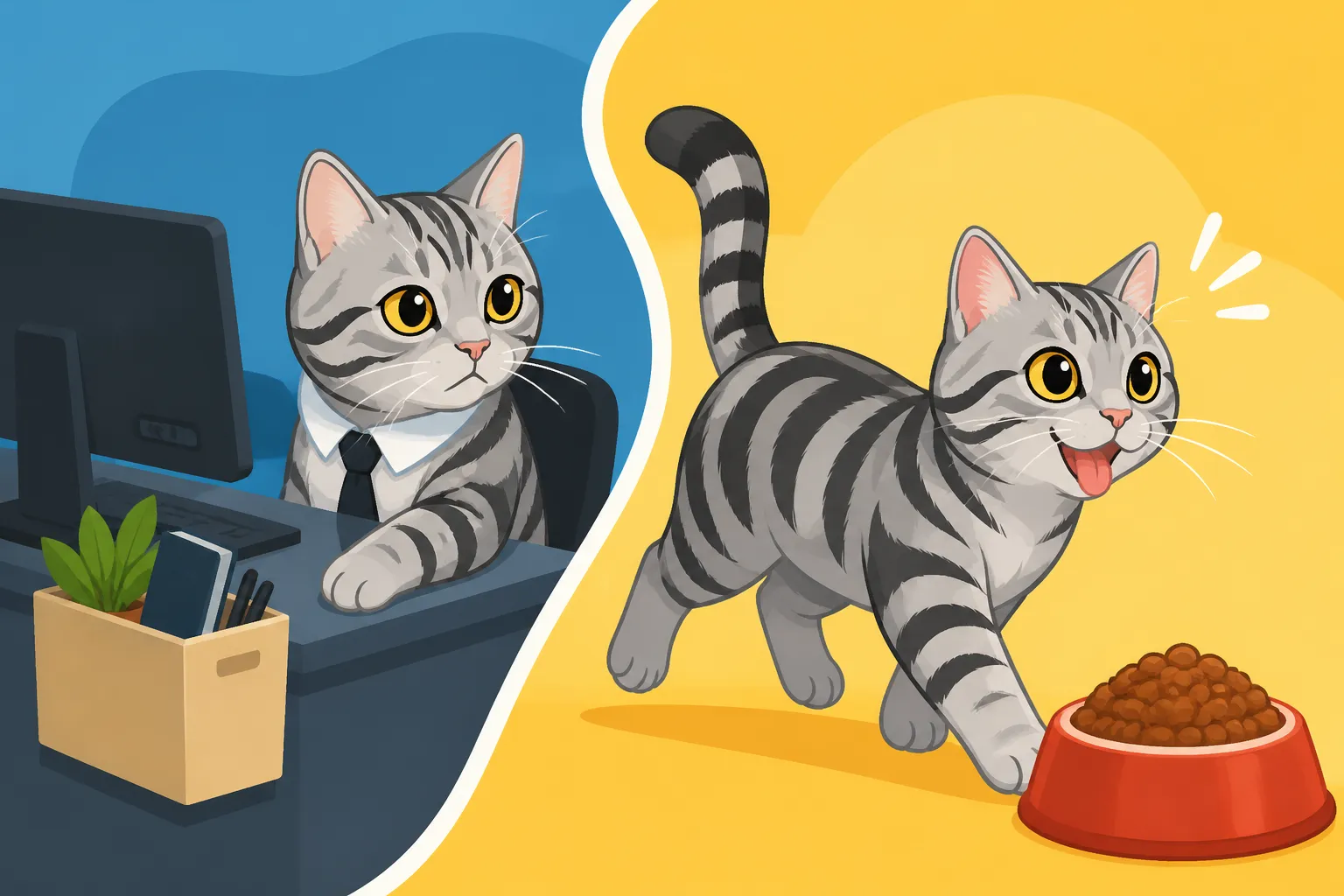
The American Shorthair, despite its refined pedigree today, started life as a no-nonsense working cat. These weren't pets carefully bred for looks; they were essential members of early American households, responsible for protecting valuable food stores from vermin. This demanding "job" instilled in them certain traits that, while invaluable centuries ago, can pose a challenge in our cushy modern homes.
Centuries of Earned Meals
Imagine the lives of their ancestors. These were cats that truly had to earn every meal. They weren't given perfectly portioned, highly palatable kibble twice a day. Their sustenance depended entirely on their hunting prowess. A good mouser was a well-fed mouser, but there were no guarantees. A lean day meant a hungry day, and that constant pressure ingrained a powerful "eat when you can, as much as you can" mentality deep within their genetic code. They were, quite literally, survivors.
This history has left a lasting legacy. For hundreds of years, these cats operated under a "feast or famine" principle. When prey was abundant, they ate. When it was scarce, they went hungry. Their bodies evolved to efficiently utilize every calorie, storing reserves when food was plentiful to tide them over during lean times. This means that even a small amount of "extra" food can quickly translate into stored energy, which, in a sedentary environment, becomes excess weight. This ingrained drive is why understanding Why Centuries of Ratting Left the American Shorthair Its Drive is so crucial to their modern care. They still feel that primal urge, even if their pantry is full.
The Metabolism of a Mouser
Beyond just the psychological drive, the American Shorthair's physiology is still largely that of a highly efficient predator. Their bodies are optimized for bursts of intense activity – a sudden pounce, a chase, a climb – followed by long periods of rest and vigilance. This isn't the metabolism of a marathon runner, but rather a sprinter designed for powerful, short-duration efforts. Their digestive systems are built to process animal protein and fat from their catches, and their bodies are incredibly adept at turning those nutrients into energy or storing them for later.
This metabolic efficiency, once a survival advantage, now often works against them. When an American Shorthair lives a life where food is freely available and physical exertion is minimal, their efficient metabolism means they don't burn off excess calories easily. They convert them into fat at a rate that can be surprisingly quick, even if the portions seem reasonable to us. They were built for a life of calorie expenditure that few modern housecats experience. It's a testament to their hardy origins, but it requires a conscious effort from us to manage.
Modern Life: A Conflict of Instinct and Reality
The disconnect between your American Shorthair's ancient programming and their comfortable modern existence is at the heart of their persistent hunger and tendency toward weight gain. We've removed the "job" but not the inherent drive it created.
The Sedentary Lifestyle of an Indoor Hunter
Consider the daily life of an indoor American Shorthair. They wake up, maybe wander to the window for some bird-watching (mental hunting, but zero calories burned), nap in a sunbeam, eat, nap again, perhaps bat at a toy for a few minutes, then demand more food. This is a far cry from stalking fields, climbing trees, and chasing down prey for hours each day. Their genetic blueprint still screams "hunt!", but their reality is a plush sofa and a full food bowl.
This lack of actual, calorie-burning activity means their caloric needs are significantly lower than their ancestors'. Yet, the internal "signal" to seek out and consume food remains strong. They still have the ingrained energy of a mouser, but nowhere to truly channel it. What an Indoor American Shorthair Does With a Mouser's Instinct is often a sad compromise between their nature and their environment. We've domesticated their surroundings, but not fully their instincts. This can lead to frustration, boredom, and ultimately, an overreliance on the one thing they can control: eating.
The Psychological Connection to Food
For many American Shorthairs, food isn't just fuel; it can become a significant source of comfort, a way to alleviate boredom, or even a form of interaction with their humans. When their innate hunting and exploration drives aren't adequately met, the act of eating, or even just asking for food, can fill a void. We, as their loving owners, often contribute to this without even realizing it. A plaintive meow, a rub against the leg, and we immediately head for the food cupboard, reinforcing the idea that "food equals attention/comfort."
It's easy to fall into this trap. Our American Shorthairs are typically quiet and undemanding cats, so when they do ask for something, we want to respond. But if that something is always food, it creates a cycle. They get bored, they ask for food, we give food, they feel temporarily satisfied, and the pattern repeats. Over time, this psychological connection can override any natural hunger cues, leading them to eat simply because it's available, it's routine, or it's a way to engage with us. This is why Why a Bowl Left Down Undoes an American Shorthair is such a critical point for owners to understand; free-feeding removes any earned element from the meal.
Strategies for Managing Your American Shorthair's Enduring Hunger
The good news is that with understanding and a few intentional changes, you can help your American Shorthair maintain a healthy weight and satisfy their innate drives, even in a modern home. It's about working with their instincts, not against them.
Rethinking Mealtime: From Bowl to Battle
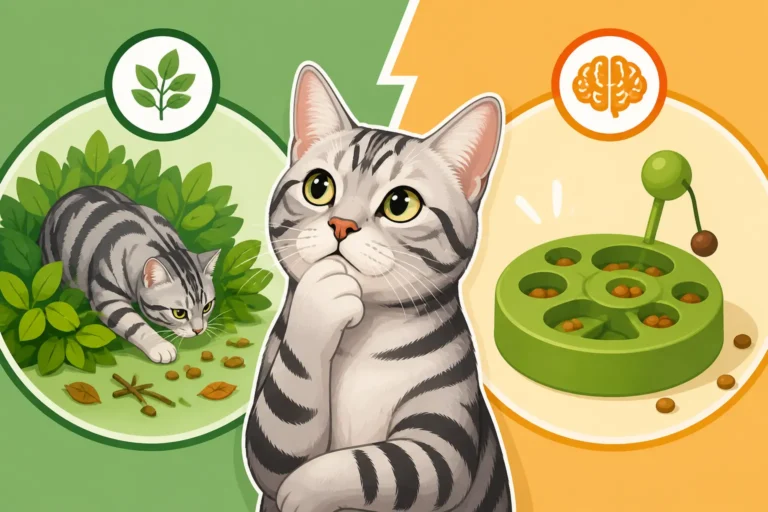
One of the most impactful changes you can make is to reintroduce the concept of "earning" their meal. Instead of simply placing a bowl of food down, turn mealtime into a mini-hunt. This engages their minds and bodies, providing mental stimulation and calorie expenditure.
There are fantastic tools available to help with this. Puzzle feeders are a game-changer. These aren't just toys; they require your cat to manipulate them to release kibble, simulating the effort of a hunt. You can find a wide variety on platforms like Chewy or Amazon, from simple balls with holes to more complex mazes. Start with easy ones to build their confidence, then gradually increase the difficulty. You can also hide small portions of their dry food around the house in different locations, encouraging them to "patrol" their territory and discover their meals, just as their ancestors would have done. Making an American Shorthair Work for Its Dinner Again transforms eating into an enriching activity.
Consider these options for making mealtime more engaging:
| Type of Feeder | Description | Benefits |
|---|---|---|
| Dispensing Ball | A simple sphere with holes; kibble falls out as the cat bats it around. | Easy to start with, promotes batting and rolling, good for beginners. |
| Slow Feeder Bowl | Bowls with ridges or mazes that force cats to eat more slowly. | Prevents scarf-and-barf, extends mealtime without requiring complex interaction. |
| Puzzle Box/Board | Multi-compartment feeders where cats must lift lids, push levers, or dig. | High mental stimulation, mimics foraging behavior, varied levels of difficulty. |
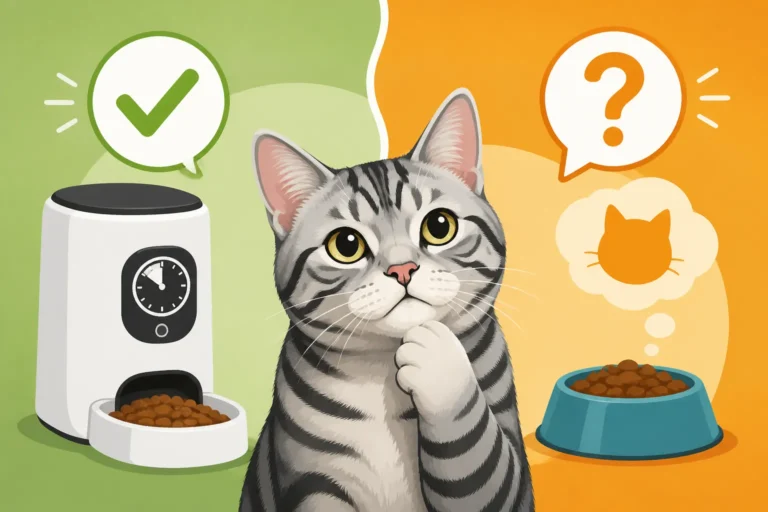
| Automatic Feeder | Dispenses pre-set portions at scheduled times. | Ensures consistent portions, can spread meals throughout the day, prevents overfeeding. |
Remember, the goal is to slow down consumption, stimulate their minds, and make them engage their hunting instincts in a safe, controlled way. If you're wondering Whether a Puzzle Feeder Replaces an American Shorthair's Hunt, the answer is that it certainly helps to fulfill that innate drive, even if it's not a live mouse.
Calorie Control and Appropriate Nutrition
Beyond how they eat, what and how much they eat are paramount. The American Shorthair is a sturdy, muscular cat, but they don't need excessive calories, especially if they're not actively hunting. It's crucial to consult your veterinarian to determine the precise caloric needs for your individual cat, as these can vary based on age, activity level, and whether they are spayed or neutered. Generally, a high-quality food with a good protein-to-fat ratio is best. Fresh food options can be precisely portioned and are often very palatable, encouraging consistent consumption without overdoing it.
Portion control is non-negotiable. Free-feeding, where food is left out all day, is a recipe for obesity in a breed with such a strong appetite. Divide their daily caloric allowance into two or three small meals. This mimics their natural eating pattern of smaller, more frequent "catches." Understanding How Many Calories a Working Framed American Shorthair Needs a Day will empower you to feed them correctly. Also, remember that Why a Neutered American Shorthair Puts On Weight Faster is a real factor, as neutering can reduce metabolic rate, meaning they need even fewer calories.
Enriching the Environment to Satisfy Instincts
Food isn't the only way to satisfy an American Shorthair's inner hunter. Environmental enrichment is key to keeping them physically active and mentally stimulated, which in turn can reduce boredom-related eating.
- Interactive Play: Dedicate at least 15-20 minutes daily to interactive play with wand toys. These toys, mimicking birds or rodents, allow your cat to stalk, chase, pounce, and "kill." This fulfills the hunting sequence that their ancestors lived by. It's incredible How Much Simulated Hunting an American Shorthair Needs to truly feel satisfied.
- Vertical Space: Provide cat trees, shelves, or cat-friendly climbing structures. American Shorthairs are natural climbers and enjoy surveying their territory from above. This exercise burns calories and provides mental stimulation.
- Window Perches: A comfortable window perch allows them to observe the outside world, engaging their predatory instincts without leaving the safety of home.
- Rotate Toys: Keep a variety of toys and rotate them regularly to maintain interest. A toy that's been put away for a few weeks feels new again.
A cat that is mentally stimulated and physically tired from play is a cat less likely to seek comfort or entertainment in their food bowl.
Recognizing and Addressing Weight Gain
Even with the best intentions, weight gain can creep up on an American Shorthair. Their stoic nature and sturdy build can sometimes mask the early signs, making it even more important for owners to be vigilant.
Spotting the Subtle Signs of Extra Weight
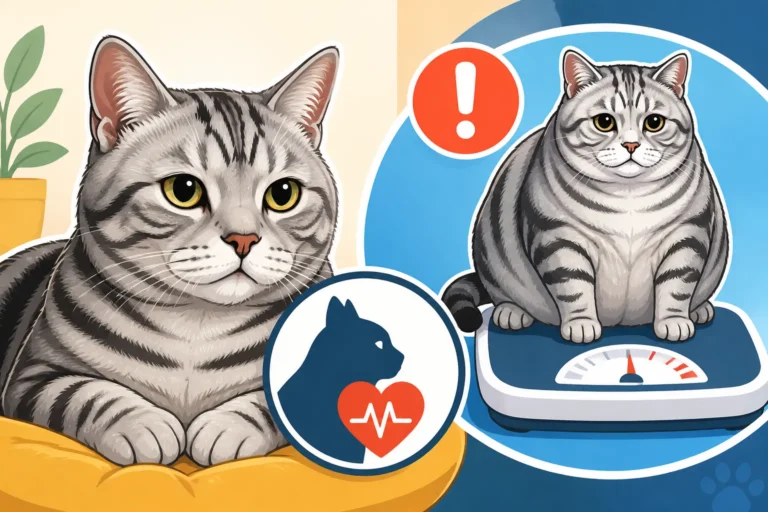
Because American Shorthairs are typically broad and muscular, it can be tricky to tell if they're carrying extra weight just by looking at them. They don't always look "fat" in the same way some other breeds might. Instead, look for subtle changes. Can you easily feel their ribs when you gently run your hands along their sides, without pressing hard? If you have to press firmly to feel them, they're likely overweight. When viewed from above, do they have a noticeable "waistline" indentation just behind their ribs? Or do they look more like a solid, continuous rectangle?
A helpful way to assess this is the "rib check" and the "waist check." Gently run your hands along their sides: you should feel the ribs with just a slight layer of fat over them. Then, look down at your cat from above. There should be a slight inward curve where their "waist" would be, just before their hips. If they look perfectly smooth or even bulge out, it's a red flag. How to Spot Weight Gain on a Square Built American Shorthair is an important skill every American Shorthair owner should master. Ignoring these signs can lead to serious health issues down the line, as What Extra Weight Does to an American Shorthair's Working Frame is significant, impacting their joints and overall mobility.
Partnering with Your Vet for a Healthy Plan
If you suspect your American Shorthair is gaining too much weight, the most important step is to consult your veterinarian. They can accurately assess your cat's body condition score, rule out any underlying medical conditions contributing to weight gain, and help you formulate a safe and effective weight loss plan. Never try to drastically cut your cat's food on your own, as rapid weight loss in cats can lead to a dangerous condition called hepatic lipidosis, or fatty liver disease.
Your vet might recommend a specific prescription diet formulated for weight loss, which are typically high in protein and fiber to help your cat feel full while consuming fewer calories. They will also guide you on portion sizes and set realistic weight loss goals. This partnership is crucial for their long-term health. How a Vet Builds an American Shorthair's Weight Loss Plan often involves regular weigh-ins and adjustments to the diet and exercise routine. Remember, consistency is key, and it's a marathon, not a sprint. Over time, uncontrolled weight gain can lead to serious conditions like diabetes, making it essential to address early. It’s important to understand How Weight Turns Into Diabetes in an American Shorthair to appreciate the severity of this risk.
Disclaimer
This article is for general informational purposes only and does not constitute professional advice. Laws, prices and regulations vary by location and change over time. Consult a qualified professional for guidance on your specific situation.