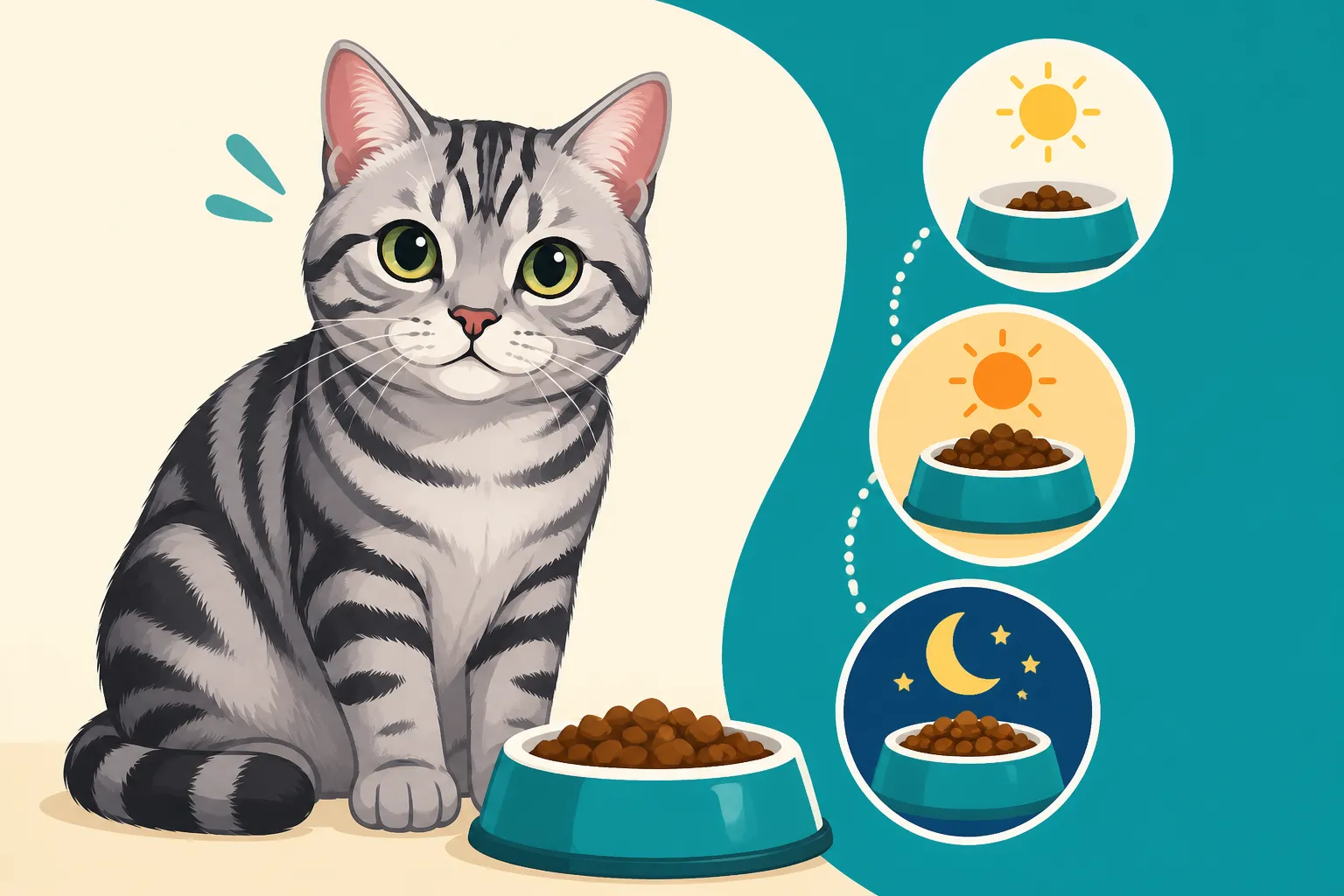
How Much to Put Down for an American Shorthair at Each Meal
One of the biggest worries I hear from American Shorthair owners, especially new ones, is about feeding. It feels like a constant battle to figure out just how much food to put in their bowl. These magnificent cats were bred for a working life, and they still carry that hearty appetite, but with most of them living a much more sedentary indoor existence, it's easy for them to pack on the pounds. This guide is all about helping you nail down the right portion sizes for your American Shorthair, ensuring they stay healthy and happy without overdoing it.
Understanding Your American Shorthair's Unique Metabolism and Instincts
When we talk about American Shorthairs, it's crucial to remember their roots. These aren't dainty, ornamental breeds; they're descendants of hardy working cats brought over on ships to keep vermin in check. This history has imbued them with a robust physique, a strong hunting drive, and an efficient metabolism designed to sustain them through periods of activity and potentially leaner times. The challenge for us modern owners is that their daily caloric expenditure has plummeted, but their internal programming still whispers "eat up, winter is coming!"
Think about it: an American Shorthair ancestor on a farm might spend hours patrolling barns, stalking prey, and defending its territory. That level of physical exertion burned a tremendous amount of calories. Today's beloved house cat, however, might spend its day napping in sunbeams, chasing a toy mouse for ten minutes, and then napping some more. The instinct to consume sufficient calories for a high-energy lifestyle remains, but the actual need does not. This discrepancy is often where the battle against an expanding waistline begins. You might notice that your American Shorthair seems to always be hungry, even shortly after a meal. This isn't necessarily a sign you're underfeeding them; it's often just their ancient programming at work, telling them to seize every feeding opportunity. It takes a conscious effort from us, their human companions, to manage this instinct responsibly. Understanding Why Ending the Mousing Job Made the American Shorthair Heavy is key to appreciating this challenge.
Furthermore, the American Shorthair typically has a solid, muscular build. This isn't fluff; it's a dense frame. Because of this, it can be deceptively easy to miss subtle weight gain until it becomes a significant problem. A little extra padding on a smaller, finer-boned cat might be immediately obvious, but on a sturdy American Shorthair, it can blend in with their natural musculature. Many owners don't realize their cat is creeping towards being overweight until they can no longer easily feel their ribs or discern a waist. This stoic nature also means they rarely complain about minor discomforts, so they might not let on that their joints are starting to ache from the extra load until the problem is quite advanced. This makes precise portion control even more critical from day one. You can read more about What Extra Weight Does to an American Shorthair's Working Frame to understand the implications.
Calculating Your American Shorthair's Daily Caloric Needs
Alright, let's get down to the numbers. There's no one-size-fits-all answer for how much to feed, because every American Shorthair is an individual. Their age, activity level, whether they're spayed/neutered, and their current body condition all play a huge role. The goal is to provide enough calories to maintain an ideal body weight, which means being able to easily feel their ribs without seeing them, having a visible waist when viewed from above, and a slight abdominal tuck from the side.
The best starting point is to consult with your veterinarian. They can assess your cat's body condition score and give you a precise caloric recommendation based on their current health and target weight. However, for a general guideline, we often talk about a range of calories per pound of ideal body weight. Typically, an adult, spayed or neutered indoor cat might need around 20-25 calories per pound of ideal body weight daily. An intact, highly active outdoor cat might need more, while a senior, sedentary indoor cat might need less. Let's say your American Shorthair should ideally weigh 12 pounds. At 20-25 calories per pound, that's roughly 240-300 calories per day. This number needs to be adjusted if your cat needs to lose weight or gain weight, but it's a solid baseline.
Factors Influencing Caloric Needs
Several key factors can drastically change your American Shorthair's caloric requirements. Overlooking these can easily lead to over- or underfeeding.
- Age: Kittens are growing rapidly and are little energy furnaces! They need significantly more calories per pound of body weight than an adult cat. As they transition into adulthood, their caloric needs will stabilize. Then, as they enter their senior years, their metabolism can slow, and their activity might decrease, necessitating a reduction in calories to prevent weight gain. Caring for an American Shorthair Past Twelve touches on the changes that occur.
- Activity Level: This is huge. An American Shorthair that spends its day chasing sunbeams and bird-watching from the window needs far fewer calories than one that's actively engaged in vigorous play sessions multiple times a day. If you've been inspired by articles like Play That Finishes the Hunting Sequence for an American Shorthair and are really getting your cat active, you might find they need a touch more food. Conversely, if your cat is truly a couch potato, you'll need to be quite strict with portions.
- Spay/Neuter Status: Neutering or spaying typically reduces a cat's metabolic rate and can increase their appetite. This is why many cats tend to gain weight after the procedure. If your American Shorthair was recently spayed or neutered, you'll likely need to slightly reduce their food intake compared to before to maintain their ideal weight. It's a very common scenario, and Why a Neutered American Shorthair Puts On Weight Faster explains why this happens.
- Current Body Condition: If your American Shorthair is already overweight, you'll be aiming for a controlled weight loss plan, which means feeding fewer calories than they need to maintain their current, heavier weight. If they are underweight, the goal is to gradually increase calories until they reach a healthy body condition. Again, your vet is your best resource for these specific adjustments.
Here's a simplified table to give you a rough idea, but remember, this is NOT a substitute for vet advice. Always check the specific calorie count on your chosen cat food's label.
| American Shorthair Status | General Caloric Range (per lb of ideal body weight) | Example for a 12lb Ideal Cat |
|---|---|---|
| Kitten (up to 1 year) | 30-40 calories | 360-480 calories/day |
| Active Adult (intact) | 25-30 calories | 300-360 calories/day |
| Less Active Adult (spayed/neutered indoor) | 20-25 calories | 240-300 calories/day |
| Senior (less active) | 18-22 calories | 216-264 calories/day |
| Weight Loss (mildly overweight) | 15-20 calories (under vet supervision) | 180-240 calories/day |
Always double-check the back of your cat food bag or can for their specific feeding guidelines, as calorie densities vary greatly between brands and formulas.
Breaking Down the Daily Intake: How to Portion Meals Effectively
Once you have that magic daily caloric number, the next step is to divide it up into meals. For American Shorthairs, given their ancestral habits, I generally recommend feeding at least two to three smaller meals a day, rather than leaving a huge bowl of kibble out all day long. This approach taps into their natural pattern of smaller, more frequent "hunts" and can help prevent gorging and subsequent begging.
Leaving a bowl down all day, often called "free feeding," can be a recipe for disaster for many American Shorthairs. Their strong appetite, a legacy from their working past, means they're not always great at self-regulating. Why a Bowl Left Down Ruins an American Shorthair is something I've seen play out in countless homes. They might eat out of boredom, stress, or just because the food is there, leading to a steady creep of extra pounds. Portioning their food into specific meals means you are in control, not their instinctual hunger. Plus, it gives you the chance to monitor their appetite, which can be an early indicator of health issues.
Let's use our 12-pound ideal American Shorthair example, needing around 270 calories per day. If their food has, let's say, 350 calories per cup (this is just an example, always check your specific food!), that means they need about 0.77 cups of food per day (270 / 350 = 0.77). If you're feeding two meals a day, that's roughly 0.38 cups per meal. If you're doing three meals, it's about 0.25 cups per meal. Using a proper measuring cup, not just a random scoop, is absolutely critical for accuracy. Believe me, those little differences add up over time.
Choosing the Right Food and Delivery System
The type of food you choose also impacts portioning. High-quality wet food tends to have fewer calories per serving than dry kibble, mainly due to its higher water content. This can be fantastic for making your cat feel fuller with fewer calories, and it also contributes to their overall hydration. Many owners find their American Shorthairs thrive on a mix of wet and dry food. A wide range of options is available, from traditional kibble to various wet foods and even fresh-prepared meals, catering to different preferences and dietary needs. Just remember to account for the calories from both types of food in their daily total.
Consider using puzzle feeders or slow feeder bowls for some of your American Shorthair's meals. These aren't just toys; they're vital enrichment tools that make your cat "work" for their food, mimicking their natural hunting behaviors. Instead of gobbling down a meal in 30 seconds, they have to use their brains and paws to extract kibble, which slows down eating, increases mental stimulation, and can help prevent boredom-related overeating. You can find a huge variety of these on Amazon or other pet supply stores. Making an American Shorthair Work for Its Dinner Again can be a game-changer for their mental and physical health.
Adjusting for Life Stages and Lifestyle Changes
Your American Shorthair's caloric needs aren't static; they'll ebb and flow throughout their life. What works for a playful kitten won't work for a sedate senior, and ignoring these changes can lead to preventable health issues. Regular check-ups with your vet are paramount to ensure your cat's diet evolves with them.
Kittens to Young Adults
An American Shorthair kitten is a bundle of boundless energy. They're growing at an incredible rate, building bone and muscle, and exploring their world with gusto. This demands a higher caloric intake and a diet formulated specifically for growth. Don't be shy about feeding your kitten generously, within reason, according to the guidelines on quality kitten food. As they approach their first birthday, their growth will start to slow, and it's time to begin transitioning them to an adult formula. This is a critical period to monitor their weight. Many American Shorthairs take up to three years to fully fill out, but their rapid growth phase is mostly over by a year, making it easy to overfeed them into early obesity if you don't adjust their portions. You can find more details on What an American Shorthair Kitten Should Eat.
Adult Maintenance and Weight Management
For most of their adult lives, your American Shorthair will fall into the "maintenance" category. This is where those daily caloric calculations we discussed earlier really come into play. It's not a set-it-and-forget-it deal, though. Weigh your cat regularly – once a month is ideal – to catch any creeping weight gain early. Even a half-pound here or there can make a difference over time. If you notice they're gaining weight, first try reducing their portion by about 10% and reassess in a few weeks. If they're losing weight unexpectedly, a vet visit is in order. Remember, these cats are robust, and a healthy adult American Shorthair should feel firm and muscular, not squishy. If you're struggling with weight, your vet can help create a specific plan, often involving prescription diets available from your vet or through online retailers like Chewy with a prescription. How to Spot Weight Gain on a Square Built American Shorthair can give you helpful tips for early detection.
Senior American Shorthairs
As your American Shorthair enters their golden years, typically around 10-12 years old, their needs will shift again. Their metabolism might slow, their activity levels will likely decrease, and they may start to develop age-related health conditions. This often means a further reduction in calories is needed to prevent senior obesity. However, some senior cats can actually start to lose muscle mass, and for them, a higher-protein diet might be recommended to help maintain muscle. It's a fine balance, and watching their body condition closely becomes even more important. Dental health can also become an issue, making wet food more appealing or necessary if chewing kibble becomes painful. A good senior cat food will also be formulated with joint support and other nutrients beneficial for aging felines. A conversation with your vet about Caring for an American Shorthair Past Twelve is essential as they age to tailor their nutrition to their evolving health.
Ultimately, portioning for your American Shorthair is an ongoing, attentive process. It's not about strict denial, but about responsible management of their powerful instincts and tailoring their diet to their unique life. You've got this!
Disclaimer
This article is for general informational purposes only and does not constitute professional advice. Laws, prices and regulations vary by location and change over time. Consult a qualified professional for guidance on your specific situation.