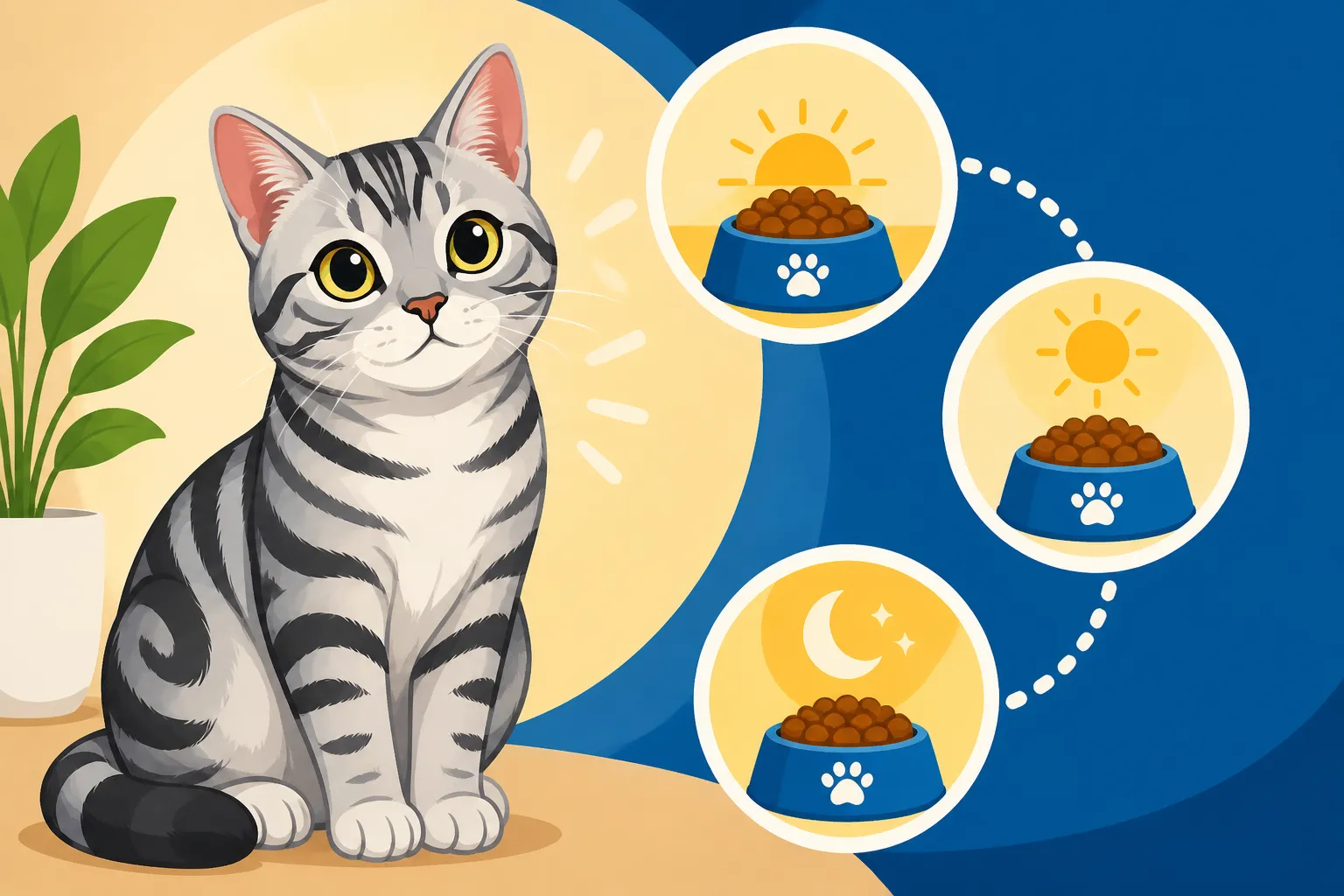
Why Three Small Meals Suit an American Shorthair
One of the most common struggles for American Shorthair owners, especially those new to the breed, is managing their cat's weight and appetite. You see that broad, muscular frame and think, "My goodness, this cat must need a hearty meal!" But the truth is, a large, infrequent meal can actually work against their natural physiology and lead to a whole host of issues, from digestive upset to frustrating weight gain. This guide is all about diving deep into why feeding your American Shorthair three smaller, more frequent meals throughout the day isn't just a good idea, but often the optimal approach for their health and happiness.
Understanding the American Shorthair's Ancestral Eating Habits
To truly appreciate why smaller, more frequent meals are best for your American Shorthair, we need to take a little trip back in time and understand how their ancestors ate. These cats weren't lounging on velvet cushions; they were working animals, earning their keep. Their bodies are still finely tuned to that historical rhythm, even if their modern lives are far more luxurious.
The Hunter's Metabolism
Think about a cat in the wild, or even a barn cat from a few decades ago. They aren't sitting down to a massive buffet once or twice a day. Instead, they're constantly on the hunt, stalking, pouncing, and catching small prey like mice, voles, and birds. Each successful hunt provides a relatively small amount of food. This means their digestive system evolved to process these smaller portions quickly and efficiently.
Their metabolism is geared towards short bursts of activity followed by rest, fueled by these mini-meals. When they catch a mouse, it's digested, and the energy is used. Then, they might rest for a bit before the hunger pangs, or perhaps just the instinct, sends them out to hunt again. This natural pattern prevented long periods of fasting followed by a sudden overload of food. Their bodies are excellent at converting these frequent, small protein sources into lean muscle and sustained energy, rather than storing large amounts of fat. This continuous, low-level intake kept their blood sugar stable and their energy consistent throughout the day, allowing them to remain vigilant and ready for the next hunt.
Evolution of the Modern American Shorthair's Diet
Fast forward to today, and most American Shorthairs live comfortable, indoor lives. The "job" of mousing has largely been replaced by chasing laser pointers or napping in sunbeams. While this shift certainly has its perks (fewer outdoor dangers, for one!), it also presents a challenge to their ancient physiology. Suddenly, a cat whose ancestors ate 10-15 small meals a day is being offered one or two large bowls of highly processed kibble.
This drastic change means their bodies, which are still essentially those of a proficient hunter, are now trying to adapt to a vastly different eating pattern. The primal drive to eat when food is available, a survival mechanism from lean times, can lead to overeating when a large bowl is left down all day. The natural inclination to patrol and hunt for food is replaced by a sedentary existence where food appears as if by magic. This lack of mental and physical engagement during mealtime, combined with larger portions, can easily lead to a calorie surplus that the body, no longer burning energy through constant hunting, quickly stores as fat. It's a fundamental mismatch between their genetic blueprint and their modern environment, and it's a key reason why we need to be thoughtful about how we feed them.
The Physiological Benefits of Smaller, More Frequent Meals
Switching to a multi-meal approach isn't just about managing hunger; it’s about aligning their diet with their inherent biology, which offers significant physiological advantages.
Stabilizing Blood Sugar and Energy Levels
Imagine you only ate one huge meal a day. You'd likely feel sluggish after, then ravenously hungry hours later. Cats experience similar fluctuations, though perhaps less overtly. When an American Shorthair eats a large meal, especially one high in carbohydrates (common in many dry kibbles), their blood sugar can spike. Their pancreas releases a rush of insulin to bring it down, and often, it overcorrects, leading to a blood sugar crash. This rollercoaster can manifest as periods of high energy or even hyperactivity, followed by lethargy, irritability, and intense hunger.
By offering three smaller meals, you create a much more stable environment for their internal systems. The consistent, smaller intake of nutrients helps to regulate glucose levels, avoiding those dramatic spikes and crashes. This leads to more consistent energy throughout the day – less napping in the afternoon because they’re recovering from a carb coma, and less frantic begging because they’re actually feeling satisfied. This stable blood sugar is not only better for their mood and activity levels, but it also reduces the long-term strain on their pancreas, a critical factor in preventing conditions like feline diabetes.
Supporting Digestive Health
Cats, including the American Shorthair, have relatively short digestive tracts designed for processing meat quickly. They aren't grazers like herbivores with long, complex systems for breaking down fibrous plant matter. When they consume a large volume of food in one sitting, their digestive system can get overwhelmed.
Smaller, more frequent meals are simply easier for their bodies to handle. Each portion is processed more efficiently, allowing for optimal nutrient absorption and reducing the likelihood of digestive upset. Think about it: a cat's stomach isn't a bottomless pit; it has a finite capacity. Overfilling it can lead to discomfort, regurgitation (which many owners mistakenly call vomiting), and even diarrhea. Some cats, particularly those who eat too quickly, might even gulp air, leading to gas or bloating. Distributing the daily caloric intake into three smaller meals means less strain on the stomach and intestines. This gentler approach helps to prevent indigestion, reduces the chance of undigested food passing through too quickly, and ensures that your American Shorthair can extract the maximum nutrition from every bite. It’s a kinder, more natural way to fuel their robust systems.
Combating Weight Gain and Obesity Risks
One of the biggest modern health concerns for American Shorthairs is obesity, and their feeding schedule plays a huge role in this. Their natural robust build can sometimes hide creeping weight gain, making it vital to be proactive.
The Link Between Meal Frequency and Satiety
The American Shorthair's appetite, honed by centuries of working for its meals, often outlasts its need for actual calories in a sedentary indoor environment. Why an American Shorthair's Appetite Outlasted Its Job explains this phenomenon well. If you only feed your American Shorthair once or twice a day, those long stretches between meals can trigger intense hunger. When they finally get fed, they're more likely to gorge themselves, leading to overeating because their primal brain is screaming "Eat it all, you don't know when you'll get more!" This feeling of extreme hunger, even if they're getting enough calories overall, can be really distressing for a cat.
Breaking their daily food allowance into three smaller meals helps them feel fuller and more satisfied throughout the day. Instead of experiencing severe hunger pangs, they receive consistent signals that food is available and they don't need to panic. This sustained satiety can significantly reduce begging behavior and the psychological stress associated with waiting for food. When a cat feels adequately fed, they are less likely to overeat during each meal, ultimately helping to manage their total caloric intake and prevent the dreaded weight creep. It’s about managing both their physical hunger and their ingrained mental association with food scarcity.
Preventing Metabolic Slowdown
When an American Shorthair, or any cat, goes for long periods without food, their body can interpret this as a time of scarcity. In response, their metabolism may slow down as a survival mechanism, trying to conserve energy and store any available calories as fat, just in case. This is a brilliant evolutionary trait for a wild animal facing unpredictable food sources, but it's counterproductive for our well-fed indoor companions.
If your American Shorthair is only fed once or twice a day, those long stretches can inadvertently trick their body into this "starvation mode." Even if they consume their full daily calories in those one or two meals, their body might be predisposed to store fat more readily due to the metabolic slowdown between feedings. Conversely, providing three smaller, regular meals sends a consistent signal to their body that food is abundant. This helps to keep their metabolism active and efficient, encouraging their body to burn calories for energy rather than hoarding them. Given how few calories an indoor American Shorthair burns compared to their hunting ancestors, How Few Calories an Indoor American Shorthair Burns highlights why keeping their metabolism optimally functioning is crucial for maintaining a healthy weight. This proactive approach helps your American Shorthair stay lean, active, and less prone to the health issues associated with obesity.
Practical Implementation: Shifting to a Three-Meal Schedule
Making the switch to a new feeding routine can feel a bit daunting, especially if your American Shorthair is set in their ways. But with a little patience and consistency, it's absolutely achievable and well worth the effort.
Transitioning Your American Shorthair
Cats are creatures of habit, and suddenly changing their meal schedule can be a source of stress. The key is to make the transition gradual. If your cat is currently eating two meals a day, start by splitting one of those meals in half and offering the third portion mid-day. For instance, if they eat at 8 AM and 6 PM, try an 8 AM, 1 PM, and 6 PM schedule. Slowly adjust the quantities so that their total daily caloric intake remains the same, just divided into more frequent servings. This allows their digestive system to adapt, and more importantly, helps your cat adjust psychologically to the new rhythm of food availability.
Consistency is paramount. Try to stick to the new schedule as closely as possible every day, even on weekends. Cats thrive on routine, and knowing when their next meal is coming helps to alleviate anxiety and reduce begging outside of mealtimes. Observe your American Shorthair carefully during this transition. Are they finishing their smaller meals? Are they begging excessively? Adjust the timing or portion sizes slightly if needed, but avoid giving in to demands between meals, as this can reinforce unwanted behavior. Remember, you're training both yourself and your cat!
Choosing the Right Food and Portions
Once you've got the schedule down, the next step is ensuring you're feeding the right type and amount of food. For an American Shorthair, a cat built for muscle, Which Food Suits an American Shorthair Built for Muscle emphasizes the importance of a high-protein, moderate-fat, and low-carbohydrate diet. Wet food is often an excellent choice because its high moisture content can help with hydration and provide a greater feeling of fullness with fewer calories, which is a huge bonus in weight management.
When it comes to portions, precision is key. Don't just eyeball it. Your veterinarian can help you determine the exact caloric needs for your American Shorthair based on their age, activity level, and ideal weight. Once you have that daily caloric target, you'll divide it by three. For example, if your cat needs 200 calories a day, each meal would be roughly 67 calories. Use a kitchen scale to measure food accurately, especially if feeding dry kibble, as measuring cups can be notoriously inaccurate. You can find a wide variety of high-quality wet and dry foods on platforms like Chewy or Amazon, making it easy to research and order options that fit your cat's dietary needs. Some specialized fresh food services can even deliver pre-portioned meals directly to your door, taking the guesswork out of calorie counting. Remember, How Much to Put Down for an American Shorthair at Each Meal is a delicate balance, and getting it right is crucial for their health.
Addressing Common Challenges and Advanced Strategies
Even with the best intentions, changing a cat's feeding habits can come with a few bumps in the road. Knowing how to handle these challenges will make the process smoother for both you and your American Shorthair.
Managing Begging and Early Morning Hunger
This is probably the most common frustration for owners! If your American Shorthair is used to free-feeding or only getting two meals, they might protest the new, smaller portions and the wait between them. Early morning hunger is particularly notorious, as cats are often most active at dawn and dusk. The crucial thing to remember is that Why a Bowl Left Down Undoes an American Shorthair is often the culprit for unhealthy eating habits, so resisting the urge to just put down more food is vital.
To combat begging, try to distract them. Engage them in a short play session with a wand toy a little before their scheduled mealtime. This mimics their natural hunting sequence and can help them "earn" their meal. If they wake you up early for food, try to shift their last meal of the day to just before you go to bed, or even consider an automatic feeder that dispenses their first morning meal a few minutes before you usually get up. These can be found on Amazon or Chewy and are a lifesaver for early risers. Ignoring attention-seeking meows (as long as you know they're not genuinely unwell) and only rewarding calm behavior can also teach them that polite requests are more effective than demanding ones. Consistency here is key, as giving in "just once" can set you back significantly.
Incorporating Enrichment into Feeding
For American Shorthairs, whose ancestors had to work for every bite, simply putting food in a bowl, even three times a day, can miss an important element of their natural behavior. Their brains are wired for the hunt, and mealtime is an opportunity to tap into that instinct. Making an American Shorthair Work for Its Dinner Again can provide significant mental and physical enrichment.
This is where puzzle feeders shine. Instead of a bowl, try placing a portion of their meal in a puzzle toy that requires them to bat, roll, or manipulate it to get the food out. This slows down their eating, prevents gulping, and provides mental stimulation. You can find a wide array of puzzle feeders suitable for American Shorthairs on Chewy or Amazon, ranging from simple food mazes to more complex interactive toys. If you're feeding dry kibble, consider scattering a portion of it around the room, making them "hunt" for it. For wet food, you can use slow-feeder bowls with ridges or spread it thinly on a lick mat. These activities not only make mealtime more engaging but also burn a few extra calories, which is always a good thing for an indoor cat. The goal is to make eating an activity, not just a passive consumption of calories.
Long-Term Benefits and Overall Wellness
Adopting a three-meal-a-day schedule for your American Shorthair is more than just a temporary fix for a problem; it's an investment in their overall, long-term well-being.
Enhanced Quality of Life
When an American Shorthair is fed according to its physiological needs, with stable blood sugar, a healthy metabolism, and a satisfied tummy, their entire quality of life improves. They tend to be more even-tempered, less prone to anxiety-related behaviors (like excessive grooming or destructive tendencies born from boredom or hunger), and more engaged with their environment and with you. Their coat often looks shinier and healthier because their body is absorbing nutrients more efficiently.
Maintaining a healthy weight, which this feeding schedule greatly facilitates, has profound impacts on their lifespan and vitality. Less strain on their joints, lower risk of conditions like diabetes and heart disease, and better overall mobility mean more active, playful years with your companion. The Fifteen to Twenty Years the American Shorthair Was Given is a precious gift, and proper nutrition is a cornerstone of maximizing that time. You'll likely find yourself with a more contented, energetic cat that is truly thriving, rather than just existing.
Signs of a Well-Fed American Shorthair
So, how do you know if your three-meal-a-day plan is working wonders for your American Shorthair? There are several clear indicators of a truly well-fed cat. First and foremost, their weight. A healthy American Shorthair should have a noticeable waist when viewed from above, and you should be able to easily feel their ribs with gentle pressure, without them being visible. How to Judge an American Shorthair's Ideal Weight by Frame is a great resource for understanding their unique build. They shouldn't have a saggy belly unless it's a primordial pouch, which is distinct from fat.
Beyond their physical condition, look for behavioral cues. A well-fed American Shorthair will have consistent energy levels, engaging in play and exploration without excessive lethargy or frantic bursts. Their coat will be glossy and smooth, indicating good nutrient absorption. Their litter box habits should be regular and consistent, with firm, well-formed stools. They'll also typically exhibit a calmer demeanor around meal times, less desperate begging, and a general sense of contentment. If you notice a sudden change in any of these areas, it's always wise to consult your veterinarian, but generally, a cat thriving on a three-meal schedule will radiate good health and happiness.
| Meal Frequency | Pros for American Shorthair | Cons for American Shorthair |
|---|---|---|
| Free-Feeding | Convenient for owners | High risk of obesity, metabolic slowdown, can encourage overeating, difficult to monitor intake, increased risk of digestive upset. |
| Once a Day | Simple for owners, less time-consuming | Long periods of hunger, blood sugar spikes/crashes, metabolic slowdown, increased risk of overeating, potential for digestive upset from large portions. |
| Twice a Day | Better than once a day, still fairly simple | Can still lead to periods of significant hunger, potential for blood sugar fluctuations, still a risk of overeating if portions are too large or cat is highly food-motivated. |
| Three Smaller Meals a Day | Mimics natural hunting pattern, stabilizes blood sugar, supports active metabolism, improves satiety, reduces begging, aids digestion, promotes healthy weight. | Requires more owner involvement and consistency, automatic feeders may be necessary for busy schedules, takes time to transition the cat. |
| Multiple Meals (4+ small meals) | Highly mimics natural hunting, excellent for metabolism and satiety, good for medical conditions requiring small, frequent intake. | Very high owner involvement, almost requires automatic feeders or very flexible schedule, can be harder to manage total daily calories precisely. |
Disclaimer
This article is for general informational purposes only and does not constitute professional advice. Laws, prices and regulations vary by location and change over time. Consult a qualified professional for guidance on your specific situation.