Which Generations an American Shorthair Pedigree Must Show
It’s easy to feel overwhelmed when looking at an American Shorthair’s pedigree paper, especially if you’re not sure what you’re even looking for or how many generations you should see. Many prospective owners feel a little lost, wondering if they’re getting the full picture of their future feline friend's lineage. This guide is here to demystify what an American Shorthair pedigree entails and why those ancestral lines matter for your future furry family member.
Understanding the American Shorthair Pedigree: More Than Just a Piece of Paper
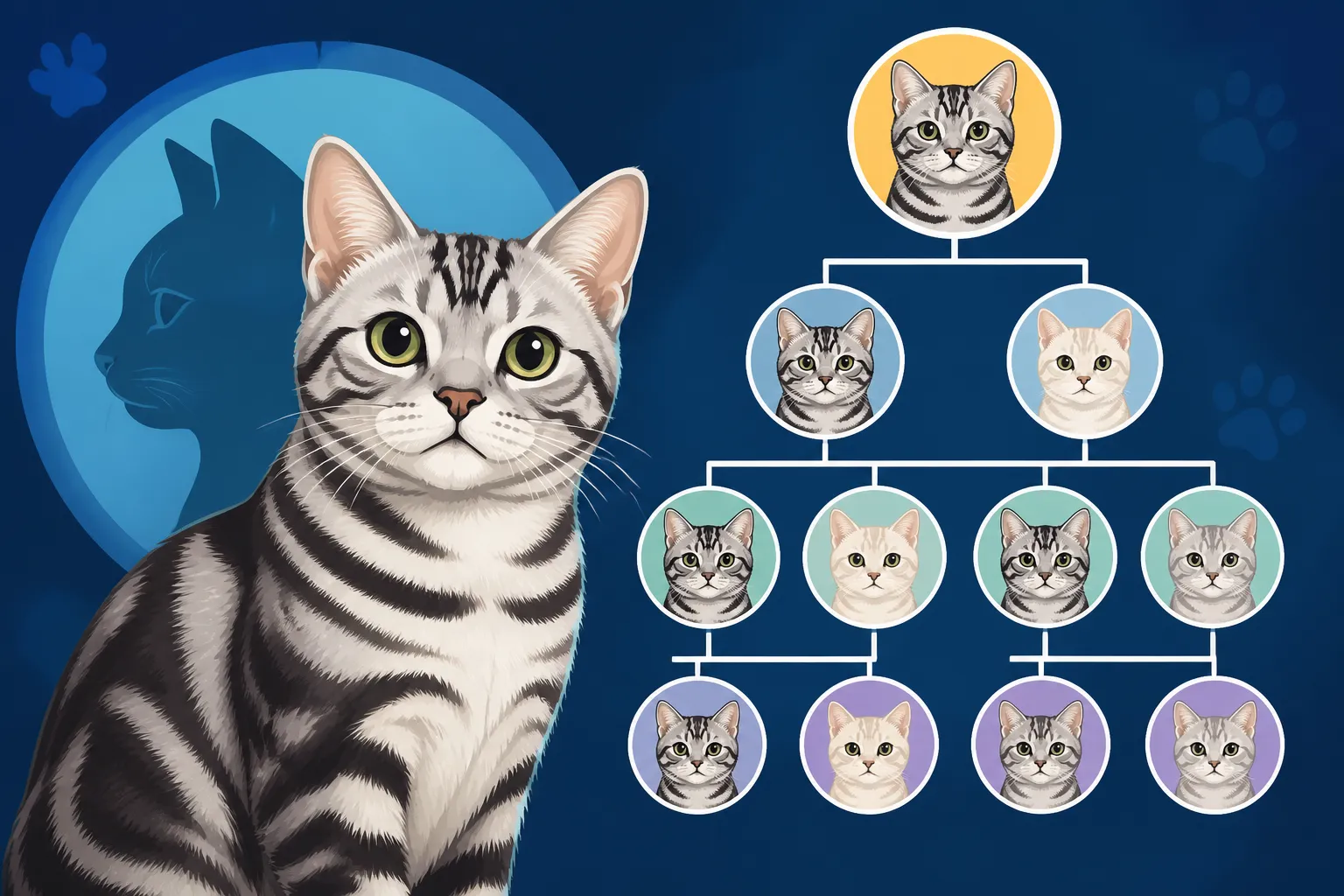
When you hear the term "pedigree" in the context of a purebred cat like the American Shorthair, it’s understandable to picture a fancy certificate, perhaps adorned with ribbons and seals. While that’s certainly part of it, a pedigree is fundamentally a detailed family tree, tracing your cat’s lineage back through several generations. It’s not just a vanity document; it’s a vital record that speaks volumes about the cat’s heritage, potential health, and even its likely temperament.
Many people confuse the simple registration slip you get from a breeder with the actual pedigree. The registration slip simply registers your cat with an organization like the Cat Fanciers' Association (CFA), confirming it’s recognized as a purebred American Shorthair. The pedigree, however, is the expansive document that lists the names, registration numbers, colors, and sometimes even titles of the ancestors for several generations back. Think of it this way: your birth certificate registers you, but your family tree is your pedigree. For new owners, this distinction can be a significant source of confusion, making it hard to know exactly what they’re paying for when they acquire a registered kitten. It’s important to understand that while a cat can be registered, having a full, multi-generational pedigree is a different level of detail altogether.
The Minimum Generations for a Recognised American Shorthair Pedigree
When you're looking at acquiring a registered American Shorthair, the breed's historical roots as hardy, working cats mean that their lineage is often deeply documented. Reputable registries like the CFA typically require a minimum number of generations to be recorded for a cat to be fully recognized and for its pedigree to be considered complete. Generally, for an American Shorthair, you should expect to see at least a three-to-five generation pedigree.
This isn't just an arbitrary number. This minimum allows for a basic tracing of the cat’s direct ancestors, helping to ensure that known genetic health issues or undesirable traits can be tracked and ideally, bred out. For instance, if you're concerned about HCM Is the One Inherited Disease the American Shorthair Kept, a three-generation pedigree might show you if any immediate ancestors carried the trait or had a history of heart issues. Without this minimum, it becomes incredibly difficult to verify the purity of the lines or to make informed decisions about future health and breeding, should that ever be a consideration. It’s a foundational document that connects your kitten to its documented breed history, proving that it isn't just a randomly bred tabby that looks like an American Shorthair. For more on distinguishing between similar-looking cats, you might want to read How to Tell an American Shorthair From a Random Bred Tabby.
Some breeders might offer what's sometimes called a "limited pedigree" or simply provide registration papers without the full multi-generational breakdown. While the cat itself might still be purebred and registered, this limited information can be frustrating. It means you have less data to work with regarding genetic predispositions, temperament trends, or conformation consistency in the lineage. Always ask for the full pedigree, specifying the number of generations, before committing to a kitten. This transparency is a hallmark of a responsible breeder who understands that Which Health Results an American Shorthair Breeder Must Show go hand-in-hand with a clear lineage.
Why a Deeper Pedigree Offers More Value for American Shorthair Owners
While a three-to-five generation pedigree is generally considered the minimum standard, a deeper pedigree—say, showing five generations or more—can offer significantly more value and peace of mind for an American Shorthair owner. It’s not just about having a longer scroll of names; it’s about the depth of information and the reassurance that comes with it.
Firstly, a more extensive pedigree provides a far clearer picture of the health history of the line. American Shorthairs are generally known for their robust health, a testament to their landrace origins. However, no breed is entirely immune to genetic quirks. The deeper the pedigree, the further back you can trace ancestors who may have been screened for specific conditions, or conversely, identify lines where certain issues did arise. This historical data is invaluable. Knowing that several generations of ancestors were routinely screened for Why an American Shorthair Still Needs a Yearly Heart Scan or hip issues (though less common in this breed) offers immense reassurance. This kind of detailed health tracking also impacts your pet insurance choices; companies like Healthy Paws often appreciate comprehensive breed histories when assessing potential risks and coverage needs.
Secondly, a deeper pedigree can provide insights into temperament and behavioral traits. American Shorthairs are celebrated for their laid-back, adaptable nature, fitting well into various household environments. If a cat's ancestors consistently produced offspring with desired traits—like being good with children or other pets, as discussed in An American Shorthair With Children, Dogs and Noise—it increases the likelihood that your kitten will exhibit similar characteristics. It’s not a guarantee, but it certainly offers a stronger predictive model for What an American Shorthair Pedigree Predicts About Temperament. You can start to see patterns in how long cats in the lineage lived, giving you a better understanding of The Fifteen to Twenty Years the American Shorthair Was Given for a healthy American Shorthair.
Finally, a more detailed pedigree helps to solidify the breed standard and type. In the American Shorthair world, consistency in conformation, coat type, and overall appearance is important. When you see many titled champions (like Grand Champions or Distinguished Merit cats) further back in the line, it indicates a strong commitment to breeding true to type. This means the breeder has been consistently producing cats that meet or exceed the breed standard. This depth ensures that the distinct, sturdy build and pleasant expression of the American Shorthair are maintained. It’s a mark of quality and thoughtful breeding practices that go far beyond just meeting the minimum requirements.
Decoding the Information Within an American Shorthair Pedigree
A pedigree, especially a deep one, can look like a complicated spreadsheet if you don't know what you're seeing. But once you understand the basic components, it becomes a fascinating story of your cat’s heritage. Beyond just names and registration numbers, there are specific elements that provide crucial information.
Here’s a breakdown of what to look for and how to interpret it:
Understanding Titles and Abbreviations
Look closely for prefixes and suffixes to names. These are often titles earned through show rings or breeding achievements:
- CH (Champion): A cat that has achieved a certain number of wins in cat shows.
- GRCH (Grand Champion): A cat that has achieved an even higher level of success than a Champion.
- DM (Distinguished Merit): Awarded to female cats who have produced a certain number of Grand Champion or Distinguished Merit offspring. This is a huge indicator of a strong breeding line, demonstrating consistent quality over generations.
- OD (Outstanding Dam): Similar to DM but for male cats, signifying that they have sired a certain number of Grand Champion or Distinguished Merit offspring.
Seeing these titles, especially multiple DMs or ODs, several generations back, indicates a strong, well-established line of American Shorthairs. It suggests that the cats weren't just registered, but actively participated in and excelled within the breed community. This directly relates to How to Find an American Shorthair Breeder Worth Paying For, as breeders who consistently produce titled cats are often more invested in the breed's health and standards.
Evaluating Health Clearances and Lineage Health
A pedigree itself doesn’t always list specific health test results, but it provides the framework for asking the right questions. With a detailed pedigree in hand, you can ask your breeder about the health screening history of specific ancestors.
| Pedigree Depth | Information Revealed | Benefits to Owner |
|---|---|---|
| 1-2 Generations | Immediate parents & grandparents | Basic verification of purebred status. |
| 3-5 Generations | Standard minimum, covers great-grandparents | Standard for registration; helps identify immediate risks. |
| 5+ Generations | Deep ancestral lines, multiple generations of breeders | Stronger health predictions, temperament consistency, breed type confirmation. |
If the breeder is transparent, they should be able to provide documentation or discuss the health outcomes of the cats in the pedigree. For example, they might have records of echocardiograms for HCM screening for the parents and grandparents, or attestations of longevity in the lines. This is crucial because while a pedigree proves lineage, Whether Papers Are the Only Proof of an American Shorthair is a different question when it comes to long-term well-being. Knowing the health history of ancestors allows you to consider potential long-term care needs, perhaps influencing your choice of diet or supplements, which you can easily source from pet supply providers like Chewy.
Identifying Inbreeding and Outcrossing
A pedigree helps you visualize the genetic diversity within a line. While some degree of "line breeding" (breeding related cats to fix certain traits) is common and acceptable in purebreds, seeing too many repeated names too close in the family tree can be a red flag for excessive inbreeding. This can sometimes lead to reduced genetic diversity and a higher risk of inherited health problems. A reputable breeder will explain their breeding choices and demonstrate a healthy balance. Looking at How Wide the American Shorthair's Gene Pool Really Is can give you a better context for understanding acceptable breeding practices.
A detailed pedigree allows you to see if any outcrosses (breeding to another breed) were used in the distant past to introduce new genetics, and then how the line was bred back to pure American Shorthair. While less common in established breeds like the American Shorthair today, understanding the genetic background is vital for maintaining the breed's integrity. For instance, if you're looking for an American Shorthair with a particularly robust immune system or consistent body type, looking for healthy, diverse lines, even within the purebred framework, is key. Even if your American Shorthair is from a robust lineage, providing them with high-quality, biologically appropriate food can help maintain their natural vigor and contribute to a long, healthy life.
The Long-Term Benefits of a Comprehensive Pedigree
Choosing an American Shorthair kitten from a breeder who provides a thorough, multi-generational pedigree isn't just about initial bragging rights or proving your cat is "real." It's an investment in understanding the potential future of your pet. This depth of information allows you, as an owner, to make more informed decisions throughout your cat's life.
For instance, if you understand the genetic predispositions of the line for certain conditions, you and your vet can be proactive in preventative care. This foresight can potentially save on emergency vet bills and help your cat enjoy a higher quality of life. Knowing the typical lifespan of cats in the lineage, as explored in How Long the American Shorthair Lives Against Other Pedigrees, can also shape your expectations and help you appreciate every year with your beloved companion.
Ultimately, a detailed pedigree is a testament to a breeder's dedication and transparency. It’s a tool that empowers you, the owner, with knowledge—knowledge that is invaluable for the health, happiness, and longevity of your American Shorthair. Don't be shy about asking for it, and take the time to truly understand what it means. It's a foundational step in bringing a well-bred, healthy, and happy American Shorthair into your home.
Disclaimer
This article is for general informational purposes only and does not constitute professional advice. Laws, prices and regulations vary by location and change over time. Consult a qualified professional for guidance on your specific situation.