Which Films Feature an American Shorthair
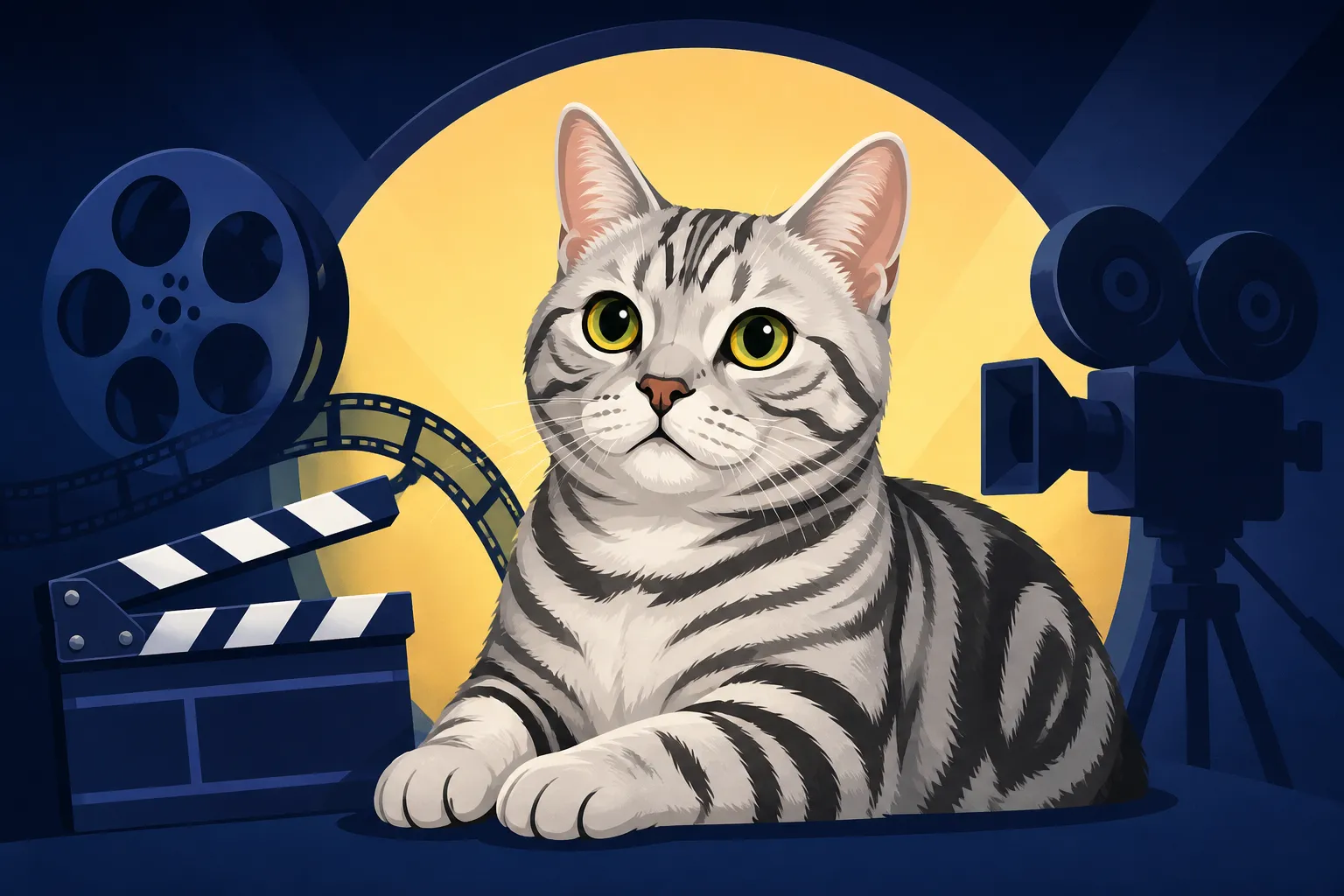
A cat on screen may have the round face, dense coat, and tabby markings people associate with an American Shorthair, but appearance alone cannot confirm its breed. Film credits rarely identify a cat’s pedigree, so a reliable answer needs to separate documented American Shorthairs from familiar movie cats that merely look similar.
Why American Shorthairs Are Hard to Identify on Screen
A tabby pattern is not a breed certificate
American Shorthairs come in many colors and patterns, including the silver tabby look that has become closely associated with the breed. But tabby markings are not exclusive to American Shorthairs. Domestic Shorthairs—the general term for shorthaired cats without a documented pedigree—can have similar stripes, colors, and sturdy builds.
That overlap is why online lists sometimes label a movie cat an American Shorthair based on a photo alone. A close-up might show a broad face and a striped coat, but it cannot establish the cat’s ancestry. Even a strong resemblance to the breed standard is not the same as confirmation that a cat was registered as an American Shorthair.
If you are comparing a screen cat with the breed, it helps to know What an American Shorthair Looks Like by the Standard. The standard describes a type of cat; it does not identify every similarly built cat as a member of the breed.
Film publicity usually names the character, not the breed
Film credits and publicity materials tend to focus on a cat’s character name, the animal’s role, or the trainers involved. Breed details may be omitted entirely. When multiple cats share a role, the publicity may also discuss the animal performers as a group rather than identify each cat’s background.
That leaves a gap between what viewers can see and what can responsibly be claimed. A film may feature an orange tabby, for example, without providing enough information to say whether the performer was an American Shorthair, a mixed-breed cat, or another type of domestic cat.
A useful rule is to treat a breed claim as unconfirmed unless credible production information or the animal’s documented history supports it. This is especially important when discussing older films, where accessible publicity often gives little detail about animal actors.
Famous Movie Cats Often Mistaken for American Shorthairs
Jonesy in Alien
Jonesy, the orange cat aboard the Nostromo in Alien, is one of cinema’s most recognizable feline characters. The film gives the cat a memorable presence, but the character’s orange coat does not establish a specific breed. Without reliable pedigree information, it is safer to describe Jonesy as an orange cat rather than call him a confirmed American Shorthair.
The distinction may seem small, but it matters if you are searching for films that genuinely feature the breed. Jonesy can be a useful visual comparison: he has the short coat and familiar tabby-cat appearance that viewers may associate with an American Shorthair, but resemblance is not evidence of registration or ancestry.
The cats in Breakfast at Tiffany’s and Captain Marvel
The unnamed cat known as Cat in Breakfast at Tiffany’s is another familiar orange tabby on screen. The animal actor Orangey is often discussed in connection with the role, but the film’s cat character is not reliably established as a pedigreed American Shorthair. The same caution applies: orange tabby describes appearance, not breed.
In Captain Marvel, Goose is a central part of the story, and several cats were used to portray the character. Their coats and faces may remind viewers of ordinary shorthaired tabbies, but the film’s character is a fictional Flerken, not a breed showcase. The performers’ individual breed backgrounds should not be inferred from their roles or coloring.
| Film | Cat character | What can be said with care |
|---|---|---|
| Alien | Jonesy | A recognizable orange cat; a confirmed American Shorthair pedigree is not established by the film’s appearance |
| Breakfast at Tiffany’s | Cat | An orange tabby character; color alone does not verify breed |
| Captain Marvel | Goose | A fictional Flerken portrayed by cats; the character is not proof of an American Shorthair identity |
| Inside Llewyn Davis | Ulysses | An orange cat central to the story; avoid assigning a breed without reliable documentation |
These movies feature cats that may look familiar to American Shorthair fans, but that is different from having a documented American Shorthair in the cast. For a wider look at common breed mix-ups, see What People Get Wrong About the American Shorthair and How to Tell an American Shorthair From a Random Bred Tabby.
Ulysses in Inside Llewyn Davis
Ulysses, the cat in Inside Llewyn Davis, becomes a memorable presence as the story moves through New York City. The cat’s orange coat makes it easy to group him visually with other famous ginger movie cats. Yet a character’s coloring—and even a similar body shape—does not confirm American Shorthair ancestry.
This is a good example of why breed labels can spread through repetition. A viewer sees an orange cat, finds a page describing it as a particular breed, and then sees the claim repeated elsewhere. Unless the claim can be traced to reliable information about the animal itself, it is more accurate to call Ulysses an orange domestic cat.
How to Check Whether a Film Really Features an American Shorthair
Look for evidence about the performer, not just the character
Start by separating the fictional character from the real animal actor. A character may have a name, personality, and appearance designed by a screenwriter or production team. The cat used on set is a real animal, and its breed can only be established through information about that performer.
Useful evidence might include a credible production account that names the animal and identifies its breed, or reliable documentation from the cat’s owner or breeder. A fan page that simply describes a striped cat as an American Shorthair is not enough on its own. If sources repeat the same unsourced claim, repetition does not make it better evidence.
When a role was played by more than one cat, check whether the information refers to all the animal performers or just one. Different cats may have been used for different scenes, so even a confirmed breed for one performer would not automatically apply to every cat appearing as the same character.
Be cautious with breed databases and lookalike photos
Breed databases can be useful starting points, but short entries may repeat information without explaining where it came from. Photos are even less conclusive. A cat can match the American Shorthair’s general look without being a pedigree cat, just as a pedigreed American Shorthair may not resemble the silver tabby image many people expect.
The same caution applies to DNA testing. A visual resemblance or a broad ancestry estimate is not the same thing as a documented pedigree. For more context, read Whether a DNA Test Tells an American Shorthair From a Moggy and Whether a Domestic Shorthair and an American Shorthair Differ Genetically.
A practical way to assess a claim is to ask three questions:
- Does the information name the real cat actor, rather than only the fictional character?
- Does it identify a reliable source for the breed claim?
- If several cats played the role, does the claim specify which performer it describes?
If those details are missing, describe what is visible—such as “orange tabby” or “shorthaired cat”—rather than presenting the breed as fact.
Finding American Shorthairs in Film and at Home
Search for documented breed mentions, not just famous cat characters
When looking for movies featuring American Shorthairs, use searches that include terms such as “animal actor,” “film production,” and the cat’s performer name. This can help distinguish an actual breed credit from a casual description based on appearance. It is also worth checking whether a film’s publicity identifies the cat as a particular breed or simply calls it a tabby or domestic cat.
You may find that the most famous screen cats are not confirmed American Shorthairs. That does not make the films less enjoyable, and it does not mean the cats were not wonderful performers. It simply means a careful list should label the evidence honestly. At present, the safest answer is that several famous movie cats resemble American Shorthairs, but their screen appearances alone do not verify that they were pedigreed members of the breed.
For historical background on the breed’s public image, see Which Cat Made the Silver Tabby American Shorthair Famous and Which Advertising Cat Was an American Shorthair. Those topics also help explain why people often connect a classic tabby look with the breed, even when a film cat’s identity is uncertain.
Let a movie inspire curiosity, not an assumption about temperament
It is easy to fall for a breed after seeing a confident, clever cat on screen. But film behavior is shaped by training, editing, and the needs of a story. A movie cat that seems unusually brave or affectionate is not a reliable guide to how every American Shorthair will behave at home. Individual cats vary, and their early experiences and living arrangements matter.
If a movie inspires you to prepare a cat-friendly home, focus on ordinary needs rather than trying to recreate a character. A secure resting place, scratching options, appropriate play, and a predictable routine are more useful than choosing supplies based on a film scene. If you are browsing for toys or everyday cat essentials, Chewy is one place to compare available options; check the product details and choose items that suit the individual cat. Chewy listings can also be a starting point for comparing different toy styles, but the cat’s play habits should guide the choice.
For example, a cat drawn to chasing may enjoy a supervised wand-toy session, while another may prefer a puzzle feeder or a quiet window perch. Chewy’s selection may help you browse those categories, but always use toys safely and put away items with strings or small parts when play is over. And if you are considering adoption or a breeder, make the decision around the animal’s needs and verified background—not the assumption that a movie character’s personality comes with a breed label.
Disclaimer
This article is for general informational purposes only and does not constitute professional advice. Laws, prices and regulations vary by location and change over time. Consult a qualified professional for guidance on your specific situation.