Why the CFA Registered a Working Cat as the American Shorthair
A sturdy barn cat and a pedigreed show cat may look like they belong in different worlds, but the American Shorthair has roots in both. The Cat Fanciers’ Association registered a working-cat type because breeders wanted to preserve a useful, recognizable American cat—not simply reward any shorthaired tabby. Understanding that choice means separating the breed’s practical origins from the formal rules that later defined it.
The working cat behind the American Shorthair
A practical cat, shaped by everyday work
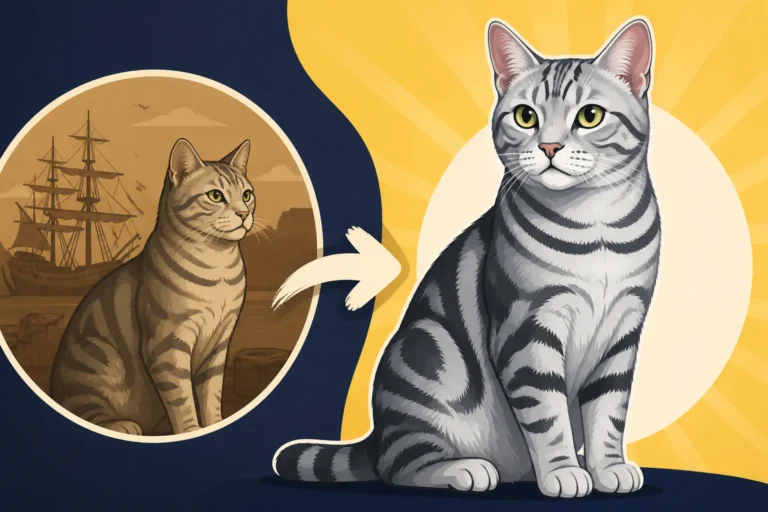
The American Shorthair’s ancestors were domestic cats valued for their usefulness. On farms, in homes, and aboard ships, cats helped keep rodents under control. Their lives called for alertness, strength, and the ability to cope with changing conditions—not a particular coat color or a carefully sculpted show-ring profile.
Those cats were not all identical, and they did not begin as a formally organized breed. They were part of a broad population of domestic shorthairs. Over generations, people favored cats that could do the job: sturdy animals with strong bodies, good coordination, and coats that offered protection from ordinary weather. The breed’s square, muscular look reflects that history, although no single feature can prove that an individual cat descends from working lines.
This practical background is part of why the American Shorthair is sometimes described as a natural or landrace-derived breed. That description points to a population shaped over time by everyday conditions, rather than one created by selecting for a dramatically unusual trait. It does not mean every cat that hunted mice was automatically an American Shorthair. For more on that distinction, see How Farm Work Shaped the American Shorthair.
Why a working population needed formal recognition
By the time cat shows and breed registries became more organized, breeders faced a choice: treat the native shorthaired cat as an undifferentiated domestic type, or define and preserve a particular version of it. Registration offered a way to record ancestry and encourage breeders to maintain recognizable features across generations.
That mattered because an informal population can change. Cats may be bred with imported or fashionable types, and their offspring may gradually look or behave differently from the cats people originally wanted to preserve. A written breed standard could give breeders a shared description to work toward, while registration could track which cats belonged to documented breeding lines.
The motivation was not that working cats had suddenly become less useful or needed to be made fancy. Rather, the show world was developing systems for naming, recording, and judging cats. The native shorthaired type could be included in that system, with its own identity instead of being treated as a miscellaneous category. The broader historical path is explored in Where the American Shorthair Comes From and Why the American Shorthair Was Called Domestic Shorthair Until 1966.
Why the CFA registered the type
A registry could preserve a recognizable American cat
The Cat Fanciers’ Association’s early recognition of the American Shorthair’s predecessor reflected a practical decision: a locally established type of cat was worth documenting. The CFA did not register every working cat simply because it was a good mouser. Registration connected particular cats to an organized breeding population and a developing standard.
That distinction is easy to miss. “Working cat” describes a role and a history; “registered breed” describes a documented population managed according to registry rules. A cat could be an excellent farm mouser without having the pedigree records needed for breed registration. Likewise, registration did not mean every American Shorthair had to work on a farm or catch rodents to qualify as a pet.
The CFA’s role was therefore not to turn all ordinary cats into pedigree cats. It was to make a defined type visible within the emerging world of cat fancy. The breed’s history also sits within the CFA’s early development, discussed in The American Shorthair Was One of the CFA's Five Founding Breeds.
Why recognition did not erase the cat’s practical character
A breed standard provides a common description, but it does not automatically replace a cat’s underlying temperament or history. American Shorthairs continued to be valued as sturdy, adaptable companions. The show standard helped distinguish the breed as a consistent type; it did not require the cat to become delicate, dependent, or highly specialized.
This is one reason the breed’s story differs from accounts of breeds developed around an extreme body shape or a narrow set of unusual traits. The American Shorthair was recognized as a defined breed while retaining a relatively practical outline. That does not make every individual free of health or behavior concerns, and it does not guarantee that a particular cat will enjoy hunting, children, or apartment life. It does explain why the standard emphasizes balance and substance rather than an exaggerated feature.
A useful way to think about the decision is that the CFA registered a recognizable lineage, not a job description. A modern American Shorthair may spend its days watching birds through a window rather than patrolling a barn. Its historical role helps explain the type, but it should not be treated as a promise about an individual cat’s abilities. Related context appears in What the American Shorthair Standard Asks For and Whether the American Shorthair Still Works on Farms.
From “Domestic Shorthair” to “American Shorthair”
Why the old name caused confusion
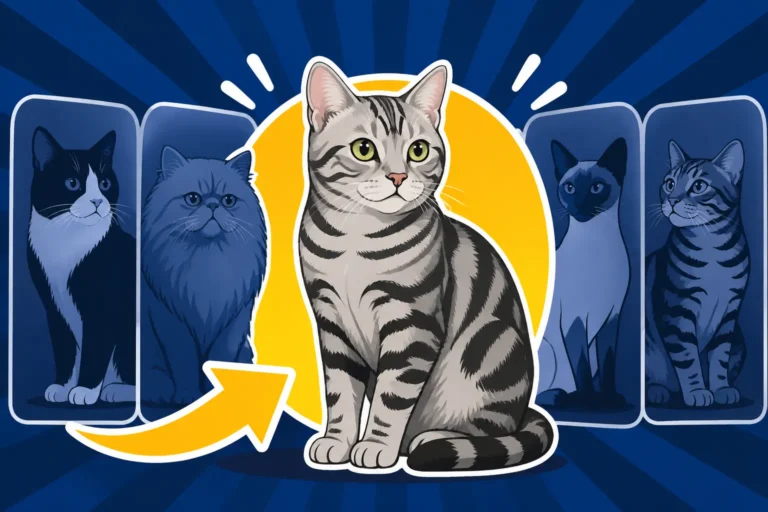
The early name “Domestic Shorthair” described a broad category, not just the ancestors of the modern American Shorthair. It could refer to many shorthaired cats with different backgrounds and appearances. That made it difficult to tell whether someone meant a registered breed or simply a shorthaired domestic cat.
As cat breeding became more formal, the name became a problem for breeders trying to establish a distinct identity. A registered cat with a documented lineage could be mistaken for any shorthaired cat, while an unregistered tabby might be casually described using the same words. The label did not communicate the difference between a breed standard and a general coat type.
The name change to American Shorthair in 1966 helped separate the breed from that broad category. It emphasized the breed’s established identity and its American history, rather than leaving it under a generic description. It did not mean that ordinary domestic shorthairs were inferior; they simply were not the same thing as a pedigree American Shorthair. The change is covered further in The Rename That Separated the American Shorthair From the Alley Cat and What Year the Name Changed to American Shorthair.
What registration means to a cat owner today
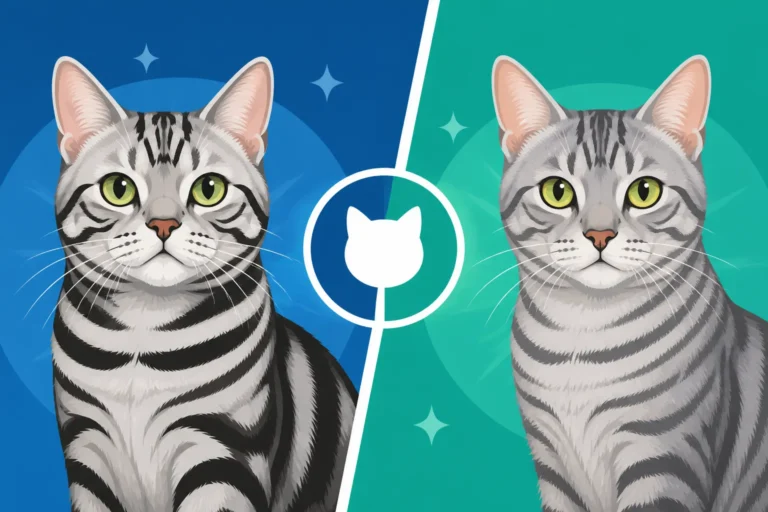
If you are looking at a cat who resembles an American Shorthair, appearance alone cannot establish that it is a registered member of the breed. Many domestic shorthairs have sturdy bodies, round faces, and tabby coats. A pedigree record and the breeder’s documentation are more meaningful than resemblance, while a DNA test should not be treated as a substitute for formal registration.
Retail and adoption listings can add to the confusion. A description on a pet retailer such as Chewy or an adoption page may use a breed name loosely to describe a cat’s appearance or likely type; that wording is not the same as registry documentation. When comparing a breeder’s claims, ask for the pedigree and supporting health records rather than relying on a photo or a label.
This distinction matters even if you are not planning to show or breed a cat. It helps set realistic expectations: pedigree can tell you about documented ancestry, but it cannot guarantee a particular personality, lifespan, or health outcome. For a closer look at the difference between a registered cat and a lookalike, read How an American Shorthair Differs From a Domestic Shorthair and Whether a Shelter Tabby Can Be Registered as an American Shorthair.
The working roots and the breed standard
What the standard carries forward
A breed standard turns broad qualities into a shared description that breeders and judges can use. In the American Shorthair, the desired impression is balanced and substantial: a strong, well-proportioned cat rather than one built around an extreme feature. That general image connects naturally with the breed’s practical past, even though the show standard is not a job test.
The connection is not literal. A broad chest does not prove a cat has ever worked, and a beautiful silver tabby pattern does not make a cat a better mouser. The standard is a guide to type, not a record of an individual animal’s achievements. A cat can be a beloved family companion without ever catching anything more ambitious than a toy.
The breed’s appearance also developed through selection by breeders and changing preferences among cat fanciers. The registered American Shorthair is therefore both connected to a working population and shaped by organized breeding. Those two facts are not contradictory: formal breeding can preserve a practical-looking type while also establishing its own standards and show identity.
How to read the history without overclaiming
It is tempting to say that the CFA registered the breed because it was the best mouser, or that every American Shorthair today is descended directly from a particular ship’s cat. Those claims go further than the history can support. The breed’s ancestors belonged to a wider population of domestic cats, and individual family trees are not always traceable back through centuries of informal breeding.
A more careful explanation is that domestic shorthairs with useful traits became part of a recognizable American type, and cat fanciers later organized that type through registration and standards. The CFA’s decision helped establish a formal identity for it. That identity has since been carried forward through documented breeding, not through a requirement that each cat prove its working skills.
For owners, that means the breed’s history is best understood as context, not a guarantee. It can explain the American Shorthair’s sturdy reputation and why it was worth distinguishing from a broad domestic category. It cannot tell you everything about a particular cat’s needs. If you are considering one, assess the individual animal’s temperament, health history, and living situation. A retailer such as Chewy may help you compare everyday supplies once you know what your cat needs, but a product listing cannot establish pedigree or replace veterinary guidance. And if you encounter the breed name in an adoption listing or online shop, including Chewy, treat the label as a starting point for questions rather than proof of registration.
Disclaimer
This article is for general informational purposes only and does not constitute professional advice. Laws, prices and regulations vary by location and change over time. Consult a qualified professional for guidance on your specific situation.