What a Classic Tabby American Shorthair Is
A classic tabby American Shorthair is recognized by the bold, swirling markings across its coat—not by a particular color or by the pattern alone proving its pedigree. Those curved stripes can be easy to confuse with other tabby patterns, especially in kittens or cats with muted coloring. This guide explains what to look for, how the pattern differs from a mackerel tabby, and what it does—and does not—tell you about the cat.
What a classic tabby American Shorthair looks like
The markings that define the classic pattern
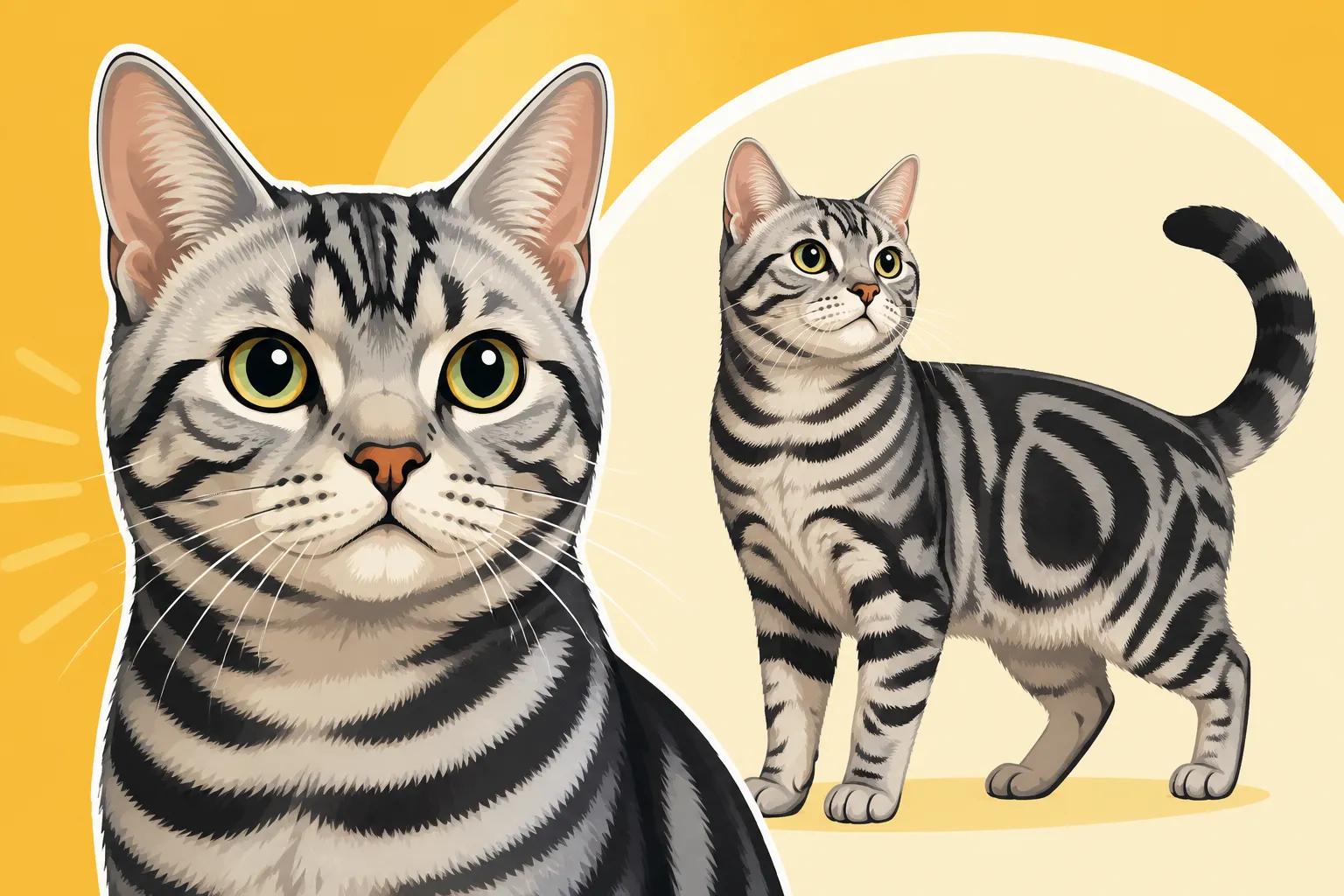
The classic tabby pattern is sometimes called blotched tabby. Instead of having mostly narrow, parallel stripes, a classic tabby has broad, curving bands and swirls along its sides. A large circular or oval marking on each flank can resemble a bullseye, though the shapes vary from cat to cat. The pattern does not need to be perfectly symmetrical to count as classic.
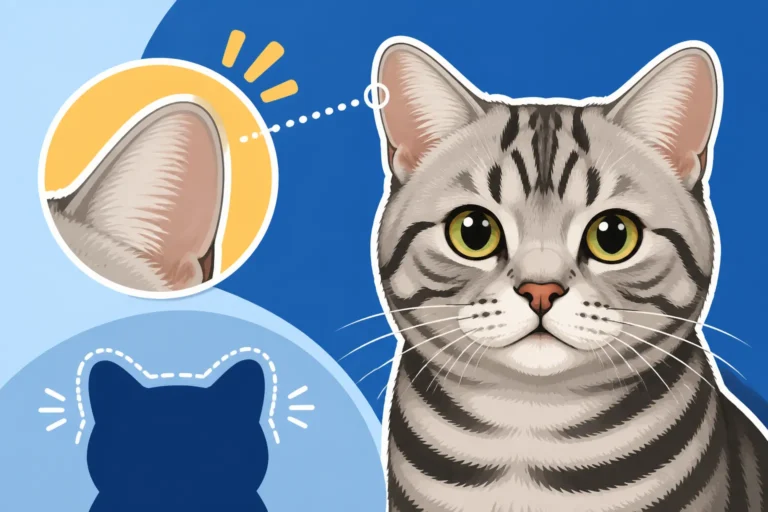
Look beyond the sides, too. Classic tabbies often have a dark line running along the spine, with bands or swirls connecting to the larger flank markings. The shoulders may show a butterfly-like shape, and the legs and tail usually have distinct bars or rings. Many tabbies also have an “M” marking on the forehead, though its contrast can be subtle on a pale or heavily shaded coat.
The American Shorthair’s coat is short and dense, so the markings usually sit close to the body rather than appearing long or flowing. The overall look can be crisp and high contrast, or softer and less sharply defined. Coat color, age, lighting, and individual variation all affect how clearly the pattern shows.
A classic pattern is not the same thing as a particular color. A cat can have classic tabby markings in more than one color combination. For an overview of the breed’s color range, see Which Colors an American Shorthair Comes In. The classic pattern is one of several tabby patterns that can appear within the breed.
The difference between a classic tabby and a mackerel tabby
The easiest way to tell the two patterns apart is to study the cat’s sides. A mackerel tabby typically has narrow, relatively straight stripes running down its body. A classic tabby has wider, more curved markings, often forming loops or large patches. In a quick glance, a busy classic pattern can still look striped, so it helps to follow the markings rather than judging by a single dark line.
The pattern can be less obvious when a cat is sitting, curled up, or viewed from above. If you can, look at the side of the body while the cat is standing. Check whether the markings form broad swirls or mostly separate vertical stripes. The legs and tail can provide additional clues, but they are less useful on their own because both patterns can have ringed tails and leg bars.
A classic tabby may have a light background with darker markings, but the contrast varies. A silver classic tabby, for example, has a pale silver-looking ground color and darker markings. That is a color-and-pattern combination, not a separate body type. For a closer look at how the silver version is described, see What a Silver Tabby American Shorthair Is. A mackerel pattern, by contrast, is known for its narrower stripe arrangement; What a Mackerel Tabby American Shorthair Is explains that pattern separately.
| Feature | Classic tabby | Mackerel tabby |
|---|---|---|
| Main body markings | Broad, curved swirls or blotches | Narrower, more parallel stripes |
| Side view | Often includes a large loop or bullseye-like marking | Usually shows stripes running down the sides |
| Pattern impression | Bold and sometimes marbled | More distinctly striped |
| Tail and legs | Often ringed or barred | Also often ringed or barred |
| Color | Can appear in several color combinations | Can appear in several color combinations |
How the pattern fits the American Shorthair breed
Pattern is only one part of the breed standard
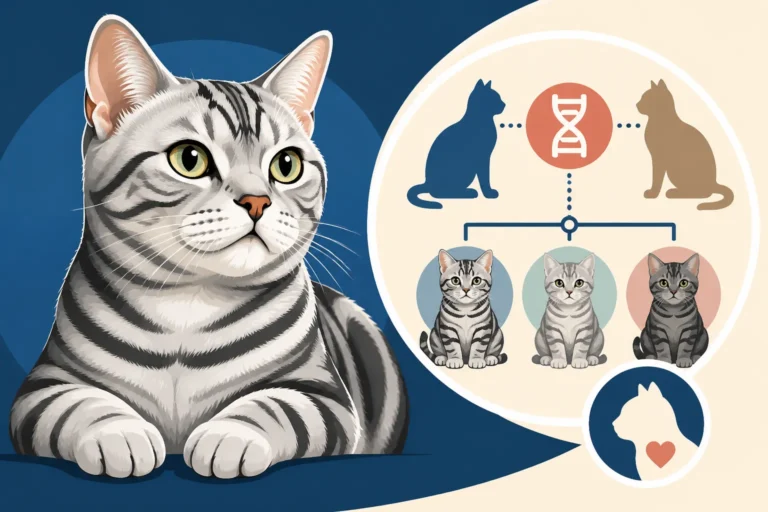
The word “classic tabby” describes the arrangement of a cat’s coat markings. “American Shorthair” refers to a recognized breed with a broader set of features, including its overall build, head shape, coat, and other characteristics. A cat’s tabby pattern cannot establish its breed by itself.
That distinction matters because many domestic shorthair cats have classic tabby coats. A cat from a shelter may look very much like an American Shorthair, but resemblance is not the same as documented ancestry. The breed’s appearance and registration involve more than a pattern that happens to match. For more on those differences, see How to Tell an American Shorthair From a Random Bred Tabby.
A classic tabby American Shorthair should be understood as a cat that has both the breed identity and the classic tabby pattern—not simply any shorthaired cat with swirls. If you are evaluating a kitten from a breeder, ask about its registration and family history rather than relying on a photograph or coat description. The breed standard includes details beyond color and markings; What the American Shorthair Standard Asks For is a useful companion topic.
Color and body type can change the overall impression
Two classic tabby American Shorthairs may look quite different from each other. One might have dark markings over a warm brown ground, while another has dark markings against a paler silver background. Even within similar color combinations, contrast and pattern width vary. The swirling layout is the key feature—not a single required shade.
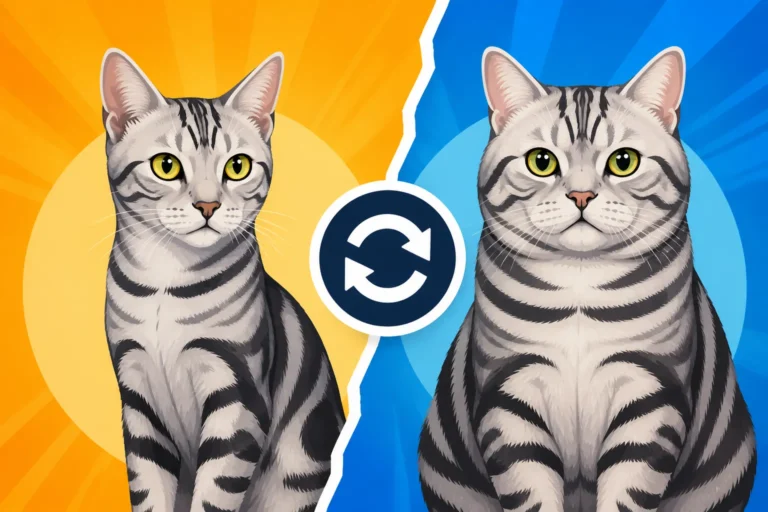
The breed’s sturdy, muscular frame can make its markings look especially bold. The cat’s proportions, posture, and coat density contribute to the impression of a strong, substantial animal, but no one weight or outline proves that a cat is a classic tabby or an American Shorthair. Individual cats mature at different rates, and a cat’s frame should be considered in context. For more on adult size and build, see How Big an American Shorthair Gets.
It is also common for people to focus on the most photogenic part of the coat, such as a dramatic flank swirl, and overlook the rest of the cat. In a real identification, look at the whole pattern and the whole animal. If the markings are partly hidden by the cat’s position or lighting, wait for a better view rather than drawing a firm conclusion from one snapshot.
How to identify a classic tabby coat in everyday situations
Look at the pattern in good light
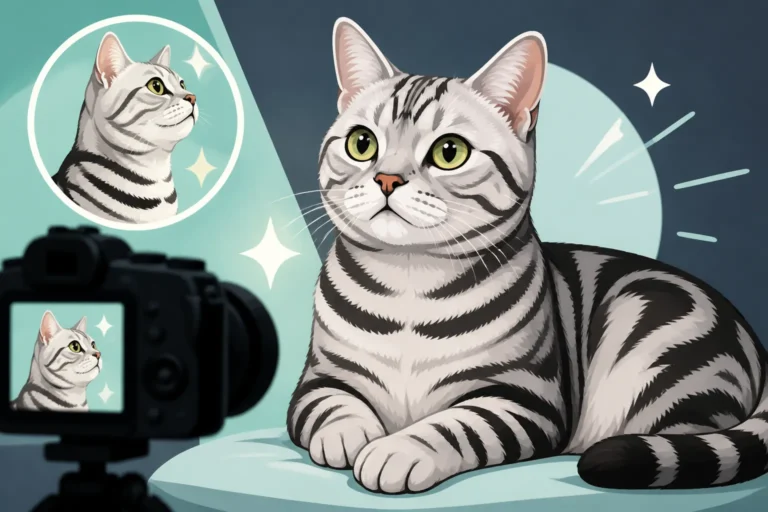
Natural, indirect light usually makes coat details easier to see than dim indoor lighting. If the cat is still, check the sides first, then look at the back, shoulders, legs, and tail. You are looking for broad curves and connected swirls, not perfect circles or identical markings on both sides.
A phone photo can help you compare markings over time, but pictures can distort color. Flash may wash out pale areas or make dark markings look harsher, while warm indoor bulbs can make silver coats appear beige. If you are comparing two cats, use similar lighting and angles. A picture from above may show the spine but hide the flank pattern, while a side view may reveal the swirls more clearly.
Kittens can be particularly confusing. Their coats are developing, their bodies are growing, and the final contrast may not be obvious at first. In some cats, the pattern becomes easier to read as the coat matures. For more detail, see Whether a Tabby Pattern Sharpens as the Cat Matures. It is reasonable to describe a young cat’s pattern cautiously if you are not yet sure how clearly the adult markings will appear.
Separate coat care from coat identification
A classic tabby pattern does not require special grooming. The markings are part of the coat’s pigmentation, not a surface layer that needs polishing or trimming. Regular gentle brushing can help lift loose hair and give you a better chance to notice changes in the skin or coat, but it will not make the pattern more classic or change its layout.
If you are choosing a brush, consider the cat’s comfort and coat rather than the pattern. Some owners browse options at retailers such as Chewy, but the important thing is to choose a tool suited to a short coat and introduce it gradually. Let the cat sniff it, try a few strokes, and stop before the session becomes a wrestling match. A calm, brief routine is more useful than trying to remove every loose hair at once.
The same practical approach applies to other supplies. If you compare grooming tools on Chewy, read the product description carefully and look for a tool intended for shorthaired cats. Avoid assuming that a more aggressive deshedding tool is automatically better. If brushing seems uncomfortable or you notice bald spots, scabs, persistent dandruff, or sudden coat changes, that is a reason to contact a veterinarian rather than simply switching brushes.
If you use Chewy or another retailer to order basic supplies, remember that coat pattern does not predict which food, brush, or litter a cat needs. Those choices depend on the individual cat, its health, and your household. Keep the coat description separate from care decisions: “classic tabby” tells you how the markings are arranged, not what the cat should eat.
What a classic tabby pattern can and cannot tell you
It describes appearance, not personality or health
A classic tabby coat is a visual pattern. It does not reliably tell you whether a cat will be outgoing, quiet, playful, or affectionate. Those traits are shaped by the individual cat, its early experiences, health, and environment. Two cats with nearly identical coats can have completely different preferences—one might race to greet visitors while the other watches from a safe perch.
The markings also do not diagnose health or guarantee a particular lifespan. Coat color and pattern should not be treated as evidence that a cat is healthier, more athletic, or more suited to indoor or outdoor life. If you are choosing a companion, spend time observing the cat’s behavior and ask about its medical history rather than using its pattern as a shortcut.
Likewise, a classic tabby appearance cannot confirm pedigree. Registration papers and reliable breeding records are more meaningful for establishing documented breed ancestry. DNA tests may provide ancestry estimates, but a coat pattern by itself is not a substitute for records. This is especially relevant when an online listing presents “classic tabby” as though it were proof of a specific breed.
It does not need to be perfectly symmetrical
People often expect tabby markings to form neat, mirrored shapes, particularly when they have seen polished show photographs. Real cats are not printed designs. The swirls may differ from side to side, one flank marking may be more open than the other, and some areas may have a softer or less sharply defined edge.
A patch of dark fur can also interrupt a swirl without changing the overall pattern. As the cat moves, the coat’s shape changes, and the markings may seem more or less obvious. This is why a single angle can be misleading. Look for the overall arrangement instead of requiring every detail to match a diagram.
If you are looking at a show prospect or a registered kitten, the relevant standards and evaluation criteria are more specific than a casual coat description. For a pet owner, though, the useful distinction is usually simple: classic tabby markings are broad and curved; mackerel markings are generally narrower and more parallel. Whether the cat’s pattern is perfectly even is a separate question from whether it is recognizable as classic tabby.
Disclaimer
This article is for general informational purposes only and does not constitute professional advice. Laws, prices and regulations vary by location and change over time. Consult a qualified professional for guidance on your specific situation.