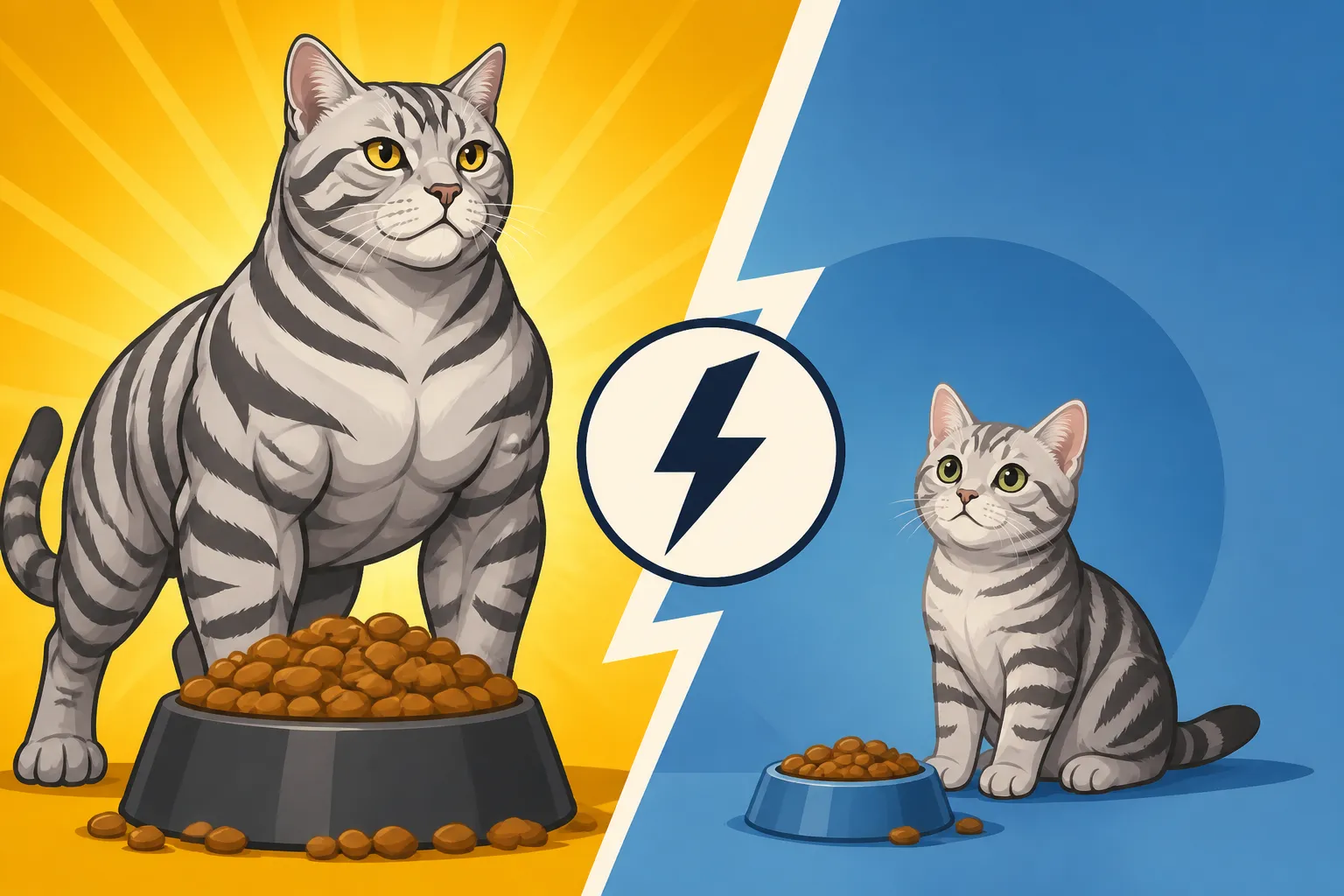
What Feeding a Muscular Cat Costs Against a Smaller Breed
It's a common thought, isn't it? That a cat is a cat, and they all pretty much eat the same amount. But if you're a proud American Shorthair parent, or considering becoming one, you're probably already sensing that this simply isn't true. These magnificent, muscular felines have dietary needs that can significantly differ from those of a daintier, smaller breed, and that difference absolutely translates to your grocery bill. This guide is here to walk you through exactly why your American Shorthair might be a heartier eater and what that means for your budget, offering practical insights into managing their nutritional needs effectively.
Understanding the American Shorthair's Muscular Build and Energy Needs
The American Shorthair is a breed built for a purpose – a working cat through and through. They descended from the ships' cats brought over by early European settlers, tasked with keeping rodents at bay on long voyages and then on farms and in homes. This isn't a cat bred for delicate features or extreme aesthetics; it's a cat bred for strength, resilience, and an efficient metabolism that fuels a robust physique. When you look at an American Shorthair, you see a cat with broad shoulders, powerful legs, and a solid, well-muscled body. This isn't fluff or extra padding; it's pure, functional feline athleticism.
This historical lineage and physical structure directly impact their caloric and nutritional requirements. They aren't going to thrive on the same minimal portions as, say, a tiny toy breed. Their bodies are furnaces that need consistent, quality fuel to maintain that muscle mass, support their organ systems, and give them the energy for their naturally inquisitive and often playful temperament. Understanding this fundamental difference is the first step in appreciating why their feeding costs might look a little different.
The Hunter's Legacy: Energy Output and Metabolism
Even if your American Shorthair has never seen a mouse outside of a toy, they still carry the genetic blueprint of a capable hunter. This means they have an inherent activity level that, while perhaps not as frantic as some other breeds, demands a solid energy supply. They love to stalk, pounce, and explore their territory, even if that territory is your living room. A cat that's engaging in regular play, patrolling its indoor domain, and maintaining its powerful build simply burns more calories than a smaller, less active breed.
Their metabolism is geared towards sustaining that muscular frame. If they don't get enough calories, their bodies will start to break down muscle for energy, which is certainly not what we want for a healthy, vibrant American Shorthair. It's about providing the right kind of fuel in the right quantity to keep that engine purring smoothly. Think of them as finely tuned athletes; they need a diet that supports their natural physicality, even if their "job" these days is mostly napping in sunbeams and chasing feather wands. The American Shorthair Still Hunts, Whether You Want It To or Not really dives into this instinct.
Why "Big Boned" Isn't Just a Saying for the American Shorthair
When people affectionately describe their American Shorthair as "big boned," they're not entirely wrong, but it's more accurate to say "heavily muscled." This breed has a substantial bone structure that supports a significant amount of lean muscle. They are medium to large-sized cats, with males often weighing in the range of 11-15 pounds, and females slightly less. Compare that to a breed like a Singapura, which might weigh only 4-8 pounds, and you immediately see a substantial difference in sheer body mass.
This greater body mass means more cells, more organs, and more tissue that all require nutrients and energy to function. It's a fundamental biological principle: larger animals, especially those with an active, muscular build, require more sustenance. Trying to feed an American Shorthair like a smaller, more delicate breed would be akin to trying to run a pickup truck on the fuel intended for a scooter – it just won't work efficiently, and eventually, the system will suffer. Their robust frame is a testament to their heritage and a clear indicator of their dietary needs.
Comparing Nutritional Requirements: American Shorthair vs. Smaller Breeds
Now that we understand the American Shorthair's foundation, let's get into the nitty-gritty of their nutritional demands compared to smaller breeds. It's not just about quantity; it's about the composition of that quantity. While all cats are obligate carnivores and need a diet rich in animal protein, the sheer volume and the optimal ratios might shift for a larger, more muscular cat.
A smaller, less active cat might get by on a diet that's slightly less calorie-dense or has different macronutrient ratios, simply because their maintenance needs are lower. For an American Shorthair, maintaining muscle mass and supporting their energetic lifestyle means a consistent supply of high-quality protein and appropriate fats. This often means choosing foods specifically formulated for active adult cats or those with a higher protein content.
Protein Power: Fueling the American Shorthair's Physique
Protein is paramount for all cats, but for a muscular breed like the American Shorthair, it's absolutely critical. Protein provides the amino acids necessary for building and repairing muscle tissue, supporting a healthy immune system, and producing essential enzymes and hormones. Without adequate protein, their impressive musculature would begin to diminish, leading to weakness and potential health issues. Why an American Shorthair's Muscle Goes Before Its Fat explains this in more detail.
When looking at cat food labels, you'll often see percentages of protein. For an American Shorthair, particularly an active one, a food with a higher crude protein percentage, ideally from animal sources, is generally recommended over foods that rely heavily on plant-based proteins or fillers. This doesn't necessarily mean a "special" or "prescription" diet, but it does mean being discerning about ingredient quality. Many premium brands understand these needs, and you might find yourself gravitating towards options that explicitly promote lean muscle support.
Calorie Counts: More Than Just a Number for Active Cats
Calories are simply units of energy, and your American Shorthair needs more of them to maintain its larger body and activity level. While a tiny cat might thrive on 150-200 calories a day, an adult American Shorthair could easily need 250-350 calories, or even more if they are particularly active or still growing (as they can take up to three years to fully mature). This isn't about overfeeding; it's about meeting their baseline metabolic demands.
The caloric density of food also plays a role. Some foods are more calorie-dense than others. You might find that a high-quality, protein-rich kibble or wet food designed for active cats provides more bang for your buck in terms of nutrition and satiety, even if the initial cost per bag or can seems higher. Conversely, a cheaper, filler-heavy food might require you to feed much larger quantities to meet their caloric needs, negating any perceived savings and potentially leading to digestive issues or poor nutrient absorption. This is where researching brands and their nutritional breakdowns becomes really valuable, and places like Chewy offer a wide range of options to compare.
The Actual Cost Difference in Cat Food
Let's face it, when we talk about feeding a muscular cat versus a smaller breed, the cost difference is often where the rubber meets the road. It's not just a theoretical difference in nutritional needs; it's a very real impact on your monthly budget. Because American Shorthairs generally require more food by volume and often benefit from higher-quality, protein-rich diets, their feeding expenses tend to be higher.
This isn't to say an American Shorthair is an exorbitantly expensive cat to feed, but rather to manage expectations. If you're coming from owning a smaller cat breed, or even a typical domestic shorthair of a slighter build, you might notice a definite uptick in how quickly you go through a bag of kibble or a case of wet food. It's simply a reflection of their larger physical requirements.
Serving Sizes and Daily Consumption
The most direct impact on cost comes from serving sizes. If a smaller cat needs a quarter cup of kibble twice a day, an American Shorthair might need a half cup or more. That's double the amount, and it quickly adds up. The same goes for wet food; where a small breed might eat one or two small cans a day, your American Shorthair might need two or three larger cans, or even more, depending on the calorie density.
Consider this hypothetical scenario:
| Category | Small Breed Cat (e.g., Singapura) | American Shorthair (Adult, Active) |
|---|---|---|
| Average Weight | 5-8 lbs | 10-15 lbs |
| Estimated Daily Calories | 150-200 kcal | 250-350+ kcal |
| Dry Food (per day) | 1/4 – 1/2 cup | 1/2 – 3/4 cup |
| Wet Food (per day) | 1 small (3oz) can | 1-2 large (5.5oz) cans |
| Weekly Food Consumption | 1-2 lbs dry / 7-14 small cans | 3-5 lbs dry / 7-14 large cans |
As you can see, even on a weekly basis, the volume difference is substantial. Over a month, or a year, this means more frequent purchases and a higher overall spend. This isn't a problem, just a reality of owning a larger, more substantial cat. Regular monitoring of their body condition will help you fine-tune their portions. How to Spot Weight Gain on a Square Built American Shorthair can be a great resource for this.
Quality Matters: Premium Foods for Muscular Health
Beyond just the quantity, the quality of food you choose for your American Shorthair can also influence costs. While there are perfectly good budget-friendly cat foods, many owners of muscular breeds opt for premium or high-performance formulas. These often feature higher percentages of animal-based protein, fewer fillers, and a more balanced nutrient profile, which can be particularly beneficial for maintaining muscle and overall health.
Think of it as investing in their long-term well-being. A diet of higher quality might cost more per serving, but it can contribute to better digestion, healthier coat, and sustained energy, potentially reducing future veterinary costs related to diet-induced issues. Foods with fresh, human-grade ingredients might have a higher upfront cost but offer tailor-made nutrition that many owners feel is worth the investment for their cat's vitality. While these premium foods can initially seem pricier, they often mean you're getting more nutrient density, which can sometimes mean feeding slightly less volume. It's a balance.
Beyond the Bowl: Hidden Costs Influenced by Size and Activity
Feeding costs aren't always just about the main meals. There are other associated expenses that can subtly increase your overall expenditure, especially when dealing with a more muscular and active cat like the American Shorthair. These might include treats, supplements, and even the type of feeding accessories you need to accommodate their size and potentially their feeding habits.
While these might seem like minor details, they contribute to the holistic cost of feeding and caring for your American Shorthair. Being aware of these potential extras allows you to budget more accurately and ensure your feline friend has everything they need to thrive.
Treats and Supplements for a Robust Feline
Most of us love to spoil our cats with treats, and American Shorthairs are no exception. However, due to their larger size and greater caloric needs, the volume of treats you give might also be higher, or you might find yourself buying treats more frequently. Just like with their main meals, choosing high-quality, protein-rich treats is often beneficial to complement their diet without adding excessive empty calories.
Sometimes, a muscular cat might also benefit from certain supplements, especially as they age or if they have specific health needs. Joint supplements, for instance, might be considered to support their strong but aging frame, particularly if they remain active. While not every American Shorthair will need supplements, it's a conversation to have with your vet, and these can add to the monthly budget. This is where considering pet insurance from providers like Healthy Paws can be beneficial, as it can help cover unexpected vet bills, including diagnostic tests or treatments that might arise from age-related conditions. When a Stiff American Shorthair Needs Joint Support is a good read on this.
Durable Gear: Bowls, Feeders, and More
Believe it or not, even the gear you use for feeding can reflect the difference in size. A larger, more muscular American Shorthair needs appropriately sized food and water bowls. Tiny, shallow bowls might be perfectly fine for a smaller cat, but your robust American Shorthair will appreciate, and likely require, wider, sturdier bowls that don't tip over easily and accommodate their broader muzzle.
Automatic feeders, if you use them, also need to be robust enough to handle larger portions and withstand the occasional nudge from a strong cat. Puzzle feeders, which are excellent for stimulating an American Shorthair's hunting instinct and slowing down their eating, might also need to be chosen with their strength and size in mind. A flimsy puzzle toy might not hold up to the enthusiasm of an American Shorthair determined to get their dinner! While these are usually one-time purchases, they are still part of the overall cost of ownership influenced by your cat's breed. What a Box Wide Enough for an American Shorthair Costs further illustrates this point for other essentials.
Disclaimer
This article is for general informational purposes only and does not constitute professional advice. Laws, prices and regulations vary by location and change over time. Consult a qualified professional for guidance on your specific situation.