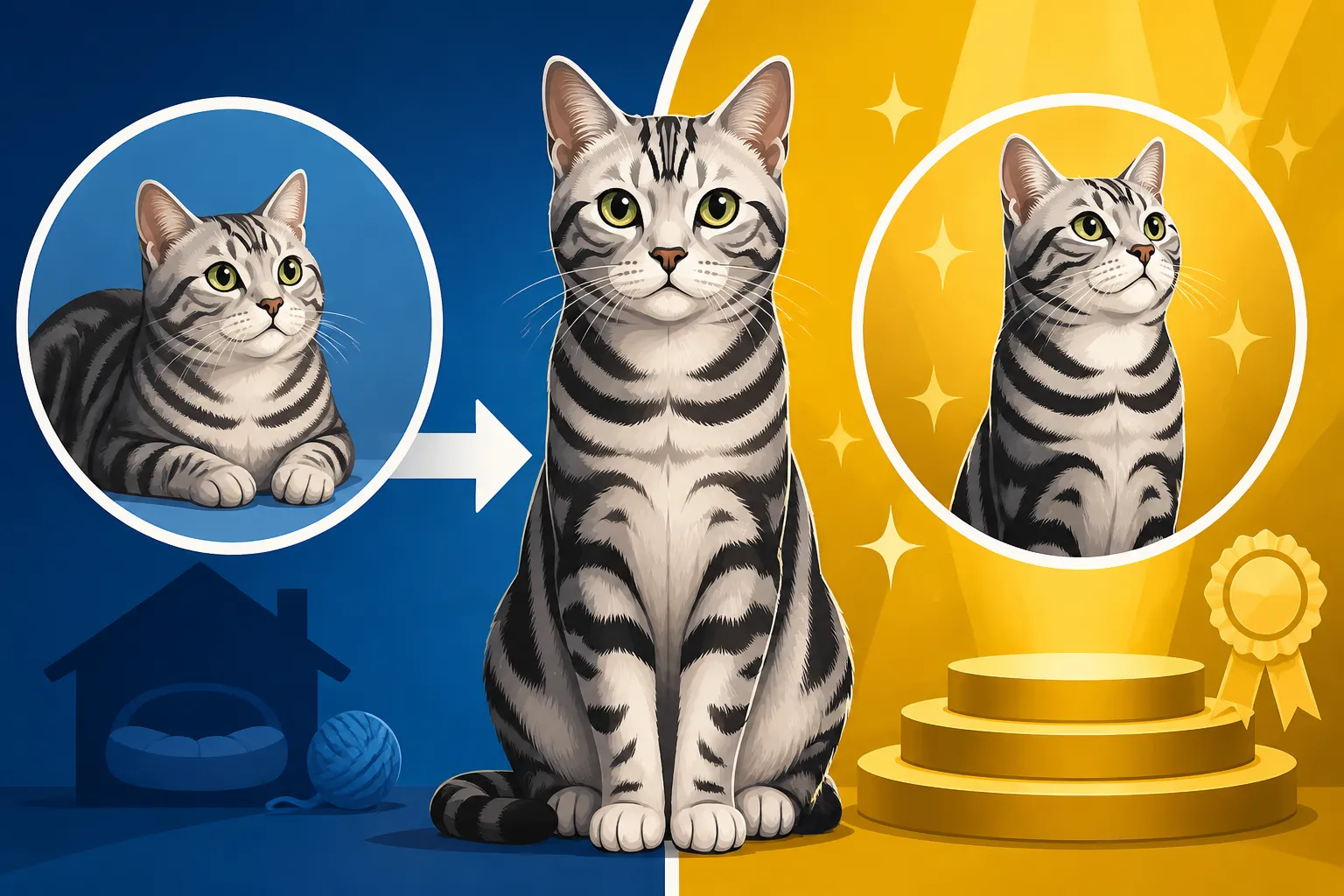
Which Markings Move an American Shorthair From Pet to Show
It can be incredibly confusing for prospective American Shorthair owners, especially if you’re new to the world of pedigreed cats, to understand why some kittens are priced as "pet quality" and others are deemed "show quality." Often, it comes down to a seemingly subtle difference in their coat markings, which might look perfectly lovely to the untrained eye but tell a very different story to a seasoned breeder or a cat show judge. This guide will walk you through the specific marking nuances that elevate an American Shorthair from a beloved family companion to a potential ribbon winner.
Understanding the American Shorthair Standard for Markings
When we talk about "show quality" markings, we're really diving into the precise details outlined in the breed standard by organizations like the Cat Fanciers' Association (CFA). This standard is essentially the blueprint for the ideal American Shorthair, and every aspect, from the tip of its tail to the expression in its eyes, is considered. But for many, the coat markings are the most striking and defining feature, particularly the various tabby patterns.
The Foundation: What the Standard Seeks
At its core, the American Shorthair breed standard emphasizes a cat of robust health, strength, and a well-balanced appearance – a true working cat, even if it now lives a pampered indoor life. The markings on its short, dense coat are expected to be clear, distinct, and evenly distributed, reflecting its natural heritage. The standard doesn't just want a tabby; it wants a perfect tabby, where every line, spot, and swirl contributes to an overall harmonious look. Imagine a piece of intricate art where every brushstroke is intentional and flawlessly executed. That's the level of precision a show-quality American Shorthair's markings are held to. Any blurring, unevenness, or deviation from the expected pattern can, and often does, mean the difference between a champion and a cherished pet. You can learn more about What an American Shorthair Looks Like by the Standard to get a full picture of the breed's ideal presentation.
Tabby Patterns: The Heart of American Shorthair Identity
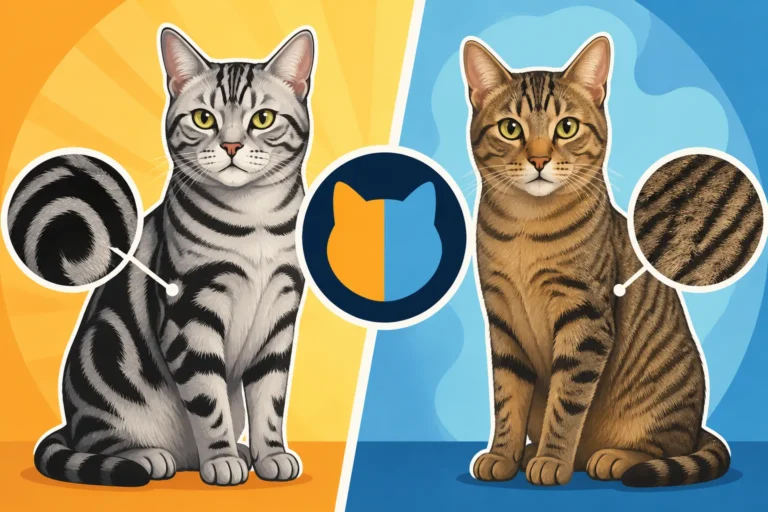
The American Shorthair is famous for its tabby patterns, and understanding these is crucial. There are four main tabby patterns recognized in the breed: classic (blotched), mackerel, spotted, and ticked. Each has its own specific requirements for a show-quality cat.
- Classic Tabby: This is often called the "blotched" tabby, and it's characterized by a distinct "bullseye" or oyster pattern on the sides, along with a butterfly pattern over the shoulders and three clear stripes running down the spine. For show, these markings must be incredibly clear, with deep, rich colors and strong contrast. The "bullseye" should be a perfect circle, not distorted or broken. We delve deeper into this specific pattern in What a Classic Tabby American Shorthair Is.
- Mackerel Tabby: This pattern features narrow, parallel stripes running vertically down the sides, resembling a fish skeleton (hence "mackerel"). These stripes should be unbroken, distinct, and evenly spaced, radiating down from the spine. Any broken stripes or splotches within the mackerel lines would be considered a fault. To understand the specifics, you might find What a Mackerel Tabby American Shorthair Is helpful.
- Spotted Tabby: While less common, the spotted tabby has distinct spots over the body. These aren't just broken mackerel stripes; they should ideally be round or oval, evenly distributed, and clearly defined against the ground color. Size and shape uniformity are key for show.
- Ticked Tabby: This pattern gives the coat a flecked or salt-and-pepper appearance due to individual hairs having bands of color. While the body might not have overt stripes, clear tabby markings should still be visible on the face, neck, and tail. The ticking should be consistent, without large areas of solid color or prominent striping on the body.
Beyond the pattern itself, the "M" shape on the forehead, the fine pencil lines on the face, and the unbroken necklaces on the chest are universal tabby traits that must be present and well-defined for a show-quality cat.
Color and Clarity: Beyond the Pattern Itself
It's not just what the markings are, but how they appear. Color and clarity are paramount. The ground color (the lighter base color) should be clean and clear, providing a strong contrast to the darker tabby markings. For instance, in a silver tabby, the ground color should be a sparkling, clear silver, not a dull, muddy grey. The markings themselves should be dense and rich in pigment, whether they're deep black, rich brown, or vibrant red. Faded or indistinct markings are a definite no-no for the show ring. The crispness of the lines, the depth of the color, and the overall contrast define a show-stopping coat. This is particularly true for the famous silver tabby, which we discuss in depth in Why the Silver Tabby Became the American Shorthair's Face. Even the eye color is considered, as it should complement the coat color, typically gold or green, though specific pairings are outlined in Which Eye Color Goes With Each American Shorthair Color.
Pet vs. Show Quality: The Nuances of Markings
The distinction between a pet-quality and a show-quality American Shorthair often boils down to subtle differences in these markings. A pet-quality cat is just as loving, healthy, and wonderful, but it might have a few quirks that deviate from the strict show standard.
Minor Imperfections: Why a Pet is Still Perfect
Many beautiful American Shorthairs, perfectly suited for loving homes, might possess what breeders call "minor faults" in their markings. These are things that don't impact the cat's health, temperament, or overall charm, but would cause a judge to mark them down. For example:
- Broken Markings: A classic tabby might have a "bullseye" that isn't perfectly round, or a mackerel tabby might have a stripe that breaks in the middle. These are minor deviations from the ideal.
- Faded or Uneven Pigmentation: The markings might not be as deep or as clearly defined as the standard requires. Perhaps a brown tabby has lighter patches within its stripes, or the "M" on the forehead isn't as bold.
- Ghost Markings: Sometimes, on solid-colored American Shorthairs, faint tabby patterns might still be visible, especially in certain lights. While not a disqualification, clear ghost markings can be considered a fault in solid cats.
- Ticking on Non-Ticked Patterns: A slight amount of ticking (bands of color on individual hairs) appearing on a classic or mackerel tabby can detract from the crispness of the pattern.
These imperfections make a cat "pet quality," meaning they are sold as companions rather than for showing or breeding. They are still purebred American Shorthairs with all the wonderful traits of the breed; they just don't fit the exacting visual criteria for the show ring. When looking for supplies for your treasured companion, whether show-quality or pet-quality, reliable sources like Chewy offer a vast array of high-quality foods, toys, and accessories to keep them happy and healthy.
Major Deviations: When Markings Are a Disqualification
Certain marking issues are considered significant enough to be disqualifications from the show ring entirely. These are more serious departures from the breed standard and immediately render a cat ineligible for competition, regardless of its other qualities.
- Absence of Tabby Markings: For any color presented as a tabby, the complete absence of clear tabby markings (like the "M" on the forehead, or the spinal lines) would be a disqualification. If the cat is meant to be a tabby, it must have the defining tabby features.
- Incorrect Color or Pattern for the Breed: While American Shorthairs come in many colors, a color or pattern not recognized by the standard would lead to disqualification. For example, colorpoint patterns (like a Siamese) are not part of the American Shorthair standard. Similarly, if a cat is entered as a solid black but clearly has strong, distinct tabby stripes all over its body, it would be incorrect for its class.
- White Lock(s) or Buttons: In some solid color classes, even a tiny patch of white hair (a "lock" or "button") can be a disqualification if the standard for that specific color calls for an absence of white. This often happens subtly on the chest or belly.
- General Lack of Clarity or Definition: If the overall pattern is so muddled, blurred, or faded that it's impossible to discern the intended tabby type, it would be a major fault, possibly leading to disqualification if severe enough.
It's important to remember that these disqualifications are purely for the show ring. They have no bearing on a cat's health, longevity, or ability to be a fantastic companion. A cat with a show disqualification is still a wonderful American Shorthair.
The Role of a Breeder and Judge in Markings Assessment
The journey of an American Shorthair kitten from birth to potential show champion involves a critical eye from both the breeder and, later, the judge. They are the gatekeepers of the breed standard.
Breeder's Eye: Early Assessment of Potential
A reputable American Shorthair breeder spends countless hours studying the breed standard and observing their kittens from birth. They are the first to identify which kittens might have "show potential" based on their developing markings, conformation, and temperament. They know the subtle differences that can mean everything in the show ring. For instance, they'll be looking for the crispness of the classic bullseye on a silver tabby kitten, or the unbroken lines of a mackerel. They'll also assess overall type – the head shape, body build, and coat texture. Kittens with even minor marking faults are generally designated as "pet quality" and sold with spay/neuter contracts to ensure they don't contribute to future breeding lines that might perpetuate those faults. Those designated "show quality" typically come with a higher price tag due to their adherence to the strict standard and the breeder's investment in producing such quality. When considering a kitten, always ask about Whether an American Shorthair Kitten Comes With Papers and health screenings.
Judge's Perspective: The Finer Points on the Table
When an American Shorthair enters the show ring, a judge performs a methodical assessment, comparing the cat to the written breed standard. They are looking for perfection, or as close to it as possible. When it comes to markings, they'll meticulously check:
- Symmetry and Balance: Are the markings even on both sides of the cat? Do they flow harmoniously?
- Clarity and Contrast: Are the lines sharp? Is there a clear difference between the ground color and the pattern color?
- Completeness: Are all the required elements of the chosen tabby pattern present and correctly formed (e.g., "M" on the forehead, leg banding, tail rings)?
- Absence of Faults/Disqualifications: The judge will actively look for any of the minor faults or major disqualifications mentioned earlier.
It's a highly objective process, and even a tiny, almost imperceptible smudge in a pattern can cost points. This rigorous scrutiny is why a show-quality cat is so prized – it represents years of careful breeding and selection aimed at maintaining the breed's distinct characteristics.
The Impact on Value: Show Potential vs. Companion Cat
The precise adherence to the breed standard in terms of markings (and other physical traits) directly influences the price of an American Shorthair kitten. A "pet quality" kitten, while still a purebred and typically coming from health-tested parents, will be less expensive than a "show quality" kitten. This difference in price isn't about the cat's inherent worth as a companion, but rather its perceived value within the highly competitive world of cat fancying. You might be curious about What a Championship Line American Shorthair Costs and the investment involved. For any cat, regardless of show potential, ensuring their health is paramount. Services like Healthy Paws offer pet insurance plans that can help manage unexpected veterinary costs, providing peace of mind whether your feline friend is a future champion or your beloved couch potato.
Beyond Markings: Other Show Considerations
While markings are a huge part of an American Shorthair's show appeal, they are not the only thing judges consider. The entire cat must meet the standard.
Conformation and Type: The Body Beneath the Coat
The American Shorthair is known for its sturdy, well-muscled build – a legacy of its working cat ancestors. A show-quality cat must have excellent conformation, meaning its body structure adheres perfectly to the breed standard. This includes:
- Head: A large, full-cheeked head with a medium-length, square muzzle.
- Ears: Medium-sized, set wide apart with slightly rounded tips.
- Eyes: Large, wide-set, and expressive, with a slight slant at the top and a rounded curve at the bottom.
- Body: A powerful, muscular body that is neither cobby nor svelte, with a broad chest.
- Legs and Paws: Medium-length legs with well-muscled hindquarters and round, firm paws.
- Tail: Medium length, tapering to a blunt tip.
All these elements contribute to the overall "type" of the American Shorthair. A cat with perfect markings but a weak jawline or a too-short tail wouldn't fare well in the ring. The standard aims for a harmonious, balanced cat from nose to tail.
Temperament in the Ring: A Calm Demeanor is Key
Finally, temperament is an often-overlooked but crucial aspect of a show cat. An American Shorthair must be tractable, calm, and cooperative on the judging table. A cat that hisses, scratches, or tries to escape will not be able to be properly evaluated by the judge, leading to a poor showing. The breed is generally known for its placid and easygoing nature, a trait that makes them excellent companions and good show contenders. They are often described as self-sufficient and undemanding, traits which are explored further in Why an American Shorthair Was Never Bred to Need You. A cat that remains relaxed during handling allows the judge to thoroughly examine its features, including those intricate markings. To support their natural vigor and calm disposition, feeding a high-quality diet can make a difference. A high-quality diet can contribute to overall health, a shiny coat, and a comfortable digestive system, all of which reflect a well-cared-for cat, ready for anything.
Here's a quick comparison of what separates a show-quality American Shorthair from a beloved pet-quality one, specifically concerning markings:
| Feature/Category | Show Quality American Shorthair | Pet Quality American Shorthair |
|---|---|---|
| Marking Clarity | Extremely crisp, distinct, bold lines/spots | May have slightly blurred, faded, or less defined patterns |
| Pattern Symmetry | Highly symmetrical and balanced across the body | Minor asymmetry or unevenness in pattern distribution |
| Ground Color | Clean, clear, and contrasting sharply with markings | May be slightly muddied or have less distinct contrast |
| Specific Pattern Features | All required tabby elements (e.g., "M," bullseye, necklaces) are perfectly formed and present | May have broken stripes, incomplete bullseyes, or less prominent facial markings |
| Disqualifying Faults | Absence of any disqualifying marks (e.g., white lock in solids, incorrect pattern type) | May have minor cosmetic faults that disqualify from show, but not health or temperament |
| Overall Impression | Exemplifies the ideal breed standard for coat | A beautiful cat, but with slight deviations from the show ideal |
Disclaimer
This article is for general informational purposes only and does not constitute professional advice. Laws, prices and regulations vary by location and change over time. Consult a qualified professional for guidance on your specific situation.