The One Grooming Tool an American Shorthair Owner Buys
As an American Shorthair owner, you might sometimes feel bombarded by the sheer number of grooming products marketed for cats. From fancy deshedding tools to various brushes, it's easy to wonder what your typically low-maintenance feline genuinely needs. The truth is, while many breeds demand a full arsenal, your American Shorthair's utilitarian coat actually simplifies things dramatically. This guide will focus on the single most effective grooming tool that every American Shorthair owner should prioritize, cutting through the clutter to highlight what truly matters for their magnificent, yet practical, coat.
Understanding the American Shorthair's Unique Coat
The American Shorthair's coat isn't just pretty; it's a testament to centuries of hard work and natural selection. Unlike many other pedigree cats bred for aesthetics, the American Shorthair's fur was designed for function, a heavy-duty covering that protected them from the elements and the rough-and-tumble life of a working cat.
The Practicality Behind the American Shorthair's Coat
Imagine a cat needing to keep warm on a drafty barn floor or fend off brambles in a field. That's the heritage of the American Shorthair. Their coat is short, dense, and slightly coarse to the touch, often described as "hard" – a far cry from the plush, soft coats of some other breeds. This texture isn't a flaw; it's a feature. It helps shed water, protects against minor scrapes, and provides excellent insulation without becoming easily matted or tangled. It's a coat built for resilience, which means it largely takes care of itself. This practical design is why The American Shorthair Was One of the CFA's Five Founding Breeds, recognized for its inherent soundness.
The guard hairs, those stiff outer hairs, are crucial for its protective qualities. They form a robust shield over the softer undercoat. This dual-layer system is incredibly efficient, requiring minimal intervention from us, the owners. When we consider Why an American Shorthair Grooms Itself Better Than You Can, it's because their natural coat structure is perfectly adapted for self-maintenance in most environments.
Seasonal Changes and Shedding Cycles
Even with such an efficient coat, your American Shorthair isn't immune to nature's cycles. They aren't a year-round constant. You'll definitely notice distinct changes throughout the year, especially if you live in an area with pronounced seasons.
Typically, you'll find your American Shorthair sheds more noticeably twice a year: in the spring, as they lighten their coat for warmer weather, and again in the fall, when they start preparing for winter. During these times, you might suddenly find cat hair everywhere, clinging to your clothes, furniture, and seemingly defying gravity. It’s during these periods that you might be tempted to reach for every newfangled deshedding tool on the market, but resist the urge for anything too aggressive. This seasonal shedding is completely normal and healthy, a process where old, dead hairs are replaced with new ones. An American Shorthair Sheds Twice a Year and Asks Nothing Else is a saying that truly rings true for this breed. This shedding helps them adapt, as Why an American Shorthair's Coat Thickens for Winter and How an American Shorthair's Coat Thins Toward Summer illustrates.
Why an American Shorthair's Coat Differs From a British Shorthair's Plush
If you've ever petted a British Shorthair, you'll immediately notice a striking difference in coat texture. The British Shorthair boasts a luxurious, dense, and plush coat that feels almost like velvet. It's truly magnificent, but also demands a different grooming approach. Your American Shorthair's coat, by contrast, is firm and springy, designed to lie close to the body and repel moisture. It's less prone to matting and doesn't hold onto debris in the same way a softer, thicker coat might.
This distinction is key to understanding why specialized tools for "plush" or "long-haired" breeds are overkill, and potentially even damaging, for your American Shorthair. Trying to use a tool designed to de-matt a long, silky Persian on your American Shorthair's robust, short coat could actually irritate their skin or pull out healthy hairs, causing discomfort. Their heritage as a hardy, self-sufficient mouser meant they needed a coat that worked with them, not against them, a direct contrast to breeds where appearance became the primary breeding focus.
Why Most Grooming Tools Miss the Mark
Walk down the pet aisle, and it's a jungle of brushes, combs, and deshedding gadgets, each promising to deliver a salon-quality groom. For many cat owners, especially those new to American Shorthairs, it's tempting to try them all. However, for our pragmatic felines, most of these tools are, frankly, unnecessary.
The Allure of Specialty Brushes and Deshedding Gadgets
We’ve all seen the commercials: a miracle tool that claims to remove vast amounts of loose fur, preventing hairballs and leaving a shiny coat. These often include slicker brushes, rubber curry combs, or blades designed to strip the undercoat. While they certainly have their place for breeds with very dense undercoats or long, flowing hair that easily tangles, they are often overkill for the American Shorthair.
The problem with many of these specialty tools, particularly those with sharp blades or very stiff bristles, is that they can be too aggressive for the American Shorthair's functional coat. Instead of just removing loose, dead hair, they can actually cut or damage healthy guard hairs, disrupting the natural protective layer of the coat. This isn't just cosmetic; it can impact the coat's ability to insulate and protect your cat. Plus, repeated over-brushing with harsh tools can irritate the skin underneath, leading to redness or even minor abrasions.
Common Pitfalls of Over-Grooming
It’s easy to think that more grooming equals a healthier, happier cat. But for an American Shorthair, this isn't always the case. Over-grooming, especially with the wrong tools, can lead to several unintended problems. First, as mentioned, skin irritation is a real risk. Cats have delicate skin, and excessive pulling or scratching with stiff brushes can be uncomfortable or even painful, turning grooming into a dreaded experience for both of you.
Secondly, you might unintentionally remove too much of their protective topcoat, leaving their skin more exposed or making their coat less efficient at its job. This is particularly true if you use tools that aren't designed for their specific coat type. Thirdly, turning grooming into a battle can damage your bond. Cats are creatures of routine and preference, and if every grooming session becomes a wrestling match with a harsh tool, your cat will likely flee at the mere sight of it. Our goal is always to make interactions positive and stress-free.
What an American Shorthair Grooms Itself Better Than You Can
Here's the beautiful truth about the American Shorthair: they are exceptionally good at grooming themselves. Their short, dense coat is surprisingly self-sufficient. They don't have long tresses that drag on the ground or easily mat around their legs. Their tongue, covered in tiny, abrasive papillae, acts as a remarkably effective comb, removing loose hairs and stimulating their skin's natural oils to keep their coat healthy and shiny.
Think about it: these cats evolved over centuries without human intervention, maintaining their coats perfectly well. Their natural athleticism allows them to reach almost every part of their body, keeping themselves tidy. While we can assist, we should acknowledge that their inherent grooming abilities are often superior to our own, especially when it comes to the daily upkeep. They are truly built for self-reliance, extending even to their cleanliness.
The Unsung Hero: A Simple, Effective Comb
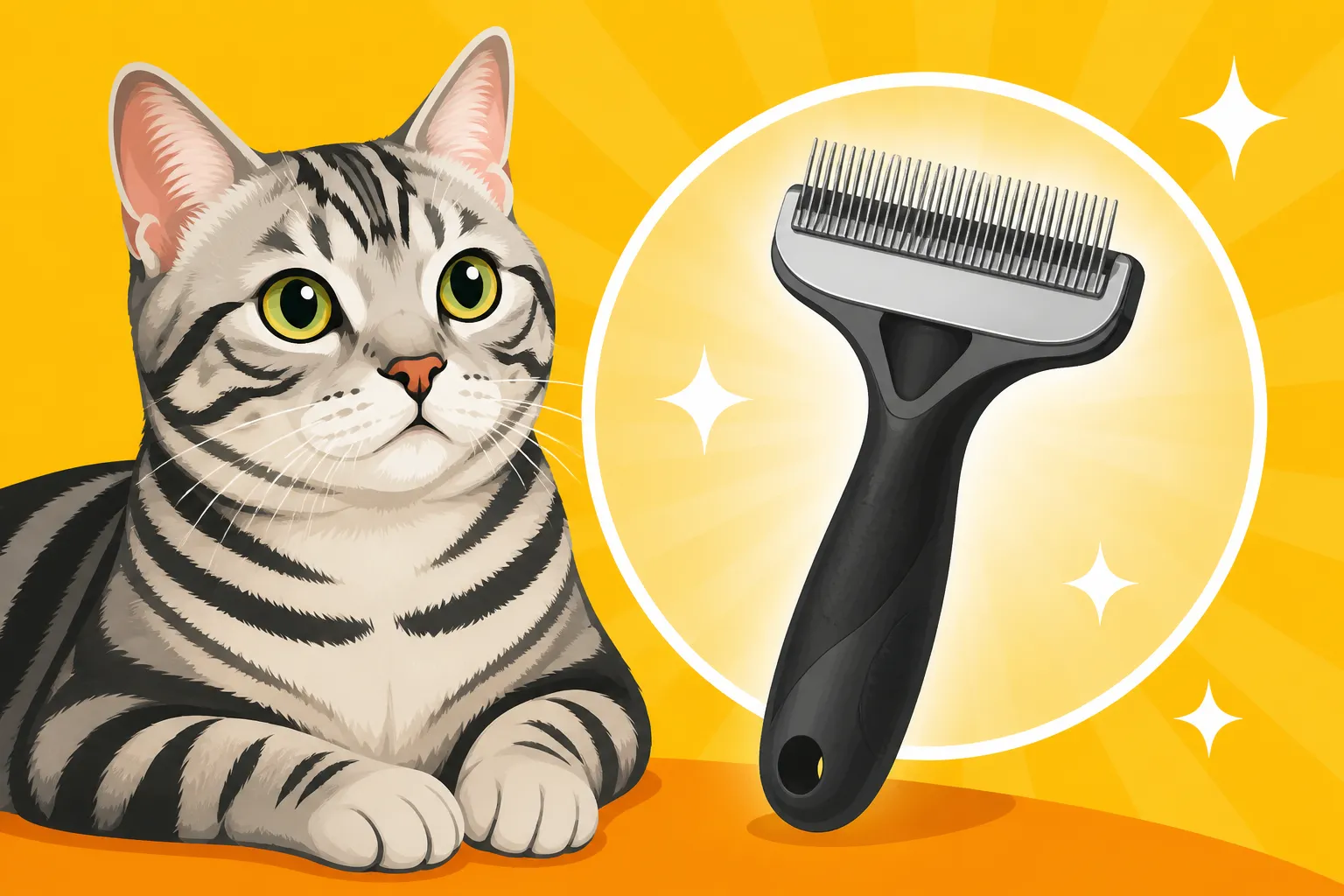
Forget the expensive gadgets and the brushes that promise the moon. For your American Shorthair, the one grooming tool you truly need, the one that will make the biggest difference, is incredibly simple: a good quality, metal greyhound comb.
What Kind of Comb We're Talking About
When I say "metal greyhound comb," I'm referring to a sturdy, well-made comb typically crafted from stainless steel. These combs usually feature two sections of teeth: one side with wider-spaced teeth and the other with finer, more closely set teeth. The teeth themselves should be smooth, with no sharp edges that could scratch your cat's skin. They come in various lengths, but a medium-sized one is usually perfect for an American Shorthair. You want one that feels solid and durable in your hand, not flimsy plastic.
This type of comb is a staple for many professional groomers precisely because of its versatility and effectiveness. It glides through the coat, gently lifting loose fur and debris without snagging or pulling. It respects the natural texture of the American Shorthair's fur while still being incredibly efficient at removing shed hair. This is truly Which Comb Suits an American Shorthair's Hard Coat.
Why This Comb is Uniquely Suited for the American Shorthair
The greyhound comb is perfect for the American Shorthair for several reasons. Firstly, its design allows it to penetrate the dense, short coat down to the undercoat without causing irritation. The wider teeth can tackle the initial pass, getting through the top layer and pulling out the majority of loose hairs, especially during heavy shedding periods. Then, the finer teeth can be used for a second pass to catch any smaller, finer hairs and smooth the coat, leaving it sleek and neat.
Secondly, it's gentle. Unlike brushes with stiff pins or bladed deshedders, a well-made metal comb won't damage the guard hairs or scratch the skin when used correctly. This means your grooming sessions can be more comfortable and enjoyable for your cat, fostering a positive association with being handled. It’s about working with their coat, not aggressively stripping it. This gentle yet effective approach aligns perfectly with the American Shorthair's self-sufficient nature and robust coat type.
Where to Find the Right Comb
You might be surprised how easy it is to find a high-quality metal greyhound comb. They aren't typically specialty items that require a trip to an exotic pet store. Most well-stocked pet supply stores will carry them, often in the dog grooming section, but they are absolutely suitable for cats with dense, short coats like the American Shorthair.
Online retailers are another excellent resource. Websites like Chewy, for example, offer a wide selection of grooming tools, and you can easily read reviews to ensure you're getting a durable, well-made comb. Look for brands known for quality pet grooming supplies. Investing a little more in a good metal comb will pay off, as it will last for years and provide a much better experience than a cheap, plastic alternative. A solid, ergonomic handle is also a plus, making it comfortable for you to hold during grooming sessions.
How to Use Your American Shorthair's Essential Grooming Tool
Having the right tool is only half the battle; knowing how to use it effectively and kindly is the other. Your goal is to make grooming a pleasant, bonding experience, not a chore or a fight.
The Gentle Art of Combing: Technique and Approach
When you first introduce the comb, approach your American Shorthair calmly. Choose a time when they are relaxed, perhaps when they are already settled on your lap or beside you. Start with gentle, short strokes, going with the direction of the fur growth. Begin in areas your cat typically enjoys being petted, like their back or sides, before moving to more sensitive spots.
Use the wider-toothed side of the comb first. Hold the comb so the teeth are at a slight angle to your cat's body, not straight down. This helps the comb glide through the fur more easily and prevents scratching the skin. Once you've gone over the entire body with the wide teeth, switch to the finer-toothed side for a smoother finish and to catch any remaining loose hairs. Always be attentive to your cat's reactions. If they show any signs of discomfort – tail lashing, flattened ears, trying to pull away – stop immediately and try again later, or move to a different spot. Consistency and patience are far more important than speed.
Making Grooming a Positive Experience
The key to successful grooming, especially for a proud and independent American Shorthair, is positive reinforcement. Every session should be associated with good things. Start with very short sessions, just a minute or two, especially when your cat is a kitten or new to grooming. Follow each session with a treat, some verbal praise, or a favorite toy. This helps your cat associate the comb with positive outcomes.
If your cat is initially resistant, don't force it. Try again when they are more receptive. You can even leave the comb near them during quiet times so they get used to its presence. Over time, many American Shorthairs learn to tolerate, and even enjoy, their combing sessions because they associate it with your attention and affection. How Much an American Shorthair Enjoys Being Combed really comes down to your approach and how you make them feel during the process.
How Often an American Shorthair Should Actually Be Combed
One of the greatest benefits of the American Shorthair's easy-care coat is that you don't need to comb them daily. In fact, over-combing can be detrimental. For most of the year, a thorough combing session once or twice a week is perfectly sufficient to remove loose hairs and keep their coat healthy.
However, during their heavier shedding seasons – typically spring and fall – you might find that combing every two to three days is more beneficial. This increased frequency will help manage the larger volume of shedding hair, reduce the amount of fur ending up on your furniture, and minimize the chance of hairballs. Remember, the goal isn't to remove all the hair, but to help them shed the dead undercoat more efficiently. Consistent, gentle maintenance is the key to a happy cat and a cleaner home. Consider this part of their routine care, just like their natural ability to keep themselves well-groomed. How Little Combing an American Shorthair Actually Needs is often a pleasant surprise for new owners.
Beyond the Comb: When Other Tools Might Be Useful (But Still Optional)
While the metal greyhound comb is truly the MVP of American Shorthair grooming, there are a few other tools that might occasionally be useful. These aren't daily essentials, but they can certainly make certain aspects of your cat's care easier.
Nail Clippers for Active Paws
Even though many American Shorthairs are active and love to scratch on appropriate surfaces, their claws can still grow quite long and sharp. Regular nail trims are important not only for your furniture and your skin but also for your cat's comfort and mobility. Overgrown claws can get snagged, cause discomfort when walking, or even grow into their paw pads, leading to painful infections.
Investing in a good pair of cat-specific nail clippers is a wise choice. There are scissor-style clippers and guillotine-style clippers; experiment to see which you and your cat prefer. Introduce nail trims gradually, just like combing, by clipping one or two nails at a time and rewarding your cat. You'll want to learn how to identify the quick (the pink part of the nail that contains nerves and blood vessels) to avoid cutting it, which can be painful and cause bleeding. If you're unsure, your vet or a professional groomer can demonstrate the correct technique. For many American Shorthairs, their active lifestyle means Why an American Shorthair That Sharpened Its Own Claws Needs Fewer Trims, but not no trims at all.
Soft Brushes for Bonding (Not Deshedding)
You might still see a place for a soft-bristled brush in your grooming kit, not for heavy-duty deshedding, but for softer, gentler sessions. A brush with natural bristles or very soft synthetic ones can be lovely for light surface grooming and, more importantly, for bonding. These brushes won't penetrate the dense coat effectively enough to remove deep-seated loose hair, but they can smooth the topcoat and distribute natural oils, leaving a lovely shine.
These softer brushes are particularly useful for kittens, helping them get accustomed to the sensation of being brushed from a young age, or for older cats who might appreciate the gentle massage. It's more about the tactile experience and the shared quiet time with you than about rigorous grooming. Think of it as a pampering tool, a way to show affection rather than a functional deshedder.
Dental Care Essentials
While not a grooming "tool" in the traditional sense of brushing fur, dental care is an absolutely vital part of your American Shorthair's overall well-being, and it often gets overlooked. Just like us, cats can suffer from plaque, tartar buildup, and gum disease, which can lead to painful infections and other health issues. Why Gum Disease Is the American Shorthair's Quietest Problem is something many owners only discover when their cat is already in discomfort.
Having a cat-specific toothbrush and enzymatic toothpaste (never use human toothpaste!) is a great idea. Introduce toothbrushing gradually, starting by just letting them taste the toothpaste, then gently touching their gums, and eventually working up to brushing their teeth for short periods. Even brushing a few teeth a few times a week can make a huge difference. If regular brushing proves too difficult, ask your vet about dental treats, water additives, or professional dental cleanings under anesthesia. This proactive approach to oral hygiene will contribute greatly to their long-term health and comfort. How to Start Toothbrushing an American Shorthair Kitten is a good resource for early intervention.
Keeping Up with a Lifetime of Low-Maintenance Grooming
The beauty of owning an American Shorthair is their generally robust health and self-sufficient nature. While their grooming needs are minimal compared to many breeds, it's still a lifelong commitment that evolves as they age.
Recognizing Changes in an Aging Coat
As your American Shorthair enters their senior years, you might notice subtle changes in their coat quality. It might become a little coarser, or perhaps a bit thinner in places. Some older cats might develop dry skin or a duller coat due to underlying health issues or simply the natural aging process. Their ability to self-groom might also decline. An older cat might struggle to reach their back or hips due to arthritis or stiffness, leading to matted fur in those areas.
This is when your comb becomes even more important. You might need to increase your combing sessions to help them with areas they can no longer reach. Pay close attention to their comfort level; what was once easy might now be painful. If you notice persistent dullness, excessive shedding, or skin issues, it's always a good idea to consult your vet, as these can be indicators of deeper health concerns. When an Old American Shorthair Needs Help Grooming will tell you more about adapting your routine.
The Role of Diet in Coat Health
You are what you eat, and the same goes for your cat! A high-quality, balanced diet is fundamental to a healthy coat, regardless of breed. A diet rich in essential fatty acids (like Omega-3 and Omega-6), vitamins, and minerals supports healthy skin and a shiny, resilient coat from the inside out. If your cat isn't getting adequate nutrition, their coat might appear dull, dry, or excessively flaky.
Choose a reputable cat food that lists real meat as the primary ingredient. Some owners opt for foods specifically formulated for skin and coat health, which often contain higher levels of those beneficial fatty acids. Always ensure your American Shorthair has access to fresh, clean water, as hydration is also key for skin and coat vitality. A well-nourished cat will naturally have a more vibrant and healthier coat, reducing the need for extensive external grooming. Which Food Suits an American Shorthair Built for Muscle is an important consideration for their overall well-being and coat health.
Overall Well-being and Its Impact on Grooming Needs
Grooming isn't just about brushing; it's a reflection of your cat's overall health and happiness. A stressed, anxious, or unwell American Shorthair might neglect their grooming, leading to a dull or greasy coat. Conversely, a cat that over-grooms can sometimes be indicating stress or an underlying skin irritation.
Regular vet check-ups are essential to catch any health issues early that might manifest in coat changes. Ensure your cat has a stimulating environment, plenty of play, and a consistent routine to minimize stress. If you notice any sudden or significant changes in their grooming habits – either a lack of grooming or excessive grooming – it's a signal to investigate further. A happy, healthy American Shorthair will naturally maintain a beautiful, functional coat with minimal intervention from you, making that single comb your most valuable tool for support.
| Tool Type | American Shorthair Suitability | Primary Use | Notes |
|---|---|---|---|
| Metal Greyhound Comb | Essential | Removing loose fur, detangling (rarely needed) | Most effective and safest for dense, short coat. |
| Cat Nail Clippers | Recommended | Trimming claws | Prevents snagging, overgrowth; vital for comfort. |
| Soft Bristle Brush | Optional | Light surface grooming, bonding, distributing oils | More for pampering; less for shedding. |
| Toothbrush & Paste | Essential (for health) | Oral hygiene, preventing dental disease | Not grooming fur, but crucial for overall health. |
| Rubber Curry Brush | Rarely Needed | Massage, very light surface shedding | Can be too gentle to penetrate dense coat effectively for shedding. |
| Bladed Deshedding Tool | Avoid | Aggressive undercoat removal | Can damage healthy guard hairs, irritate skin. |
| Slicker Brush | Avoid | Removing mats, loose fur on longer coats | Too harsh for short, dense American Shorthair coat. |
Disclaimer
This article is for general informational purposes only and does not constitute professional advice. Laws, prices and regulations vary by location and change over time. Consult a qualified professional for guidance on your specific situation.