What a Mackerel Tabby American Shorthair Is
A mackerel tabby American Shorthair has narrow, dark stripes running down its sides, usually with rings on the tail and a striped face. The pattern can be striking, but it does not prove a cat is an American Shorthair: many domestic shorthairs share the same markings. This guide explains how to recognize the pattern, understand its colors, and distinguish appearance from pedigree.
What the mackerel tabby pattern looks like
The stripes that define mackerel tabby
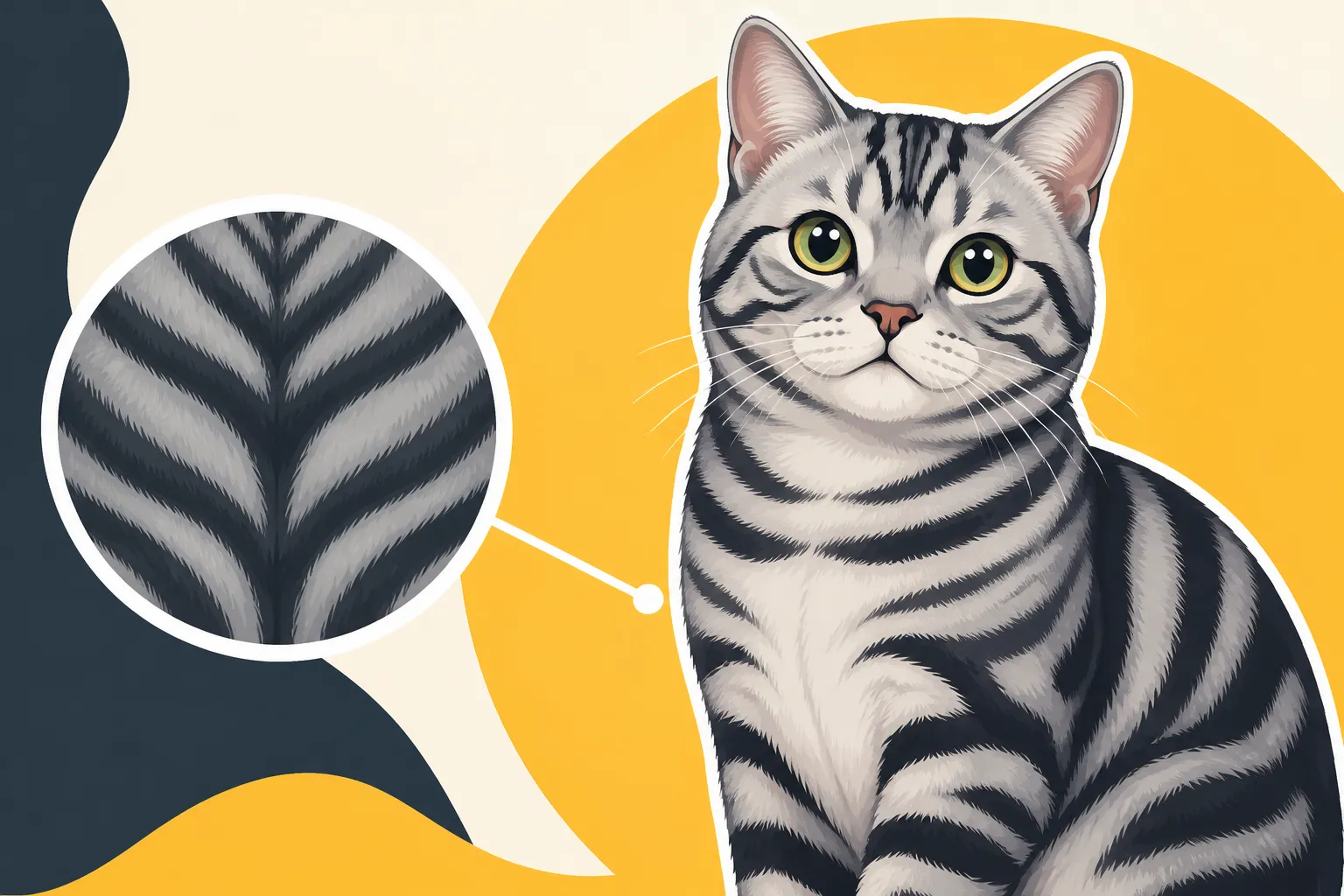
The clearest clue is the pattern along the cat’s sides. Mackerel tabbies have narrow stripes that run vertically down the body, often curving slightly around the ribs. The lines resemble fish bones branching from a central spine stripe, which is why the pattern is called “mackerel.” In a well-defined example, the stripes are distinct rather than broad, cloudy swirls.
Look at the cat from above and from the side rather than relying on one quick glance. A mackerel tabby commonly has a darker line running along its spine, stripes down the legs, and rings or bands around the tail. On the face, you may see lines across the cheeks and forehead, including the familiar “M” shape above the eyes. The exact contrast and clarity vary from cat to cat.
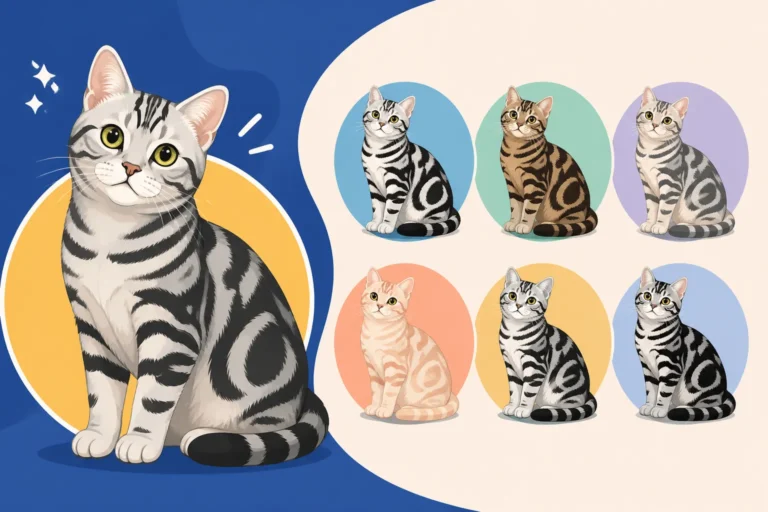
Kittens can make pattern identification a little confusing. Their coats may be softer in color, and the adult pattern can become clearer as they grow. A brown tabby, for example, may have dark brown or black markings over a warm brown background, while a silver tabby has dark markings on a pale, cool-toned ground. Lighting, coat condition, and seasonal shedding can also change how sharp the stripes look.
How mackerel differs from other tabby patterns
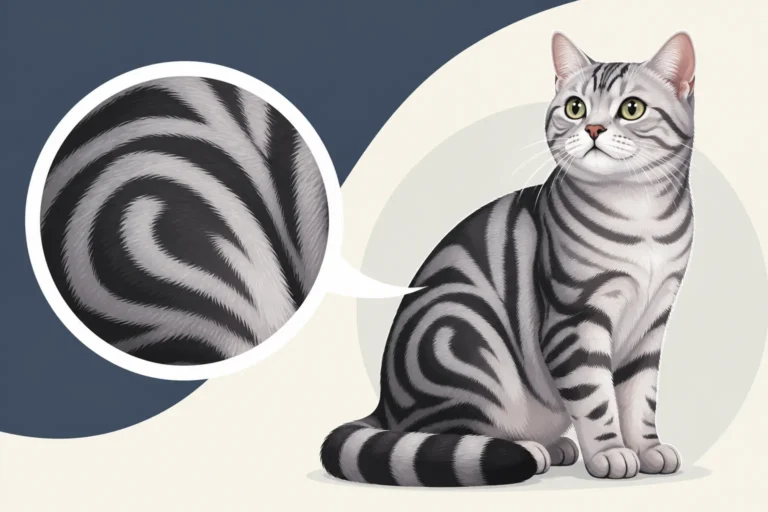
“Mackerel tabby” describes the arrangement of markings, not the cat’s breed. It is one of several familiar tabby patterns, alongside classic tabby, which tends to have broad swirls or bullseye-like markings on the sides. A ticked tabby may have little or no obvious striping on the body, while spotted tabbies show distinct spots or broken stripes.
| Feature | Mackerel tabby | Classic tabby |
|---|---|---|
| Body markings | Narrow, mostly vertical stripes | Broad swirls, loops, or bullseye-like shapes |
| Overall impression | A striped or fishbone appearance | A marbled or whorled appearance |
| Tail and legs | Often ringed or banded | Often ringed or banded |
| Face | Commonly has forehead and cheek lines | Commonly has forehead and cheek lines |
| What it identifies | A coat pattern | A coat pattern |
Not every cat with side stripes has a perfectly textbook pattern. Stripes can be broken, faint, or partly hidden by the coat’s background color. Some cats also have markings that look like a blend when viewed quickly. If you want to explore the range of recognized patterns, Which Patterns an American Shorthair Comes In offers useful context, while What a Silver Tabby American Shorthair Is and What a Brown Tabby American Shorthair Is explain two common color descriptions.
Mackerel tabbies and the American Shorthair breed
A coat pattern does not establish breed
An American Shorthair can be a mackerel tabby, but the pattern alone cannot tell you whether a cat belongs to that breed. Domestic shorthairs, including mixed-ancestry cats, can have the same stripes, colors, and facial markings. A silver mackerel tabby in a shelter may resemble a pedigreed American Shorthair at a glance without having documented American Shorthair ancestry.
That distinction matters if you are choosing a cat and want to know what you are bringing home. Appearance can suggest a resemblance, but a registered pedigree is the meaningful evidence of breed lineage. A DNA test may offer ancestry estimates, but it should not be treated as a substitute for recognized registration documents. For a closer look at the difference, see What a Domestic Shorthair Is Next to an American Shorthair and How to Tell an American Shorthair From a Random Bred Tabby.
The breed itself is judged by more than coat color or markings. Its overall structure, head shape, body, coat, and other traits contribute to whether a cat fits the breed standard. If you are comparing a particular cat with the breed’s typical appearance, What an American Shorthair Looks Like by the Standard and What the American Shorthair Standard Asks For help put the coat into perspective.
Where the pattern fits in the breed standard
American Shorthairs come in many approved colors and patterns, and tabby markings are an important part of the breed’s visual variety. The mackerel pattern may appear with different background colors, so “mackerel tabby” by itself does not tell you whether the cat is silver, brown, red, or another color. Think of the pattern as the layout of the markings and the color as the shades used to create them.
The familiar silver tabby has become especially associated with the breed, but it is not the only American Shorthair appearance. A mackerel tabby might be silver with dark stripes, or have a warmer brown background with darker markings. Why the Silver Tabby Became the American Shorthair's Face explains why that particular look is so recognizable, but a less familiar color or pattern does not automatically make a cat less of an American Shorthair.
If you are buying from a breeder, ask how the kitten is registered and what documentation will accompany it. Do not rely on a seller’s description such as “looks like an American Shorthair” as proof of pedigree. Conversely, if you are adopting, it is perfectly reasonable to love a cat for its personality and appearance without needing to assign it a precise breed label.
Color, contrast, and coat details
Reading the color behind the stripes
A mackerel tabby’s coat has a background color and darker markings. The background may look pale silver, warm brown, cream, or another shade, while the stripes create contrast. People sometimes use the word “silver” to describe a cat that looks gray, but the precise appearance depends on the coat, light, and the colors of the individual hairs.
Try to describe what you see without letting one feature do too much work. A cat might have a pale base coat and black stripes, but that tells you about its coloration and pattern, not its pedigree. If you are taking a cat to a vet, describing the pattern as “silver mackerel tabby” can be useful for identification, especially if the cat has distinctive markings. It still does not replace a microchip or other reliable identification.
Photographs can also be misleading. Indoor lighting may make a silver coat look beige or a warm brown coat look gray. A phone camera can smooth out fine stripes or exaggerate contrast. If you are comparing photos, look for the overall arrangement of the markings—the narrow side stripes, back line, and tail bands—rather than judging breed from a single color impression.
Coat care for a shorthaired tabby
The tabby pattern does not require a special grooming routine. A short coat is usually straightforward to maintain, but short-haired cats still shed, and loose hair can collect on furniture and clothing. A gentle comb or brush used regularly can help remove loose coat and give you a chance to notice changes such as dandruff, small scabs, or new lumps.
Keep grooming low-pressure, particularly if your cat is unsure about being handled. Start with a few calm strokes and stop before the cat becomes irritated. You can browse basic grooming tools through retailers such as Chewy, but the most important thing is choosing a tool your cat tolerates and using it gently. A slicker brush or comb that pulls at the coat is more likely to turn a simple routine into a wrestling match.
The same practical approach applies to supplies. If a cat’s stripes are hard to see because of loose hair, regular brushing may help the coat look neater, but there is no need to try to “enhance” the pattern with products. For cats that dislike brushes, a grooming glove may feel less intrusive. Chewy’s product listings can be useful for comparing tool shapes and reading descriptions, though comfort for your individual cat is the deciding factor.
What to consider when identifying or choosing one
Questions to ask about a pedigreed kitten
If a breeder describes a kitten as a mackerel tabby American Shorthair, ask for the registered breed information and paperwork, not just photos. You can also ask to see the kitten’s parents, learn how the kittens are raised, and find out what health checks and veterinary care have been completed. A responsible breeder should be comfortable discussing the kitten’s background and answering reasonable questions.
Look closely at the full picture rather than focusing only on an attractive coat. Ask how the kitten behaves around people and other animals, what food it is eating, and how the breeder plans the transition to its new home. A kitten may have striking stripes, but temperament, early socialization, health, and the quality of the placement matter much more than whether its markings are perfectly symmetrical.
If you are still comparing breed appearance with a tabby’s coat, What a Mackerel Tabby American Shorthair Is is not the only detail to consider. The broader breed overview in What an American Shorthair Looks Like by the Standard can help you understand why the breed is assessed as a whole rather than by one distinctive marking.
Questions to ask when adopting a tabby
At a shelter or rescue, staff may not know a cat’s full ancestry, and that is normal. You can still ask about the cat’s age estimate, health history, known behavior, and experience with children or other pets. If the cat resembles an American Shorthair, describe it as an American Shorthair-type or tabby unless there is documentation supporting a pedigree claim.
Make the homecoming easier by setting up a quiet room with food, water, a litter box, a scratching surface, and a safe place to hide. Give the cat time to explore at its own pace. A confident-looking, sturdy tabby may still be unsettled by a new home, unfamiliar voices, or a different routine. The coat pattern cannot tell you how quickly that individual cat will adjust.
For day-to-day care, focus on basics rather than breed assumptions: provide a balanced diet, fresh water, routine veterinary care, play, and a comfortable litter setup. Chewy can be one place to compare ordinary supplies such as food puzzles, brushes, or litter-box accessories, but choose items based on your cat’s needs and your veterinarian’s guidance where health is involved.
A mackerel tabby American Shorthair is, in short, an American Shorthair with narrow, stripe-like tabby markings. Those stripes are appealing and distinctive, but they do not establish breed on their own. When identifying a cat, separate the coat pattern from the pedigree, and when choosing one, give equal attention to health, temperament, and the home the cat will be joining.
Disclaimer
This article is for general informational purposes only and does not constitute professional advice. Laws, prices and regulations vary by location and change over time. Consult a qualified professional for guidance on your specific situation.