What the American Shorthair Says About Cat Breeding
A cat can look like a familiar tabby and still represent a carefully maintained pedigree—or be a wonderful domestic shorthair with no registered breed ancestry at all. That difference gets to the heart of what the American Shorthair says about cat breeding: how working cats become a defined breed, what standards can preserve, and why health and welfare matter more than appearance alone.
The American Shorthair began with a job, not a look
Working cats were selected for practical strengths
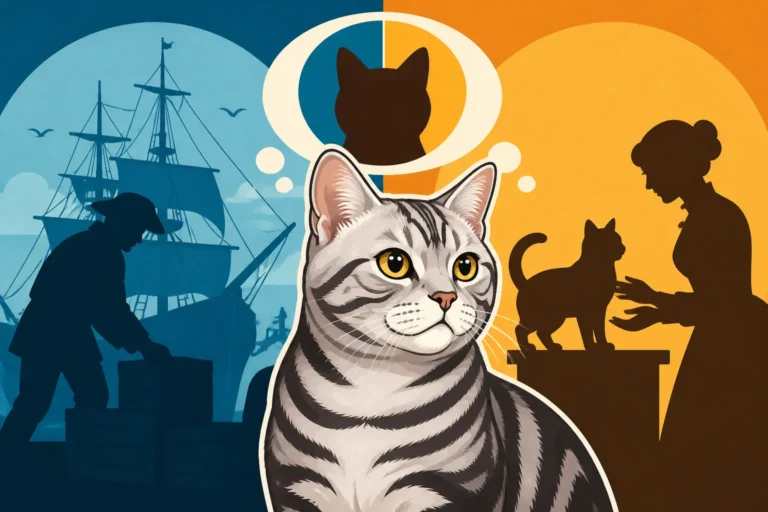
The American Shorthair’s history is tied to ordinary cats kept to control rodents around farms, homes, and ships. In those settings, a cat’s usefulness mattered more than whether its coat matched a show-ring ideal. A sturdy body, capable hunting instincts, and the ability to live alongside people were practical advantages, not points on a judging sheet.
That history helps explain why the breed is often discussed as an example of function shaping form. Cats that could thrive in demanding everyday conditions were valued, and traits associated with a robust working cat became part of the picture people now recognize. For more on that foundation, see How Farm Work Shaped the American Shorthair.
But it is important not to turn a broad history into a tidy origin myth. The ancestors of today’s breed were not necessarily a single, uniform population with a formal pedigree. Many were simply cats doing useful work, and the modern breed emerged later through deliberate selection and record-keeping. The story is less “a perfect breed arrived fully formed” and more “people began defining and preserving a type that had developed over time.”
A familiar-looking cat became a named breed
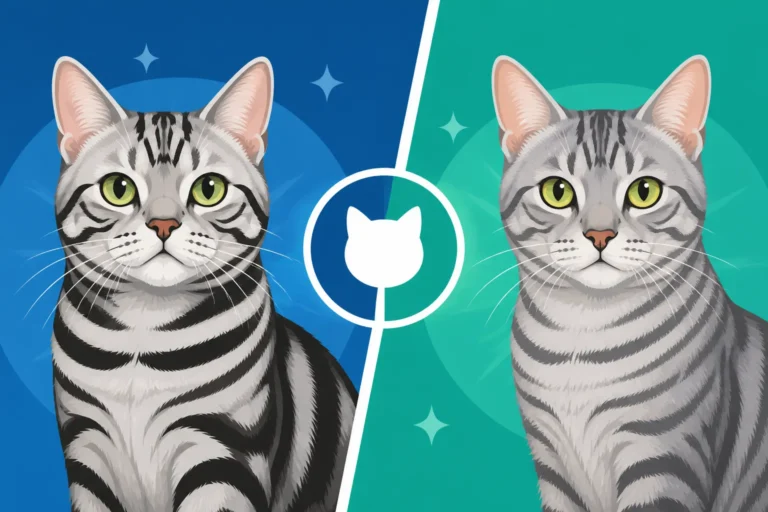
For years, cats of this general type were known as domestic shorthairs. As breeders began distinguishing pedigreed cats from the much larger population of shorthaired cats, a more specific identity became important. The breed’s name changed to American Shorthair in 1966, helping distinguish registered cats bred to a standard from cats who merely looked similar.
That distinction can feel a little awkward to prospective owners. A shelter cat may have a classic silver tabby coat and a sturdy build, yet appearance alone cannot establish that it is a pedigreed American Shorthair. A recognized breed is defined through ancestry and registry records as well as physical traits. The naming history is explored in Why the American Shorthair Was Called Domestic Shorthair Until 1966 and The Rename That Separated the American Shorthair From the Alley Cat.
This is not a judgment about the value of non-pedigreed cats. It is simply a reminder that “looks like” and “is documented as” answer different questions. A domestic shorthair can be healthy, affectionate, and striking without being a registered American Shorthair. Understanding that difference makes conversations about breed history more honest and adoption decisions less confusing.
The breed shows how standards turn variation into a recognizable type
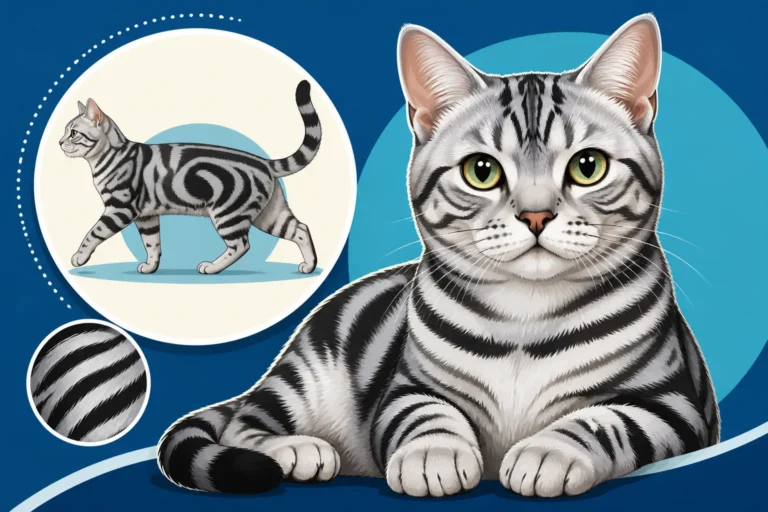
A breed standard describes the features breeders aim to preserve. In the American Shorthair, that includes a balanced, substantial build and a head and body shape associated with a capable, moderate cat rather than an exaggerated one. The standard gives breeders and judges a shared framework, but it does not mean every American Shorthair should look identical.
Standards are useful because they make a breed legible across generations. They can help keep a recognizable type from drifting too far, and they give breeders a basis for evaluating cats beyond color or first impressions. At the same time, a standard is a human tool. It reflects choices about which traits deserve emphasis, and those choices should be reviewed with attention to health and comfort. See What an American Shorthair Looks Like by the Standard for more on the breed’s physical description.
The larger lesson is that a standard can preserve a functional, moderate appearance—or encourage breeders to chase an increasingly narrow ideal. The words in a standard matter, but so do the decisions made in real breeding programs: which cats are selected, which are excluded, and whether health and temperament remain central.
What the breed reveals about selection and genetic diversity
Selection always involves trade-offs
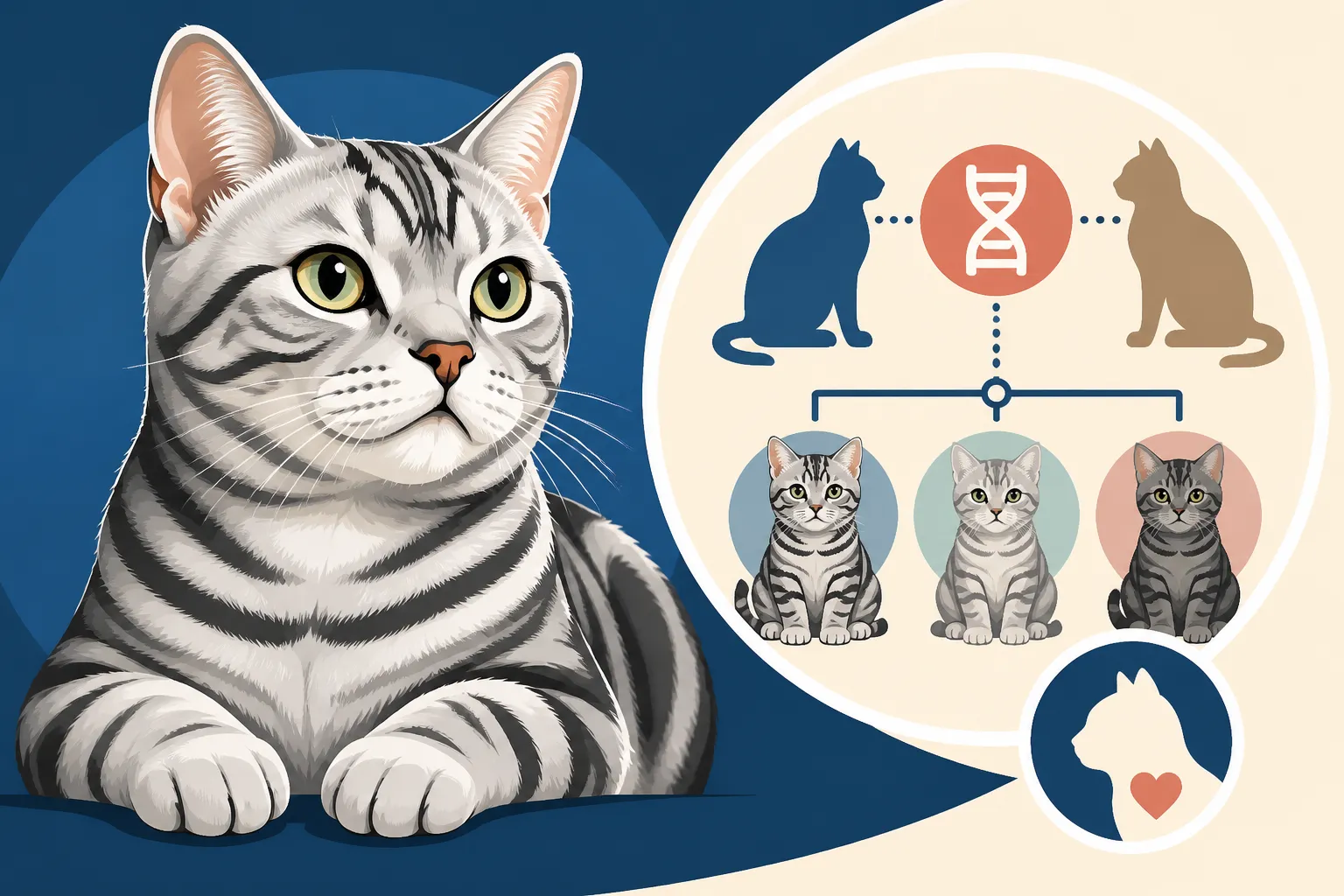
Breeding is a process of choosing which animals will have offspring and which traits are more likely to appear in future generations. Even when breeders aim for a healthy, balanced cat, repeated selection can shift a population. A favorite coat pattern, head shape, or body type may become more common, while less visible traits receive less attention.
This does not mean that all selective breeding is harmful. Careful selection can preserve valued qualities and reduce the chance of passing on some known problems. But focusing too narrowly on appearance can create pressure to use a limited group of popular cats repeatedly. Over time, that can shrink effective genetic diversity, even if a breed has a larger recorded population than a rare breed.
The American Shorthair offers a useful way to ask a broader question: are breeders maintaining a healthy population, or merely reproducing a recognizable picture? A cat’s outline in a show photograph cannot tell you whether its relatives were screened, whether the breeding pair was chosen thoughtfully, or whether less visible health concerns are being monitored.
A pedigree is a record, not a health guarantee
A pedigree can document ancestry and help a breeder understand relationships between cats. That information can be valuable when making breeding decisions, especially when combined with health histories and appropriate veterinary assessments. But a pedigree does not, by itself, certify that an individual cat is free from disease or will never develop a health problem.
This distinction matters for anyone comparing a registered kitten with a shelter cat. Registration tells you something about documented lineage and breed identity; it does not replace health information. A responsible breeder should be willing to explain what health checks have been performed, what they can and cannot show, and how the results inform breeding choices. What an American Shorthair Breeder Should Have Screened is a useful companion topic.
It is also worth being cautious about broad claims that a breed is “healthy” or “low risk.” Every cat is an individual, and risk can vary among families and lines. A thoughtful conversation asks what is known about the parents and relatives, rather than assuming that a breed label settles the question.
Breed identity and genetic openness are not the same thing
A breed can have a clear identity while breeders still pay attention to the health of its gene pool. In practice, maintaining a population involves balancing consistency with enough genetic variety to avoid excessive concentration of inherited traits. That balance is not solved by simply trying to make every cat look more alike.
The breed’s working-cat background often leads people to describe the American Shorthair as naturally robust. That idea should not be mistaken for proof that its gene pool is immune to the effects of selective breeding. No breed history can substitute for careful decisions made in present-day breeding programs, including evaluation of relatives, thoughtful pairings, and honest record-keeping.
This is a lesson that applies well beyond one breed. The more attention a breeding community gives to diversity, temperament, and whole-life health, the less likely it is to treat a fashionable appearance as the only measure of success. A breed remains a living population, not a finished product.
What responsible cat breeding should prioritize
Health should shape choices before appearance
Health-centered breeding is not just about running a test and declaring a cat “clear.” Some conditions do not have a simple test, some assessments offer information only at a particular point in time, and inherited risk can be complicated. Responsible breeders use the tools appropriate to the concern, keep track of relevant family history, and avoid presenting any single result as an absolute promise.
For potential owners, it is reasonable to ask which evaluations were done on the parents and whether documentation is available. A careful breeder should be able to explain the purpose of each check in plain language. They should also be open about uncertainty. An answer like “we do not know everything, but here is what we checked and why” is more credible than a sweeping guarantee.
This kind of transparency is one reason breed discussions should include more than looks and price. A healthy breeding program takes time, record-keeping, and decisions that may not produce the most dramatic-looking kitten in every litter. Those choices are part of what a pedigree should represent.
Temperament and everyday function deserve a place in the conversation
A cat’s quality of life is shaped by more than its physical appearance. Temperament, confidence, ability to adapt, and comfort with ordinary handling all affect how well a cat and household fit together. These traits are not perfectly predictable, but breeders can observe adult cats and kittens, discuss family tendencies, and help match a kitten’s personality to a home.
The American Shorthair’s history makes this point especially clear. Its appeal is not only a sturdy frame or a familiar tabby coat; it is also the idea of a capable, adaptable companion. Breeding for a picture-perfect outline while ignoring behavior would miss much of what made the type useful and appealing in the first place.
For prospective owners, practical questions can reveal more than asking whether a kitten is “the calm one.” Ask how the kitten responds to new sounds, whether it seeks interaction or prefers to observe first, and what the breeder has noticed about its play and recovery after surprises. No answer can guarantee adult behavior, but thoughtful observation gives you a better starting point.
Welfare includes the cat’s life beyond the breeding room
A responsible approach considers the entire life of the animal: pregnancy and birth, early socialization, veterinary care, placement, and ongoing support for the new household. It also considers the welfare of adult breeding cats, including whether they have time to recover between litters and whether they can be retired and placed in suitable homes.
Good breeding practices are not just a matter of producing kittens that meet a visual standard. They should also reduce avoidable suffering and help kittens enter homes prepared to meet their needs. That includes honest conversations about costs, care, and what happens if an owner’s circumstances change. Broader questions about ethical standards are discussed in Whether Welfare Bodies Have Anything to Say About the American Shorthair.
For everyday caretakers, responsible decisions continue after adoption. Choosing suitable food, enrichment, and veterinary care does not alter a cat’s pedigree, but it strongly affects its well-being. When comparing products, a retailer such as Chewy may be one place to review ingredient labels and product descriptions; the important step is to match choices to your cat’s needs and your veterinarian’s advice, not to assume that a breed requires a special product.
What the American Shorthair can teach future cat owners
A breed label tells only part of the story
A breed name can help describe likely appearance and documented ancestry, but it is not a complete personality forecast or a guarantee of health. Even within one breed, cats differ in activity, confidence, sociability, and preferred routines. A cat’s individual history and the way it is cared for matter enormously.
The American Shorthair also illustrates why a domestic shorthair should not be treated as a lesser version of a pedigreed breed. The registered cat has documented lineage and has been bred toward a defined standard. The shelter cat may have no known ancestry, but that does not make it less deserving of care or less capable of becoming a wonderful companion. For a closer comparison, see How an American Shorthair Differs From a Domestic Shorthair.
When people understand this distinction, they can choose based on what matters to them. Someone who values predictable ancestry and a particular breed standard may prefer working with a responsible breeder. Someone who is open to a wide range of looks and backgrounds may find an excellent match through a rescue or shelter. Neither path automatically makes someone a better owner.
Look beyond the kitten’s first impression
A kitten’s coat pattern can be captivating, and it is easy to let appearance dominate the decision. But the more useful questions concern health records, socialization, the breeder’s practices, and the kitten’s fit with your household. Ask to understand the parents’ general temperaments and what support is available after the kitten goes home.
A careful selection process should also include a realistic plan for routine care, emergencies, and enrichment. If you are comparing foods or basic supplies, retailers such as Chewy can help you review product details, but a shopping page cannot assess your individual cat’s nutritional needs or medical history. Keep the focus on clear labeling, a gradual transition when changing food, and guidance from your veterinary team.
The same practical mindset applies to accessories and play. A sturdy scratching surface, appropriate toys, safe places to rest, and opportunities to explore can make a home more comfortable for any cat. Chewy may be one option for browsing those categories, but thoughtful setup and regular interaction matter more than any particular brand or item.
The best breeding lesson is to value the whole cat
The American Shorthair’s story is a reminder that breeds are shaped by human choices. People decide which traits to preserve and how much importance to give them. The most responsible choices treat appearance as one part of a larger picture that includes health, genetic diversity, temperament, and welfare.
That does not mean every breed must be judged by exactly the same priorities, or that standards have no value. It means standards should serve cats rather than the other way around. A recognizable type is meaningful only when the cats themselves can live comfortably, behave naturally, and receive responsible care.
For readers wondering what the American Shorthair says about cat breeding, the answer is not that one breed proves breeding is good or bad. It shows that working traits can become a valued breed identity, that labels and pedigrees need context, and that ethical breeding requires attention to more than the traits people can see at a glance. The American Shorthair Is the Control Group of Cat Breeding offers another perspective on why this breed is often used in discussions of breeding choices, while What People Get Wrong About the American Shorthair helps untangle common assumptions about its identity.
Disclaimer
This article is for general informational purposes only and does not constitute professional advice. Laws, prices and regulations vary by location and change over time. Consult a qualified professional for guidance on your specific situation.