How Weight Wears Out an American Shorthair’s Joints
It's a tough pill to swallow when you realize your sturdy, robust American Shorthair, a breed known for its healthy, working frame, isn't as spry as they used to be, perhaps hesitating before jumping onto the sofa or showing a stiffness after a nap. This guide will dive deep into how excess weight relentlessly stresses their joints, leading to discomfort, mobility issues, and a diminished quality of life, and what you can do to prevent it and support your beloved feline companion.
The American Shorthair's Sturdy Frame and Why It's Vulnerable to Weight
American Shorthairs are renowned for their robust, muscular build, a testament to their lineage as working cats. They were bred for function, for keeping barns and ships clear of rodents, which meant they needed to be agile, strong, and enduring. This heritage bestowed upon them a wonderfully hardy constitution, but it also comes with a specific anatomical blueprint that can be particularly vulnerable when burdened by extra weight. Their very strength can become a weakness if their bodies are asked to carry more than they were designed for.
Understanding the American Shorthair's Natural Build
Think about the quintessential American Shorthair: a medium-to-large cat with a powerful, well-muscled body, a broad chest, and sturdy legs. Their bones are dense, their musculature is developed, and they move with a confident, ground-covering stride. They are not delicate creatures; they are built for action, for quick bursts of speed, and for powerful jumps. This "square build," as it's often described, means their skeletal structure and joint capsules are designed to distribute their ideal body weight efficiently during high-impact activities. For generations, their survival depended on maintaining this optimal physical condition. When we look at their structure, we see a cat that is perfectly adapted to a life of active patrolling and hunting, not a life of sedentary ease.
However, this inherent robustness doesn't make them immune to the effects of excess weight. In fact, their dense frame can sometimes mask early signs of obesity, as their stocky appearance might initially seem 'normal' to an untrained eye. It’s a cruel irony that the very traits that made them such effective working cats—their powerful muscles and broad chests—are the ones that will take the brunt of the impact when too many pounds are added to their frame. We’ve written before about how their original job protected them from many modern ailments, and a good way to understand this breed's healthy foundation is to look at The American Shorthair Is the Control Group of Cat Breeding.
How a Stocky Build Carries Weight Through Its Hips and Legs
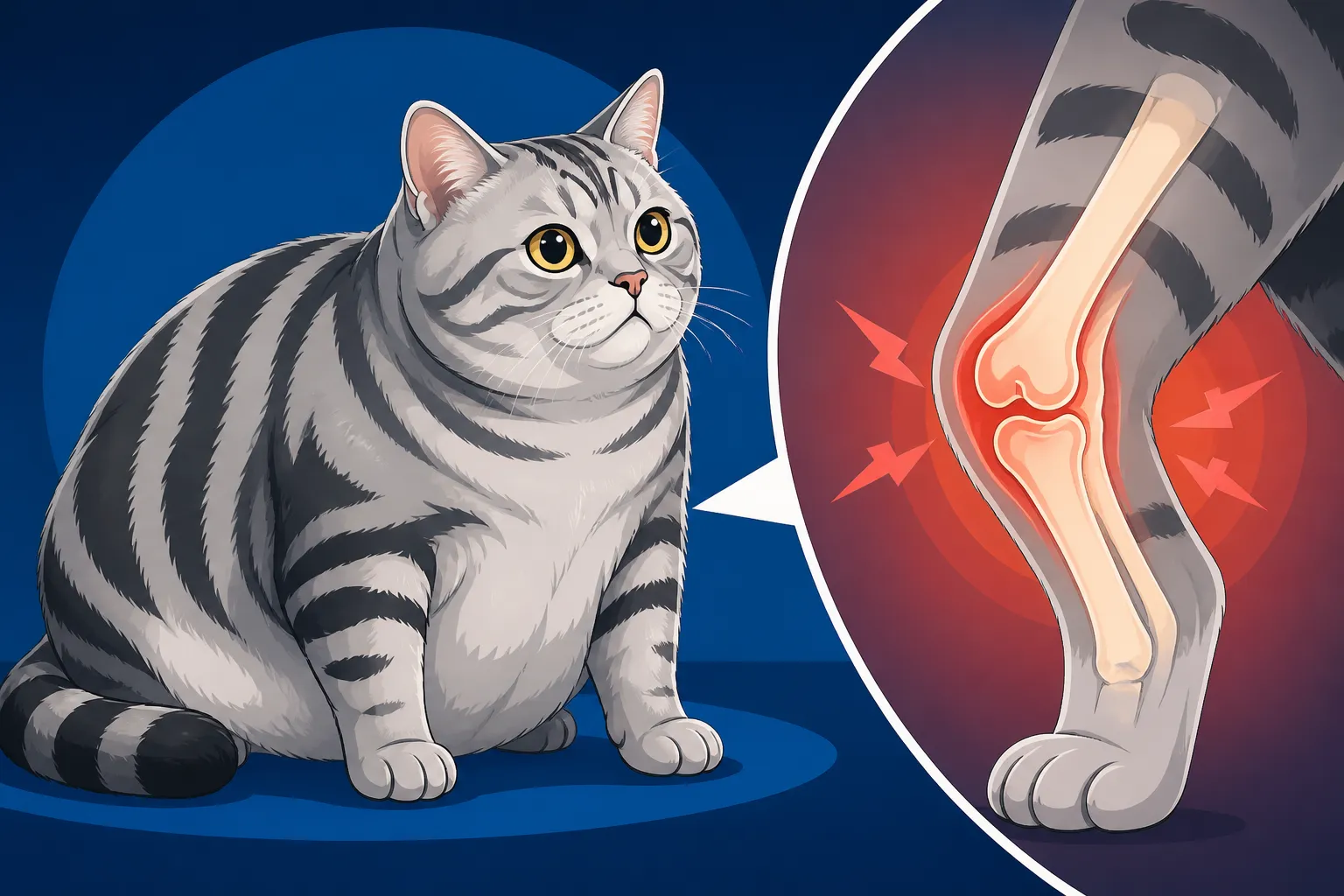
The American Shorthair's powerful rear legs and hips are the engine of their athleticism. They are critical for jumping, running, and climbing – all activities that put significant, but natural, stress on their joints. When an American Shorthair gains weight, every single pound adds disproportionate stress to these crucial weight-bearing joints. Imagine strapping a heavy backpack onto yourself every time you move; that's what it's like for your cat. The additional mass increases the compressive forces within the hip joints, knees, and even the hocks and ankles, pushing cartilage beyond its natural limits. This constant, elevated pressure begins to degrade the smooth, shock-absorbing cartilage that cushions the bones.
This phenomenon is particularly pronounced in their hips. As we discussed in Why a Stocky Build Costs an American Shorthair Its Hips, the very architecture that gives them powerful hindquarters also means that these joints are under immense pressure with every step, every jump, and every landing. The added weight forces the hip joint to articulate unnaturally, causing the ball and socket to grind more than glide. The ligaments and tendons supporting these joints, which are already working hard, become stretched and strained under the increased load. Over time, this chronic stress leads to inflammation, micro-trauma, and eventually, degenerative joint disease, or osteoarthritis. This isn't just about the physical burden; it's about the biological response to that burden, initiating a cascade of destructive processes within the joint itself.
The Mechanics of Weight-Induced Joint Strain
It’s not just the visible extra fat that’s causing problems; it’s the insidious, invisible damage happening at a cellular level within their joints. When we talk about how weight wears out an American Shorthair's joints, we're delving into a complex interplay of physical forces, biological responses, and a relentless cycle of degradation that, once started, can be difficult to reverse entirely. Understanding these mechanics is crucial to appreciating the urgency of weight management for these magnificent felines.
The Cumulative Effect of Extra Pounds on Cartilage and Ligaments
Every extra ounce on an American Shorthair translates into significantly more force exerted on their joints during movement. Think of the cartilage in their joints as the smooth, slippery lining that allows bones to glide effortlessly against each other, acting like a natural shock absorber. When a cat is overweight, this delicate cartilage is subjected to constant, excessive compression and shear forces. It's like consistently driving a car over rough terrain – the tires and suspension (the cartilage and ligaments in this analogy) wear out much faster. This sustained overload causes the cartilage to thin, crack, and eventually erode away. Once cartilage is damaged, it doesn't regenerate effectively, leading to bone-on-bone friction, which is incredibly painful.
Beyond cartilage, the ligaments and tendons that stabilize the joints also suffer. These strong, fibrous bands are designed to hold the bones in proper alignment and limit excessive movement. With added weight, these structures are continuously stretched and strained beyond their normal capacity. Over time, they can lose their elasticity, become weakened, or even suffer microscopic tears. This leads to joint instability, making the joint more susceptible to further injury and accelerating the degenerative process. The cumulative effect is a vicious cycle: weakened ligaments lead to less stable joints, which further damages cartilage, and so on. This is what What Extra Weight Does to an American Shorthair's Working Frame really explores. Protecting these structures often requires long-term planning, and services like Healthy Paws can be invaluable for managing chronic conditions that arise from such wear and tear.
Inflammation and Pain Cycle in Overburdened Joints
It’s not purely a mechanical issue; there’s a significant biological component. Adipose tissue, or fat, is not just inert storage; it's an active endocrine organ that produces and releases pro-inflammatory hormones and signaling molecules, such as leptin and adipokines. These substances circulate throughout the body, including the joints, where they exacerbate inflammation. So, an overweight American Shorthair isn't just dealing with the physical stress of extra weight; their body is also constantly battling a systemic inflammatory state that directly targets and damages joint tissues. This is especially true for our stoic feline friends, who often hide their discomfort until it becomes severe.
This chronic inflammation is a major driver of pain and further joint damage. The inflammatory mediators break down joint fluid (synovial fluid), reducing its lubricating properties, and directly damage the cells that maintain cartilage health. This creates a painful cycle: inflammation leads to more damage, which leads to more inflammation and more pain. The cat becomes less willing to move, which then often leads to further weight gain because they're burning fewer calories. This sedentary lifestyle contributes to muscle atrophy, further destabilizing the joints and increasing the burden on weakened structures. It’s a downward spiral that can severely impact their quality of life, and it's a primary reason why addressing Obesity Is What Ending the American Shorthair's Job Cost It is so critical for their overall health and well-being.
Recognizing the Signs of Joint Wear and Managing the Problem
Recognizing that your American Shorthair's joints are wearing out can be particularly challenging because cats are masters of disguise when it comes to pain. Their evolutionary history as solitary predators meant showing weakness could make them vulnerable. This stoicism often means that by the time you notice overt signs of discomfort, the underlying joint damage is often quite advanced. It's up to us, their devoted caregivers, to be vigilant and understand the subtle clues they might be giving us.
Subtle Clues Your American Shorthair's Joints Are Hurting
Your American Shorthair might not limp dramatically or cry out in pain. Instead, the signs are often much more subtle, requiring close observation of their daily habits and movements. One of the earliest indicators might be a reluctance to perform activities they once enjoyed, like jumping to their favorite high perch. You might notice they take a longer, more circuitous route, or they may even just stop jumping to the counter altogether, opting for lower spots. A change in their gait, even a slight stiffness or a less fluid movement, especially after resting, can be a major red flag. They might seem a bit slower to get up, or you could observe a subtle change in how they use the litter box, perhaps struggling to get in or out.
Grooming habits can also change. An overweight cat with sore joints may struggle to reach certain areas, particularly their back or hindquarters, leading to a duller coat, mats, or even skin issues in those neglected spots. Behavioral changes like increased irritability, withdrawal, or a decreased desire to play or interact can also indicate chronic pain. They might also start sleeping in new, lower places, avoiding stairs or vertical surfaces. Because American Shorthairs are typically so active and agile, any reduction in their usual mobility should prompt a closer look. If you're wondering How an Old American Shorthair Shows Its Joints Hurt, these subtle cues are often the first, and most important, warnings. Taking pictures or videos of your cat's movement over time can sometimes help you spot these gradual changes you might otherwise miss in day-to-day interactions.
Practical Steps to Alleviate Joint Stress and Improve Mobility
The most impactful step you can take to alleviate joint stress in an overweight American Shorthair is to help them achieve a healthy weight. This isn't a quick fix; it requires a dedicated, veterinarian-supervised plan focusing on controlled caloric intake and appropriate exercise. Your vet can help you determine How to Spot Weight Gain on a Square Built American Shorthair and create a safe and effective weight loss strategy. This often involves switching to a specific diet food, precise portion control, and integrating more play sessions that encourage movement without overstressing already compromised joints. Puzzle feeders and interactive toys can also make mealtime an enriching activity rather than just a quick gulp. Remember, rapid weight loss can be dangerous, potentially leading to fatty liver disease, so a gradual approach is key.
Beyond weight loss, there are several ways to support your cat's joint health. Joint supplements containing glucosamine, chondroitin, and omega-3 fatty acids can help support cartilage health and reduce inflammation. These can be discussed with your vet to ensure they are appropriate for your individual cat. Creating an environment that accommodates their reduced mobility is also crucial. Provide ramps or steps to help them reach their favorite elevated spots without painful jumps, and ensure their litter box has low sides for easy access. Soft, orthopedic beds can offer comfort for aching joints. For cats already showing significant signs of joint pain, your veterinarian might prescribe pain relief or anti-inflammatory medications. Regular vet check-ups, even if your cat is seemingly healthy, are essential for monitoring their joint health and intervening early. An annual check-up that includes a thorough physical examination can catch subtle changes before they become major problems. Companies like Healthy Paws offer pet insurance plans that can help cover the costs of these diagnostics and long-term treatments, making ongoing care more accessible.
The Long-Term Impact of Untreated Weight on Your Cat's Lifespan
Ignoring the issue of excess weight and its impact on your American Shorthair's joints is, unfortunately, a direct path to a diminished quality of life and a potentially shortened lifespan. Chronic joint pain makes simple movements agonizing, robbing your cat of their natural agility and zest for life. A cat that can no longer jump, run, or groom itself properly experiences a significant decline in well-being. This reduced activity leads to further muscle loss, creating a vicious cycle where weakened muscles provide less support for already damaged joints, exacerbating the pain and limiting movement even more. It’s important to acknowledge that How Many Years Extra Weight Takes Off the American Shorthair's Lifespan is a very real and tragic consequence.
Furthermore, chronic inflammation from obesity isn't confined to the joints. It contributes to a wide array of other health problems, including diabetes, heart disease, and a compromised immune system. An overweight American Shorthair is also at higher risk for urinary tract issues and certain types of cancer. While American Shorthairs are generally a healthy, long-lived breed, living for fifteen to twenty years, carrying extra weight systematically erodes that natural longevity. It forces organs to work harder, introduces systemic inflammation, and puts immense strain on a body not built for such continuous burden. The goal is not just to extend their years, but to ensure those years are filled with comfort, activity, and joy, not suffering. Investing in proactive care and considering options like pet insurance from providers like Healthy Paws can help manage the financial burden of chronic conditions that might arise.
| Joint Health Aspect | Ideal Weight American Shorthair | Overweight American Shorthair |
|---|---|---|
| Cartilage Integrity | Smooth, resilient, excellent shock absorption | Thins, cracks, erodes; poor shock absorption |
| Ligament Stability | Strong, elastic, optimal joint alignment | Stretched, weakened, prone to micro-tears; joint instability |
| Inflammation Levels | Minimal systemic inflammation | Chronic systemic inflammation; accelerated joint damage |
| Mobility & Agility | Agile, confident jumps, fluid movement | Reluctance to jump, stiff gait, reduced activity |
| Pain Perception | Generally pain-free movement | Chronic pain, often hidden but persistent |
| Risk of Osteoarthritis | Low | High; accelerated onset and progression |
| Quality of Life | Active, comfortable, full range of motion | Restricted, uncomfortable, diminished engagement |
| Lifespan Impact | Maximized longevity, healthy aging | Reduced lifespan, earlier onset of age-related issues |
Why an American Shorthair Stops Jumping to the Counter
It’s often one of the first, most heartbreaking signs that something is wrong: your once effortlessly agile American Shorthair, who used to vault onto the kitchen counter or the highest bookshelf with barely a thought, now hesitates. They might stare at their desired perch, contemplate it for a long moment, perhaps even try a small jump and abort, or seek a different, lower route entirely. This isn't just "getting old"; it's a clear indicator that the act of jumping, and especially landing, has become painful or too difficult due to joint wear. The impact of landing sends jarring forces through already compromised hips, knees, and ankles, causing a sharp jolt of discomfort.
When your American Shorthair was at an ideal weight, their powerful hindquarters provided the thrust, and their healthy cartilage absorbed the shock. With extra weight, the mechanics change dramatically. The effort required to propel their heavier body upwards is greater, and the landing, which previously felt springy and comfortable, now sends pain signals through inflamed and damaged joints. It’s a moment of reckoning for many owners, a vivid illustration of how their cherished cat's body is silently struggling. Recognizing this behavior means it’s time to consult your vet immediately to assess their joint health and begin addressing their weight. The sooner you intervene, the better the chances of alleviating their discomfort and restoring some of their natural mobility.
Disclaimer
This article is intended for informational purposes only and does not constitute veterinary advice. Always consult with a qualified veterinarian for any health concerns or before making any decisions about your pet's care or treatment.