How to Tell a Pedigree American Shorthair From a Domestic Shorthair
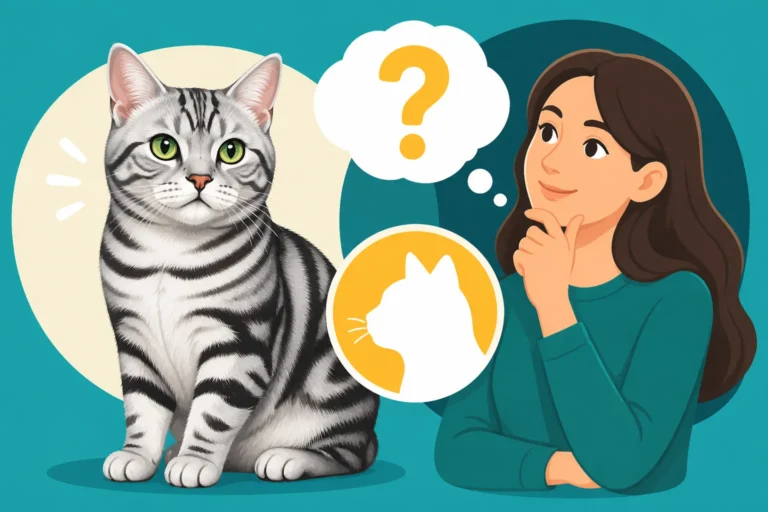
It's incredibly common for people to look at a beautiful, short-haired tabby cat and immediately think, "Ah, an American Shorthair!" But while many American Shorthairs are tabbies, not every tabby, or even every short-haired cat, is a purebred American Shorthair. This widespread confusion often leaves aspiring cat parents wondering what the real difference is, leading to misunderstandings about what they're actually bringing into their home. This guide is here to untangle that knot, showing you exactly how to differentiate a genuine pedigree American Shorthair from a beloved domestic shorthair.
The Heart of the Confusion: Why It's So Easy to Mix Them Up
Let's be honest, at first glance, many cats share a similar silhouette. A sleek, sturdy build, a short coat, and those familiar tabby markings — it's no wonder people often lump all non-long-haired cats into one category. The term "domestic shorthair" itself isn't a breed; it's more like a general description for cats of mixed or unknown ancestry that happen to have short coats. This broad definition makes it incredibly easy for pedigree American Shorthairs, with their historically unexaggerated features, to blend right into a crowd of their mixed-breed cousins. It's a bit like trying to spot a purebred Labrador in a park full of friendly, medium-sized mixed-breed dogs. Without specific markers or documentation, it's a real head-scratcher.
The "Tabby Cat" Misconception and What It Really Means
One of the biggest culprits in this confusion is the "tabby cat" label. When someone says "tabby," most people immediately picture a cat with stripes, swirls, or spots on its coat. And yes, the classic silver tabby pattern is probably the most iconic look for an American Shorthair, even making a Which Silver Tabby American Shorthair Became a Grand Champion famous in the cat fancy world. But "tabby" isn't a breed; it's simply a coat pattern. You can have tabby Persian cats, tabby Maine Coons, and certainly, tabby domestic shorthairs.
The American Shorthair comes in over eighty different colors and patterns, not just tabby! You might find solid blacks, pure whites, calicos, bicolors, and even smokes within the breed. So, while a stunning silver tabby might look like the quintessential American Shorthair, its markings alone aren't enough to confirm its pedigree status. You'll encounter countless domestic shorthairs with these same patterns, proving that a pretty set of stripes is not a passport to a specific breed. It's the whole package – the structure, the temperament, and most crucially, the documented ancestry – that truly defines the American Shorthair.
Historical Overlap: Why the Names Got Confused
The very history of the American Shorthair is woven deeply into the fabric of the common domestic cat. For many years, what we now call the American Shorthair was simply known as the Domestic Shorthair, which only adds to the layers of confusion. Imagine trying to differentiate between two things when, for decades, they shared the exact same name! The ancestors of today's American Shorthair were the working cats brought over on ships from Europe to control rodent populations. They were valued for their robustness, their hunting prowess, and their ability to thrive in various environments, not for any specific aesthetic ideal.
It wasn't until the mid-20th century that the breed officially changed its name to "American Shorthair" in 1966. This was a deliberate move by breeders to distinguish their carefully bred, pedigreed lines from the vast population of everyday housecats. The aim was to emphasize its unique American heritage and its development into a distinct breed, ensuring it wouldn't be mistaken for just any random short-haired cat. However, that historical overlap means the perception of "Domestic Shorthair" as a breed lingers in the public imagination, making it harder to appreciate the specific characteristics that define the pedigree. Understanding Why the American Shorthair Was Called Domestic Shorthair Until 1966 helps to clarify this deep-rooted misunderstanding.
Unpacking the Pedigree: What Makes an American Shorthair Official
When we talk about a "pedigree" American Shorthair, we're not just talking about a cat that looks the part. We're talking about a cat with a documented family tree, verified by reputable cat registries, that proves its lineage and adherence to a specific breed standard. This is the absolute cornerstone of distinguishing a pedigree from a domestic shorthair. Without this verifiable history, no matter how perfectly a cat matches the breed description, it cannot technically be called a purebred American Shorthair. It's the difference between a family heirloom with proven provenance and a beautiful antique that's probably from the same era but lacks the paperwork.
The Role of Registries: CFA and TICA
Cat registries are the official record-keepers of the feline world. Organizations like the Cat Fanciers' Association (CFA) and The International Cat Association (TICA) are crucial for validating a cat's breed status. When an American Shorthair is born, its breeder registers the litter, and then each individual kitten, with one of these associations. This registration process involves submitting information about the parents (who must also be registered American Shorthairs), the birth date, and often, details about the kitten's color and pattern.
These registries maintain meticulous records, tracing back generations, ensuring the integrity of the breed. If a cat is truly a pedigree American Shorthair, it will have a registration number and often a championship title in its lineage, confirming its ancestry and adherence to breed standards. This is the verifiable proof that separates a carefully bred animal from a random-bred one. A responsible breeder will always provide you with these registration papers, often after you've provided proof of spay/neuter for a pet-quality kitten, ensuring the integrity of the breed lines. You might wonder Why a CFA Registered American Shorthair Costs More, and the answer lies partly in this rigorous record-keeping and commitment to breed standards.
The Importance of a Pedigree Certificate
A pedigree certificate is essentially a cat's family tree. It lists its ancestors for at least three to five generations, detailing their names, registration numbers, and often any titles they've achieved in cat shows. This document is far more than just a piece of paper; it’s a genetic roadmap. It confirms that your cat's parents, grandparents, and great-grandparents were all recognized American Shorthairs, bred to the specific standards of the breed.
This certificate is vital for several reasons. Firstly, it provides proof of authenticity. Secondly, it can offer insights into potential inherited health traits, as responsible breeders will track health information through their lines. Thirdly, for those interested in showing or breeding (though reputable breeders typically only sell breeding rights to other established breeders), the pedigree is essential. Without this official documentation from a recognized registry, any claim of a cat being a "purebred American Shorthair" is simply anecdotal. If you're looking for a genuine pedigree American Shorthair, always ask to see the parents' pedigrees and ensure the kitten can be registered in your name.
Physical Distinctions: The American Shorthair Standard
While documentation is the absolute proof, understanding the physical characteristics outlined in the breed standard can help you recognize an American Shorthair when you see one, even before you ask for papers. The American Shorthair standard describes a cat built for a purpose – a sturdy, well-muscled animal designed for hunting and resilience. These aren't exaggerated features; they are functional traits that define its robust nature. A domestic shorthair, by contrast, can exhibit a vast array of physical types, as there's no set standard they're bred to meet.
Head, Face, and Eye Shape: Beyond "Cute"
The American Shorthair's head is often described as large, with a full-cheeked face that is longer than it is wide. It should have a slightly concave curve when viewed in profile from the brow to the nose, and a distinct, square muzzle. This isn't just a "cute" face; it's a strong, functional head built for efficiency. Their ears are medium-sized, slightly rounded at the tips, and set moderately apart. The eyes are large, wide-set, and generally round, though they may appear slightly almond-shaped in certain expressions. Their color should be clear and bright, often corresponding to the coat color – for example, green or gold for tabbies, blue for whites, and copper for others.
Contrast this with a domestic shorthair, whose head can be any shape: round, triangular, narrow, or broad. Their muzzles vary wildly, their ears can be large and pointed or small and tucked, and their eyes can be any color or shape. While a domestic shorthair might coincidentally have some of these features, it's the combination and consistency of these specific traits, all aligning with the breed standard, that points to an American Shorthair.
Body Build and Proportions: The Working Cat Frame
The body of an American Shorthair is perhaps its most defining physical characteristic, embodying its working heritage. They are medium to large in size, well-built, and powerfully muscled. Think of a brick house – solid, sturdy, and substantial. The chest should be broad and deep, the shoulders strong, and the back level. They have medium-length legs with well-rounded, firm paws. Their tail is medium in length, thick at the base, and tapers slightly to a rounded tip. When you pick up an American Shorthair, they should feel surprisingly heavy for their size, a testament to their dense musculature. They are built for strength and agility, perfectly suited for their historical role as rodent catchers.
A domestic shorthair, on the other hand, comes in all shapes and sizes. Some might be long and lean, others small and delicate, some round and soft. While a domestic shorthair might also be muscular, it won't consistently exhibit the specific "square" build and powerful proportions that define the American Shorthair. It's about the entire physique working together according to the established breed type. The breed standard dictates that this cat fills out over time, with a male American Shorthair taking up to three years to reach its full, impressive size and musculature. This is why Why an American Shorthair Takes Three Years to Fill Out is such a commonly asked question among new owners.
Coat Texture and Markings: More Than Just "Short Hair"
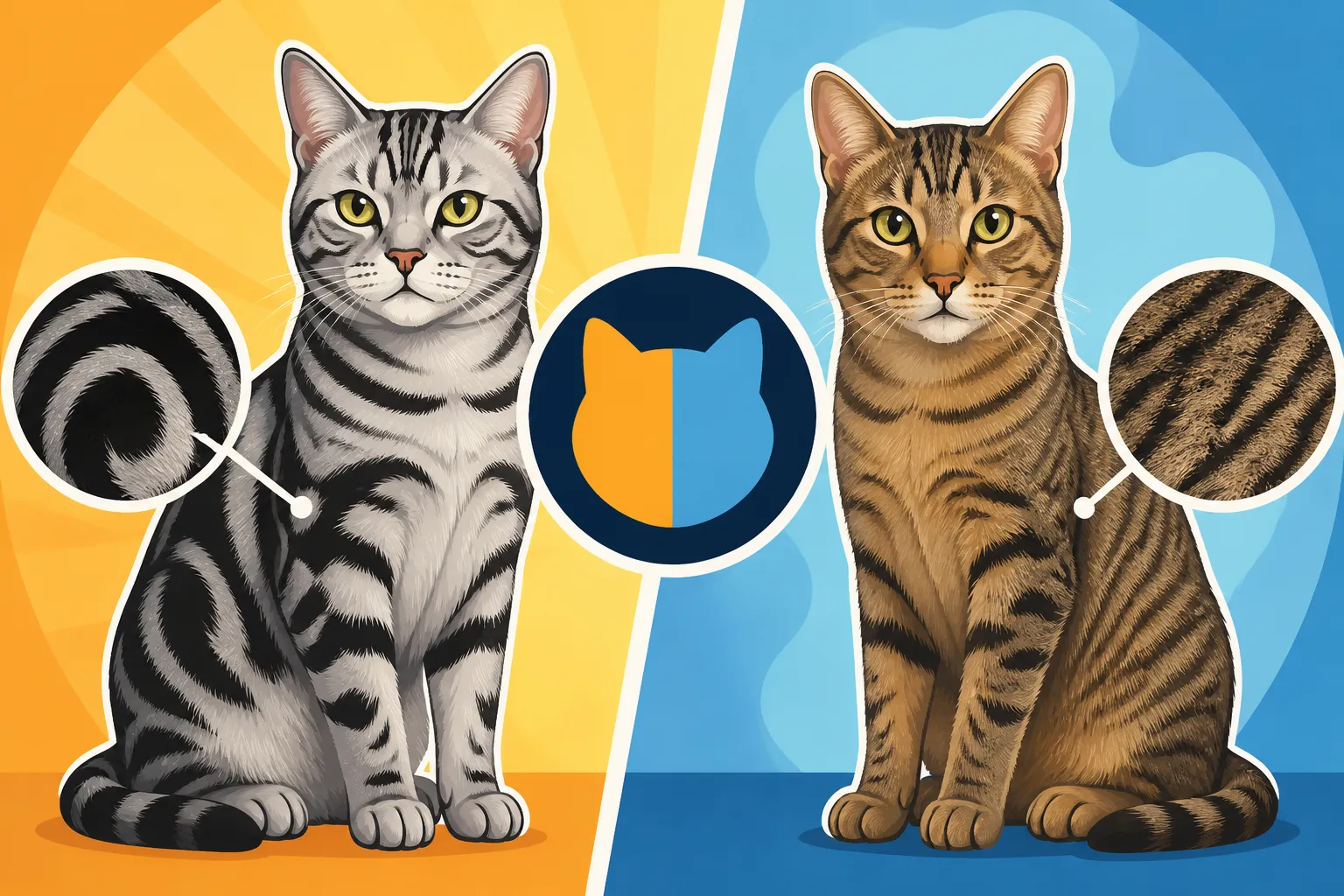
The American Shorthair's coat is another key identifier, even though it's "shorthair." It should be thick, dense, even, and hard to the touch, providing protection from the elements. It’s not soft and plush like a British Shorthair's coat; instead, it has a more resilient, slightly wiry feel. This texture is a direct link to their working past, designed to repel moisture and offer insulation. During different seasons, you'll notice How an American Shorthair's Coat Thickens Toward Winter and thins in summer, adapting to environmental changes just as their ancestors did.
While the silver tabby is iconic, the quality and clarity of the markings are what matter for a pedigree. A classic tabby, for example, will have a distinct "bullseye" pattern on its sides, clean lines, and a definite "M" on its forehead. These patterns should be clear and crisp, not blurred or muddy. For a domestic shorthair, the coat can be of varying densities and textures – from soft and silky to rough and sparse. The markings, if present, might be less defined, or the color might be less vibrant. While Chewy offers a wide variety of grooming tools for all coat types, the American Shorthair generally requires minimal fuss due to its self-maintaining coat. A simple comb is often all you need.
Here's a quick comparison to help solidify these points:
| Feature | Pedigree American Shorthair | Domestic Shorthair |
|---|---|---|
| Documentation | Must have official registration papers from a recognized registry (CFA, TICA), showing multi-generational pedigree. | No official pedigree; ancestry is unknown or mixed. |
| Head Shape | Large, full-cheeked, longer than wide, square muzzle, slightly concave profile. | Varies widely; no specific standard. |
| Eye Shape/Set | Large, wide-set, round (can appear slightly almond), clear, bright color. | Varies widely in shape, set, and color. |
| Body Build | Medium to large, powerful, well-muscled, broad chest, "square" or "brick-like" feel. | Varies widely in size and build, from lean to cobby. |
| Coat Texture | Thick, dense, even, hard to the touch, resilient. | Varies widely in thickness and texture, can be soft or coarse. |
| Markings | Clear, crisp, well-defined patterns (if tabby), wide range of accepted colors. | Can have any pattern or color, often less defined patterns. |
| Temperament | Generally calm, adaptable, even-tempered, independent. | Varies widely, can be shy, bold, or unpredictable. |
Beyond Looks: Temperament and Behavior Clues
While physical appearance and paperwork are the primary ways to distinguish a pedigree American Shorthair, their renowned temperament can also offer some telling clues. Of course, individual personalities vary even within a breed, and a domestic shorthair might share some traits by sheer coincidence. However, the consistent, predictable behavioral patterns that emerge from generations of selective breeding are often what makes a pedigree cat truly distinct. The American Shorthair was never bred for extreme features, but for function and a stable disposition, making What an American Shorthair Bred Only for Usefulness Turns Out Like quite predictable.
The American Shorthair's Even-Keeled Nature
One of the most celebrated traits of the American Shorthair is its wonderfully even-keeled temperament. They are known for being adaptable, patient, and generally quite placid. They tend to be good-natured with children, other pets (including dogs!), and visitors, often observing new situations with a calm curiosity rather than fear or aggression. They're not typically "lap cats" in the demanding sense, preferring to be near you rather than constantly on you, offering companionship without being overly clingy. Their independent spirit means they generally cope well with being left alone for reasonable periods, and they're rarely prone to frantic vocalizations or destructive behaviors born of anxiety. This makes Why an American Shorthair Suits a First Time Owner a common piece of advice.
A domestic shorthair, having a mixed background, can display any range of temperaments. You might get a shy, reclusive cat, a highly energetic and demanding one, or even one with unpredictable reactions to new stimuli. While many domestic shorthairs are wonderfully calm and friendly, there's no inherent genetic predisposition towards a specific temperament type as there is with a pedigree breed. It's a delightful roll of the dice.
Instinctual Traits: The Hunter Within
Even though most American Shorthairs today live comfortable indoor lives, they retain a strong connection to their working ancestry. This means they possess a pronounced hunting instinct, which manifests in their play. They love to stalk, chase, and pounce on toys, completing the full "hunt sequence" with vigor. While they are usually quiet, they can be remarkably focused and agile when engaged in play. You'll find them patrolling their territory, whether that's your living room or a catio, always alert and aware of their surroundings. This innate drive is part of their charm and why The American Shorthair Still Hunts, Whether You Want It To or Not.
Domestic shorthairs also have hunting instincts, of course – they are, after all, cats! However, the intensity and consistency of this drive can vary significantly. Some domestic shorthairs might be avid hunters, while others are more focused on cuddling or simply observing. With a pedigree American Shorthair, you can almost guarantee you'll have a cat that needs engaging play to satisfy its deeply ingrained prey drive, even if it's just chasing a wand toy from Chewy.
Health and Lifespan: What a Pedigree Can (and Cannot) Tell You
Health is a huge consideration for any pet owner, and this is where the pedigree status offers both assurances and specific considerations. While the American Shorthair is celebrated for its robust health and longevity, a pedigree status means you can trace health screenings and potential genetic predispositions, something completely absent in a domestic shorthair. This doesn't mean domestic shorthairs are inherently unhealthy, but rather that their health history is, by nature, a mystery.
Understanding Inherited Health Conditions in Pedigrees
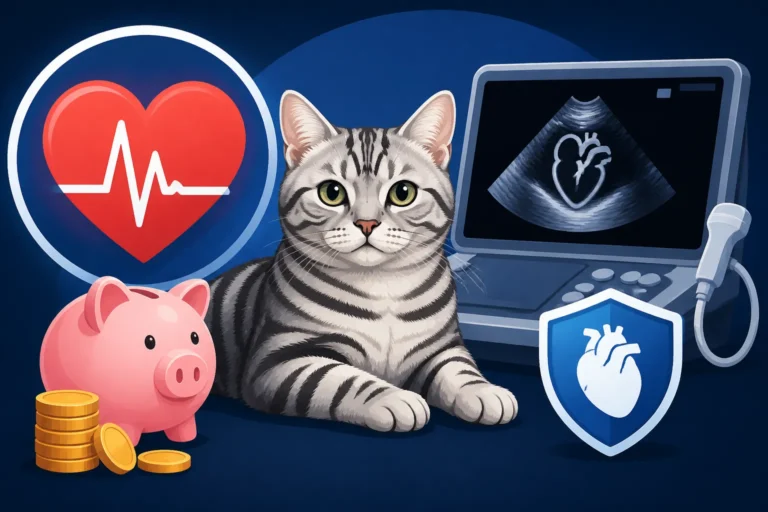
The American Shorthair is often touted as a healthy breed, sometimes even referred to as the "control group" of cat breeding due to its lack of extreme features and strong genetic diversity. However, even well-bred pedigrees aren't entirely immune to inherited conditions. The most notable concern for the American Shorthair is Hypertrophic Cardiomyopathy (HCM), a common heart disease in cats. Reputable American Shorthair breeders will screen their breeding cats for HCM through echocardiograms (heart ultrasounds) to try and minimize its prevalence in their lines. This commitment to screening is a hallmark of responsible breeding and a key benefit of choosing a pedigree. Learning Why an American Shorthair Still Needs a Yearly Heart Scan even if from good lines highlights the ongoing vigilance required.
For a domestic shorthair, you simply don't have access to this kind of genetic history. You might adopt a perfectly healthy cat, or one with an unknown predisposition to conditions like HCM, kidney disease, or dental issues. You simply won't know until symptoms emerge, which can be a source of anxiety for many owners. This is why pet insurance, like policies from Healthy Paws, can be a great option for any cat, but especially for a domestic shorthair where you have less prior health information.
The Value of Health Guarantees from a Breeder
When you acquire a pedigree American Shorthair from a reputable breeder, you typically receive a health guarantee. This guarantee usually states that the kitten is free from serious genetic defects for a certain period and that its parents have been screened for relevant conditions like HCM. This provides a layer of security and peace of mind that is simply unavailable with a domestic shorthair. Should an inherited health issue arise within the guaranteed period, a responsible breeder will often offer support, a replacement kitten, or a refund, depending on the terms of their contract.
While a domestic shorthair from a shelter might come spayed/neutered, vaccinated, and microchipped, it won't have a health guarantee tied to its genetic lineage. The shelter will treat any immediate health issues, but beyond that, you're entering into an unknown. Both paths lead to a loving companion, but the pedigree route offers a level of transparency and accountability regarding health that the domestic shorthair simply cannot.
The Cost Factor: Why Pedigrees Come With a Price Tag
One of the most immediate and tangible differences between a pedigree American Shorthair and a domestic shorthair is the initial financial investment. A pedigree cat, with its verified lineage and breeder's commitment to the breed standard, naturally comes with a higher upfront cost. This isn't just about exclusivity; it reflects the significant resources, time, and expertise that go into responsible breeding. Many people wonder What an American Shorthair Costs When the Markings Miss, indicating that even small deviations from the ideal can affect price, which isn't a factor in domestic cats.
Breeder Costs vs. Shelter Fees
Purchasing a pedigree American Shorthair kitten from a reputable breeder involves a substantial financial commitment. This cost covers many things: the careful selection of breeding stock, health screenings for the parents (like those expensive HCM echocardiograms), quality nutrition and veterinary care for the queen and kittens, registration fees, genetic testing, and the breeder's extensive knowledge and time invested in raising healthy, well-socialized kittens. Reputable breeders invest heavily in their cats, and the purchase price reflects that investment. You're not just buying a cat; you're buying into a legacy of care and commitment to the breed.
On the flip side, adopting a domestic shorthair from a shelter or rescue organization typically involves a much lower adoption fee. These fees usually cover essential services like spaying or neutering, initial vaccinations, deworming, microchipping, and sometimes even a starter bag of food. While the initial outlay is significantly less, it doesn't come with the same genetic health assurances or lineage documentation. Both options are valuable ways to bring a cat into your home, but they represent different levels of initial investment and background information.
Long-Term Financial Differences and Insurance Considerations
While the initial purchase price is higher for an American Shorthair, some argue that the long-term veterinary costs might be lower due to their robust health and fewer breed-specific genetic issues compared to some more exaggerated breeds. This is why Why an American Shorthair Is Cheap to Insure is often discussed. Insurance providers sometimes offer more favorable rates for breeds known for good health. However, this is not a guarantee, and any cat can develop unforeseen health problems as they age.
For both pedigree and domestic shorthairs, the ongoing costs of care include food, litter, routine veterinary check-ups, toys, and grooming supplies. High-quality food is essential for optimal health for any cat. For a domestic shorthair, with its unknown genetic background, investing in pet insurance from a provider like Healthy Paws can be a wise decision to help mitigate potential future veterinary bills. For a pedigree American Shorthair, even with health guarantees, insurance can still offer peace of mind, especially as the cat enters its senior years, when conditions like kidney disease or hyperthyroidism can become more prevalent. Caring for an American Shorthair past twelve, for instance, often involves increased vet visits and potential medication.
Making Your Choice: Deciding Between a Pedigree and a Domestic Shorthair
Ultimately, the choice between bringing home a pedigree American Shorthair or a domestic shorthair depends entirely on your preferences, priorities, and lifestyle. There's no "better" option, only the right fit for you and your family. Both types of cats offer immense love, companionship, and joy. Understanding the distinctions simply empowers you to make an informed decision.
When a Pedigree American Shorthair Might Be Right for You
If you're drawn to the predictability that comes with a breed standard, a pedigree American Shorthair might be your ideal companion. This includes a desire for:
- Predictable Appearance: You love the classic, well-balanced look of the American Shorthair – the sturdy build, the specific head shape, and the hardy coat. You want a cat that consistently meets these aesthetic ideals.
- Predictable Temperament: You value the known calm, adaptable, and friendly nature of the breed. You want a cat that is likely to integrate well into a busy family, be good with children, and generally handle change with grace.
- Health Transparency: You appreciate the health screenings and guarantees provided by a responsible breeder, offering a degree of foresight into potential genetic health concerns.
- Documented History: You are interested in the lineage and heritage of your cat, and the official papers and pedigree certificate are important to you.
- Support from a Breeder: You want the ongoing support and expertise that a reputable breeder often provides throughout your cat's life.
Choosing a pedigree is a commitment to a specific ideal, a known quantity, and an appreciation for the efforts of breeders who have dedicated themselves to preserving the breed's characteristics.
Embracing the Charm of the Domestic Shorthair
If, however, your primary desire is simply a loving cat companion without a specific breed type in mind, then a domestic shorthair is an excellent choice. This path offers:
- Variety and Uniqueness: Domestic shorthairs come in an endless array of looks and personalities. Every one is truly unique, a delightful genetic mix that creates a one-of-a-kind pet.
- The Joy of Rescue: Adopting from a shelter or rescue group is incredibly rewarding, giving a home to a cat in need. You're literally saving a life, and these cats often show immense gratitude.
- Affordability: The initial adoption fees are much lower, making cat ownership accessible to a wider range of budgets.
- No Preconceptions: You're open to whatever personality and appearance comes your way, ready to fall in love with a cat for who it is, not what breed it represents.
Domestic shorthairs are often just as healthy, if not healthier, than some purebreds, thanks to their diverse gene pools. They are resilient, loving, and make wonderful family members. The best cat for you is ultimately the one that brings you the most joy, whether it arrives with a multi-generational pedigree or simply a wagging tail and a purr. The important thing is to provide a loving, safe home for whichever feline friend you choose.
Disclaimer
This article is for general informational purposes only and does not constitute professional advice. Laws, prices and regulations vary by location and change over time. Consult a qualified professional for guidance on your specific situation.