Why an American Shorthair Leaves Prey on the Doormat
Finding a small, furry, or sometimes feathered "present" on your doormat can be a truly perplexing experience. One minute you're enjoying your quiet home, the next you're stepping over the remnants of your American Shorthair's latest conquest. It's a behavior that often leaves us humans scratching our heads, wondering why our beloved felines feel the need to bring their kills inside, especially to a place where we so often tread. This guide will explore the deeply rooted instincts behind this peculiar habit, helping you understand your American Shorthair's intentions and how best to respond.
Unpacking the Hunter's Instinct: Why Your American Shorthair Hunts
At the heart of every American Shorthair, no matter how pampered or domesticated, lies the soul of a hunter. This isn't just a quaint breed trait; it's a fundamental part of who they are, woven into their very DNA. Understanding this instinct is the first step to deciphering the doormat mystery.
A Legacy of the Hunt
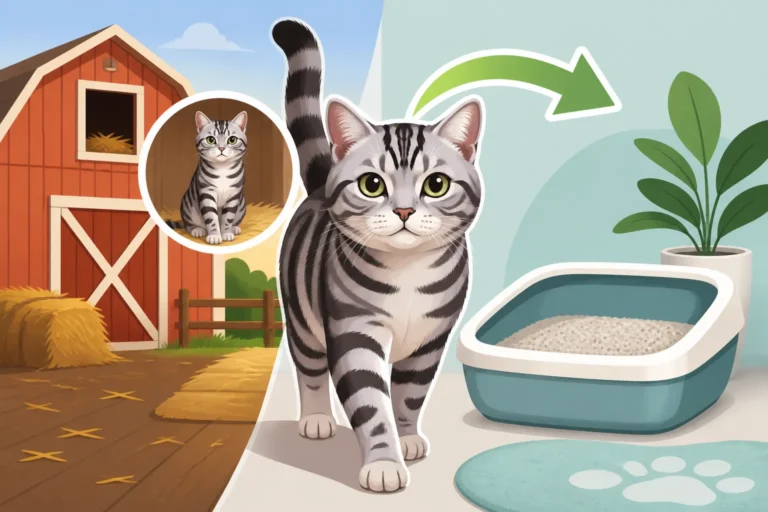
Let's cast our minds back to where the American Shorthair truly began: not in a show hall, but on ships and in barns across early America. These cats weren't pets in the modern sense; they were working animals, vital for controlling rodent populations that threatened food stores and spread disease. Their survival, and indeed the survival of their human companions, depended entirely on their prowess as hunters. They learned to stalk, pounce, and dispatch prey with incredible efficiency.
This history means that your American Shorthair carries a profound genetic memory of the hunt. Even generations removed from their working ancestors, the drive to seek, catch, and kill prey remains incredibly strong. It's an instinct that defines their physical build — that sturdy, muscular body and alert gaze — and their mental programming. You can learn more about this deep-seated drive in Centuries of Ratting Left the American Shorthair Its Drive. They were selected, generation after generation, for their ability to perform this job.
So, when your American Shorthair is out exploring, whether it's the vast wilderness of your backyard or just a particularly bushy rose garden, they're not just enjoying the fresh air. They're engaging in behaviors that their ancestors perfected over centuries, responding to an internal call to patrol their territory and secure it from unwelcome vermin. The thrill of the chase, the successful capture – these are deeply satisfying experiences for a cat like the American Shorthair, fulfilling a primal need that even the most delicious bowl of kibble cannot fully replicate.
The Full Hunting Sequence
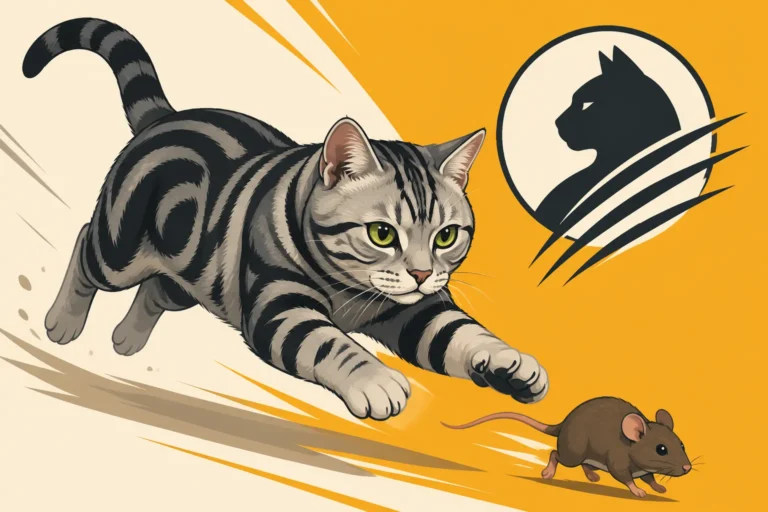
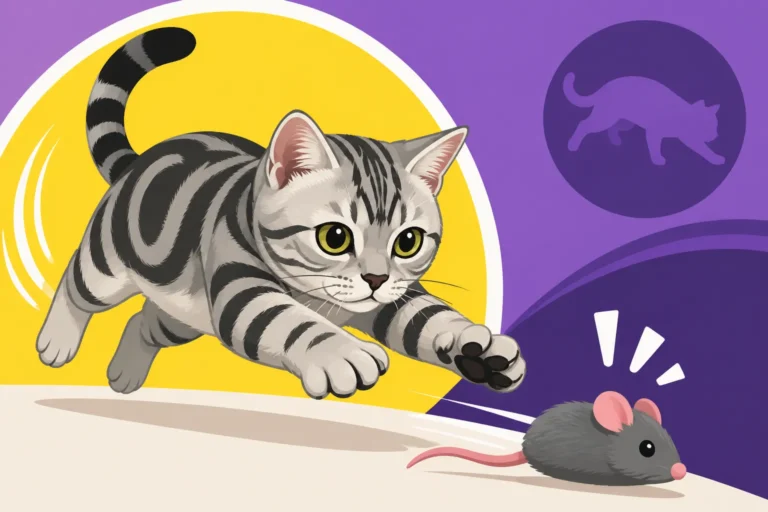
For a cat, hunting isn't just about catching something; it's a complex, multi-stage sequence of behaviors that needs to be completed for full satisfaction. It typically starts with the stalk, where your cat silently observes and approaches its target. Then comes the pounce, a sudden, explosive burst of energy. Next is the "kill bite" – a precise, often instinctual action aimed at the neck or head of the prey to dispatch it quickly.
However, the sequence doesn't always end there. Many cats, especially those with a strong prey drive, also have an instinct to retrieve their kill to a safe, private place for consumption. This might be a secluded corner of the yard, under a bush, or, more often than not, inside your home. It’s part of processing the hunt. Your American Shorthair's particular method of How an American Shorthair Hunts might lean heavily into this retrieve and consume aspect.
The crucial thing to remember is that interrupting any part of this sequence can be frustrating for a cat. If they catch something but are scared away before they can "finish" with it, that instinct remains unfulfilled. Bringing the prey home, therefore, serves several purposes: it secures the catch, allows them to complete the sequence in a safe environment, and often, as we'll discuss next, involves their human family.
When Indoor Life Meets Wild Instincts
Many American Shorthairs live entirely indoors, yet their hunting instincts are still incredibly potent. We provide them with toys, cat trees, and endless affection, but the hardwired programming for survival remains. An indoor American Shorthair might "hunt" dust bunnies, play aggressively with wand toys, or stalk shadows on the wall, showing that the drive is always there, waiting to be expressed.
If your American Shorthair has outdoor access, even occasionally, that instinct is unleashed in full force. They are incredibly effective predators, a testament to their heritage. This can be a double-edged sword: while it’s fascinating to observe their natural prowess, it also means they are likely to bring home their conquests. They don't differentiate between a wild mouse and the pest control issue their ancestors handled; to them, it's prey.
It's a clash between their deeply ingrained natural behaviors and the domestic lives we provide for them. We ask them to be cuddly companions, but their bodies and minds are still tuned for the wild. This inherent conflict is a significant reason why you might find an unexpected "gift" waiting for you. For more on the natural behaviors, see The American Shorthair Still Hunts, Whether You Want It To or Not.
The "Gift" Theory: Why They Bring Prey to You
So, they hunt. That's clear. But why the doormat? Why not just eat their catch out in the yard? This is where the "gift" theory comes in, and it's less about a literal present and more about complex feline social dynamics.
Sharing the Bounty with the Colony
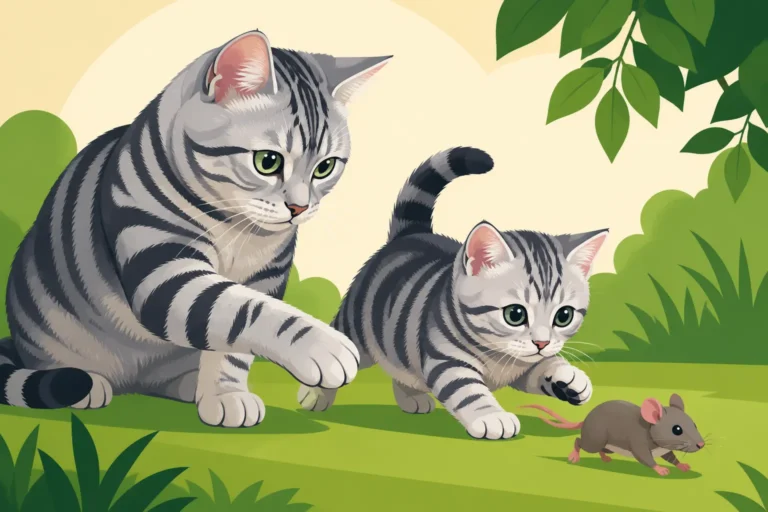
Imagine a wild cat colony. When a mother cat teaches her kittens to hunt, she doesn't just send them out with a pat on the head. She brings them prey, often incapacitated but still alive, right to the den. This serves a dual purpose: it provides sustenance for the vulnerable young, and it's a crucial training session. The kittens learn how to finish off the prey and eventually how to hunt for themselves. It's a lesson in survival, delivered directly to their safe space.
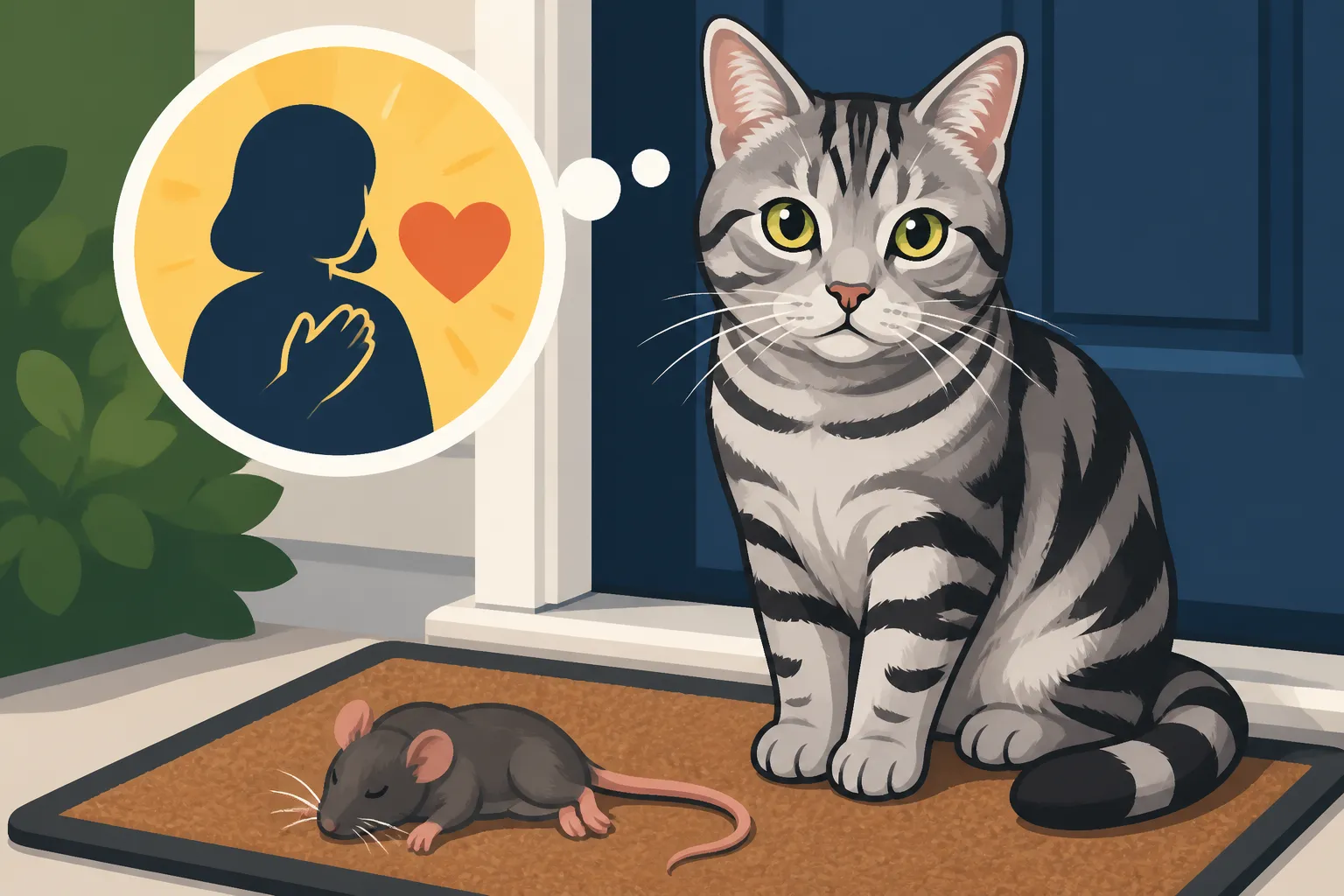
Your American Shorthair, despite being a domesticated pet, still operates on many of these ancient social programs. They view you, their human family, as part of their colony or social group. And, in their eyes, you might be a bit of a failure when it comes to hunting. You never seem to bring home any mice or birds! So, they take on the responsibility themselves. Bringing prey to the doormat is their way of fulfilling a communal duty, providing for the "less capable" members of their family.
This isn't just conjecture; it's a widely accepted interpretation of cat behavior. They are acting out a deeply ingrained pattern of care and provision, ensuring the welfare of those they consider their own. It’s a profound display of their love and commitment, however grisly it might seem to our human sensibilities.
You're a Less-Than-Adequate Hunter (in their eyes)
Let's be real: from a cat's perspective, we humans are terrible hunters. We don't stalk birds, we don't pounce on mice, and we certainly don't bring anything truly satisfying back to the den. We open cans or bags, which, while appreciated, isn't exactly hunting. Your American Shorthair, with its impressive heritage as a Whether an American Shorthair Hunts Better Than a Modern Breed, likely sees your hunting skills as severely lacking.
Because of this perceived inadequacy, your cat feels compelled to step up. They're not judging you maliciously; they're simply observing that you don't provide "real" food in the way they understand it. So, they bring their successful catches to you, perhaps hoping to teach you a thing or two, or at the very least, to ensure that the family doesn't starve. It's a genuine act of concern and a demonstration of their natural role as providers.
This explains why they'll often place the prey right where you'll find it – on the doormat, in your bed, or even at your feet. They want to make sure you get the message: "Look what I caught! We won't go hungry if I'm around." It's a testament to their self-reliance and their protective nature, even if it does mean dealing with a deceased critter before your first coffee.
The Safety of the Den (Your Doormat)
The doormat or immediate entrance to your home isn't just a convenient drop-off point; it represents the boundary of your shared "den." In the wild, bringing prey back to the den ensures its safety from scavengers or rival predators. It's a secure, familiar location where the cat feels comfortable leaving their valuable catch.
For your American Shorthair, your home is their safe haven, their territory. The doormat is a prominent, undisputed spot within that territory, a place where they know the prey will be relatively safe until it can be dealt with. It’s their version of the communal table or the larder. It's also often where you enter and exit, ensuring that you, the less-than-stellar hunter, will definitely see their contribution.
This behavior highlights their territorial instincts, which are quite strong in American Shorthairs. They are assessing the environment and deciding the most secure place to present their hard-won meal. It's a blend of practical safety and social communication, all rolled into one slightly unsettling package.
More Than Just a Gift: Other Interpretations
While providing for the family is a major driver, sometimes your American Shorthair's doormat deliveries can have other nuances, reflecting different aspects of their personality and relationship with you.
Seeking Praise and Attention
Cats are intelligent creatures, and they quickly learn what gets a reaction from their humans. Even a horrified scream or a frantic dash for cleaning supplies is a form of attention. If your American Shorthair consistently brings prey home and you react strongly (even negatively), they might be inadvertently reinforced. They associate the act with you noticing them, even if it's not the kind of "good boy" praise you'd usually offer.
Sometimes, they'll even make a specific sound or engage in particular body language when they present their kill. A proud meow, an insistent rub against your leg, or a direct gaze might accompany the offering. This is their way of saying, "Look what I did! Aren't I clever?" They're seeking acknowledgement for their impressive feat, much like a child bringing home a drawing from school.
It’s important to remember that this isn’t manipulative behavior; it’s simply a cat's attempt to communicate and interact based on the responses they receive. They don't understand that a dead mouse is upsetting to you; they only know that it creates a reaction, and any reaction can be interpreted as attention.
A Display of Affection
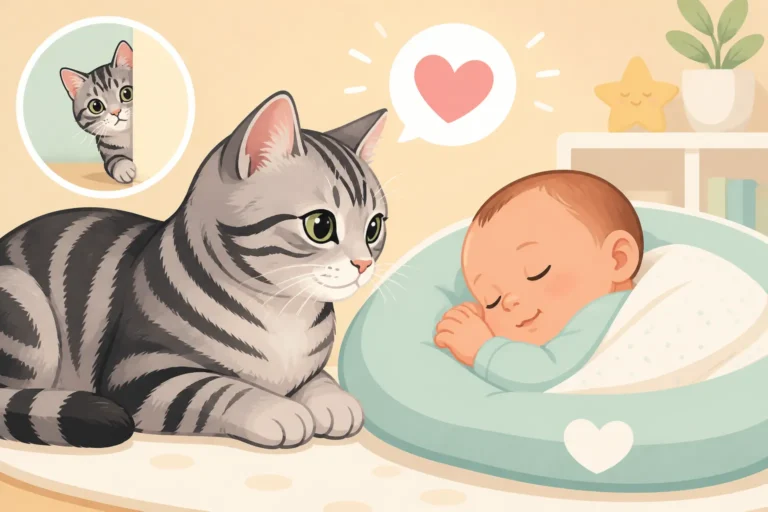
While it may not feel like it when you're cleaning up, bringing prey to you is often one of the highest forms of affection a cat can show. Cats operate on a different emotional wavelength than us. In their world, providing food is a profound act of love and care, akin to us bringing home groceries or cooking a meal for our loved ones. They are sharing their most valuable resource and demonstrating their commitment to your well-being.
This behavior speaks volumes about the bond they feel with you. It signifies trust, indicating they feel safe enough to bring their catch into your shared space. It also suggests they see you as an integral part of their family, worthy of their hunting efforts and generosity. An American Shorthair, despite being known for being Why an American Shorthair Was Never Bred to Need You, still shows affection in their own unique ways, and this is certainly one of them.
So, the next time you find a "gift," try to reframe it in your mind. Instead of a mess, see it as a declaration of love, a primal instinct tempered by their bond with you. It's their way of saying, "You're important to me, and I want to keep you safe and fed."
A Request for Help or Play
Occasionally, the prey brought to the doormat might not be entirely deceased, or it might be incapacitated but still moving. In these situations, your American Shorthair might be seeking your help to finish the job. This is particularly true if they're a younger cat still honing their hunting skills, or if they've caught something surprisingly large or difficult to manage on their own.
They might bring the struggling prey to you as if to say, "Hey, I caught this, but I need an assist here!" This also ties into the mother cat teaching her kittens – sometimes she brings still-living prey to them so they can practice their finishing moves. Your cat might be trying to engage you in this educational process, or simply acknowledging that you're a bigger, stronger member of the family who can deal with the tricky parts.
Alternatively, it can be a form of play invitation, albeit a rather intense one. For some cats, the process of bringing prey back is part of the "play hunt." They might drop it, pounce on it again, and look at you as if to encourage you to join in. It’s a very primal, instinctual game, and one that completes the Play That Finishes the Hunting Sequence for an American Shorthair cycle.
What to Do (and Not Do) When You Find a "Gift"
Reacting appropriately to your American Shorthair's hunting prowess is key to maintaining a good relationship and managing the behavior, even if you can't eliminate it entirely.
The Wrong Reaction: Scolding or Punishing
It’s completely understandable to feel a jolt of disgust or frustration when you discover a dead animal on your pristine doormat. Our immediate human reaction might be to scold, shout, or even punish the cat. However, this is perhaps the worst thing you can do. Your American Shorthair will have absolutely no idea why you are angry.
Cats live in the moment and don't connect abstract concepts like "this dead mouse is bad because it's gross" with your reaction. They understand cause and effect immediately. If you scold them after they've brought the prey, they'll only associate your anger with their presence, or your presence, not with the act of hunting or bringing the gift. This can lead to fear, confusion, and a breakdown of trust between you and your cat. They might become withdrawn or anxious around you, or even start hiding their future catches, which you'll still have to find eventually!
Remember, from their perspective, they’ve done something good, something instinctual, or something loving. Punishing them for it is akin to punishing a child for giving you a handmade gift, regardless of how inappropriate it might be. The intention is there, and reacting negatively only damages the bond.
The Best Reaction: Neutrality and Quiet Removal
So, what should you do? The most effective approach is to react with neutrality. Acknowledge your cat with a calm tone, perhaps a quiet "Thank you, dear," or "Oh, you found something," without any fanfare or emotional outburst. Then, discreetly and quickly dispose of the prey without making a big fuss. You don't want to reinforce the behavior with positive attention, but you also don't want to punish it.
By remaining calm, you avoid giving your cat the attention (positive or negative) that might reinforce the behavior. They won't feel rewarded for bringing the kill, but they also won't feel chastised for it. This maintains your bond and helps them understand that while you're aware of their efforts, it's not a performance worthy of applause.
This quiet acknowledgment helps them feel seen and understood without encouraging further deposits on your doormat. It’s a delicate balance of respect for their nature and managing your household, but it's crucial for your relationship.
Preventing Future "Gifts": Managing the Outdoor Hunt
While you can't completely erase thousands of years of evolutionary history, you can manage your American Shorthair's hunting opportunities and channel their instincts in more appropriate ways.
-
Keep Them Indoors: The most effective way to prevent outdoor prey from appearing on your doormat is to keep your American Shorthair exclusively indoors. This not only protects local wildlife but also significantly reduces The Risks an Outdoor American Shorthair Takes That an Indoor One Does Not, such as traffic accidents, fights with other animals, and exposure to diseases or parasites. If your cat is accustomed to outdoor access, this transition needs to be gradual and involve a massive increase in indoor enrichment. For more information, read Why an American Shorthair Should Be Kept In at Night.
-
Supervised Outdoor Access or Catios: If your cat absolutely thrives on outdoor time, consider supervised outings on a harness and leash, or building a secure outdoor enclosure (a "catio"). This allows them to experience fresh air and mental stimulation without the opportunity to hunt. There are many plans and kits available for catios, and you can find various options on Amazon that cater to different spaces and budgets. This can provide a fantastic compromise and Whether a Catio Satisfies an American Shorthair's Drive.
-
Bells on Collars: A collar with a bell can sometimes give wildlife a warning, reducing your cat's hunting success. However, bells aren't foolproof, and many cats quickly learn to move in a way that minimizes the bell's sound. Ensure any collar is a quick-release safety collar to prevent choking hazards.
-
Enrichment and Simulated Hunting: For indoor American Shorthairs, or those with limited outdoor access, providing ample opportunities to "hunt" indoors is vital. Use interactive toys like wand toys (which are often available on Amazon in a huge variety, mimicking different types of prey) that allow them to stalk, chase, pounce, and "kill" a toy. Finish play sessions by letting them "catch" the toy, satisfying that final part of the hunting sequence. Puzzle feeders, also readily available on Amazon, make them "work" for their food, engaging their foraging and problem-solving skills, which can also tie into their hunting drive.
-
Scheduled Play Sessions: Dedicate 15-20 minutes, several times a day, to active play, especially during dawn and dusk when cats are naturally most active and their hunting instincts are strongest. These focused play times can help tire them out and fulfill their innate desire to hunt, making them less likely to seek out real prey if they do go outside.
By understanding the deep-seated reasons behind this behavior and responding with calm, consistent strategies, you can minimize the number of "gifts" on your doormat while strengthening the incredible bond you share with your American Shorthair.
Disclaimer
This article is for general informational purposes only and does not constitute professional advice. Laws, prices and regulations vary by location and change over time. Consult a qualified professional for guidance on your specific situation.