Why an American Shorthair Hunts at Dusk
It’s a familiar scene for many American Shorthair owners: as the sun dips below the horizon and twilight paints the sky, your otherwise calm and collected feline companion suddenly transforms into a creature of pure energy, darting from room to room, stalking shadows, and pouncing on imaginary prey. This sudden burst of activity at dusk isn’t just a random occurrence; it’s a deeply ingrained instinct, a remnant of centuries of survival. This guide will delve into the fascinating reasons behind your American Shorthair’s crepuscular hunting habits and offer practical advice on how to understand and manage this powerful natural drive in a domestic setting.
The Echoes of the Hunt: Why Dusk Was Prime Time for American Shorthair Ancestors
The American Shorthair is a breed steeped in history, tracing its lineage back to the working cats brought to North America by European settlers. These were not pampered pets; they were essential members of ships' crews and farmsteads, valued for their prowess in controlling rodent populations. Their very survival depended on their hunting skills, and these skills were honed over generations in environments where prey was abundant and vigilance was key. Dusk, or twilight, presented a unique window of opportunity for these ancestors, a time when conditions were just right for a successful hunt.
Ancestral Prey Rhythms and Opportunistic Hunting
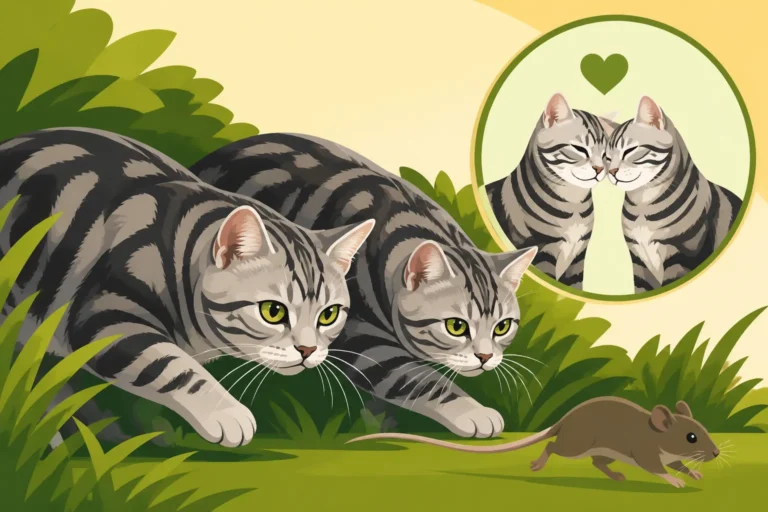
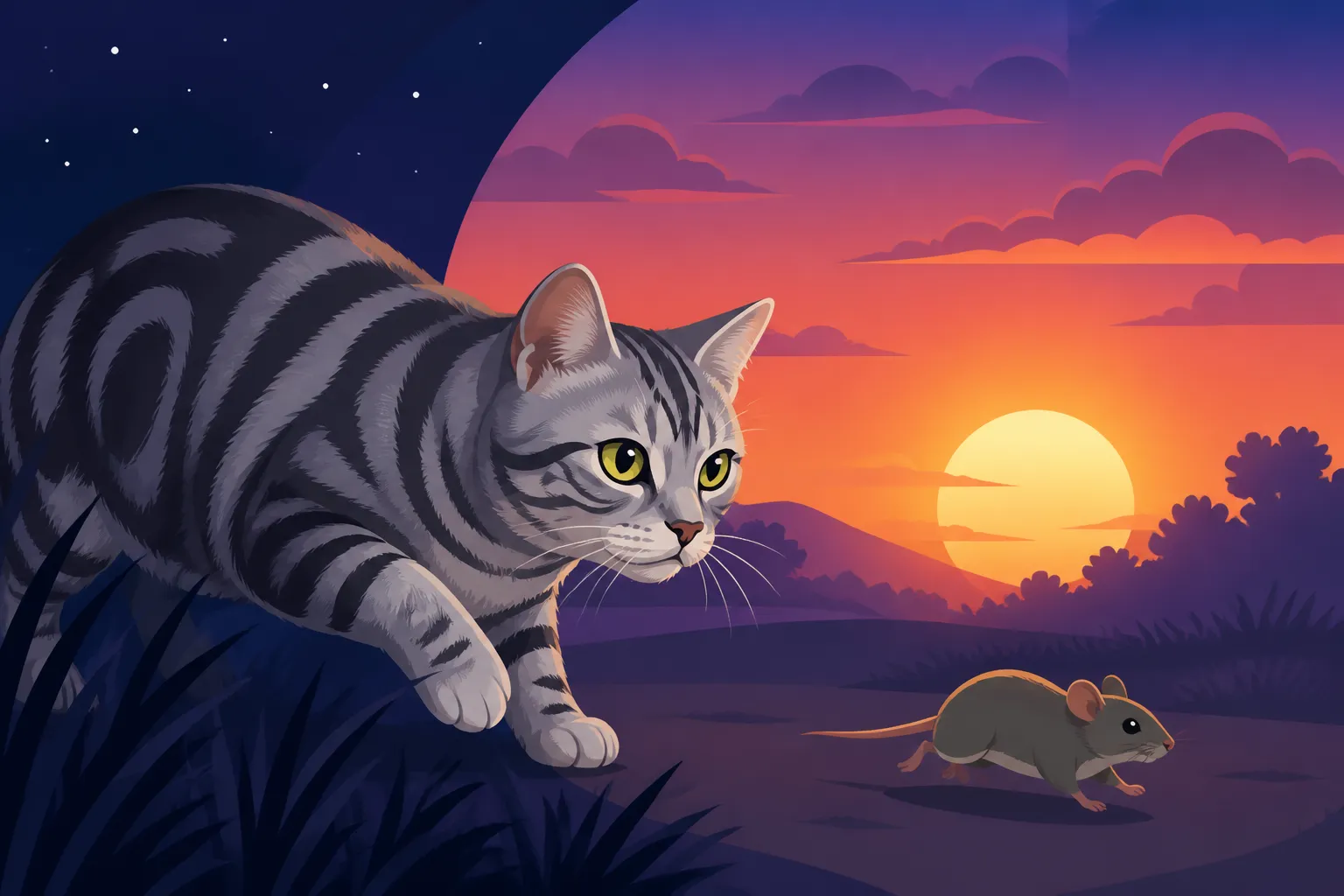
Imagine a bustling farm or a dimly lit ship’s hold centuries ago. The primary targets for these early American Shorthair ancestors were rodents – mice and rats. What many people don't realize is that many of these small mammals are primarily crepuscular, meaning they are most active during the low-light hours of dawn and dusk. As the sun began to set, casting long shadows and dimming the landscape, these rodents would start to emerge from their daytime hiding spots, venturing out to forage for food and water. For a keen-eyed and agile feline, this coincided perfectly with their own internal biological clocks. It was a time of heightened opportunity, a natural call to action. Their internal programming, refined over countless generations, told them this was the moment to be alert, to be on patrol, and to make their presence known. They weren't just hunting for sport; they were hunting for their next meal, a vital component of their existence. This strong drive still defines them, as explored in The American Shorthair Still Hunts, Whether You Want It To or Not.
The Advantage of Low Light and Heightened Senses
Beyond the activity patterns of their prey, the low light conditions of dusk offered a significant tactical advantage to the American Shorthair's ancestors. While humans struggle to see clearly in dim light, cats are equipped with superior night vision, thanks to a higher concentration of rod cells in their retinas and a reflective layer behind the retina called the tapetum lucidum. This allows them to absorb more light, effectively seeing much better in near darkness than we can. At dusk, when the light is fading but not yet completely gone, they could navigate their surroundings with relative ease, while their rodent prey, and larger predators, might be at a slight disadvantage. This visual edge, combined with their incredibly sensitive hearing and highly tuned whiskers, turned the twilight hours into their domain. They could spot the subtle movement of a mouse, hear the rustle of leaves, or feel the slight air currents indicating prey nearby, all while remaining partially concealed by the deepening shadows. It was a perfect blend of natural ability and environmental conditions that selected for powerful hunting instincts at this specific time of day.
Understanding Crepuscular Behavior in Domestic Cats
The term "crepuscular" might sound fancy, but it simply describes animals that are most active during twilight – dawn and dusk. While not strictly nocturnal (active at night) or diurnal (active during the day), many species, including our domestic cats, exhibit this preference. It's a survival strategy deeply embedded in their DNA, and even though your American Shorthair might never have to hunt for its dinner, those ancient urges are still very much present, bubbling to the surface as the day transitions to night.
Biological Clocks and Innate Instincts
Every living creature has an internal biological clock, known as a circadian rhythm, which regulates various physiological processes and behaviors over a 24-hour cycle. For cats, this clock is often set to a crepuscular schedule. As the light levels begin to fall at dusk, a cascade of hormonal and neurological changes occurs within your American Shorthair, priming them for activity. Their alertness sharpens, their energy levels peak, and their hunting instincts become more pronounced. This isn't a conscious choice on their part; it's an innate, automatic response to environmental cues, a deep-seated programming that has kept their species thriving for millennia. It's why you might find your calm daytime napper suddenly wide-eyed and ready for action when you're just settling down for the evening. Even a plush house cat cannot escape the powerful call of its ancient lineage.
Sensory Acuity at Twilight: A World of Subtle Cues
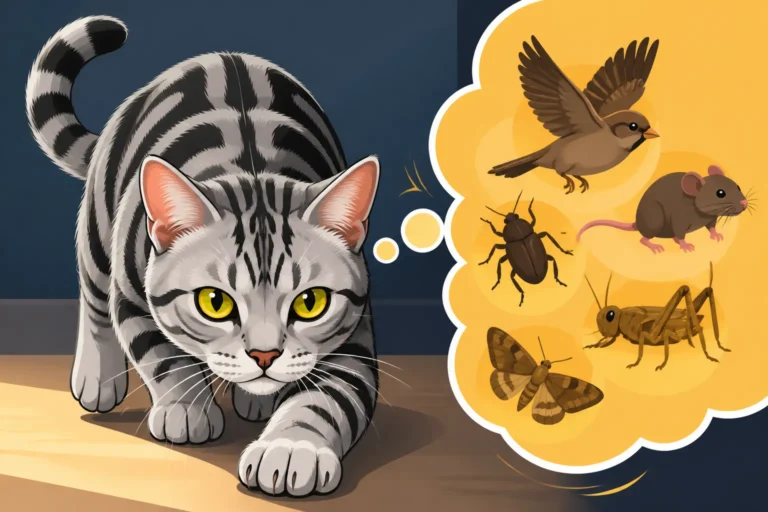
For an American Shorthair, dusk isn't just a time of dimming light; it's a symphony of subtle cues that humans often miss. Their eyes, perfectly adapted for low light, become even more effective. They can detect movement with astonishing precision in conditions that would render us virtually blind. But it's not just their vision. Their highly sensitive ears can pick up the faintest sounds – the chirping of crickets, the rustle of leaves outside, or even the scuttling of tiny insects within the walls of your home. Their whiskers, or vibrissae, are sophisticated sensory tools, detecting changes in air currents and enabling them to navigate and locate objects in the dark with incredible accuracy.
Consider this: as you sit on your sofa reading or watching TV, your American Shorthair might be picking up on a myriad of stimuli that you are completely oblivious to. A tiny dust motes dancing in the last rays of sun, the faint tremor of the floorboards as a neighbor walks by, or the distant hoot of an owl – these are all potential "prey" signals to a cat wired for hunting. The transition from day to night amplifies these subtle environmental changes, making them irresistible to an American Shorthair's finely tuned senses. This heightened sensory experience fuels their evening energy bursts, driving them to explore, stalk, and "hunt" whatever catches their attention, whether it's a stray piece of lint or your unsuspecting ankles.
Channeling That Dusk Drive Indoors
Living with an American Shorthair means acknowledging and respecting their powerful crepuscular drive. While we can't completely extinguish centuries of instinct, we can certainly provide healthy, enriching outlets for that energy, transforming potentially disruptive behaviors into satisfying play. The key is to be proactive and consistent, giving them appropriate ways to express their natural hunting sequence.
Establishing a Consistent Play Routine
One of the most effective ways to manage your American Shorthair’s dusk energy is to implement a consistent play routine that strategically taps into their hunting cycle before they decide to invent their own games. Aim for vigorous play sessions roughly 1-2 hours before their typical "witching hour" or before you plan to settle down for the evening. This means picking up a wand toy, ideally one with feathers or a lure that mimics prey, and engaging them fully. Make them stalk, chase, pounce, and catch the "prey." The "catch" is crucial; it completes the hunting sequence and provides a sense of satisfaction. A laser pointer, while engaging, can be frustrating because it never allows them to physically capture anything, which is an important part of the cycle. You might even find a great selection of durable wand toys and interactive teasers on platforms like Amazon. Consistent, fulfilling play can significantly reduce the intensity and duration of their natural dusk zoomies. Providing How Much Simulated Hunting an American Shorthair Needs is vital.
Feeding Routines to Mimic the Wild Cycle
In the wild, a successful hunt is typically followed by a meal and then a period of rest. We can replicate this pattern in our homes to help settle our American Shorthairs after their evening "hunt." Schedule a substantial meal for your cat immediately after your dedicated play session. This helps to fulfill another crucial part of their ancestral routine. The act of eating, especially a good, satisfying meal, triggers physiological responses that promote relaxation and sleep.
Consider splitting their daily food intake into multiple, smaller meals, with one of the most significant meals coinciding with this post-play wind-down. This mirrors how they might eat in the wild, consuming small prey throughout their active periods. For cats that tend to gulp their food, or for those needing extra mental stimulation, puzzle feeders can be a fantastic tool. You can find many varieties of slow feeders and puzzle toys on Amazon that make your cat "work" for their food, further engaging their minds and bodies. This approach supports Portioning for an American Shorthair That Once Worked for Meals and helps them transition from high energy to calm contentment.
Environmental Enrichment for the Indoor Hunter
Even the most active American Shorthair spends a good portion of its day napping, but during their waking hours, especially at dusk, they need an environment that allows them to express their natural behaviors. Think vertically and horizontally. Cat trees are excellent for satisfying their climbing instincts and providing elevated vantage points, which are prime "perches" for observing their territory, just like their ancestors would have used a hayloft or tree branch. Consider tall, sturdy cat trees that allow them to get How High an American Shorthair Needs to Get and survey their domain.
Window perches offer a front-row seat to the real-time crepuscular activities outside – birds settling down, squirrels darting about, or insects buzzing. This visual stimulation can be incredibly satisfying for an indoor hunter. Additionally, rotating toys, hiding treats in different spots, or even just leaving crinkly balls around can provide spontaneous "hunting" opportunities. Remember that the world outside at dusk is a very real source of fascination for your cat, as their internal compass is telling them to be aware and alert.
Recognizing and Addressing Frustrations
While an American Shorthair's dusk drive is natural, sometimes, without proper outlets, this intense energy can manifest in ways that are frustrating for both cat and owner. Recognizing these signs and proactively addressing them is crucial for a harmonious household.
When Instinct Becomes a Nuisance
An American Shorthair that doesn't have enough appropriate outlets for its hunting instincts at dusk might resort to behaviors that you definitely don't appreciate. This could mean suddenly attacking your ankles as you walk by, especially if your quick movements mimic prey. It might involve knocking objects off shelves, not out of malice, but because the falling object creates movement and sound, triggering their predatory response. You might also experience "midnight zoomies" where your cat races through the house, vocalizing loudly, just when you're trying to sleep. These aren't signs of a "bad" cat; they are cries for more appropriate enrichment, a demonstration of What an Indoor American Shorthair Does With a Mouser's Instinct when left unchecked. They are simply trying to fulfill their intrinsic need to hunt.
Utilizing Interactive Toys and Puzzle Feeders
To combat these unwanted behaviors, think about how you can redirect your American Shorthair's attention and energy. Interactive toys, beyond simple wand toys, can be invaluable. Toys that move unpredictably on their own or require your cat to solve a problem to get a treat can provide extended engagement. For example, a battery-operated toy that mimics a hidden mouse scurrying under a fabric cover can keep them captivated and allow them to "hunt" safely. These types of toys are readily available from retailers like Amazon.
Puzzle feeders are another fantastic tool, not just for mealtime, but also to occupy their minds during those peak activity hours. Instead of just putting down a bowl of kibble, spread their evening meal portions across several puzzle feeders or hide them in different spots around the house. This makes them work for their food, simulating the effort of a hunt and providing mental stimulation. This "foraging" activity can tire them out both physically and mentally, helping them transition into a calmer state.
The Importance of Mental Stimulation
It's not just about physical exertion; an American Shorthair, with its intelligent and independent nature, also needs mental stimulation. A bored cat, especially one with strong instincts, is a recipe for trouble. Engage them with rotating toys to keep things fresh. Teach them simple tricks using positive reinforcement – many American Shorthairs respond well to learning to fetch or sit. Spend quality time interacting with them, even if it's just a few minutes of focused attention. Don't underestimate the power of a good "conversation" or a gentle grooming session to bond with your cat and help them feel secure and fulfilled. Remember, even though Why an American Shorthair Asks You for Almost Nothing, they still thrive on interaction and engagement.
Here's a quick look at ways to support your American Shorthair's hunting instincts:
| Activity Type | Description | Benefits for American Shorthair | Best Time to Implement |
|---|---|---|---|
| Wand Play | Interactive play with a toy on a string or stick. | Mimics stalking, chasing, pouncing, and catching prey; provides physical exercise and mental satisfaction. | 1-2 hours before dusk, daily. |
| Puzzle Feeders | Devices that dispense food only when manipulated by the cat. | Engages natural foraging instincts; slows eating; provides mental challenge; can replace passive bowl feeding. | Throughout the day, especially for evening meals. |
| Vertical Space | Cat trees, shelves, window perches. | Satisfies climbing instinct; provides vantage points for observation ("patrol"); allows escape routes. | Available 24/7, used most during active hours. |
| Rotational Toys | Introducing new toys regularly, then removing them. | Keeps interest high; prevents boredom with static toys; stimulates curiosity. | Varies; swap toys weekly or bi-weekly. |
| Outdoor Catios | Secure, enclosed outdoor spaces. | Offers safe access to outdoor sights, sounds, and smells; allows observation of real wildlife without risk. | During peak dusk activity, under supervision. |
| Scent Games | Hiding treats for the cat to find using their nose. | Engages their sense of smell; mental stimulation; can be done with simple household items or specialized toys. | Can be done anytime, good for quiet engagement. |
By understanding why your American Shorthair becomes a whirlwind of activity at dusk, you can better equip them with the tools and routines they need to live a fulfilling life that respects their deep-seated instincts. This isn't just about managing behavior; it's about enriching their world and strengthening your bond with these magnificent, historically significant felines.
Disclaimer
This article is for general informational purposes only and does not constitute professional advice. Laws, prices and regulations vary by location and change over time. Consult a qualified professional for guidance on your specific situation.