Whether an American Shorthair Needs a Water Fountain
We all want what's best for our beloved American Shorthairs, and one of the most common worries I hear from fellow cat parents is whether our felines are actually drinking enough water. These wonderfully independent and robust cats might seem low-maintenance, but adequate hydration is crucial for their long-term health, and sometimes, a simple bowl just doesn't cut it. This guide will explore whether a water fountain could be the game-changer your American Shorthair needs to stay happily hydrated.
Understanding Your American Shorthair's Hydration Needs
It's easy to assume that if a cat has access to water, they'll drink what they need. But for American Shorthairs, much like their feline cousins, their hydration needs are often underestimated, and their natural instincts can make them surprisingly picky about their water source.
Why Hydration Matters for American Shorthairs
While American Shorthairs are generally known for their excellent health and sturdy build, proper hydration is absolutely fundamental to maintaining that vitality throughout their lives. Think about it: in the wild, a cat's primary source of water comes directly from their prey, which is naturally high in moisture. Modern domestic cats, especially those primarily on a dry kibble diet, often don't get anywhere near this level of moisture, leaving them in a constant state of mild dehydration without owners even realizing it.
For your American Shorthair, sufficient water intake is vital for supporting healthy kidney function, ensuring their urinary tract operates smoothly, and preventing the formation of common urinary issues. We often validate our own worries about our cats developing kidney stones or bladder infections, and these concerns are incredibly valid, particularly when we talk about male American Shorthairs. The specific anatomy of male cats makes them more prone to blockages, a distressing and often life-threatening condition. Knowing Why a Male American Shorthair's Urethra Blocks First can truly highlight the importance of proactive hydration strategies. It's not just about comfort; it's about preventing serious health crises.
Beyond those critical systems, water helps regulate body temperature, lubricates joints (so important for their active, muscular frames!), and aids in nutrient absorption and waste elimination. A well-hydrated cat simply feels better and has more energy. You'll notice it in their coat, their eyes, and their general demeanor.
Signs Your American Shorthair Isn't Drinking Enough
Sometimes, the signs that your American Shorthair isn't drinking enough can be incredibly subtle, which is frustrating for us pet parents who want to catch issues early. These cats are champions at hiding discomfort, a trait inherited from their wild ancestors who wouldn't show weakness. This stoicism means you often have to be a detective to notice problems. If you've ever felt like your cat is keeping secrets, you're not wrong, especially when it comes to things like pain or illness. In fact, Why a Stoic American Shorthair Hides Pain the Longest can give you a deeper understanding of this inherent behavior.
One of the first things to look for is a decrease in the frequency or volume of urination. While it's hard to measure precisely, if you notice the litter box isn't getting as wet as usual, or the clumps are smaller, it could be a red flag. Their urine might also appear darker or have a stronger odor due to being more concentrated. Take a moment to gently check their gums; if they feel tacky or dry rather than moist and pink, it's a definite sign of dehydration.
Beyond these physical cues, observe their behavior. Are they a bit more lethargic than usual? Less interested in play? Perhaps their appetite has changed, or they seem a little less spry when jumping onto their favorite perch. A duller coat, lack of elasticity in their skin (you can gently tent the skin on their back, and if it's slow to snap back, they might be dehydrated), or even slight constipation can all be indicators. These signs, especially when combined, should prompt a closer look at their water intake and potentially a vet visit.
Why Cats Are Picky Drinkers and How Fountains Help
Cats have a reputation for being finicky, and when it comes to water, there's a good reason behind their seemingly strange preferences. Understanding these deep-seated instincts can help us make better choices for their hydration.
The Instinctual Aversion to Still Water
This one always surprises new cat owners. You meticulously clean their water bowl, fill it with fresh, filtered water, and yet your American Shorthair acts like it's a forgotten puddle on the driveway. The reason? Evolution. In the wild, still water sources — puddles, ponds, or even forgotten bowls — are often stagnant and much more likely to harbor bacteria, parasites, or other contaminants. Drinking from such a source could easily lead to illness, or worse.
Conversely, running water, like a stream or a natural spring, signals freshness and safety. It's constantly being replenished, making it a much healthier option. Even if your home's tap water is perfectly safe, your American Shorthair's ancient brain isn't necessarily making that distinction. It just sees still water and thinks, "Nope, potential danger!" This is why you might often find your cat trying to drink from a dripping faucet, pawing at the toilet bowl, or even nudging your glass of water off the counter. It's not about being naughty; it's about seeking out what their instincts tell them is the freshest, safest water source.
This innate distrust of still water can be a real hurdle in ensuring adequate hydration, especially if their only option is a stationary bowl. Even if you change the water frequently, the lack of movement doesn't trigger that "fresh and safe" signal in their minds.
The Appeal of Moving Water for American Shorthairs
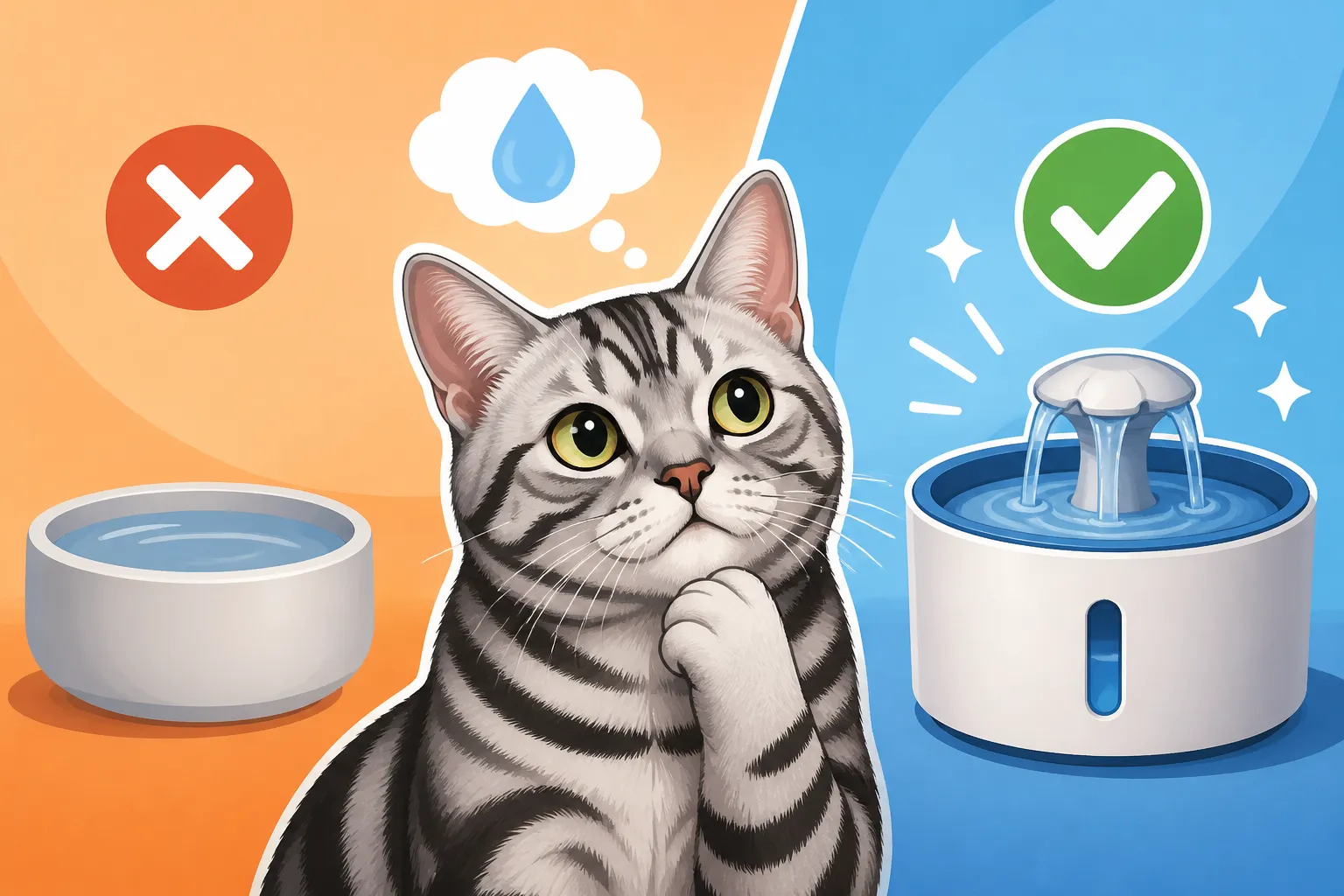
This is where the magic of a water fountain truly comes into play for your American Shorthair. The constant circulation and visible flow of water directly addresses that ancient instinctual aversion to still water. The sound alone — a gentle trickle or gurgle — can be incredibly enticing, mimicking the natural sounds of a brook or spring. For many cats, this auditory cue is enough to pique their curiosity and draw them in for a drink.
Beyond the sound, the visual movement of the water is a powerful attractant. It signifies freshness and oxygenation, signaling to your American Shorthair that this is a safe and appealing source. Many American Shorthairs are also inherently curious and playful, and the moving water taps into their natural inquisitiveness. They might paw at it, watch it intently, or even try to "catch" the streams, which often leads them to take a drink in the process. Remember, The American Shorthair Still Hunts, Whether You Want It To or Not, and that drive for movement and engagement translates even to something as basic as a water source.
The continuous flow also keeps the water aerated and often cooler than water sitting in a static bowl, making it taste fresher. This can make a huge difference to a discerning feline palate. For some American Shorthairs, the higher water level and different drinking surfaces offered by fountains (like a bubbling pool or a flowing spout) provide a more comfortable and natural way to drink, allowing them to lap without their whiskers brushing against the sides of a bowl, which can be irritating. It's all about making the water source as irresistible and natural-feeling as possible.
Types of Water Fountains and What to Consider
Diving into the world of cat water fountains can feel a bit overwhelming at first, with so many options out there. But understanding the basic types and what features to prioritize will help you find the perfect match for your American Shorthair and your lifestyle.
Materials and Maintenance
When you're looking at water fountains, the material it's made from is a big consideration, both for your cat's health and for your ease of cleaning. Each material has its own set of pros and cons.
Plastic fountains are often the most budget-friendly option, which is great if you're just testing the waters (pun intended!) to see if your American Shorthair will even use one. They're lightweight, come in a vast array of designs, and are easy to move around. However, plastic can scratch over time, creating tiny crevices where bacteria, known as "biofilm," can thrive. This requires very diligent cleaning to prevent a slimy buildup and potential feline acne on your cat's chin. If you go with plastic, commit to frequent, thorough washing. You'll find many plastic options available at retailers like Chewy, offering different capacities and designs.
Ceramic fountains tend to be heavier and more stable, making them less likely to be tipped over by a playful or thirsty American Shorthair. The non-porous surface of ceramic is much easier to keep clean than plastic, as it's less prone to scratching and bacterial accumulation. They're also often quite aesthetically pleasing, blending well with home decor. The downside? Ceramic fountains are typically more expensive and, being ceramic, they can break if dropped. If durability and hygiene are top priorities, and you don't mind the higher price point, ceramic is a fantastic choice.
Stainless steel fountains offer a fantastic middle ground, or arguably, the best of both worlds for many pet owners. Stainless steel is incredibly durable, virtually indestructible, and highly hygienic because it's non-porous and resistant to scratches. It's also often dishwasher-safe, which is a huge bonus for busy households. Like ceramic, it tends to be more expensive than plastic, but its longevity and ease of cleaning often make it a worthwhile investment in the long run. Many pet parents find stainless steel to be the easiest to maintain, ensuring consistently fresh water for their American Shorthair without as much scrubbing effort.
Regardless of the material, remember that regular cleaning is non-negotiable. Filters need to be changed according to manufacturer recommendations – usually every 2-4 weeks – and the entire unit, including the pump, needs a good scrub at least weekly to prevent bacterial buildup. Skimping on cleaning can turn a hydration solution into a health hazard.
Flow Styles and Noise Levels
The way the water flows and the amount of noise the fountain makes can significantly impact whether your American Shorthair embraces it. Cats are creatures of habit and sensory beings, so these details really matter.
Fountains come with various flow styles: some create a bubbling spring effect, where water gently wells up from the center; others have a free-falling stream, mimicking a faucet; and some offer multiple streams or a waterfall cascade. Many American Shorthairs, with their innate curiosity and appreciation for movement, seem particularly drawn to the free-falling stream. It's often the most visually stimulating and creates that distinct sound of running water that cues freshness. Experimentation might be key here; some cats prefer a gentler bubble, while others love a strong, narrow stream.
Noise level is another critical factor. While some cats are oblivious, others are highly sensitive to sounds. A loud pump or a constant gurgling can deter a cautious American Shorthair from approaching the fountain. Imagine trying to relax or drink from something that sounds like a miniature construction site! Manufacturers are constantly improving pump technology, so look for fountains advertised as "whisper-quiet" or with low decibel ratings. Read reviews carefully, as what one person considers quiet, another might find distracting. Factors like proper water level (a low water level can make pumps noisy) and proper assembly can also influence the sound. A quiet hum is usually acceptable, but anything that creates a persistent drone or rattling could scare your cat away.
Ultimately, the best flow style and noise level are those that your specific American Shorthair accepts and enjoys. You might find yourself trying a few different models or experimenting with different settings if your chosen fountain has them, until you hit upon the sweet spot that encourages consistent drinking.
Capacity and Features
Beyond the basic materials and flow, various capacities and extra features can make a fountain more or less suitable for your home and your cat's needs. Thinking about these details beforehand can save you headaches later.
The capacity of a water fountain refers to how much water it can hold. For a single American Shorthair, a capacity of around 60-80 ounces (about 1.7-2.3 liters) might be sufficient, requiring refills every few days. If you have multiple cats, or a particularly thirsty American Shorthair (especially if they're on a dry kibble diet), you'll want a larger capacity, perhaps 100-150 ounces or more. A larger capacity means less frequent refilling for you, which is a major convenience. Consider your daily schedule; if you're often out for long hours or travel frequently, a bigger reservoir will ensure your American Shorthair always has access to fresh water.
When it comes to features, there's a surprisingly wide range. Some fountains include automatic shut-off mechanisms, which will power down the pump if the water level gets too low, preventing the pump from burning out. This is a nice safety feature and can prolong the life of your fountain. LED indicators are another popular feature, often glowing blue when the water level is good and turning red when it's time for a refill, or even glowing softly to help your cat find it in the dark.
Multiple drinking levels can be beneficial, especially if you have cats of different sizes or those with mobility issues. Some fountains are designed with tiered platforms, allowing cats to drink from a bubbling pool, a higher stream, or a lower collection area. This caters to different preferences and physical needs. For the more tech-savvy, some fountains offer smart features, connecting to an app on your phone to remind you to refill or change filters, or even monitor your cat's drinking habits. These can be cool, but aren't essential for basic hydration. Ultimately, think about what truly adds value for you and your American Shorthair without becoming overly complicated or expensive.
Integrating a Water Fountain into Your American Shorthair's Routine
Getting your American Shorthair to embrace a new water fountain isn't always an instant success story. Cats are creatures of habit and sometimes a little wary of new things. Patience and a strategic approach are key.
Introducing the Fountain Gradually
Imagine a brand new, whirring, bubbling contraption suddenly appearing in your kitchen where a quiet bowl once sat. For some American Shorthairs, this might be a fascinating new toy; for others, it could be a terrifying alien object. The best way to introduce a water fountain is gradually and without pressure. Don't just remove their old, familiar water bowl and replace it. That's a recipe for stress and dehydration.
Instead, set up the new water fountain a few feet away from their existing water bowl. Let your American Shorthair discover it on their own terms. Cats are naturally curious, and they'll eventually investigate the new item and its intriguing sounds. Keep the old bowl in its usual spot for at least a week or two, or until you're absolutely certain your cat is regularly and confidently drinking from the fountain. This gives them a safe fallback option and prevents any anxiety-induced refusal to drink.
Placement also matters. Choose a quiet, accessible spot where your American Shorthair already feels safe and relaxed. Avoid areas with high foot traffic or loud noises, as this can make them hesitant. Some cats prefer their water away from their food, mimicking their wild behavior where they wouldn't drink near a kill site to avoid contamination. Try placing the fountain in a different room from their food bowl, or at least a good distance away. If you notice your cat consistently favoring the fountain, you can then slowly move to phase out the old bowl.
For especially hesitant cats, you can try making the water fountain even more appealing. A tiny, almost imperceptible drop of tuna juice (unsalted, in water) or low-sodium chicken broth in the fountain water for the first day or two can entice them to take a sniff and hopefully a sip. Just be sure to clean the fountain thoroughly afterwards to avoid bacterial growth. Over time, your American Shorthair will associate the fountain with fresh, appealing water.
Troubleshooting Common Fountain Issues
Even with the best intentions and a gradual introduction, you might encounter a few bumps in the road. Don't get discouraged! Many common issues have simple solutions.
Perhaps the most common frustration is, "My cat won't drink from it!" If your American Shorthair seems to be actively avoiding the fountain, first, re-evaluate its placement. Is it too close to their litter box? Is it in a noisy area? Try moving it to a different, quieter spot. Next, check the flow. Is it too strong and splashing, which some cats dislike? Or perhaps too weak, not providing enough visual or auditory stimulation? Many fountains have adjustable flow settings, so experiment with those. Cleanliness is paramount; even a slight film or off-smell can deter a cat. Ensure you're changing filters as recommended and scrubbing the entire unit regularly. You want them to recognize that this is a superior drinking experience, not a chore. If you're still struggling, consider offering both fountain water and a clean, wide ceramic or glass bowl of still water for a while longer to see which they prefer, perhaps even from a reputable brand like Chewy that offers a variety of bowl options.
Another issue could be that "the fountain is too noisy." As mentioned earlier, pump noise can be a deal-breaker. First, check the water level; if it's too low, the pump might be struggling and making more noise. Ensure all parts are assembled correctly and aren't rattling. Sometimes, a simple rubber mat placed underneath the fountain can help absorb vibrations and reduce noise. If it's still too loud, it might be worth investigating if the pump itself is faulty or if a quieter replacement pump is available.
Splashing can also be an issue. Some cats simply love to play with water, and while endearing, it can make a mess! If your American Shorthair is splashing excessively, try placing a waterproof mat underneath the fountain. Sometimes, adjusting the water flow to a gentler setting can reduce the urge to bat at the water. For others, it's just part of their personality, tapping into their hunting instincts, so embracing a little mess might be the only option! Observing your cat's specific reactions will give you clues on how to address their unique quirks. It's truly a process of trial and error tailored to your individual feline friend.
Weighing the Pros and Cons of Water Fountains for American Shorthairs
Deciding whether a water fountain is right for your American Shorthair involves considering both the significant advantages and the potential downsides. It's not a one-size-fits-all solution, but for many, the benefits far outweigh the drawbacks.
The Benefits: Healthier, Happier Hydration
The most compelling argument for a water fountain is undoubtedly the health benefits it offers. Increased water intake is a game-changer for many cats, particularly those consuming primarily dry kibble. Proper hydration actively promotes optimal kidney and urinary tract health, which is incredibly important for all felines, but especially for male American Shorthairs. Due to their narrower urethras, male cats are statistically more susceptible to painful and life-threatening urinary blockages. Anything that encourages consistent flushing of their system, such as a water fountain, is a significant preventative measure. This is also why understanding Why a Female American Shorthair Faces Fewer Urinary Risks can highlight the anatomical differences and why male cats need that extra push for hydration. Getting a good baseline understanding of How Much Water an American Shorthair Should Drink can help you assess if a fountain is really helping.
Beyond preventing serious illness, better hydration contributes to overall vitality. It helps with digestion, nutrient absorption, and maintaining a healthy skin and coat. A well-hydrated American Shorthair is often more energetic, has brighter eyes, and is simply more comfortable.
Water fountains also offer a layer of stimulation and enrichment. For a naturally curious breed like the American Shorthair, the moving water provides visual and auditory interest, tapping into their instincts and making hydration an engaging activity rather than a passive one. This can be especially beneficial for indoor cats who need various forms of mental and physical stimulation throughout their day.
Finally, the continuous filtration and movement of water in a fountain typically mean the water tastes fresher and is less likely to become stale compared to water sitting in an open bowl. This reduces the likelihood of your American Shorthair seeking out less sanitary alternative water sources around your home, like the toilet or a dripping showerhead. Being proactive with your cat's health, including ensuring they drink enough, can potentially save you significant veterinary expenses down the line. It's also why many pet parents choose to invest in pet insurance from providers like Healthy Paws, knowing that even with preventative care, unexpected health issues can arise, and they want to be prepared.
The Drawbacks: Cost, Maintenance, and Cat Preferences
While the benefits are substantial, it's equally important to consider the potential drawbacks of introducing a water fountain into your American Shorthair's life. These are often practical considerations that can impact your decision.
The initial purchase cost of a good quality water fountain can be a deterrent for some. While basic plastic models are affordable, ceramic or stainless steel options, which are often more hygienic and durable, come with a higher price tag. Beyond the upfront cost, there are ongoing expenses for replacement filters, which need to be changed regularly (typically every 2-4 weeks) to maintain water quality and prevent pump issues. These small costs can add up over time. When you're budgeting for your cat, consider that this is an ongoing expense, much like their food or litter. Brands like Chewy often have subscriptions for filters, which can make it a little more convenient and sometimes save you a few dollars.
Maintenance is another key factor. While a simple water bowl requires a quick rinse and refill, a water fountain demands more thorough and regular cleaning. The pump, in particular, needs to be disassembled and cleaned periodically to remove hair, slime, and mineral deposits that can impede its function or harbor bacteria. Failure to maintain the fountain diligently can negate its health benefits and even create health risks. You'll need to commit to weekly cleaning sessions, which for some busy owners, can feel like an added chore. Many owners wonder How to Tell If an American Shorthair Drinks Enough, and this becomes harder if the fountain is not appealing due to lack of maintenance.
Perhaps the biggest unknown is your cat's individual preference. Despite all the scientific reasons why a fountain should be appealing, some American Shorthairs simply won't take to them. They might be scared by the noise, dislike the flow, or simply prefer still water. You could invest in a fancy fountain only to have it sit unused. In such cases, you might still need to explore other hydration strategies, like incorporating more wet food into their diet. Indeed, Whether an American Shorthair Needs Wet Food is a pertinent question, as it's an excellent way to boost hydration directly. Fresh, high-moisture food options can also significantly increase a cat's daily water intake, regardless of their drinking habits.
Finally, there's the potential for pump failure or leaks. Like any electronic appliance, fountain pumps can wear out or malfunction. Minor leaks can also occur if parts aren't sealed properly or if the fountain is jostled, leading to water damage if not caught quickly. These are relatively rare but are still considerations when weighing the pros and cons.
Here's a quick comparison of popular water fountain materials:
| Feature | Plastic Fountains | Ceramic Fountains | Stainless Steel Fountains |
|---|---|---|---|
| Initial Cost | Generally Lowest | Moderate to High | Moderate to High |
| Durability | Prone to scratches, can become brittle | Heavy, can chip or break if dropped | Highly durable, almost indestructible |
| Hygiene | Can scratch, harbor bacteria (biofilm) | Non-porous, easy to clean, highly hygienic | Non-porous, very hygienic, often dishwasher-safe |
| Maintenance | Requires diligent cleaning | Easy to clean, less prone to biofilm | Easiest to clean, less prone to biofilm |
| Aesthetics | Wide variety of designs, sometimes basic | Often stylish, blends with decor | Modern, sleek look |
| Weight/Stability | Lightweight, can be tipped easily | Heavy, very stable | Moderate weight, very stable |
Ultimately, whether an American Shorthair needs a water fountain depends on your individual cat's habits and your commitment to maintenance. For many, it's a fantastic tool to encourage better hydration, supporting their robust health and lively spirit for years to come. By encouraging more water intake, you're not just offering convenience; you're actively contributing to their long-term well-being and helping to prevent costly and painful health issues. Just remember to introduce it patiently, keep it impeccably clean, and observe your specific American Shorthair's reaction. Every cat is an individual, and what works for one might not work for another.
Disclaimer
This article is for general informational purposes only and does not constitute professional advice. Laws, prices and regulations vary by location and change over time. Consult a qualified professional for guidance on your specific situation.