When an American Shorthair Reaches Full Size
An American Shorthair may look nearly grown well before its body has finished developing. That can make it hard to know whether your kitten is growing normally, simply filling out slowly, or gaining excess weight. This guide explains when American Shorthairs typically reach adult size, what changes as they mature, and how to track growth without relying on the scale alone.
When an American Shorthair reaches adult size
Physical growth can continue for several years
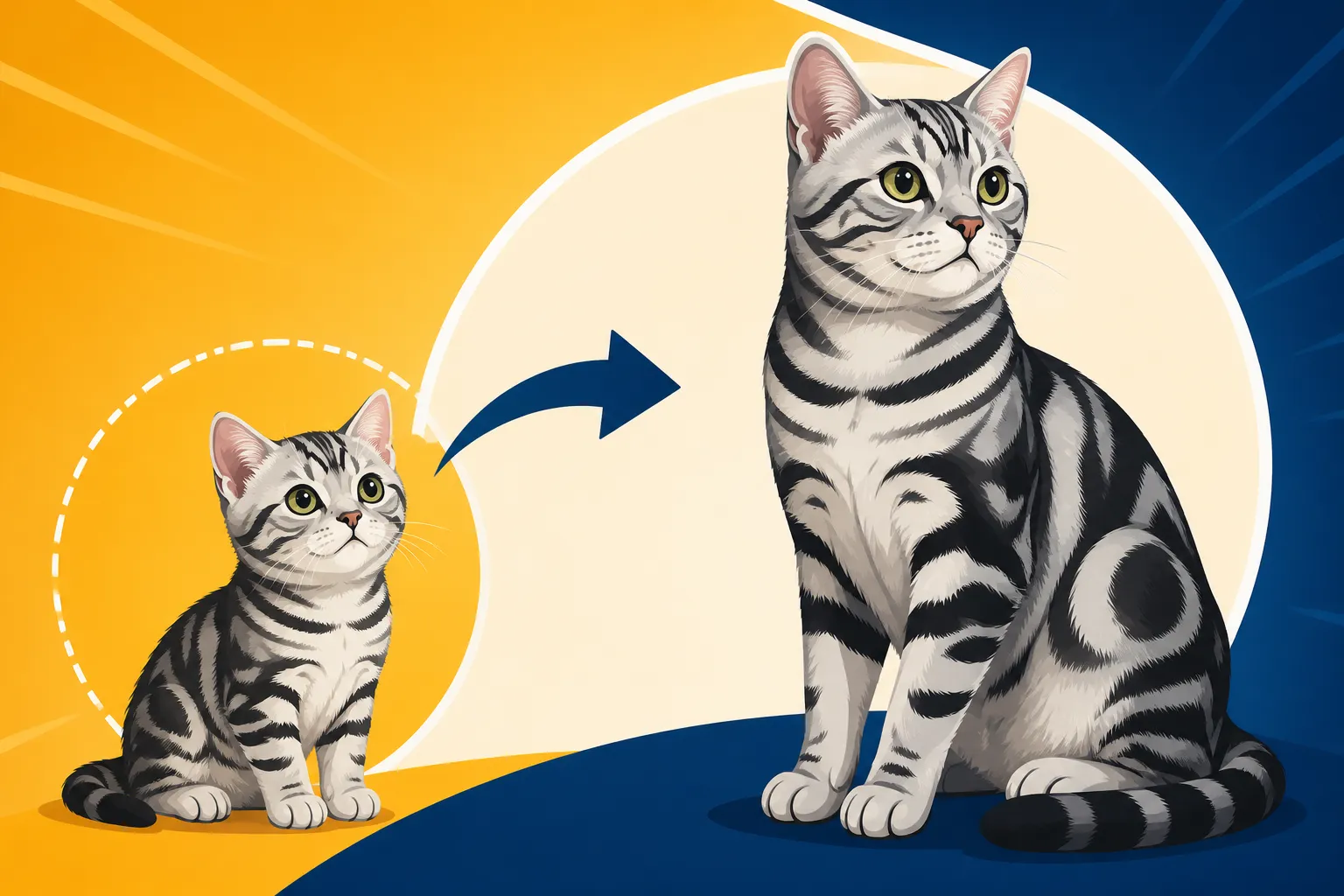
American Shorthairs are a sturdy, slow-maturing breed. Many reach close to their adult height and length during their first year, but that does not necessarily mean they have finished growing. Their chest may broaden, their muscles may develop, and their overall frame can continue to fill out as they mature. It is common for an American Shorthair to take around three years to reach full physical maturity, with some individuals continuing to change gradually beyond that.
This slower development can be confusing if you are used to a kitten who seems to shoot up quickly and then stop. Your young American Shorthair might look long-legged and slim at one stage, then become more substantial over the following months. Those changes are not automatically a sign that something is wrong. A healthy cat can have several distinct growth phases rather than one smooth climb toward adult size.
It helps to think of “full size” as a combination of height, length, muscle, and body condition—not a birthday or a single number on the scale. The breed’s characteristic solid build may take time to emerge. For more on the breed’s expected proportions, see How Big an American Shorthair Gets and Why an American Shorthair Takes Three Years to Fill Out.
Adult size varies from cat to cat
There is no one adult weight that suits every American Shorthair. Males are often larger and more heavily muscled than females, but individual cats vary with their family background, frame, activity level, and health. A naturally broad, muscular cat may weigh more than a smaller-framed cat while still being in good condition.
That is why comparing your cat with a neighbor’s American Shorthair—or with a photograph online—can create unnecessary worry. Two cats of the same age may differ visibly in build, and both may be healthy. A kitten’s parents can offer clues about likely adult size, but they cannot predict an exact weight or guarantee a particular growth pattern.
The scale is useful, but it is only one piece of the picture. Your veterinarian can assess your cat’s growth alongside body condition, muscle development, and overall health. A practical companion read is What an American Shorthair Weighs, which puts weight into the context of this breed’s frame.
| Age or stage | What you may notice | What to focus on |
|---|---|---|
| Kittenhood | Rapid changes in length, height, and coordination | Regular meals, healthy development, and routine veterinary care |
| Around the first year | Many cats look close to their adult height and length | Whether the body is still lean, filling out, or gaining excess fat |
| Young adulthood | Chest, muscle, and overall proportions may continue developing | Trend over time rather than one measurement |
| Around three years and beyond | Many American Shorthairs are approaching full physical maturity | Stable body condition, mobility, and changes from your cat’s own baseline |
These are broad stages, not a strict schedule. A cat’s health, sex, genetics, and daily routine all affect how growth appears.
How to tell normal development from excess weight
Follow body shape as well as weight
A solid American Shorthair can look stocky even when its body condition is healthy. Instead of judging by appearance alone, gently feel along the ribs and look at your cat from above and from the side. You should generally be able to feel the ribs under a light layer of tissue, without having to press firmly. From above, there should usually be some definition behind the ribs rather than a continuously rounded outline.
A cat’s coat and posture can make these checks tricky. A dense coat can hide the waist, and a relaxed cat curled on the sofa may look much rounder than it does standing. Try checking when your cat is standing naturally, and repeat the check every few weeks rather than making a judgment from one glance. A vet can show you how to assess your own cat’s body condition and help establish what is appropriate for that individual.
Pay attention to changes in habits, too. If your cat is becoming less eager to jump, is grooming less effectively, or seems to tire more quickly, those changes deserve attention. They may have several possible causes, so they are not proof of excess weight by themselves. For a more detailed body-shape guide, see How to Score a Square Built American Shorthair's Body Condition.
Measure progress consistently
Weighing your cat at home can help you spot a trend, especially when the changes are gradual. Use the same scale, at roughly the same time of day, and record the result with the date. If your cat will not sit still on a household scale, one simple method is to weigh yourself, then weigh yourself holding your cat and subtract the first number. This gives an estimate, not a substitute for a veterinary measurement, but consistent estimates can still be useful.
Do not expect the number to rise steadily every week. Growth may slow, pause, or look uneven, and ordinary changes in food, hydration, or bathroom habits can affect an individual reading. What matters most is the pattern across time and whether your cat seems well. If a measurement surprises you, repeat it under similar conditions before drawing conclusions.
A small notebook or phone note can make this easier: record weight, appetite, activity, and any changes you have noticed. If you shop for a pet scale or growth-tracking supplies through a retailer such as Chewy, choose tools you can use consistently rather than treating any single reading as a verdict. For practical weighing tips, see How to Weigh an American Shorthair at Home.
What supports healthy growth
Feed for life stage, not for a bigger-looking cat
Kittens need food suited to growth, while adults need a feeding routine that supports maintenance. Follow the food label as a starting point, but remember that feeding guidance cannot account perfectly for every cat’s metabolism or activity. Your veterinarian can help adjust portions based on your cat’s actual condition and growth pattern.
It is tempting to add extra food because a young cat seems to be taking a long time to fill out. But a slow-maturing frame does not mean that unlimited food will help your cat become a healthier adult. Excess calories can add body fat faster than muscle or healthy structural development. Keeping meals measured and checking body condition regularly is more useful than trying to make the scale climb.
Make food changes gradually unless your veterinarian advises otherwise, and keep treats in the overall daily picture. If you are unsure which diet is appropriate for a growing cat, What an American Shorthair Kitten Should Eat offers a useful starting point for understanding kitten nutrition.
Build a routine that leaves room for activity
Play supports movement, coordination, and the chance to use natural hunting behaviors indoors. Short, regular play sessions can suit a kitten better than one long, exhausting session. Try a wand toy or another safe toy that lets your cat stalk, chase, and catch. Keep play age-appropriate, and give your cat room to stop when tired.
Activity does not need to be complicated. A stable scratching post, accessible resting spots, and opportunities to explore can encourage movement throughout the day. Watch how your kitten uses the space: a cat who avoids a high perch may need an easier step or a lower place to climb, particularly while coordination is still developing. The goal is enjoyable, safe activity—not forcing exercise to change the cat’s shape.
Once your cat is neutered, its energy needs may change, and the same portions that suited an active kitten may eventually be too much. That does not mean every neutered cat will gain weight, but it does make portion awareness especially helpful. See Why a Neutered American Shorthair Needs Less Food for more on adjusting feeding expectations.
When to ask your veterinarian about growth
Look for changes that are sudden or persistent
A slow-growing cat can still be perfectly healthy, but a sudden change in weight or appetite is worth discussing with a veterinarian. The same goes for a kitten who seems unusually tired, has persistent digestive trouble, or is not developing as expected. Rather than waiting for a particular birthday, use changes in your cat’s behavior and condition as cues to check in.
Bring your notes if you have them. A record of weights, food portions, appetite, and activity gives your vet more context than a memory of whether your cat “seems bigger.” If you have several cats, keep their records separate so you do not accidentally compare one cat’s bowl habits or weight trend with another’s.
Seek prompt veterinary advice for more urgent signs, such as difficulty breathing, repeated vomiting, marked weakness, or a sudden inability to walk normally. These symptoms are not ordinary growth variations. A vet can decide whether examination or testing is needed and help you distinguish a routine developmental difference from a health concern.
Use the same baseline as your cat grows older
Once your American Shorthair is fully mature, keep an eye on its normal shape, appetite, and activity rather than assuming that weight will stay appropriate without attention. A mature cat may become less active, and age, routine, and health can all influence body condition. The useful question is not just “Is this a normal weight for the breed?” but “Is this the right condition for my cat?”
If your cat is gaining weight, avoid crash diets or sharply reducing food on your own. Cats need a carefully managed approach to weight loss, and abrupt restriction can be dangerous. Your veterinarian can set a safe plan and help you track progress. Likewise, unexplained weight loss should not be treated as a welcome change without checking for an underlying cause.
For most American Shorthairs, reaching full size is a gradual process rather than a sudden milestone. Your cat may look close to grown well before its muscles and proportions have finished developing. Track its individual pattern, use body condition alongside weight, and bring concerns to your veterinarian—those habits will tell you more than a birthday or breed-average number alone.
Disclaimer
This article is for general informational purposes only and does not constitute professional advice. Laws, prices and regulations vary by location and change over time. Consult a qualified professional for guidance on your specific situation.