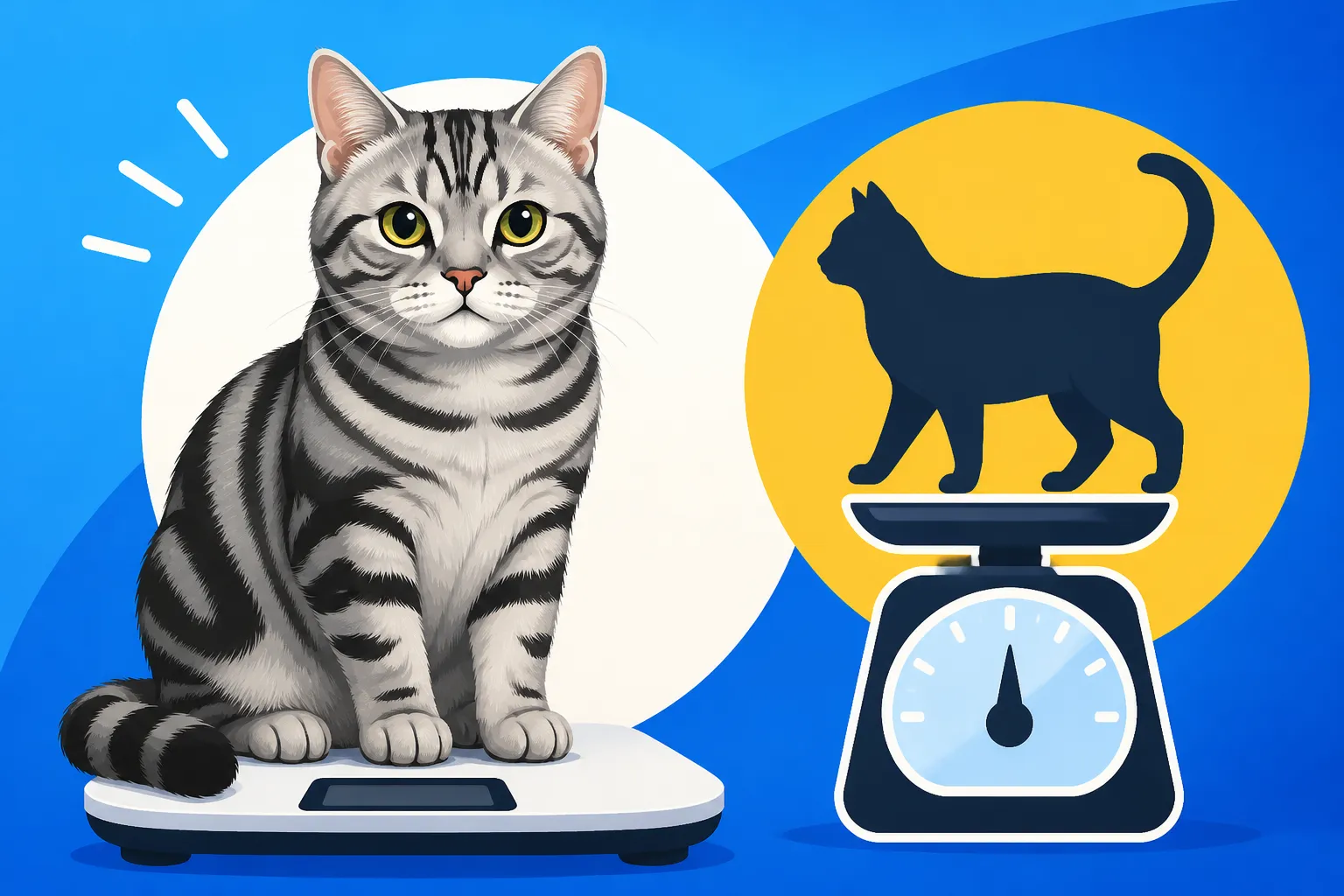
How Much a Male American Shorthair Weighs
A male American Shorthair can look surprisingly heavy because he is broad and muscular, so the number on the scale doesn’t tell the whole story. This guide explains the usual adult weight range, how to judge whether your cat is carrying a healthy amount of weight, and what to do if his weight is changing.
Typical weight for a male American Shorthair
The usual adult range
A fully grown male American Shorthair often weighs around 11 to 15 pounds. That’s a useful reference range, not a target every cat should reach. A larger-framed, active male may be healthy near the upper end, while a smaller-framed cat may be in excellent condition below it. Individual build, age, activity, and overall health all matter.
Breed averages can also be misleading when you’re looking at a single cat. Two males can weigh the same but have very different body conditions: one may be solidly built with a visible waist, while the other carries extra fat around his abdomen. The scale gives you one piece of information; his outline, muscle, and changes over time give you more.
For more context on male and female size differences, see What an American Shorthair Weighs. It can also help to consider How Big an American Shorthair Gets, since a cat may continue filling out after he has reached his adult height.
Why a broad build can fool the scale
American Shorthairs are sturdy cats with a broad chest, strong legs, and substantial muscle. Their square, compact appearance can make them seem heavier than a longer, more slender cat of the same weight. A thick coat can add to that impression, too, especially during the colder months.
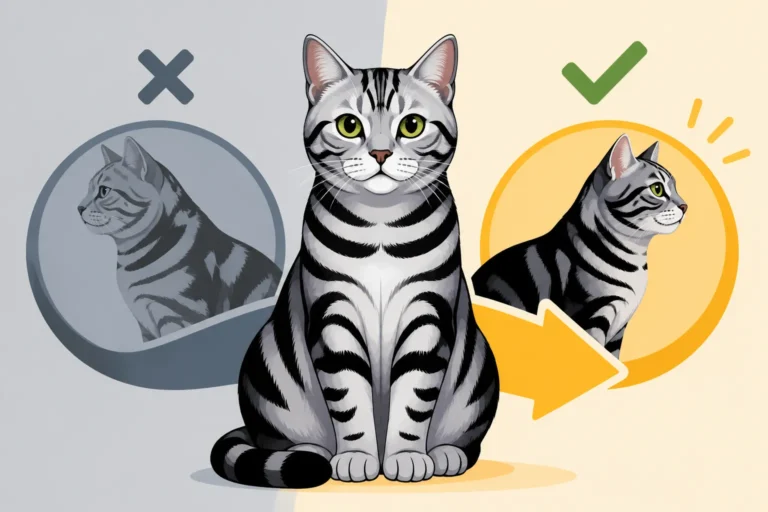
That sturdy shape isn’t a free pass to ignore weight gain. A muscular frame and excess body fat are different things, even when they’re hard to tell apart at a glance. Look for a waist when viewed from above and a gentle upward tuck behind the ribs when viewed from the side. If his outline is getting rounder, or you can’t easily feel his ribs, his weight may be drifting above his ideal.
The breed’s structure is part of why weighing alone can be confusing. Why an American Shorthair Is Built Square explains the characteristic shape that may make a healthy cat look heavier than a finer-boned breed. The more useful question is whether your individual cat’s shape and weight are right for him.
Age and maturity affect the number
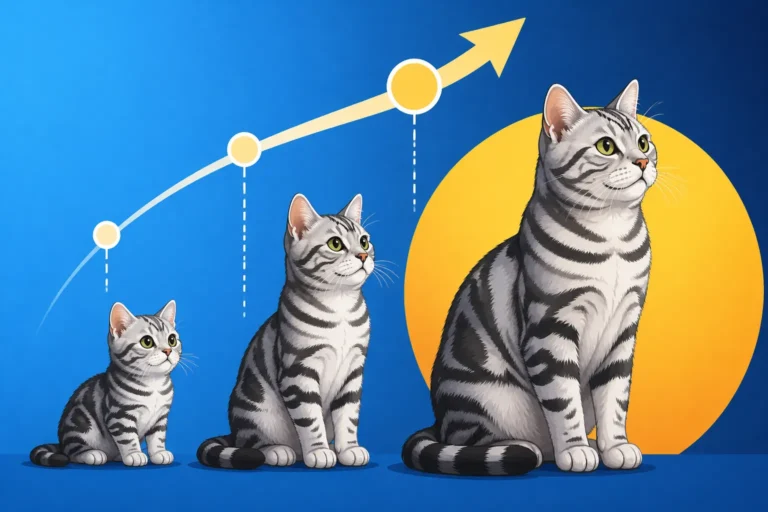
American Shorthairs mature gradually. A young male may still be growing and gaining muscle after he has stopped looking like a kitten, so don’t judge his adult size too early. A kitten’s healthy weight should be assessed by growth over time and veterinary guidance rather than by comparing him with the adult range.
Once he is mature, his weight should usually be relatively steady unless something changes in his routine or health. Less activity, a change in food portions, or access to another pet’s bowl can gradually add weight. In older cats, an unexplained drop on the scale deserves attention too; weight loss can reflect health changes rather than simply “slowing down.”
| Life stage or pattern | What to keep in mind |
|---|---|
| Growing kitten | Track growth and body condition with your vet; adult ranges don’t apply |
| Young adult | He may continue filling out as he matures |
| Healthy adult | Use his individual frame and body condition, not a breed number alone |
| Older cat | Watch for gradual loss or gain and discuss unexplained changes with a vet |
How to tell whether his weight is healthy
Use body condition, not just pounds
A quick hands-on check is often more informative than a glance. Run your fingers gently along his sides: you should be able to feel his ribs under a light covering, without having to press hard. You shouldn’t see every rib clearly, but they shouldn’t disappear beneath a thick layer of fat either.
Next, look down at him from above while he’s standing. A healthy cat usually has some narrowing behind the ribs, even if his chest and hips are broad. From the side, look for a slight upward slope from the lower chest toward the back legs. A hanging pouch of loose skin can be normal in cats, so don’t mistake that alone for obesity. Consider the whole shape and feel of his body.
If you’re unsure, ask your vet to assess his body condition and show you what to look for on your own cat. How to Score a Square Built American Shorthair's Body Condition offers more detail on evaluating a stocky frame without relying on appearance alone.
Weigh him consistently at home
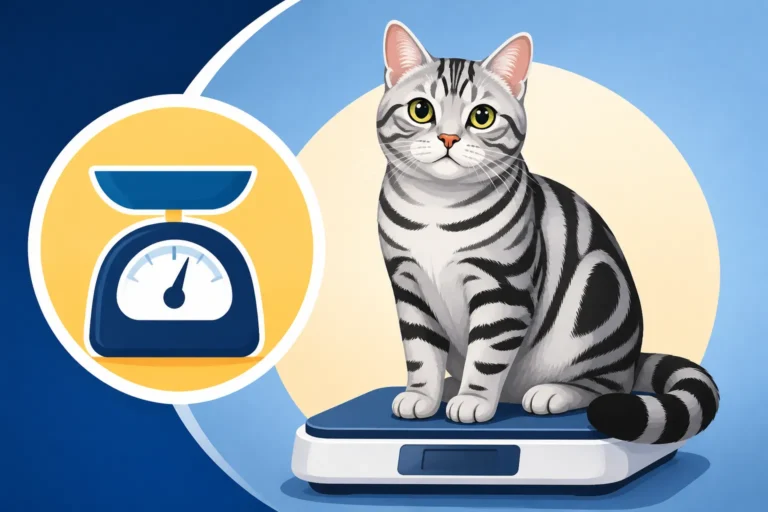
A home weight log can reveal a slow trend before it becomes obvious in photos or when you pick him up. Use the same scale, at roughly the same time of day, and keep the method consistent. If your cat will sit calmly on a household scale, weigh yourself first and then weigh yourself holding him; subtract your weight from the combined reading. A pet scale can be easier if he won’t stay still.
Write down the date and result rather than trying to remember whether he seemed heavier last month. You can also note changes to his food, activity, appetite, or medication. If you’re buying a pet scale, retailers such as Chewy may list the scale’s capacity and platform dimensions; check that the specifications suit your cat and the space you have available.
For a practical routine, see How to Weigh an American Shorthair at Home. Don’t be discouraged if one reading seems odd. A cat shifting his paws, eating shortly beforehand, or using the litter box at a different time can affect a single measurement. A series of readings is more useful than one isolated number.
Notice changes in everyday movement
Weight changes can show up in daily habits before they stand out on the scale. Your cat may hesitate before jumping onto a familiar chair, groom his back less thoroughly, or seem to tire sooner during play. Some cats also become less active as they gain weight, which can make the problem sneakier: they burn less energy while continuing to expect the same food routine.
A change in weight can also be accompanied by signs that aren’t about body fat. Increased thirst, a marked change in appetite, vomiting, or a noticeable loss of energy are reasons to check in with a veterinarian. Don’t assume an older cat is simply getting thin or a quiet cat is simply less playful. Why an Old American Shorthair's Weight Should Be Watched covers why steady monitoring matters as cats age.
What can shift a male American Shorthair’s weight
Food portions and access to meals
Portions that once suited an active young cat may become too generous if his routine changes. Food labels provide a starting point, but the right amount depends on the individual cat, the food’s calorie content, treats, and how active he is. Measure meals rather than estimating by eye, and count treats as part of his daily intake.
Free-feeding can make it difficult to tell how much he eats, especially in a multi-cat home. One cat may quietly finish another’s leftovers, or several small top-ups may add up more than anyone intended. If you shop for food through Chewy, check the feeding guidance on the specific product label and ask your vet how to adapt it to your cat’s body condition. A retailer’s feeding chart is a starting point, not a personalized plan.
If your cat is gaining weight, don’t slash his portions suddenly or put him on a crash diet. Cats need gradual, carefully managed weight loss. Your vet can help estimate an appropriate feeding plan and monitor how he responds. For a broader frame-based guide, see What an American Shorthair Should Weigh at Its Frame.
Neutering and activity changes
Some cats gain weight more easily after neutering, particularly if their food intake stays the same while their energy needs change. That doesn’t mean weight gain is inevitable. It means the feeding routine may need a fresh look after the procedure, alongside regular weighing and observation of body condition.
Household routines can change activity levels just as much. A cat who used to explore outdoors may spend more time napping after moving indoors. A change in playtime, a new work schedule, or fewer places to climb can all reduce movement. Indoor cats still benefit from play and opportunities to explore, but activity is only one part of weight management; portions matter too.
If he has gained weight since neutering, avoid blaming the surgery alone. Review his meals, treats, movement, and any changes in health with your vet. Why a Neutered American Shorthair Puts On Weight Faster looks more closely at why the transition can affect a cat’s weight.
When to seek veterinary advice
Gradual gain or loss deserves a closer look
A steady increase over time is worth discussing, even if your cat still falls within the typical breed range. The same is true of unexplained weight loss. A cat can remain inside a broad range while moving away from the weight that is healthy for his own frame.
Bring your weight log and any notes about food, appetite, thirst, activity, and litter-box habits to the appointment. Those details can help your vet distinguish a feeding or activity issue from a health concern. If your cat seems unwell, is losing weight quickly, or has stopped eating, contact a veterinarian promptly rather than waiting to see what happens.
If weight loss is recommended, ask for a safe pace and a follow-up plan. Gradual change is important; rapid weight loss can be dangerous for cats. How Slowly an American Shorthair Should Lose Weight explains why a measured approach matters.
Get help if body shape or behavior changes
A new belly, difficulty grooming, reluctance to jump, or a sudden change in appetite can all be useful clues. So can a shift in how his collar fits or how easily you can feel his ribs. These signs don’t diagnose a problem on their own, but they can tell you it’s time to check in rather than relying on the scale alone.
Your vet can assess muscle as well as fat, which is especially helpful when a cat’s frame makes visual estimates tricky. They can also help set a realistic goal weight based on your cat’s build and health, rather than asking him to match a generic breed average. That individual target is more useful than trying to make every male American Shorthair weigh the same.
Disclaimer
This article is for general informational purposes only and does not constitute professional advice. Laws, prices and regulations vary by location and change over time. Consult a qualified professional for guidance on your specific situation.