Whether a Domestic Shorthair and an American Shorthair Differ Genetically
A shelter form may say “domestic shorthair,” while a cat’s sturdy build and silver tabby coat look unmistakably like an American Shorthair. The labels can be confusing, especially when you’re trying to understand a cat’s background or choose a DNA test. The key difference is real, but it is not a simple genetic dividing line: one label describes a broad type of cat, while the other names a registered breed.
What the two labels actually mean
Domestic Shorthair describes a coat and a broad population
“Domestic shorthair” is a general term for a short-coated cat whose ancestry is not documented as belonging to a recognized pedigree breed. It is not one specific breed with a single standard appearance or a uniform genetic background. Domestic shorthairs can be small or large, lean or stocky, and nearly any color or pattern.
That variety is part of the point. A brown tabby from a shelter in Chicago and a black cat from a household in Seattle may both be called domestic shorthairs without being closely related or sharing the same mix of ancestors. The label gives useful information about coat length and pedigree status; it does not identify one consistent genetic profile.
A shelter, veterinary clinic, or adoption listing may use “domestic shorthair” as a practical description when a cat’s parents and ancestry are unknown. It usually means the cat is a short-haired household cat without verified papers tying it to a recognized breed. It does not mean the cat is inferior, genetically uninteresting, or necessarily a mixture of several named breeds.
For a closer look at how these terms are used, see What a Domestic Shorthair Is Next to an American Shorthair.
American Shorthair names a pedigreed breed
The American Shorthair is a recognized breed with a defined standard and documented pedigrees. Breeders select cats over generations for features such as a balanced, sturdy build, a rounded head, and a dense coat. An individual cat is identified as an American Shorthair through its recorded ancestry and registration, not simply because it looks similar to the breed standard.
That distinction can feel frustrating when a shelter cat looks remarkably like an American Shorthair. It may genuinely share ancestry with the breed, or it may simply have the same familiar combination of short hair, tabby markings, and a solid frame. Appearance can suggest resemblance, but it cannot establish a pedigree on its own.
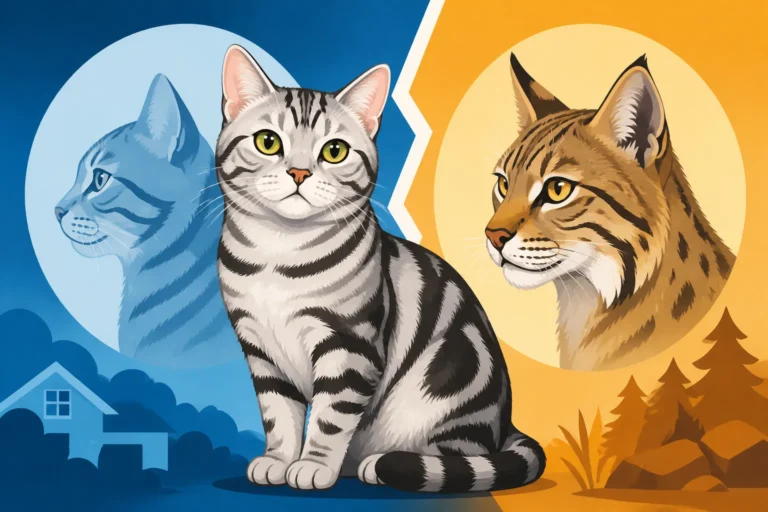
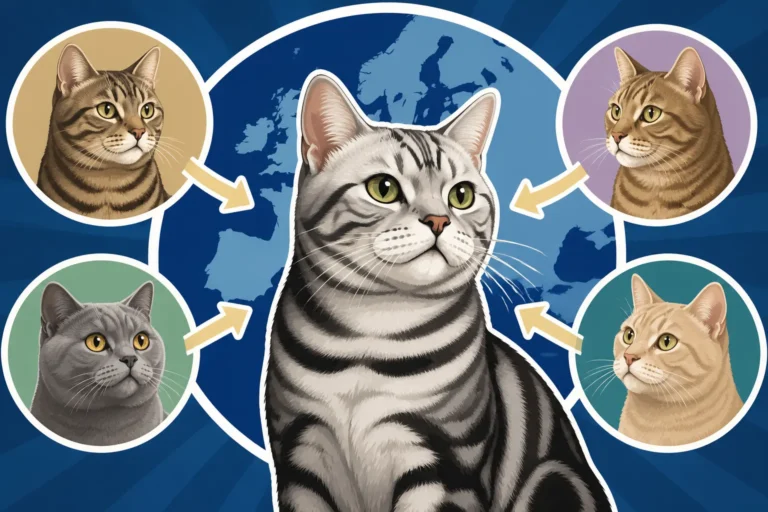
The breed developed from practical shorthaired cats in North America and was later organized through breeding and registration. That history helps explain why American Shorthairs can look like ordinary tabbies: the breed’s roots are connected to the general population of working cats, rather than to an entirely separate kind of cat. Read The Mayflower Cats Behind the American Shorthair for more on that background.
| Label | What it tells you | What it does not prove |
|---|---|---|
| Domestic shorthair | The cat has short hair and no verified pedigree designation | A particular breed mix or a single shared genetic background |
| American Shorthair | The cat belongs to a pedigreed breed when supported by documented ancestry | That every lookalike cat is an American Shorthair |
| Tabby | The cat has a coat pattern | Breed, pedigree, or close genetic relationship to an American Shorthair |
How the cats differ genetically
A breed population can be distinguishable without being genetically sealed off
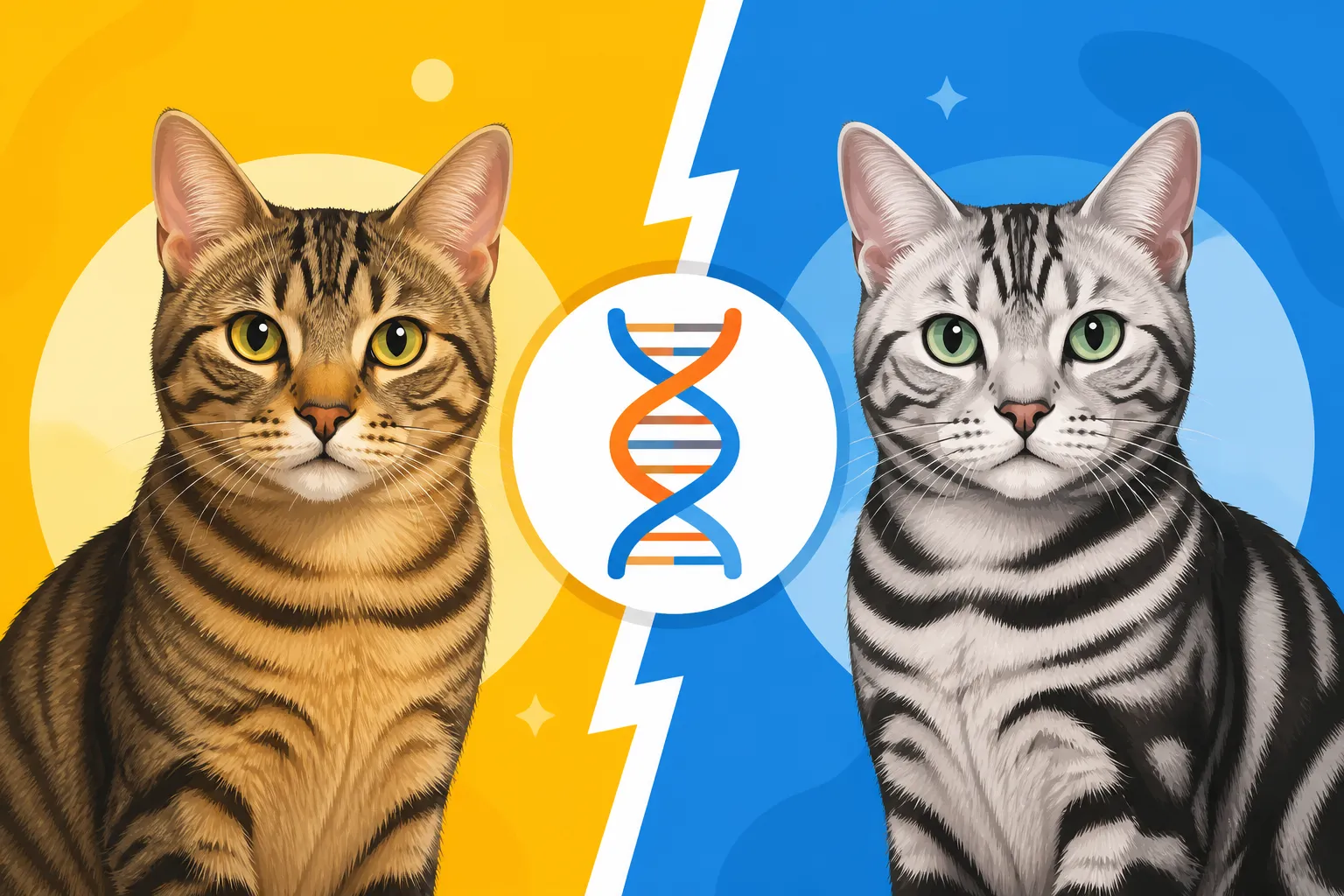
A pedigreed breed is shaped by people selecting and pairing cats across generations. Over time, that process can make a registered population more consistent in appearance and ancestry than the broad, mixed population of cats described as domestic shorthairs. Researchers can sometimes identify statistical patterns that distinguish breed populations in genetic data.
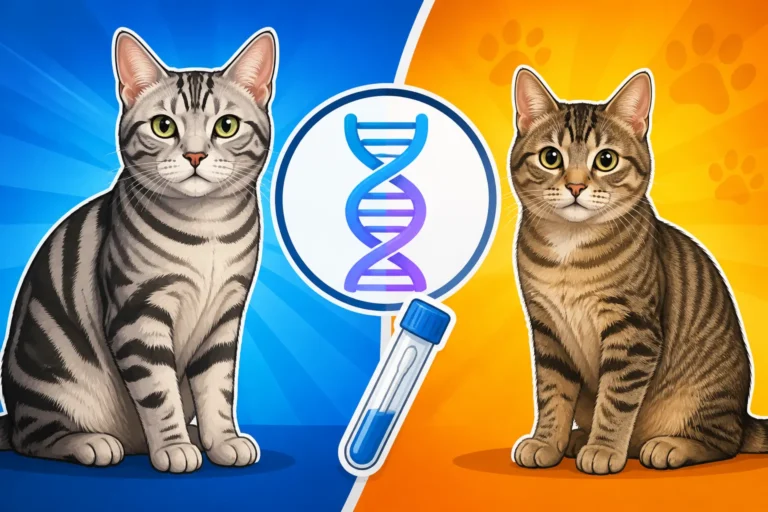
But “distinguishable on average” is not the same as “every individual has a unique genetic signature.” Individual American Shorthairs still vary, and some of their genetic variation may overlap with that found in other cats. Domestic shorthairs are also not a single comparison group: they represent many unrelated or loosely related populations. There is no single domestic-shorthair genome to compare against an American Shorthair genome.
Think of it like comparing a family with a documented family tree to a large crowd of people whose individual backgrounds are unknown. The documented family may show shared patterns, but those patterns do not mean every family member has the same DNA or that nobody outside the family shares any of the same ancestry.
The American Shorthair’s history adds another layer. The breed developed from cats already present in North America, and pedigreed breeding has drawn on related shorthaired cats over time. That means the boundary between the breed’s historical roots and the wider cat population is not a simple genetic wall. For further context, Whether the American Shorthair's Ancestors Sailed on the Mayflower looks at what can—and cannot—be said about those early cats.
Similar looks are not a genetic test
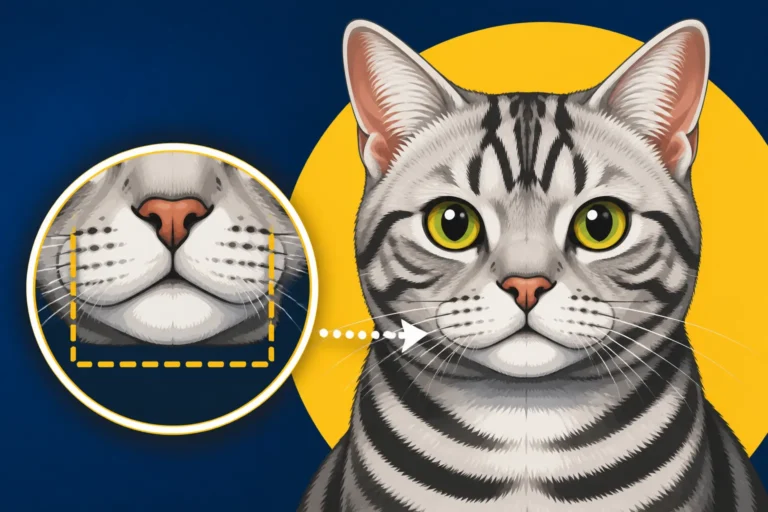
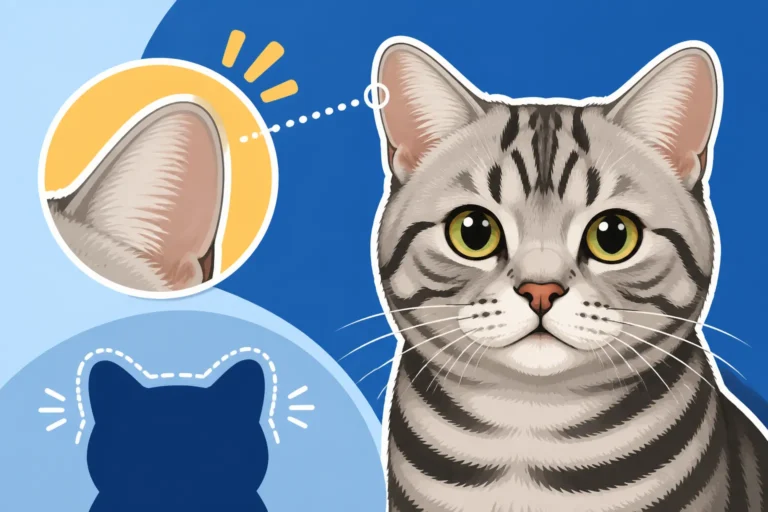
A domestic shorthair may have the American Shorthair’s broad chest, substantial body, round face, or classic silver tabby markings. Those traits can appear outside the breed. Coat pattern in particular is not a reliable breed marker: tabby patterns are widespread among cats, and a silver tabby coat does not establish American Shorthair ancestry.
The reverse is true, too. A pedigreed American Shorthair may not match the most familiar image people have of the breed. American Shorthairs come in a range of accepted colors and patterns, and young cats can change in shape as they mature. A kitten that looks lanky or a solid-colored cat that lacks the classic silver tabby pattern may still be a pedigreed American Shorthair if its records support that identity.
If you are trying to identify a cat you already own, separate what you can see from what you can verify. A photo can help describe appearance; veterinary records can tell you about health and care; pedigree documents can support breed identity. None of those things should be asked to do the job of the others. How to Tell an American Shorthair From a Random Bred Tabby explores the limits of visual comparison.
What a DNA test can and cannot tell you
An ancestry estimate is not the same as proof of breed
Cat DNA tests compare parts of a sample against reference populations included in the testing company’s system. Depending on the test and its reference data, the result may offer clues about ancestry or certain genetic traits. It is best understood as an estimate, not a certificate that turns an unregistered cat into a pedigreed American Shorthair.
The result depends on the populations the test can compare against and how the company defines them. If a cat’s ancestry comes from populations that are genetically similar to one another, the test may not be able to neatly assign every part of its DNA to a named breed. Different providers may use different reference data and methods, so their reports may not tell the same story.
If you’re considering a kit, read the testing provider’s explanation of what its breed or ancestry results mean before ordering. Retailers such as Chewy may list pet DNA tests, but the retailer’s product page is not a substitute for understanding the laboratory’s methods and limitations. Check who processes the sample, what kinds of results the test reports, and whether the company explains how it handles uncertain ancestry.
Pedigree records answer a different question
A DNA ancestry report asks what genetic patterns the sample resembles within a particular test’s reference system. Registration and pedigree records answer whether a cat’s documented family line meets the requirements of a breed registry. These are related questions, but they are not interchangeable.
For a breeder’s kitten, ask for the paperwork that connects the kitten to registered parents and a recorded line. If you are considering a cat advertised as an American Shorthair, Whether Papers Are the Only Proof of an American Shorthair can help you think through what documentation does and does not show. A DNA result may add information, but it does not replace records that establish pedigree.
For a shelter cat, the most useful answer may simply be “domestic shorthair, American Shorthair-like.” That description is honest and still leaves room for the cat’s personality, health, and history to matter more than a breed label. Chewy’s listings or customer information may help you compare test products, but look to the testing company for details about interpreting a report. If a result is confusing, contact the provider for clarification rather than treating a percentage as a definitive identity.
How to describe your cat accurately
Use the label that matches the evidence
If your cat has verified American Shorthair pedigree documents, “American Shorthair” is appropriate. If your cat came from a shelter or unknown background and has no supporting pedigree, “domestic shorthair” is generally the clearest label—even if the cat strongly resembles the breed.
That wording is not a judgment about the cat’s quality or value. A domestic shorthair can be healthy, affectionate, athletic, and striking. An American Shorthair’s pedigree may offer more predictable information about lineage and breed characteristics, but it does not guarantee a particular temperament or health outcome for an individual cat.
When completing a veterinary form, adoption profile, or insurance application, answer according to the information you actually have. If you are unsure, ask the clinic or provider how it wants unknown-breed cats listed. For general identity questions, Whether a DNA Test Tells an American Shorthair From a Moggy explains why a test may not provide a neat yes-or-no answer.
Put health and care ahead of the label
A breed name alone cannot tell you whether a particular cat is healthy, what food it needs, or how active it will be. Share the cat’s age, weight changes, symptoms, known medical history, and daily routine with your veterinarian. Those details are more useful for making care decisions than a visual guess about ancestry.
For a newly adopted cat, bring any available medical records to the first appointment and ask what preventive care or follow-up is appropriate. If the cat’s background is unknown, the vet can still build a care plan from an examination and the cat’s individual needs. You do not have to solve the ancestry question before giving your cat good care.
If you are buying a pedigreed kitten, look for responsible breeding practices and transparent records rather than relying only on photographs or a DNA result. How to Find an American Shorthair Breeder Worth Paying For offers a practical starting point. Chewy may be a convenient place to browse everyday cat supplies or find product information, but breed verification should come from appropriate pedigree documentation, not a retailer listing or a resemblance-based claim.
In short, domestic shorthair and American Shorthair are not interchangeable labels. The first describes a broad group of short-coated cats without verified breed pedigree; the second refers to a specific registered breed. Their genetic backgrounds can overlap, and an individual cat’s appearance or DNA estimate may not settle its pedigree. When the family tree is undocumented, use the honest label, then focus on the cat in front of you.
Disclaimer
This article is for general informational purposes only and does not constitute professional advice. Laws, prices and regulations vary by location and change over time. Consult a qualified professional for guidance on your specific situation.