Ships Carried the American Shorthair’s Ancestors as Ratters
Have you ever looked at a calm, sturdy American Shorthair curled up on your sofa and wondered what adventures their ancestors must have had? It’s easy to see their quiet confidence and assume they’ve always been the pampered housecats we adore today, but nothing could be further from the truth. The very characteristics that make American Shorthairs such wonderful companions – their resilience, intelligence, and laid-back demeanor – were forged in the crucible of necessity, long before they ever graced a show ring. Their history isn't just interesting trivia; it's the foundation of their entire being. This guide will explore the incredible journey of these cats, tracing their lineage back to the working felines who sailed the high seas, earning their keep as essential ratters aboard ships, and how that past continues to shape the beloved breed we know today.
The Essential Role of Cats on Early Voyages
Imagine life aboard a cramped, wooden sailing ship, days turning into weeks, and weeks into months. The creaking timbers, the vast, unforgiving ocean, and the ever-present threat of scurvy and disease. In such an environment, every resource was precious, and every living creature had a role to play. For hundreds of years, long before sophisticated navigation or preservation techniques, cats weren't just passengers; they were critical crew members, especially the hardworking ancestors of our American Shorthairs.
Aboard the Mayflower and Beyond
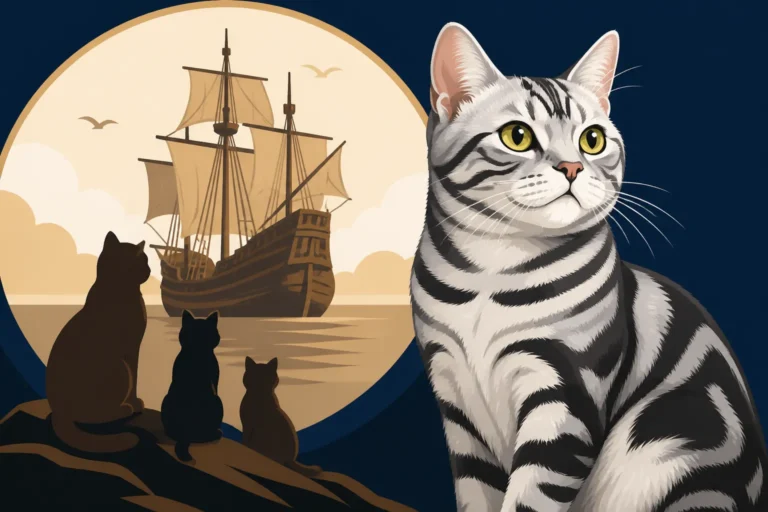
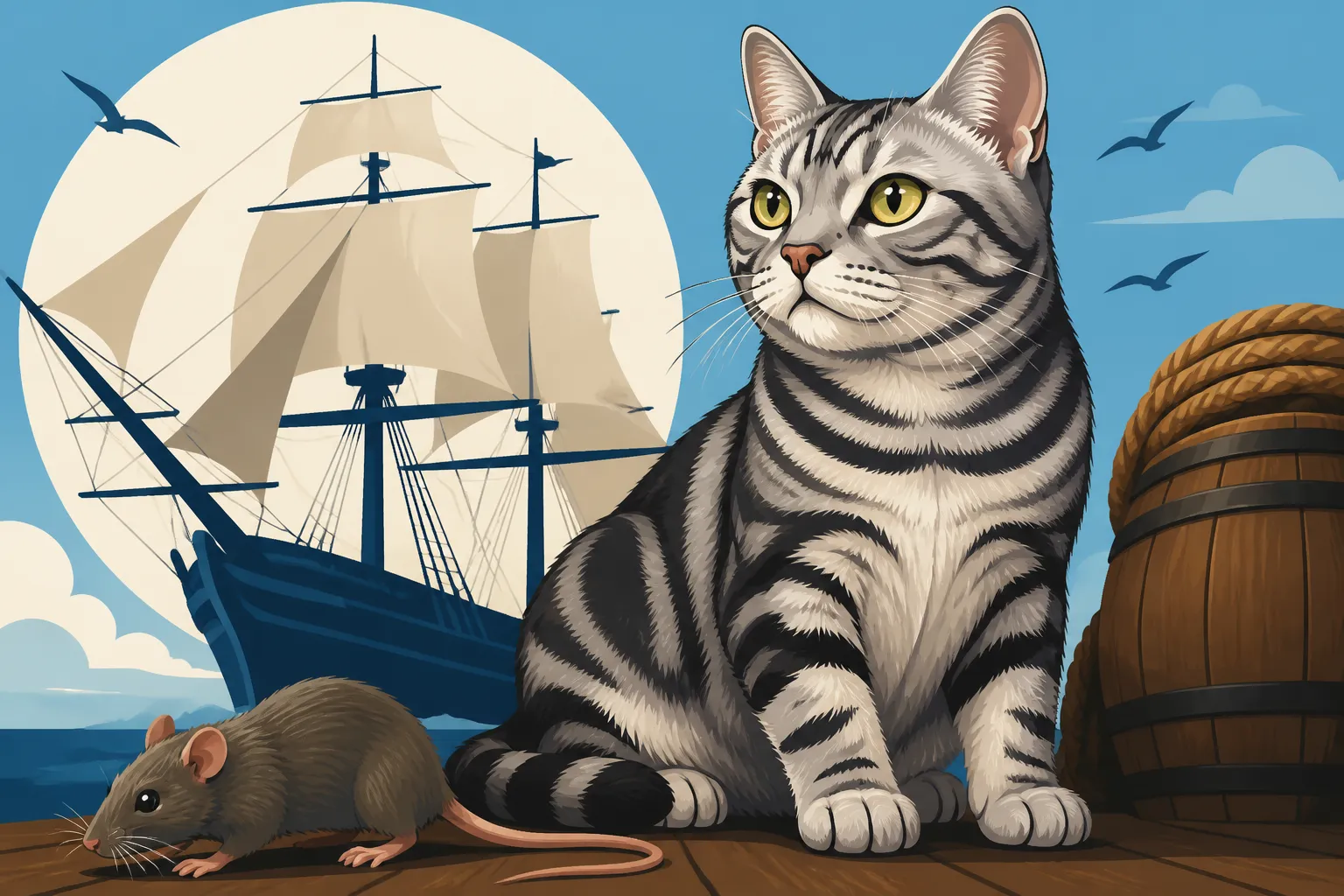
The journey across the Atlantic in the 17th century was fraught with peril, not least of which was the constant battle against vermin. Rats and mice weren't just annoying; they were a significant threat to the success of any voyage. These pests would gnaw through ropes, destroy food stores, and contaminate precious fresh water. They carried diseases that could decimate a crew, turning a challenging journey into a catastrophic one. This is why cats, like the hardy ancestors of the American Shorthair, were indispensable. It’s widely believed that some of the earliest cats to arrive in North America were indeed sailing on ships like the Mayflower, diligently performing their duties. These weren't fancy, delicate creatures; they were tough, resourceful felines bred by necessity for survival and utility, perfectly adapted to a life of perpetual pest control. Their effectiveness directly contributed to the survival of both the crew and the cargo, making them truly invaluable assets.
Beyond just preventing immediate disaster, these ship's cats played a continuous, vital role in maintaining the ship's integrity. Think about it: ropes were essential for sailing, and a single chewed rope could compromise the entire rigging. Grain and other provisions, packed tightly in the hold, were prime targets for hungry rodents. Without a cat on board, a ship could quickly become overrun, leading to spoiled food, damaged equipment, and a very disheartened crew. These feline guardians were a silent, yet incredibly effective, line of defense, allowing sailors to focus on the myriad other dangers of the open sea. They were literally the difference between a successful voyage and a failed one, impacting trade, exploration, and the very establishment of new settlements. The Mayflower Cats Behind the American Shorthair tells more about this fascinating origin.
More Than Just Pest Control
While their primary job was undeniable pest control, the ship's cats offered much more than just a clean hold. For sailors enduring long, lonely voyages, often away from family and familiar comforts for years, the presence of a cat could be a profound source of companionship and morale. Imagine the comfort of a purring cat settling on a lap after a grueling shift, or the simple joy of watching them stalk a rogue mouse across the deck. These moments of quiet connection could break the monotony and loneliness, offering a much-needed emotional anchor in a challenging environment.
These feline companions also served as a subtle early warning system. Their keen senses and acute hearing would often alert the crew to unusual sounds or movements in the ship’s dark corners, sometimes indicating a breach or other structural issue before it became severe. Their natural curiosity and predatory instincts made them excellent observers, constantly patrolling their territory. Beyond that, their very presence symbolized a small piece of home, a touch of domesticity amidst the harsh realities of sea life. They were a reminder of the world left behind and the world they hoped to return to, a comforting, familiar presence that quietly asked for little but gave so much in return. Their stoic, independent nature made them ideal for this role; they weren’t demanding, yet their mere existence was a balm to weary souls.
Traits Forged by a Life at Sea
The American Shorthair you see today carries the indelible marks of its seafaring, ratting ancestors. These weren't traits selectively bred for beauty, but for pure, unadulterated survival and effectiveness in the most demanding environments. Every aspect of their physical and behavioral makeup speaks to a history where only the fittest, most capable felines made it through.
The Hunter's Instinct: Still Alive and Kicking
When survival depended on clearing a ship or a barn of rodents, a cat's hunting drive wasn't a pastime; it was its job description. The ancestors of the American Shorthair were exceptionally good at it, and this intense predatory instinct is still very much a part of the breed today. They possess a natural athleticism, a muscular build, and incredible agility that allowed them to navigate tight spaces and pounce with precision, making them formidable hunters. Their broad chests and powerful legs are not just for aesthetics; they are functional traits developed for stalking, pouncing, and climbing.
Even if your American Shorthair has never seen a mouse in its life, that instinct remains incredibly strong. You’ll see it in their focused gaze when a fly buzzes by, the way they stalk a feather wand toy, or how they "bury" their food after eating, a throwback to caching prey. They love interactive play that mimics the hunt, from the stalk to the pounce to the "kill." This isn't just cute behavior; it's a deep-seated drive that needs to be satisfied. Providing appropriate outlets for this instinct, such as regular play sessions with engaging toys or even puzzle feeders, is crucial for their mental and physical well-being. Without it, an indoor American Shorthair might find less desirable "prey" around the house, like your dangling shoelaces or even your toes! What an Indoor American Shorthair Does With a Mouser's Instinct offers great ideas for channeling this drive.
Resilience and Adaptability
Life on the high seas and, later, in the rugged new American colonies was anything but easy. The cats that survived and thrived were those that could adapt to constantly changing conditions, endure harsh weather, and bounce back from adversity. This fostered an incredible resilience in the breed. They developed thick, dense coats that offered protection against the elements, whether it was the biting winds off the Atlantic or the chilling damp of a ship’s hold. Their robust health and solid constitution are direct legacies of this demanding past.
This historical demand for adaptability also manifests in their remarkably calm and unflappable temperament. A good ship's cat couldn't be easily startled by a sudden storm or the chaos of port; it had to remain focused and self-reliant. Modern American Shorthairs generally handle changes in routine, new environments, and even busy households with a quiet dignity. They are not typically prone to extreme anxiety or aggression, preferring instead to observe and assess new situations before engaging. This independent yet tolerant nature means they can fit into many different family dynamics, often becoming a steady, comforting presence in the home without requiring constant attention.
From Ship to Shore: Establishing a Foothold in the New World
As the early European settlers disembarked from their ships, so too did their indispensable feline companions. The transition from ship to land was just another chapter in the American Shorthair ancestors' story of adaptation, one that further cemented their utility and character in the burgeoning new world.
Landing on North American Soil
Upon arrival in the New World, these resourceful cats quickly found new territories to patrol and new jobs to do. They weren't just stepping off the boat; they were being introduced to an entirely new ecosystem. The early settlements and farms faced the same, if not greater, challenges from rodents as the ships had. Barns, granaries, and humble cabins were ripe targets for mice, rats, and other small pests, threatening precious food supplies and spreading disease. The cats, already experts in vermin control, naturally transitioned into these land-based roles with ease. They spread across the continent alongside their human counterparts, vital members of pioneering families, protecting harvests and homes.
Their independence and hardiness were perfectly suited for the frontier life. These were not cats that needed coddling; they were self-sufficient workers who earned their keep. They patrolled vast barns, open fields, and the perimeters of developing towns, honing their hunting skills and contributing significantly to the survival and prosperity of the early American populace. Their adaptability allowed them to thrive in diverse climates and landscapes, from the cold New England winters to the humid southern summers, solidifying their reputation as tough, resilient, and utterly dependable creatures. They were, in essence, building their own version of the American dream, one cleared barn at a time.
The Farm Cat Era
As settlements grew into farms and communities, the ancestors of the American Shorthair became the quintessential "farm cat" or "barn cat." Their days were spent patrolling vast territories, keeping rodent populations in check, a critical task in an agrarian society where pest infestations could lead to crop failure and starvation. This era of their history further refined their physical prowess and independent spirit. They had to be smart, quick, and possess excellent problem-solving skills to hunt effectively in varied environments.
Life on a farm also meant they interacted with other animals, from livestock to dogs, further developing their tolerant and adaptable temperaments. They learned to coexist, often forming a quiet, mutually beneficial relationship with their human families and other farm inhabitants. This sustained period of natural selection, driven by the practical needs of settlers and farmers, ensured that only the strongest, healthiest, and most effective hunters passed on their genes. It was a rigorous breeding program orchestrated by life itself, resulting in a cat that was robust, intelligent, and perfectly suited for a functional, working life. Their self-reliant nature, a hallmark of the breed today, was a direct outcome of this time, as they often hunted for their own meals and required minimal intervention from humans.
Evolution into a Recognized Breed
For centuries, these robust, working cats were simply known as "domestic shorthairs" – a generic term for any short-haired cat of unknown origin. But as cat fancy began to emerge in the late 19th and early 20th centuries, dedicated enthusiasts recognized the unique qualities of these American-born felines and sought to elevate them to a distinguished status.
From Domestic Shorthair to American Shorthair
The initial recognition of these cats in early cat shows was often under the rather uninspired name "Domestic Shorthair." This was problematic because it didn't distinguish them from any other mixed-breed, short-haired cat found on the streets or in homes. Breeders and fanciers who admired their specific type – their sturdy build, gentle nature, and excellent mousing abilities – realized that a more precise identification was needed to preserve their unique lineage and characteristics. They wanted to celebrate the cats that had truly helped build America, not just any common alley cat.
The push for a distinct name was about respect and recognition for a truly American breed. After much advocacy, the breed was officially renamed the "American Shorthair" in 1966. This name change was pivotal. It immediately set them apart, emphasizing their native origins and historical significance. It was a declaration that these cats were not just random moggies, but a distinct and valuable breed with a rich heritage and specific, desirable traits. This rebranding was crucial for garnering public interest and ensuring the breed’s continued development and protection. Why the American Shorthair Was Called Domestic Shorthair Until 1966 delves deeper into the significance of this change.
Setting the Breed Standard
Once recognized as the American Shorthair, breeders began the meticulous process of developing a formal breed standard. This standard was designed to preserve the desirable traits that had made these cats such effective working animals and beloved companions for centuries. It wasn't about creating an exaggerated or delicate "designer" cat; it was about defining and maintaining the physical and temperamental characteristics that exemplified their healthy, functional heritage. Emphasis was placed on a powerful, well-muscled body, a broad chest, a large, expressive head with full cheeks, and a medium-short, dense coat.
The standard also carefully outlined acceptable eye colors, coat patterns (the classic tabby being particularly iconic), and overall balance. Crucially, temperament was a key consideration: an American Shorthair should be amiable, intelligent, and calm, reflecting their historical ability to coexist peacefully in busy households and adapt to various situations. This careful attention to both form and function ensured that the breed remained robust and healthy, free from the extreme features that can sometimes plague other pedigreed cats. The goal was to honor their working past while ensuring their future as a treasured companion animal. You can find more details on their ideal appearance in What an American Shorthair Looks Like by the Standard.
The Enduring Legacy of the Ratter
The demanding history of the American Shorthair has gifted the breed with an exceptional set of attributes that continue to make them outstanding companions in modern homes. They are a living testament to the power of natural selection and the wisdom of preserving functional traits.
Health and Hardiness
Perhaps one of the greatest gifts of their working heritage is the breed's remarkable health and hardiness. For generations, only the strongest, most disease-resistant cats survived the rigors of ship life and frontier living. This intense natural selection created a robust gene pool, largely free from the genetic predispositions to illness that can sometimes be found in breeds developed for extreme aesthetics. American Shorthairs are known for their strong constitutions, generally long lifespans, and relatively few inherited health issues.
While no breed is entirely immune to health problems, the American Shorthair often serves as a benchmark for feline health. They are, in many ways, the "control group" of cat breeding, showing what a healthy, naturally developed cat should be. This doesn't mean they're maintenance-free, of course; like any pet, they still require regular veterinary care, a balanced diet, and a loving environment. But generally speaking, owners of American Shorthairs can often expect fewer trips to the vet for complex genetic conditions compared to some other pedigrees. This inherent robustness is a direct link to their ancestors who had to be tough to survive. The American Shorthair Is the Control Group of Cat Breeding highlights this aspect perfectly. They represent a breed where practicality and survival drove their genetic makeup, resulting in a truly resilient companion.
Temperament and Companionship
Their history also profoundly influenced the American Shorthair's temperament, making them one of the most beloved and adaptable cat breeds. A ship's cat or a barn cat needed to be independent enough to handle its duties alone but also tolerant and calm enough to coexist with humans and other animals without causing trouble. This has translated into a wonderfully balanced personality. American Shorthairs are typically gentle, patient, and easy-going. They are known for their quiet presence, observing the household rather than demanding to be the center of attention.
While they may not be lap cats in the most clingy sense, they are deeply affectionate in their own way, often choosing to be near their humans, perhaps lounging on an adjacent sofa or following you from room to room. They are excellent with children and other pets, often showing a remarkable tolerance and adaptability. Their self-reliant nature means they cope well with owners who work or have busy schedules, as they don't typically suffer from separation anxiety. They are the epitome of a steady, reliable companion, offering quiet comfort and understated affection, embodying the traits of a cat that was never "bred to need you." As described in An American Shorthair Asks You for Almost Nothing, they truly are undemanding companions, a testament to their independent heritage.
Bringing the Past into the Present: Modern American Shorthair Care
Even though your American Shorthair isn't chasing rodents on a ship or in a barn, their innate drives and physical needs are still very much tied to their historical role. Understanding this helps us provide the best possible care for these wonderful cats in a modern home environment.
Fulfilling Their Instincts Indoors
The powerful hunting instinct forged over centuries of mousing hasn't disappeared just because your American Shorthair now lives indoors. This drive needs appropriate outlets to keep them mentally stimulated and physically fit. Without proper enrichment, an intelligent, prey-driven cat can become bored, which might manifest as destructive behavior or excessive energy at inconvenient times (like 3 AM!).
Interactive play is paramount. Think feather wands, laser pointers (with a tangible "kill" at the end, like a treat), and toys they can stalk, pounce on, and carry. Schedule regular play sessions to mimic the hunt sequence – stalking, chasing, catching, and "killing." Puzzle feeders are another excellent tool, forcing them to "work" for their food, much like their ancestors had to hunt. You can find a fantastic selection of these toys and feeders at places like Chewy, making it easy to keep your cat engaged. Creating vertical space with cat trees or shelves also taps into their natural desire to climb and survey their territory, a trait honed by observing from high vantage points on ships or in barns. What an Indoor American Shorthair Does With a Mouser's Instinct offers fantastic guidance on satisfying these deep-seated urges.
Nutrition for a Working Build
The ancestors of the American Shorthair were lean, muscular, and constantly active, burning a lot of calories. Modern American Shorthairs, especially indoor ones, no longer have the demanding "job" that kept their predecessors trim. However, they retain a robust appetite and a tendency towards a solid, square build, which can easily lead to unwanted weight gain if not managed carefully. Obesity is a common issue for many domestic cats, and the American Shorthair is no exception.
Therefore, precise portion control and a high-quality, protein-rich diet are crucial. Look for foods that support muscle mass rather than packing on excess fat. Wet food can be particularly beneficial, as its higher moisture content helps with satiety and hydration. Avoid leaving food down all day, as this encourages grazing and overeating. Instead, feed measured meals a couple of times a day. If you're unsure about the best diet or portion size, consult your veterinarian. Many pet supply retailers, including Chewy, offer a wide range of specialized diets designed to help manage weight or support muscle health, making it easier to find the right fit for your cat. Remember, a fit American Shorthair is a healthier, happier cat with fewer risks of conditions like diabetes or joint issues. Learning about Feeding an American Shorthair That No Longer Hunts Its Food can help you keep them at a healthy weight.
American Shorthair vs. Domestic Shorthair: Clarifying the Distinction
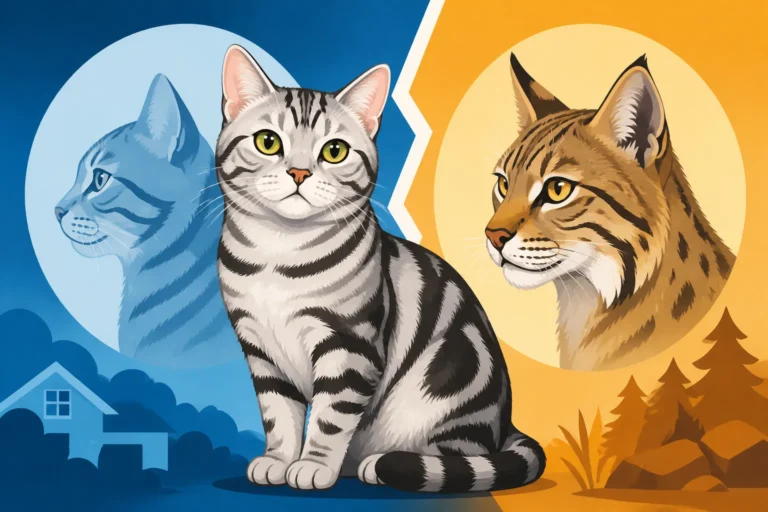
This is perhaps one of the most common points of confusion for potential cat owners. Many people see a sturdy, short-haired tabby and immediately think "American Shorthair," but there's a significant difference between a pedigreed American Shorthair and a common domestic shorthair. Understanding this distinction is key to appreciating the unique value of the breed.
The Key Differences
The most fundamental difference lies in ancestry and documentation. An American Shorthair is a pedigreed cat, meaning it has a documented lineage stretching back generations, registered with a reputable cat association like the CFA. This pedigree ensures that the cat meets a specific breed standard in terms of appearance, temperament, and often, health screening. When you acquire an American Shorthair kitten from a reputable breeder, you receive papers proving its lineage. In contrast, a domestic shorthair is a cat of unknown or mixed ancestry. It's essentially a generic term for any short-haired cat that isn't a specific pedigreed breed. While many domestic shorthairs might look like an American Shorthair – they share the sturdy build, the short coat, and often the tabby pattern – they do not have the documented family tree or the predictable traits that come with a recognized breed.
Think of it like this: all American Shorthairs are short-haired domestic cats, but not all short-haired domestic cats are American Shorthairs. The American Shorthair's characteristics, such as its robust health, specific head shape, and calm demeanor, are consistent and predictable because of generations of selective breeding to the standard. With a domestic shorthair, while you might get a wonderful cat, its traits are more of a genetic lottery. They can vary wildly in size, temperament, and appearance, as their genetic background is diverse and often unknown. How to Tell a Pedigree American Shorthair From a Domestic Shorthair provides visual and behavioral cues to help you differentiate.
Why the Distinction Matters
For many cat lovers, whether a cat has a pedigree or not is irrelevant; they simply want a loving companion, and a domestic shorthair from a shelter can certainly provide that. However, for those seeking specific traits, the distinction becomes important. If you desire a cat with a reliably calm temperament, a predictable size, a specific physical appearance (like the famous silver tabby, a signature color of the American Shorthair breed, celebrated in The Silver Tabby That Made the American Shorthair Famous), and a strong likelihood of good health due to generations of careful breeding and health screening, then an American Shorthair is the choice that offers that predictability.
Breeders of American Shorthairs are typically dedicated to maintaining the health and integrity of their lines, often screening for potential inherited conditions. While domestic shorthairs are generally healthy due to their diverse gene pool, there's no way to predict potential health issues or temperamental quirks without knowing their lineage. For those who value the historical significance, the predictable nature, and the consistent characteristics that define the American Shorthair, investing in a pedigreed cat from a reputable breeder offers peace of mind and the assurance of welcoming a true representative of this venerable American breed into their home. The predictable health profile also means that when looking at pet insurance, American Shorthairs can sometimes benefit from favorable rates due to their known hardiness, offering another practical advantage over some other pedigree breeds.
Disclaimer
This article is for general informational purposes only and does not constitute professional advice. Laws, prices and regulations vary by location and change over time. Consult a qualified professional for guidance on your specific situation.