Who Started Breeding the American Shorthair to a Standard
It's easy to look at an American Shorthair today and, if you're not familiar with cat breeds, you might just see a wonderfully handsome tabby cat. Many folks wonder why anyone would "pay for a cat that looks like a shelter cat," not realizing that behind those familiar stripes and calm demeanor lies a fascinating history of passionate individuals who saw something truly special and worked tirelessly to turn a common working cat into a distinguished, pedigreed breed. This guide will take you on a journey through the efforts of those pioneering cat fanciers who dedicated themselves to recognizing, preserving, and ultimately standardizing the American Shorthair, giving us the beloved feline companion we know today.
The Humble Beginnings: From Working Cat to Valued Companion
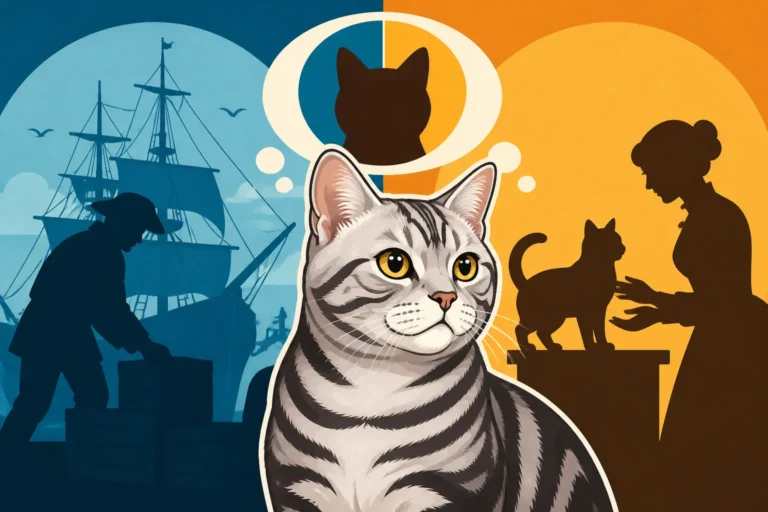
For centuries, the cats that would eventually become the American Shorthair were the backbone of farms, ships, and homesteads across North America. Their value wasn't in their fancy lineage or unique appearance, but in their unwavering dedication to rodent control. They were simply "cats," essential workers, and their robust health and self-sufficient nature were their most prized qualities.
The Unsung Heroes of the Early American Shorthair
Imagine a world before dedicated cat fancy, before breed standards and registries. These cats were everywhere, doing vital jobs. The earliest American Shorthair ancestors were The Mayflower Cats Behind the American Shorthair, hardy felines accompanying European settlers to the New World. They were not pets in the modern sense, often living outdoors, fending for themselves, and earning their keep. Most people didn't give a second thought to their ancestry or specific physical traits beyond their effectiveness as mousers. They were just, well, cats.
The idea of taking one of these ubiquitous, practical cats and elevating it to the status of a "breed" was quite a radical notion at the time. There was no concerted effort to breed them for specific looks; natural selection, driven by the harsh realities of farm life, did most of the work, favoring health, strength, and hunting prowess. Their sturdy bodies, dense coats, and intelligent eyes were simply functional adaptations, not points on a judging rubric.
Recognizing Potential: Why a "Common" Cat?
Despite their common status, these cats possessed an undeniable charm and admirable traits. They were intelligent, adaptable, and possessed a quiet dignity. Early cat enthusiasts, who were often the same people beginning to appreciate and formalize other pedigreed breeds, started to notice the consistency and inherent beauty in these domestic shorthairs. They observed that these cats, while diverse in color and pattern, often shared a strong, balanced build, a calm temperament, and excellent health—qualities forged through generations of natural selection rather than selective breeding.
It was these intrinsic qualities that began to capture the attention of a burgeoning group of cat fanciers in the late 19th century. They saw a cat that was truly "American" in its origins, a testament to resilience and practicality. They wanted to celebrate this animal, not just as a worker, but as a breed worthy of recognition, a breed that embodied the best traits of the domestic feline, making it a perfect family companion. How Farm Work Shaped the American Shorthair played a huge role in developing the traits that fanciers would later seek to preserve.
The Dawn of the Cat Fancy: Early Pioneers and Associations
The late 1800s and early 1900s marked a pivotal era for companion animals. Dog breeds were being formally recognized, and soon, cats followed suit. This was the time when people began moving beyond simply owning cats to actively shaping their future through selective breeding and the establishment of formal standards.
The First Steps Towards Standardization
The movement to recognize and standardize specific cat types began with the formation of cat clubs and associations. These groups provided a forum for enthusiasts to discuss genetics, desirable traits, and the future of their beloved felines. The burgeoning cat show scene also played a crucial role, offering a platform where cats could be judged against a defined ideal. It was here, in the midst of this exciting new world of organized cat fancy, that the foundations for the American Shorthair were laid.
Initially, many of these "domestic shorthairs" were still seen as the general population of non-pedigreed cats. The challenge was to differentiate the truly exceptional examples, those embodying the ideal hardy, well-built American cat, from the countless other random-bred cats. This required careful observation, discussion among breeders, and the eventual drafting of a written breed standard – a blueprint for the perfect specimen.
The Names Behind the Early American Shorthair Standard
While it's difficult to point to one single "founder" who single-handedly started breeding the American Shorthair to a standard, the effort was largely a collaborative undertaking by dedicated individuals within early cat organizations. The Cat Fanciers' Association (CFA), established in 1906, was instrumental in recognizing and registering the breed, initially under the name "Domestic Shorthair." Which Year the CFA Recognized the American Shorthair was a landmark moment for these cats.
Among the early proponents and breeders who championed the cause of the Domestic Shorthair, figures like Mrs. E.R. Graham and Miss Jane Cathcart are often mentioned. These early fanciers weren't just breeding; they were advocating for the recognition of this distinct American type against the backdrop of imported, more exotic breeds gaining popularity. They believed firmly in the inherent value and beauty of the "common" cat that had built America alongside its settlers.
Their work involved:
- Identifying desirable traits: They looked for the strong, muscular body, broad chest, full face, short, dense coat, and calm, amiable temperament that characterized the best examples of the working cat.
- Establishing a written standard: This standard provided a clear description for judges and breeders, guiding the selection of cats that would contribute to the breed's future. It was about defining what the ideal "Domestic Shorthair" should look like, beyond just being a cat with short hair.
- Promoting the breed: They worked to educate the public and other fanciers about the unique qualities of these cats, arguing for their place alongside other pedigreed breeds.
It was a true labor of love by these early fanciers who saw potential where others saw only utility. The dedication of these men and women laid the groundwork for what would become one of America's most beloved and enduring cat breeds. Which Five Breeds Founded the CFA With the American Shorthair includes these foundational cats.
Defining the American Shorthair: Crafting the Breed Standard
Once the idea of a "Domestic Shorthair" breed took hold, the next crucial step was to meticulously define what exactly constituted that breed. This involved creating a written standard that would serve as a guide for breeders and judges, ensuring consistency and preserving the desired characteristics.
What the Early Standard Emphasized
The early breed standard for the Domestic Shorthair was a testament to its working heritage. It wasn't about exaggerating features or creating extreme types; rather, it was focused on preserving the robust, functional attributes that had made these cats so successful for generations. The key elements the standard emphasized included:
- Body Type: A well-muscled, powerful, and sturdy body of medium to large size. This wasn't a delicate cat; it was built for strength and agility, perfectly suited for hunting. The broad chest and strong shoulders were particular points of pride, reflecting its history as a capable predator.
- Head Shape: A full, rounded head with a broad muzzle and firm chin. The face was open and sweet, with moderately sized ears and large, wide-set eyes. This gave the cat an alert yet gentle expression.
- Coat: A short, thick, even, and hard coat. This wasn't a plush, soft coat designed for petting, but a practical, weather-resistant layer that offered protection from the elements. The American Shorthair's Coat Was Built for Weather, Not a Judge describes this perfectly.
- Temperament: While not a physical trait, temperament was implicitly valued. The ideal was a calm, good-natured, adaptable cat – traits that made it an excellent barn cat and, increasingly, a cherished household companion.
This standard served to distinguish the pedigreed "Domestic Shorthair" from the general population of random-bred house cats, even those with similar markings or colors. It highlighted the specific combination of traits that breeders aimed to consistently reproduce. What an American Shorthair Looks Like by the Standard provides a modern take on these foundational principles.
The Importance of Registration and Pedigree
With a defined standard in place, the concept of registration became paramount. Organizations like the CFA provided the framework for breeders to register their cats, document their lineage, and ensure that only cats meeting the breed standard were used for breeding. This meant that when you acquired a registered American Shorthair, you weren't just getting any tabby; you were getting a cat whose ancestors had been carefully selected for specific traits over generations.
The "papers" that came with a registered kitten weren't just fancy certificates; they were a verifiable history, a promise of consistency. They traced the cat's lineage back through its pedigreed ancestors, ensuring that the kitten truly represented the breed's characteristics. This was a significant departure from the informal, often unpredictable breeding of random-bred cats. Whether an American Shorthair Kitten Comes With Papers is a common question, and it's these papers that truly establish pedigree. The pedigree itself could What an American Shorthair Pedigree Predicts About Health, offering a degree of predictability.
The registration process also helped cement the distinction between a pedigreed American Shorthair and a common domestic shorthair, even if they looked visually similar. How to Tell an American Shorthair From a Random Bred Tabby became a matter of pedigree and adherence to the written standard, not just superficial appearance. This formalized system was crucial for the breed's development, ensuring that dedicated breeders were working towards a common goal and preserving the qualities that made the American Shorthair so special. Buying a CFA registered cat often meant Why a CFA Registered American Shorthair Costs More, reflecting the effort and verification involved.
The Evolution of a Name and a Legacy
Despite the diligent work of early fanciers, the breed's initial name, "Domestic Shorthair," often caused confusion. It was a perfectly accurate description of what the cat was, but it failed to convey its unique status as a recognized, pedigreed breed. This nomenclature problem eventually led to a significant change that elevated the breed's standing.
The "Domestic Shorthair" Dilemma and the Renaming
For decades, the "Domestic Shorthair" struggled with an identity crisis. The name itself sounded generic, leading many to mistakenly believe that any short-haired house cat, regardless of ancestry or adherence to a standard, qualified as the breed. This undermined the hard work of breeders who were striving to maintain specific traits and preserve a distinct lineage. Imagine trying to explain to someone that your meticulously bred, pedigreed cat was a "Domestic Shorthair" while their random-bred tabby was also, technically, a domestic shorthair. It just didn't convey the difference in status or intent.
In 1966, after much discussion and debate among passionate fanciers, the Cat Fanciers' Association made a pivotal decision: they officially renamed the breed to the American Shorthair. Why the American Shorthair Name Changed in 1966 was a monumental step. This new name was not only distinct but also celebrated the breed's unique American heritage. It immediately set the breed apart, giving it the recognition and prestige that its careful development and long history deserved. The change was strategic, clear, and effective, allowing the public and potential owners to understand that this was a specific, pedigreed cat with a rich background. What the Breed Was Called Before American Shorthair is a fun fact often overlooked today.
Sustaining the Standard Today
The legacy of those early pioneers lives on through the continued dedication of modern American Shorthair breeders. Today's breeders are committed to upholding the rigorous standards established over a century ago, focusing on health, temperament, and conformity to the breed's ideal. They conduct health screenings, maintain detailed pedigrees, and select breeding pairs carefully to ensure the next generation of American Shorthairs continues to embody the breed's hallmark traits.
The breed standard itself remains a living document, though its core principles endure. How the American Shorthair Standard Reads Today continues to emphasize the sound structure, amiable disposition, and easy-care coat that made the breed famous. This commitment ensures that the American Shorthair remains a naturally healthy and adaptable companion, much like its ancestors who sailed the seas and patrolled the barns.
For current owners, supporting the health and well-being of their American Shorthair involves providing high-quality nutrition, regular veterinary care, and enrichment. Resources from places like Chewy, for example, make it easy for owners to access a wide range of premium foods, supplements, and toys designed to keep these wonderful cats thriving for their long, happy lives. This helps ensure that the American Shorthair continues to be the hardy, cherished family member it was always meant to be, a true testament to the vision of its early breeders.
| Year/Era | Event/Contribution | Key Figures/Organizations | Impact on Breed |
|---|---|---|---|
| Pre-19th Century | Ancestors arrive with European settlers | Unnamed ship cats, early colonists | Established foundational stock of hardy, working cats |
| Late 1800s | Informal admiration of "common" cats | Early cat enthusiasts, local communities | Sparked interest in organized cat fancy; recognized inherent qualities |
| Early 1900s | Formation of cat clubs, first cat shows | Cat Fanciers' Association (CFA), various enthusiasts | Began the process of formal recognition and classification |
| ~1906 | "Domestic Shorthair" first recognized and standard drafted | Early CFA members, pioneering breeders (e.g., Mrs. E.R. Graham, Miss Jane Cathcart) | Formalized desired traits, distinguishing it from random breeds |
| 1966 | Breed officially renamed "American Shorthair" | Cat Fanciers' Association | Established a unique identity, separated it from general house cats |
| Present Day | Ongoing adherence to standard, health screening | Modern breeders, CFA, breed clubs | Preserves breed integrity, health, and characteristic temperament for future generations |
Disclaimer
This article is for general informational purposes only and does not constitute professional advice. Laws, prices and regulations vary by location and change over time. Consult a qualified professional for guidance on your specific situation.