Whether Any Record Names an American Shorthair Ancestor Aboard
Many of us who adore our American Shorthairs often find ourselves gazing into their calm, observant eyes and wondering about their origins. It’s natural to feel a connection to history, especially with a breed as venerable as the American Shorthair. The question often arises: are there any specific records that name an individual cat, an actual ancestor of our beloved American Shorthairs, making the historic journey across the seas? This guide will dive deep into the fascinating, albeit largely unrecorded, history of these incredible felines, exploring what we know about their seafaring past and why pinpointing a specific "ancestor" by name is a romantic notion rather than a historical reality.
The Historical Context of Cats Aboard Ships
To understand why a named ancestor for the American Shorthair on an early colonial ship is unlikely, we first need to appreciate the practical role cats played during the age of sail and the nature of record-keeping at the time. Cats weren't pets in the modern sense; they were working crew members, essential for survival on long, arduous voyages.
Why Cats Were Essential Shipmates
Imagine a wooden ship, packed with provisions for months, perhaps even years, at sea. Grains, dried meats, biscuits—all prime targets for rodents. Rats and mice were not just a nuisance; they were a significant threat to the crew's food supply, could spread disease, and even damage the ship's timbers or rigging by gnawing. For centuries, cats were the most effective form of pest control available. A ship literally could not sail without them, or at least, not without risking widespread disease and famine among its human passengers. Why a Ship Could Not Sail Without an American Shorthair Type Cat tells us how critical these feline crew members truly were.
These cats weren't chosen for their pedigree or beauty; they were chosen for their hunting prowess and survival instincts. They were tough, resourceful animals, well-adapted to catching vermin in tight spaces. Their short, dense coats, which you can still see in the modern American Shorthair, would have offered protection against the elements, keeping them relatively dry and warm in harsh sea conditions. The American Shorthair's Coat Was Built for Weather, Not a Judge delves further into these practical coat characteristics. They were working animals, pure and simple, and their value was measured in the number of rats they dispatched, not in their lineage or charming personalities.
The Nature of Records in Colonial Times
When we think about ship manifests or passenger lists from the colonial era, we're typically talking about humans, and sometimes valuable cargo or livestock like horses or cattle. Animals considered mere working tools, even essential ones like cats, rarely made it into official documentation by name. Their presence was often implied or simply understood. No one kept a roster of "Captain's Cat, Mittens" or "First Mate's Mouser, Shadow." Cats were too common, too practical, and too numerous across the fleet to warrant individual recognition in the official logs that survive today.
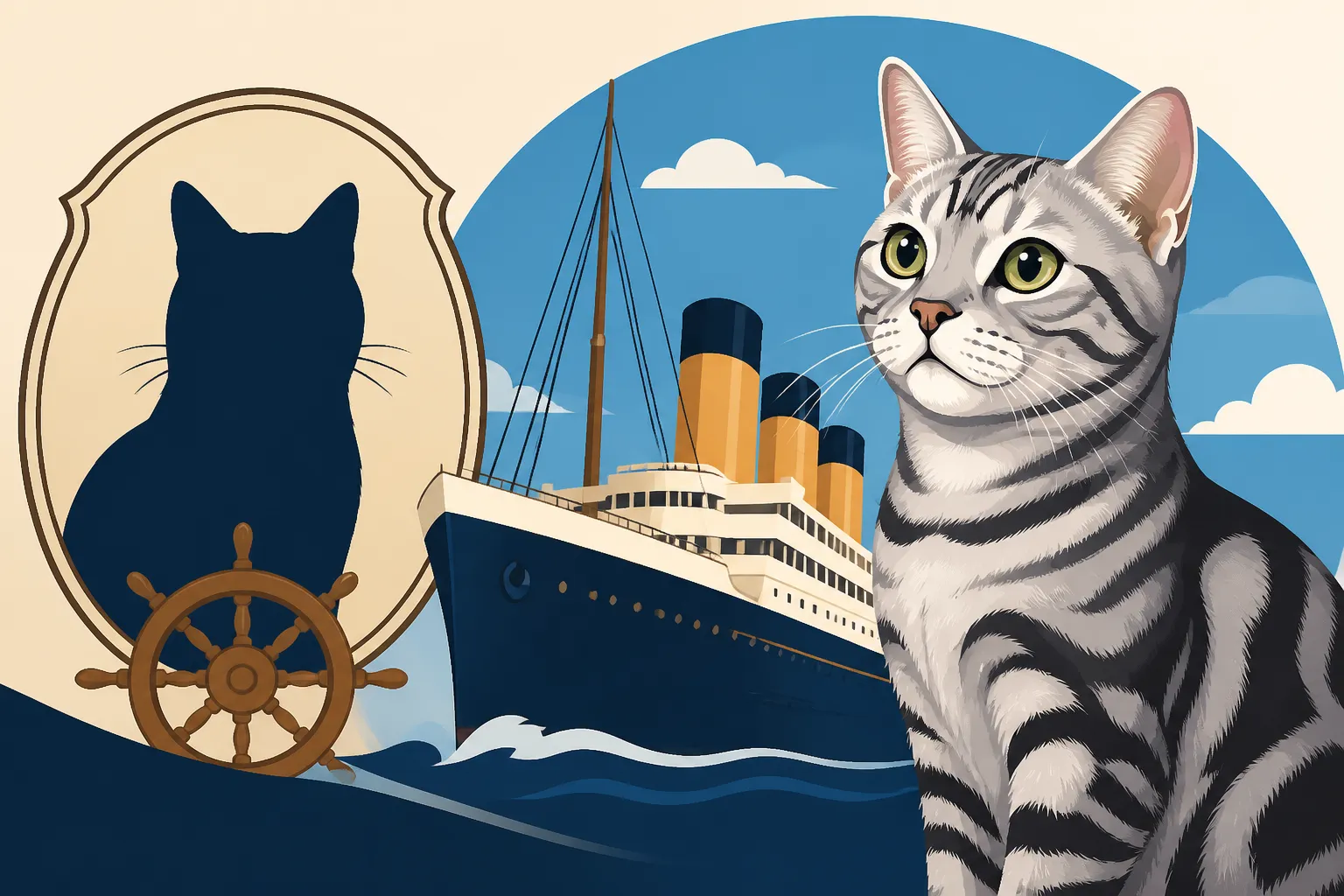
Consider the journey of the Mayflower, a ship often cited as part of the American Shorthair's ancestral lore. While it's widely accepted that cats would have been on board to control rodents, the surviving passenger lists make no mention of them. They weren't registered as passengers, nor were they typically listed as valuable cargo. This doesn't mean they weren't there; it simply reflects the different priorities of record-keeping in that period. Ship captains and chroniclers were focused on people, provisions, and events deemed significant for the voyage or the future colony, not the names of the ship's felines. Whether Any Record Names an American Shorthair Ancestor Aboard is a question that fascinates us precisely because the answer reveals so much about history itself.
Here’s a look at why records are scarce:
| Category of Record | Likelihood of Naming a Cat | Reason |
|---|---|---|
| Passenger Manifests | Extremely Low | Focused on human passengers, valuable goods. Cats were considered working animals, not persons or high-value cargo. |
| Cargo Inventories | Extremely Low | Again, primarily for commercial goods or livestock with a direct economic value (e.g., breeding animals). Cats were not "sold" this way. |
| Personal Diaries | Low, but possible anecdotal | A captain or passenger might mention a beloved cat, but unlikely to be an ancestor of a breed. Most focused on human experiences. |
| Ship Logs | Virtually Non-existent | Recorded navigation, weather, significant events, crew changes, but not typically the names of rodent control. |
The American Shorthair's Ancestral Lineage and Its Humble Beginnings
The story of the American Shorthair is one of natural selection and adaptation, a testament to the resilience of these cats who became an integral part of early American life. Their lineage is tied directly to these working cats, rather than carefully recorded pedigrees.
From Working Cats to a Recognized Breed
The cats that disembarked from colonial ships weren't "American Shorthairs" as we know them today. They were European domestic shorthairs, often referred to as "moggies" or "alley cats," essentially common cats that had evolved to be excellent hunters. They spread across the burgeoning American colonies, continuing their vital role on farms, in barns, and in homes, keeping rodent populations in check. Over generations, these cats adapted to the North American climate and environment, developing the sturdy build, strong jaws, and dense coat that characterize the breed. How Farm Work Shaped the American Shorthair is a great read if you want to understand how their daily lives refined their physical traits.
It wasn't until the late 19th and early 20th centuries that cat fanciers began to appreciate these native shorthaired cats for their inherent beauty and sound conformation. They were initially shown as "Domestic Shorthairs," reflecting their common, everyday origins. The idea of breeding them to a specific standard, much like their European counterparts (which would eventually become the British Shorthair), was a relatively new concept. This marked the very beginning of the transition from anonymous working cat to a formally recognized breed. Why the American Shorthair Was Called Domestic Shorthair Until 1966 explains the original naming convention. The deliberate breeding to a standard aimed to preserve their natural qualities, emphasizing health, robustness, and a gentle temperament that had been honed through centuries of self-reliance.
The Challenge of Tracing Individual Ancestors
Given their status as working animals and the lack of formal records, tracing a specific cat back to a ship is virtually impossible. The earliest American Shorthair breeders, when they began to select and register cats, started with what were essentially superior examples of these common domestic shorthairs found in America. Their pedigrees, if they existed at all, usually only went back a few generations to other "domestic shorthairs" that caught the eye of early fanciers. There was no registry, no studbook, and certainly no DNA testing to connect them to any specific ship or voyage.
Think about it: these cats reproduced freely, with natural selection being the primary "breeder." There would have been countless cats, each contributing its genes to the broader population. The genetic pool of these early American cats was wide, encompassing various European lineages that had arrived on different ships over many decades. It's truly incredible to consider how How Wide the American Shorthair's Gene Pool Really Is reflects this diverse history. So, while we can confidently say that the ancestors of today's American Shorthairs arrived on ships from Europe, naming one individual, like "Tabitha of the Mayflower" or "Barnaby of the Susan Constant," remains purely fictional.
The Myth and Reality of Named Ship Cats
While the desire to name a specific ancestor is understandable, the reality of historical documentation and the cat's role at the time paints a different picture. Yet, the lore of ship cats is rich with stories, even if specific American Shorthair ancestors remain unnamed.
Famous Ship Cats But Not American Shorthair Ancestors
Throughout history, many ships have had beloved cats who became famous in their own right, but these stories typically come from much later periods, often after photography became common, and usually involve naval or exploration vessels where a cat's companionship became a morale booster. For instance, "Unsinkable Sam" (also known as Oscar) was a famous ship's cat who reportedly survived the sinking of three ships during World War II. These cats became mascots and companions, often given names and celebrated by their human crewmates.
However, these stories are largely from the 20th century, long after the American Shorthair breed was being established and recognized. The cats on those early colonial ships were utility animals. They earned their keep through hunting, and their names, if they had any beyond generic terms like "Puss" or "Tom," would have been known only to their immediate human companions and lost to history. The concept of a cat as a cherished, named individual on a voyage of discovery or settlement was not the prevailing mindset in the 17th or 18th centuries for ordinary working animals. The Mayflower Cats Behind the American Shorthair highlights the general understanding of these essential, yet anonymous, voyagers.
The Limitations of Genetic Tracing for Ancient Ancestors
In our modern age, with incredible advancements in DNA testing, it's tempting to think we could somehow trace a specific American Shorthair back to a particular ship or even country of origin. While DNA can tell us a lot about the broader genetic heritage of a breed, linking it to ancient, individual animals is beyond its current capabilities, especially when those animals were part of an unmanaged, free-breeding population. DNA tests can confirm a cat is indeed an American Shorthair based on its genetic markers, and can even shed light on general ancestral populations. What DNA Says About the American Shorthair's Origin explains more about the genetic insights we do have.
However, pinpointing "this gene came from a cat on the Mayflower" is a leap that science cannot make for several reasons:
- Lack of ancient samples: We don't have cat DNA samples from 17th-century ship cats to compare against.
- Broad genetic diversity: The cats on those ships were not a purebred, genetically isolated group. They were a diverse mix of European domestic cats.
- Centuries of interbreeding: Over hundreds of years, these cats bred freely, not only among themselves but also with subsequent waves of cat arrivals.
So, while we can embrace the romantic idea of our American Shorthair's ancestors bravely sailing the Atlantic, it's important to understand that the historical records—and even modern science—don't allow us to name them individually. Instead, we honor their legacy by appreciating the resilient, adaptable, and naturally healthy breed they became. Why an American Shorthair Was Never Bred to Need You is a wonderful reflection of this inherent self-sufficiency passed down through generations. These unrecorded heroes laid the foundation for the wonderful American Shorthair companions we cherish today, a breed known for its robust health and easy-going temperament. The American Shorthair Is the Control Group of Cat Breeding truly captures their significance in the feline world.
Disclaimer
This article is for general informational purposes only and does not constitute professional advice. Laws, prices and regulations vary by location and change over time. Consult a qualified professional for guidance on your specific situation.