What an American Shorthair Pedigree Buys That a Free Tabby Does Not
For many aspiring cat parents, the decision between a meticulously bred American Shorthair and a charming, free-to-good-home tabby from a local shelter can feel overwhelming. It’s not just about the initial price tag; it's about what that initial investment, or lack thereof, truly buys you in terms of predictability, support, and long-term care. This guide will meticulously break down the tangible and intangible differences, helping you understand the full scope of ownership for both.
The Allure of the American Shorthair Pedigree vs. the Charm of a Free Tabby
When you first start looking for a feline companion, it's easy to get caught up in the sheer cuteness of every cat you see. But beneath the fluffy exterior, there are fundamental differences between a pedigree American Shorthair and a typical domestic shorthair tabby that go far beyond their initial cost. These differences influence everything from their health and temperament to the kind of support you can expect as an owner.
Initial Appeal: Why a Pedigree Cat Catches Your Eye and Wallet
Let's be honest, there's a certain cachet to a pedigree cat. You see those stunning images in magazines or on social media, perfectly posed, with gleaming coats and distinctive features. For an American Shorthair, it's often the classic silver tabby pattern that draws people in, a look that has become iconic. People often pay a premium for this specific aesthetic, for a cat that perfectly embodies the breed standard. You're not just getting a cat; you're often investing in years of careful breeding aimed at producing a consistent look and temperament. This consistency is a major draw for many, offering a sense of reliability in what their future pet will look and act like as an adult. It's a choice driven by a desire for a specific, known quantity, rather than the delightful gamble of a mixed-breed cat.
The Immediate Savings of a Free Tabby
On the other side of the coin, the appeal of a "free" tabby is undeniable. Whether it's a kitten from a friend's accidental litter, a stray you've taken in, or a cat adopted from a shelter for a nominal fee, the immediate financial outlay is minimal, or even zero. This can be a huge relief for individuals or families operating on a tight budget. The idea that you can give a loving home to a deserving animal without breaking the bank upfront is incredibly attractive. Many people find immense joy and satisfaction in rescuing a cat and giving it a second chance, feeling like they've done a good deed. These cats, often referred to as Domestic Shorthairs, come in an astonishing array of colors and patterns, with tabbies being particularly common and charming. Their immediate accessibility and low initial cost make them the go-to choice for millions of cat lovers.
Understanding "Pedigree" Beyond Just a Name
The term "pedigree" isn't just a fancy label; it signifies a documented lineage, a family tree that can be traced back generations, often through official registries like the Cat Fanciers' Association (CFA). For an American Shorthair, this means that every cat in its ancestry met a specific breed standard, and breeders have worked diligently to maintain certain traits. This meticulous record-keeping aims to ensure the cat adheres to the breed's physical characteristics, like its muscular build and broad head, and its well-established, placid temperament. When considering What an American Shorthair Pedigree Guarantees, you're essentially buying into a history of intentional breeding for specific qualities. It’s a deliberate choice to acquire a cat where the genetic lottery has been somewhat narrowed down, offering more predictable outcomes compared to a cat whose ancestry is unknown. This isn't to say a pedigree cat is "better," but it certainly offers a different kind of assurance.
Unpacking the Health Guarantees and Known Lineage
One of the most significant arguments for choosing a pedigree American Shorthair over a free tabby often revolves around health. While no animal is entirely immune to illness, the world of pedigree breeding offers a level of insight and proactive care that is rarely available for domestic shorthairs.
Documented Health Screenings and Breeder Responsibility
A reputable American Shorthair breeder will go above and beyond to ensure their kittens are as healthy as possible. This means screening breeding cats for genetic conditions known to affect the breed, even if the American Shorthair is generally considered a healthy breed. For instance, while rare, hypertrophic cardiomyopathy (HCM) is the one inherited disease that has persisted in the American Shorthair lines, so responsible breeders will have their breeding cats undergo regular echocardiograms to check for this heart condition. You should receive documentation proving these screenings have been performed, often including results from a veterinary cardiologist. This proactive approach significantly reduces the risk of inheriting serious health issues. A breeder also typically offers a health guarantee, often covering genetic conditions for a certain period, and will be transparent about the health history of the kitten's parents. This commitment to health ensures that when you bring home an American Shorthair kitten, you're starting with the best possible foundation. To learn more about specific health screenings, you might want to read Which Health Results an American Shorthair Breeder Must Show.
The Unknown Health History of a Random Bred Cat
In stark contrast, a free tabby, whether a stray or from an unknown background, comes with a largely blank health slate. While shelters and rescues do an incredible job of providing initial veterinary care, including vaccinations, deworming, and spay/neuter surgery, they cannot offer a detailed genetic history. You simply won't know if the parents carried genes for certain conditions, or if there's a predisposition to specific ailments down the line. This doesn't mean a tabby is inherently unhealthy; many domestic shorthairs live long, robust lives without significant issues. However, it does mean you're entering into ownership with more unknowns. The lack of documented lineage can make it harder for your vet to identify predispositions if a problem does arise, requiring more diagnostic tests which can, of course, increase veterinary costs. It's a gamble, albeit often a loving and rewarding one, on a cat's genetic fortitude.
The Value of Predictable Health Outcomes in the Long Run
The long-term value of predictable health outcomes cannot be overstated. While the initial cost of a pedigree American Shorthair might be higher, the investment in a cat from health-tested lines can potentially lead to fewer unexpected and costly veterinary bills down the road. Imagine the emotional and financial strain of dealing with a chronic genetic illness that could have been screened for. With an American Shorthair from a reputable breeder, you have a better understanding of the potential health landscape, allowing you to be proactive with preventative care.
Consider a scenario where you have a free tabby cat and at age 7, it develops an aggressive heart condition. Without any known genetic history, your vet has to run a battery of tests to determine the cause and best course of treatment. Now, imagine an American Shorthair whose parents were regularly screened for HCM. While it's still possible for an individual cat to develop an issue, the probability of certain genetic conditions might be lower, and you'd have clearer guidance on what to look for or even preemptive care based on family history. This isn't to say pedigree cats are immune to all health problems – far from it – but the predictability is a powerful difference. This predictable health can also influence things like pet insurance premiums. You might find that Why an American Shorthair Is Cheap to Insure compared to breeds with more well-known genetic predispositions.
Temperament, Traits, and the Predictability Factor
Beyond health, the behavioral traits and temperament are often a huge consideration for prospective cat owners. While every cat is an individual, pedigree breeding aims to produce specific behavioral tendencies that offer a level of predictability.
Bred-In Temperament: What to Expect from an American Shorthair
The American Shorthair is renowned for its placid, adaptable, and affectionate nature. These cats were historically working animals, keeping barns and ships clear of rodents, which fostered a self-sufficient and independent personality. However, selective breeding over the decades has refined these traits into a calm, gentle companion that thrives in a family setting. They are known for being good with children and other pets, and not overly demanding of attention, preferring to observe or sit near their humans rather than constantly on their laps. This inherent temperament makes them an excellent choice for first-time cat owners or busy families seeking a low-maintenance, amiable companion. When you choose a pedigree American Shorthair, you're not just hoping for these traits; you're often getting a cat whose lineage has been selected for them, increasing the likelihood that your cat will exhibit these desired characteristics. This predictability is a significant advantage for those who want to ensure their new pet is a good fit for their lifestyle and household dynamics. They are known for being easygoing, often allowing themselves to be handled and adapting well to routine changes.
The Delightful Mystery of a Tabby's Personality
With a free tabby, you get the wonderful lottery of personality. Since their genetic background is usually a mix of various domestic cats, their temperament can be incredibly diverse. You might get a shy, reserved cat, a boisterous explorer, a vocal conversationalist, or a complete lap hog. This unpredictability can be part of the charm for many owners. There's a joy in discovering your tabby's unique quirks and watching their personality unfold over time. However, it also means there's a higher chance of encountering behavioral challenges that might not align with your expectations or lifestyle. A tabby adopted from a shelter might have a history you don't know about, which could influence their behavior. For example, a cat found as a stray might be more timid or independent, while one from a bustling foster home might be more outgoing. While shelters do their best to provide insights into a cat's known behavior, there are no guarantees from a documented lineage. Embracing a tabby means embracing the full spectrum of feline individuality, with all its delightful surprises and potential challenges.
Adapting to Your Home: How Different Backgrounds Play Out
Both types of cats will adapt to your home, but their inherent temperaments can influence the ease and speed of that adaptation. An American Shorthair, with its stable and even-keeled nature, typically transitions smoothly into new environments. They're generally not prone to high anxiety or extreme reactions to changes in routine or household noise, making them ideal companions for families with busy schedules or occasional guests. Their self-reliant nature means they can cope well with being left alone for reasonable periods during the day.
Conversely, a tabby's adaptation might require more patience and understanding, particularly if they come from a traumatic background or have unknown previous experiences. A shy tabby might take weeks or even months to fully settle in, requiring a quieter environment and a consistent routine to build trust. However, once they feel secure, their affection can be incredibly rewarding. The key difference lies in the starting point. With an American Shorthair, you generally start with a baseline of calm confidence. With a tabby, you might start with more unknowns, but the journey of helping them blossom can be incredibly enriching. For those considering Whether a Shelter Cat Can Match an American Shorthair, it truly comes down to what level of predictability you're seeking in a companion.
Physical Appearance and Adherence to a Standard
The visual appeal of a cat is often a primary factor in choosing a companion. Here, the difference between a pedigree American Shorthair and a domestic tabby is perhaps most striking, representing a choice between a standardized ideal and boundless genetic diversity.
The Distinctive Look of a Pedigree American Shorthair
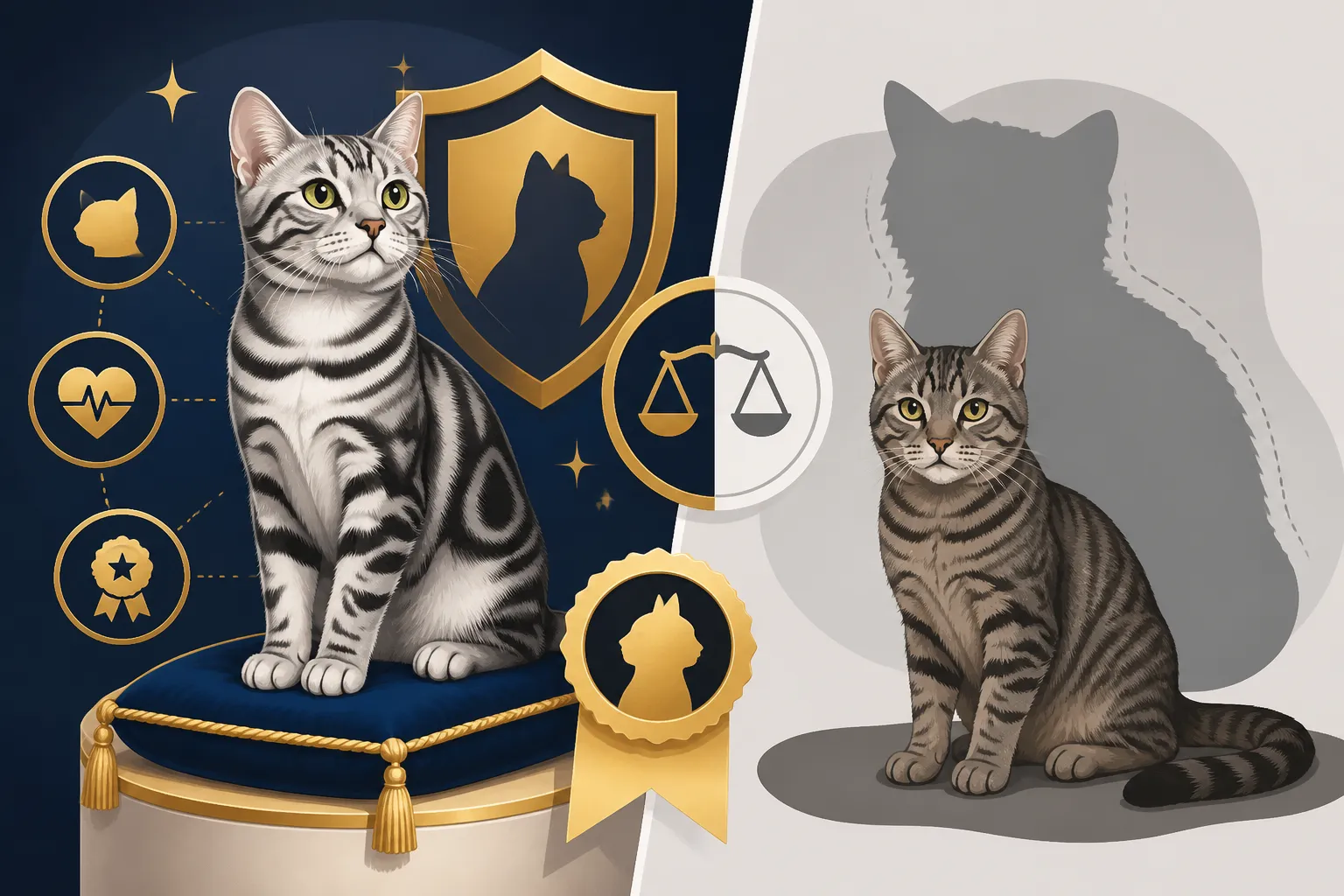
When you acquire an American Shorthair, you're buying a cat that conforms to a specific breed standard, meticulously outlined by organizations like the Cat Fanciers' Association. This standard dictates everything from the shape of its head – often described as square or slightly longer than wide – to the placement of its ears, the musculature of its body, and the texture of its coat. The classic American Shorthair is a medium-to-large cat with a powerful, balanced, and symmetrical build, designed for strength and agility. Their eyes are large, wide-set, and can be various shades, often coordinating with their coat color. Perhaps the most famous and sought-after pattern is the silver tabby, with its stark black markings against a brilliant silver background, creating a visually striking contrast. This adherence to a standard means that if you fall in love with the look of a champion American Shorthair, you can expect your kitten to mature into a very similar aesthetic. It’s a guarantee of a specific, recognizable appearance that is rarely found in the mixed-breed world. You can delve deeper into what these specific traits entail by exploring What an American Shorthair Looks Like by the Standard.
The Beautiful Diversity of Domestic Shorthairs
Domestic shorthairs, often lovingly called "moggies" or "alley cats," are a glorious celebration of genetic diversity. They come in an almost infinite array of colors, patterns, and body types. While "tabby" refers to a coat pattern, not a breed, it's one of the most common markings you'll find in domestic shorthairs, displaying everything from classic swirls to mackerel stripes, spotted patterns, and patched designs. One tabby might be a lithe, graceful creature, while another is stocky and robust. Their faces can be round, wedge-shaped, or somewhere in between. Their coats can be soft, coarse, thick, or sparse. This incredible variety means that every domestic shorthair is truly unique, a one-of-a-kind creation. While this means you can't predict their adult appearance as precisely as with a pedigree cat, it also means there's a cat for every aesthetic preference, and sometimes, the unexpected combination of features is what makes them so endearing. You might adopt a fluffy black cat that surprises you with faint tabby markings in the sunlight, or a calico with a truly artistic arrangement of colors.
Why Some Pay for a Specific Aesthetic
For many, the draw of a pedigree American Shorthair is precisely this predictable, specific aesthetic. They want a cat that looks like "an American Shorthair," with all the iconic traits that define the breed. This desire often stems from an appreciation for the breed's history, its recognized beauty, or simply a personal preference for its sturdy, classic feline appearance. It's similar to choosing a piece of art for your home – you might appreciate all art, but you're willing to pay more for a specific style or artist whose work resonates deeply with you. The silver tabby, in particular, has become the face of the breed, a testament to its striking beauty and popularity. This intentional selection for appearance means that those who value a consistent, high-quality visual presentation will often find the investment in a pedigree American Shorthair well worth it. They are not simply looking for "a cat," but for the American Shorthair, a specific type with a recognized history and look.
Breeder Support and Lifetime Resources
One of the most underestimated aspects of acquiring a pedigree cat is the ongoing relationship and support you gain from a reputable breeder. This simply isn't a factor when taking in a free tabby.
The Lifelong Relationship with a Reputable American Shorthair Breeder
When you purchase an American Shorthair from a reputable breeder, you're not just buying a kitten; you're often gaining a lifelong mentor and resource. Good breeders are passionate about their lines and genuinely care about the welfare of the cats they produce. They are typically available to answer questions throughout your cat's life, from kittenhood challenges to senior care concerns. This support can be invaluable, especially for first-time cat owners. They can offer advice on everything from diet and grooming to behavioral quirks specific to the breed. If, for any reason, you are unable to keep your cat, a responsible breeder will almost always require that the cat be returned to them, ensuring it never ends up in a shelter. This safety net provides peace of mind, knowing that your American Shorthair will always have a fallback. This level of dedication extends far beyond the point of sale, offering a continuous connection to the cat's lineage and expert advice. You can ask them detailed questions about the cat's ancestors, their typical lifespans, and any health considerations that might arise. This is a significant part of What an American Shorthair Pedigree Guarantees.
Navigating Life with a Tabby: Community and Vet Resources
For owners of free tabbies, the support system looks different. Your primary resources will be your veterinarian, local animal shelters, and online communities of cat lovers. While vets are invaluable for medical advice, they generally don't have the in-depth breed-specific behavioral insights that a breeder might offer. Shelters often provide post-adoption support, particularly if behavioral issues arise, but their resources can be stretched. Online forums and social media groups dedicated to cat care can be great for sharing experiences and getting tips from other owners, but the advice isn't always professional or tailored to your specific cat's background. If you encounter a significant behavioral or health issue with a tabby, you'll be relying solely on professional veterinary care, which can become costly. While this independent approach works perfectly for many, it requires a proactive owner willing to seek out information and professional help as needed. Companies like Chewy offer vast resources from product reviews to articles on pet care, and their customer service can be helpful for general questions about food or supplies, but they can't replace the specific breed knowledge of a dedicated breeder.
Understanding the "Return Policy" of a Pedigree Cat
The "return policy" for a pedigree American Shorthair is a unique aspect that highlights a breeder's responsibility. Most reputable breeders include a clause in their contract stating that if you ever need to rehome your cat, they must be the first point of contact. This ensures that their cats are not abandoned or surrendered to shelters, and that they can find a suitable new home. This commitment reflects a deep ethical responsibility towards the animals they bring into the world. It’s a stark contrast to a free tabby, where if you need to rehome, your options are typically limited to finding a new owner yourself, surrendering to a shelter (which often involves a fee and is never guaranteed), or, in unfortunate cases, abandonment. This safety net for pedigree cats provides an extra layer of ethical consideration and long-term security, underscoring the value beyond the initial purchase price.
The Long-Term Financial Implications: Beyond the Initial Cost
The price tag on day one is just the beginning of cat ownership. Both pedigree American Shorthairs and free tabbies come with ongoing financial commitments, but the nature and predictability of those costs can differ.
Insurance, Vet Bills, and Ongoing Care for Both
Regardless of whether you choose a pedigree American Shorthair or a free tabby, regular veterinary care is paramount. This includes annual check-ups, vaccinations, parasite prevention, and dental care. However, the predictability of health issues can influence these costs. As discussed, a pedigree American Shorthair from health-tested lines might have a lower likelihood of certain genetic conditions, potentially leading to fewer unexpected specialist visits or chronic disease management. Conversely, a tabby with an unknown history might present with unforeseen health challenges that require extensive diagnostics and treatment.
This is where pet insurance becomes a critical consideration. Companies like Healthy Paws offer various plans that can help mitigate the financial impact of accidents, illnesses, and emergency vet visits. While an American Shorthair might be considered a lower risk breed by some insurers, potentially leading to lower premiums, it's still an essential investment for any cat. For a free tabby, with its unpredictable genetic background, insurance can be an even more vital safety net against unexpected medical crises. Remember, emergency vet visits can quickly run into hundreds or even thousands of dollars, regardless of breed. Regardless of breed, How Much Less an American Shorthair Owner Spends at the Vet compared to a cat with known genetic predispositions is often a point of pride for breeders, and a benefit for owners.
Here's a simplified comparison of potential health-related costs:
| Cost Category | Pedigree American Shorthair (Reputable Breeder) | Free Tabby (Unknown History) |
|---|---|---|
| Initial Purchase | Higher upfront cost | Minimal to zero upfront cost |
| Breeder Screening | Parents are pre-screened for known genetic issues (e.g., HCM echo scans) | No genetic screening history available |
| Health Guarantee | Often included for genetic conditions for a period | No guarantee, "as is" condition |
| Known Predisposition | Lower likelihood of common genetic issues due to screening; breed known for robustness | Higher uncertainty due to unknown genetic background |
| Vet Visits (Routine) | Similar costs for routine check-ups, vaccinations, etc. | Similar costs for routine check-ups, vaccinations, etc. |
| Vet Visits (Unexpected) | Potentially fewer unexpected specialist visits for genetic issues | Higher potential for unexpected diagnostic costs for unknown issues |
| Pet Insurance | May have slightly lower premiums due to breed health profile | Premiums vary widely, can be a crucial safety net |
| Lifetime Support | Lifelong breeder support for health/behavioral questions | Relies on vet, shelter, and community resources |
Food and Supplies: Are There Differences in Needs?
When it comes to daily needs like food, litter, and toys, the differences between an American Shorthair and a tabby are less about breed and more about individual size, activity level, and dietary requirements. Both cats need high-quality cat food appropriate for their life stage. However, American Shorthairs are sturdy, muscular cats that can grow quite large. This means they might consume more food than a smaller tabby. It's crucial to portion control, as American Shorthairs can be prone to weight gain if overfed, especially if they are indoor-only cats no longer fulfilling their working cat instincts.
For toys, litter boxes, and scratching posts, the needs are largely the same: choose durable, engaging items that satisfy their natural instincts. A larger American Shorthair might need a bigger litter box or a sturdier cat tree to accommodate its size, but these are general considerations for any larger cat, not exclusive to the breed. The cost of these supplies will largely depend on the quality and brands you choose, rather than the specific genetic makeup of your feline friend.
Unexpected Costs: Preparing for the Unforeseeable
No matter how well you plan, unexpected costs can arise in pet ownership. This could range from an emergency vet visit after an accidental injury (like jumping off a tall bookcase) to unforeseen dental issues that require extensive work. For a male cat, particularly, urinary blockages can be a sudden, life-threatening emergency, costing hundreds to thousands of dollars. These types of emergencies are not breed-specific, but affect all cats.
While a pedigree American Shorthair might reduce the likelihood of certain genetic health problems, it doesn't eliminate all risks. An American Shorthair might still develop hyperthyroidism in old age, or kidney disease, just like any other cat. The financial preparedness for such events should be the same for both a pedigree American Shorthair and a free tabby. This often means having an emergency fund set aside or robust pet insurance coverage. Understanding the potential for such costs is crucial to being a responsible pet owner, regardless of your cat's origin story.
The Emotional and Personal Value Proposition
Ultimately, the choice between a pedigree American Shorthair and a free tabby often comes down to personal values, emotional connection, and what you seek in a companion. Both offer immense love and companionship, but the journey to that bond can differ.
The Satisfaction of Owning a Carefully Bred Companion
For some, the satisfaction of owning a pedigree American Shorthair comes from appreciating the years of dedication and careful breeding that went into creating such a consistent and healthy animal. There's a joy in knowing your cat represents a specific lineage, embodying traits that breeders have worked hard to preserve. This can be particularly true if you have an interest in feline genetics, show circuits, or the history of cat breeds. The predictable temperament and health assurances provide a sense of security and peace of mind, allowing you to focus on building a strong bond without as many initial unknowns. It's the comfort of knowing what you're getting, backed by a responsible breeder's commitment. For those who value tradition, predictability, and a specific aesthetic, the pedigree American Shorthair offers a unique and fulfilling ownership experience. It's about celebrating the heritage and intentionality behind the breed.
The Joy of Rescuing and Giving a Home to a Tabby
For countless others, the profound joy of rescuing a free tabby cat is an unmatched feeling. There's an immense satisfaction in providing a loving, safe home to an animal that might have otherwise faced an uncertain future. Many rescue cats, even if initially shy or nervous, blossom into incredibly affectionate and loyal companions once they feel secure. Their resilience and capacity for love, often despite difficult beginnings, can be truly inspiring. Every purr, every head-butt, every moment of trust gained feels like a profound reward. The knowledge that you've made a tangible difference in an animal's life is a powerful motivator for choosing adoption. While you might not have a detailed pedigree, you have a unique story, a blank slate, and the opportunity to shape their future with love and care. This emotional connection, born from giving a second chance, is incredibly powerful and deeply personal.
Finding Your Perfect Feline Match
Ultimately, the "best" choice between a pedigree American Shorthair and a free tabby isn't universal; it depends entirely on your individual preferences, lifestyle, and priorities.
- If you value predictability, specific aesthetic traits, documented health history, and lifelong breeder support, a pedigree American Shorthair might be your ideal match. You're investing in a known quantity, a cat whose characteristics are largely predetermined by generations of selective breeding.
- If you embrace spontaneity, cherish uniqueness, and are driven by the desire to give a deserving animal a home, a free tabby will bring immense joy. You're opening your heart to a delightful mystery, a one-of-a-kind companion whose personality will unfold over time.
Both paths lead to the wonderful world of feline companionship, offering endless purrs, playful antics, and unconditional love. The initial cost, or lack thereof, is simply one factor in a much larger, incredibly rewarding journey. Whether you bring home a meticulously bred American Shorthair or a charming tabby from the shelter, you're gaining a family member who will enrich your life in countless ways.
Disclaimer
This article is for general informational purposes only and does not constitute professional advice. Laws, prices and regulations vary by location and change over time. Consult a qualified professional for guidance on your specific situation.