Whether an American Shorthair’s Burying Instinct Blocks Toilet Training
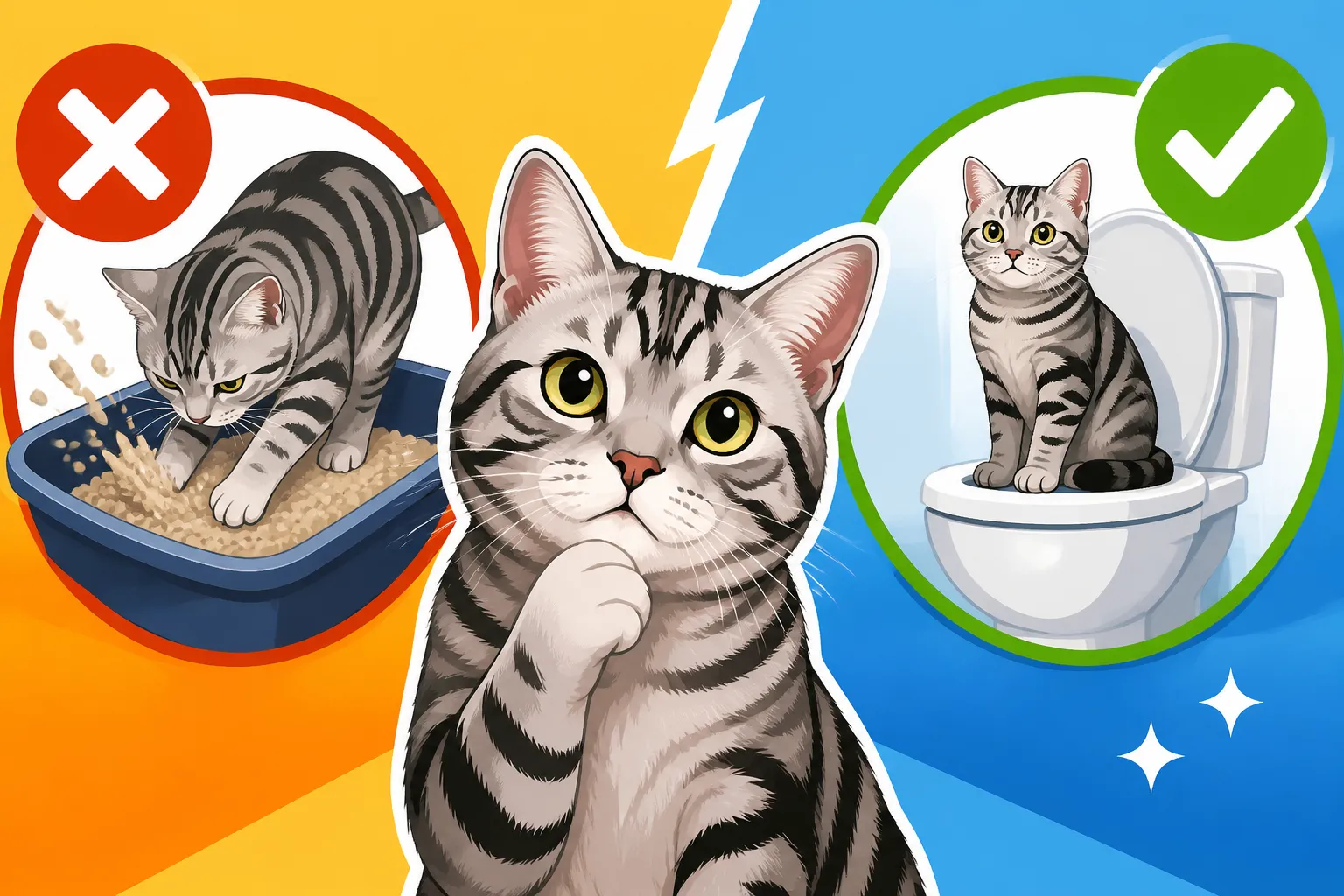
The idea of a cat using the human toilet sounds incredibly convenient, doesn't it? No more litter boxes, no more scooping, just a flush and you're done! But for American Shorthair owners, this dream often bumps up against a very strong reality: their cat's deep-seated instinct to bury its waste. This guide will explore whether this natural behavior truly makes toilet training an uphill battle for your sensible American Shorthair, and why leaning into their instincts might be the best path for everyone.
Understanding the American Shorthair's Instinctual Behaviors
Our beloved American Shorthairs, despite their domesticated lives, still carry a powerful genetic blueprint from their ancestors. These weren't just pretty faces; they were working cats, earning their keep on ships and farms as formidable mousers. And a core part of being a successful, self-sufficient predator – and avoiding becoming prey themselves – involved very specific toileting habits.
The Deep-Rooted Burying Instinct
Think back to the earliest days of cats, roaming wild or living alongside humans on farms. A cat burying its waste wasn't just about tidiness; it was a matter of survival. The scent of urine and feces could betray their presence to larger predators, making them vulnerable. Conversely, it could also warn off potential prey, making hunting more difficult. By diligently covering their eliminations, they were essentially erasing their "scent signature" from the environment. This kept them safe and allowed them to hunt more effectively.
This primal drive is why, even today, a cat will meticulously dig, eliminate, and then cover its waste. It's not a learned behavior from you; it's hardwired. Your American Shorthair might be a pampered indoor cat with not a predator or prey animal in sight, but those ancient instincts remain incredibly strong. They feel a deep, almost unconscious, need to perform this ritual to feel secure and "clean" in their environment.
How This Instinct Manifests in Modern American Shorthairs
In our homes, this powerful burying instinct directly translates to how American Shorthairs interact with their litter boxes. When you see your cat scratching at the litter, diligently covering every trace, you're witnessing generations of instinct play out. They are, in their minds, performing a crucial act of self-preservation and territorial management, even if their "territory" is just your living room.
Different American Shorthairs might show this instinct in varying degrees. Some are incredibly meticulous, spending minutes perfecting their burial technique, making sure not a speck is visible. Others might be a bit more casual, giving a quick scrape or two before trotting off. However, the fundamental desire to dig and cover is almost universally present. They need a substrate they can manipulate, a material that gives them that satisfying sensory feedback of being able to hide their scent. This deep-seated need for a diggable medium is what makes the idea of a flat, hard toilet surface so fundamentally counter-intuitive to them.
The Challenges of Toilet Training an American Shorthair
Considering the strong instincts we've just discussed, it becomes clearer why toilet training a cat, particularly one with the robust, no-nonsense nature of an American Shorthair, can be such a monumental task. It's not just about teaching a trick; it's about asking them to override millions of years of evolutionary programming.
Why Toilet Training Goes Against Natural Instincts
The core problem with toilet training is that it completely bypasses the cat's fundamental need to bury its waste. When a cat eliminates into an open bowl of water, there's no substrate to dig in, no way to cover the scent, and no sense of security that their "mark" has been hidden. For a creature driven by the need to be discreet, this can be incredibly unsettling. Imagine having to perform a highly private bodily function in a completely exposed way, with no means to tidy up afterward. That's essentially what we're asking our cats to do.
This lack of control over their waste also exposes them to perceived risks. Without covering, the scent of their urine and feces is left out in the open, signaling their presence to any imagined threat. This can create a significant amount of underlying stress and anxiety for the cat, even if they appear to comply with the training. The American Shorthair is a sensible, self-reliant cat, but even their calm demeanor can be challenged by such a profound alteration to a basic, instinctual behavior.
Practical Difficulties with the Toilet Environment
Beyond the instinctual clash, there are numerous practical hurdles that make toilet training problematic for an American Shorthair. First, there's the issue of balance and stability. A toilet seat is a narrow, often wobbly platform for a cat, especially one as sturdy and well-built as an American Shorthair. They are used to four paws firmly planted on a solid, level surface while doing their business. Expecting them to balance precariously over a hole can be uncomfortable and even frightening, leading to accidents or an aversion to the toilet altogether.
Then there's the water itself. Cats are generally not fond of water, and the idea of splashing into it, or even just feeling vulnerable over a large body of water, can be distressing. The depth of the toilet bowl can also be an issue; a small cat might feel overwhelmed by it. Furthermore, the cleanliness of the toilet, which we humans flush, is not the same as a cat's instinctual need for a fresh, clean surface for each use. They're often highly particular about their toileting environment, and a toilet that isn't perfectly clean by our standards might still feel unsanitary to them. This can lead to them holding their waste, which is unhealthy, or seeking alternative, less desirable spots around your home.
Is Toilet Training an American Shorthair Even Advisable?
Given the inherent conflicts with an American Shorthair's natural instincts and the practical difficulties, it’s worth asking if toilet training is truly in the best interest of your feline companion. While the allure of a litter-free home is strong, the potential downsides for your cat's well-being are significant.
Health and Hygiene Considerations
From a health perspective, toilet training can introduce several risks. Firstly, there's the danger of falling in. A cat, particularly an older one or a kitten, could easily lose its footing and tumble into the toilet bowl. This can be a terrifying experience and could even lead to injury. Secondly, direct exposure to toilet bowl cleaners and human waste can be unhealthy for a cat. Residue from cleaning agents can irritate their paws or be ingested when they groom themselves.
Perhaps more critically, toilet training makes it incredibly difficult for owners to monitor their cat's health. Changes in a cat's urine or feces are often the first indicators of underlying medical issues, such as urinary tract infections, kidney disease, or digestive problems. When a cat is using the toilet, you can't easily observe the volume, color, consistency, or frequency of their eliminations. This means crucial symptoms could go unnoticed until a condition becomes far more advanced and difficult to treat. Why a Male American Shorthair's Urethra Blocks First is a serious concern, and observing urine output is vital for early detection.
Behavioral Stress and Long-Term Impact
Beyond the physical risks, asking an American Shorthair to forgo their burying instinct can induce significant psychological stress. Cats thrive on routine and on having their innate needs met. When a fundamental instinct like covering waste is thwarted, it can lead to anxiety, frustration, and a general feeling of insecurity. This stress might manifest in various undesirable ways, such as inappropriate urination or defecation outside the toilet, aggression, or excessive grooming.
Imagine the strain on a cat that consistently feels compelled to bury its waste but cannot. This internal conflict can severely impact their overall happiness and sense of safety within your home. Over time, this chronic stress can contribute to other behavioral problems or even physiological issues. For a breed known for its placid, adaptable nature, forcing them into a behavior that goes so deeply against their grain can truly undermine their confidence and contentment. It’s a challenge to their very cat-ness, and it’s a burden few American Shorthairs should have to bear.
Alternative and Recommended Approaches for American Shorthairs
Instead of trying to force a cat to conform to a human convenience, the most empathetic and effective approach for your American Shorthair is to embrace and optimize the systems that align with their natural behaviors. This means focusing on creating the ideal litter box environment.
Embracing the Litter Box: The Best Solution
The litter box isn't just a container; it's your American Shorthair's personal, instinct-fulfilling bathroom. Providing a clean, accessible, and comfortable litter box setup is paramount to their well-being. This means having enough litter boxes – the general rule of thumb is one per cat, plus one extra, especially in multi-cat households. For a sturdy, muscular American Shorthair, the size of the box matters immensely. A standard box might be too small and cramped, making them feel vulnerable or unable to dig properly. Look for large, spacious boxes that allow them to turn around comfortably and perform their burying ritual without feeling confined.
The type of litter is also crucial. American Shorthairs, like most cats, often prefer soft, unscented, clumping litter that mimics the feel of sand or dirt under their paws. This allows for easy digging and covering. You can find a vast array of options for both traditional and more innovative litter boxes, as well as different litter types, on platforms like Amazon. Regular scooping, ideally twice a day, is non-negotiable. Cats are fastidiously clean, and a dirty litter box is a common reason for them to seek other, less desirable places to eliminate. How Many Litter Boxes an American Shorthair Needs and Which Litter an American Shorthair Accepts delve deeper into these crucial aspects.
Addressing Specific Litter Box Issues
If your American Shorthair is currently struggling with using the litter box, the answer almost never lies in toilet training. Instead, it’s about identifying and addressing the root cause within their existing setup. Common issues include the box being too small, the litter type being unappealing, the box being too dirty, or its location being too public or inaccessible. Think about it from your cat's perspective: Is it private enough? Is it easy to get in and out of? Is the litter comfortable for their paws?
Sometimes, medical issues can also cause inappropriate elimination, so a vet check is always a wise first step. Once medical causes are ruled out, focus on optimizing the litter box environment. Experiment with different litter types, box sizes, and locations. Try adding an extra box in a quiet, low-traffic area. Ensure the litter depth is sufficient for digging – usually 2-3 inches. Making the litter box experience as pleasant and instinct-satisfying as possible is the key to preventing and solving elimination problems.
Enrichment for Their Hunting Instincts
While unrelated to toilet training directly, a happy cat is often a well-adjusted cat, and meeting all of an American Shorthair's instinctual needs can reduce stress that might manifest in behavioral issues. These cats have a strong prey drive and need opportunities to "hunt" and play. Engaging in interactive play sessions that simulate hunting, providing puzzle feeders, or offering appropriate toys can help channel their energy and keep them mentally stimulated.
A cat that is bored, frustrated, or stressed because its natural instincts aren't being met might develop anxiety that spills over into various behaviors, including issues with their bathroom habits. So, by providing enriching play and mental stimulation, you're not just making them happier; you're also indirectly supporting their appropriate litter box usage. Whether a Puzzle Feeder Satisfies an American Shorthair explores ways to engage their minds and bodies, complementing a well-managed litter box routine.
Here's a quick comparison to help you weigh the options:
| Feature | Toilet Training a Cat | Litter Box Use for Cats |
|---|---|---|
| Natural Instinct | Goes against deep-seated burying instinct. | Aligns perfectly with natural digging and burying instinct. |
| Comfort/Balance | Requires precarious balance on a narrow, unstable surface. | Provides stable, solid ground for comfortable elimination. |
| Hygiene | Exposure to human waste and cleaning chemicals; hard to monitor health. | Separate area for cat waste; easy to monitor changes in health. |
| Scent Hiding | No ability to cover scent, leading to potential anxiety. | Allows full expression of scent-hiding behavior, promoting security. |
| Training Ease | Extremely difficult, often leads to stress and failure. | Generally easy, as it leverages innate behaviors. |
| Maintenance | No scooping, but requires consistent toilet lid management. | Requires regular scooping and occasional full cleaning. |
| Accessibility | May be difficult for kittens, elderly, or arthritic cats. | Can be adapted for all ages and mobility levels with appropriate box styles. |
In conclusion, while the thought of a toilet-trained American Shorthair might sound appealing on paper, it often creates more problems than it solves. Prioritizing your cat's natural instincts by providing an optimal litter box setup is usually the kindest and most successful approach for their overall health and happiness.
Disclaimer
This article is for general informational purposes only and does not constitute professional advice. Laws, prices and regulations vary by location and change over time. Consult a qualified professional for guidance on your specific situation.