How Many Birds an Outdoor American Shorthair Takes
It’s a tough truth that many of us face as cat parents: we adore seeing our American Shorthairs enjoy the fresh air and stimulating environment of the outdoors, but we also worry about the impact they have on local wildlife, especially birds. This guide aims to tackle that complex issue head-on, exploring the deep-seated hunting instincts of your beloved American Shorthair and offering realistic strategies to minimize their impact on the bird population while still allowing them a fulfilling life.
The American Shorthair's Innate Hunting Drive and Its Roots
Let's be real, the American Shorthair isn't just a pretty face. These cats, with their sturdy build and intelligent eyes, carry a rich history as working animals. Their ancestors weren't pampered pets; they were essential members of households, ships, and farms, valued for their prowess in keeping rodent populations in check. This isn't just a quirky personality trait; it's a fundamental aspect of their genetic makeup.
Historical Context of Hunting: Ships, Barns, and Self-Sufficiency
Imagine a time before commercial cat food, before climate-controlled homes and designated play areas. The cats that would eventually become our American Shorthairs earned their keep. They patrolled the decks of ships, protecting vital food stores from rats, or roamed vast farm properties, clearing barns of mice and other small pests. This was a critical job, and their survival—and the survival of the humans they lived with—depended on their hunting skills. They weren't just good at it; they had to be. This rigorous selection process over centuries meant that only the most effective hunters thrived and passed on their genes. The Mayflower Cats Behind the American Shorthair tells a fascinating story about this heritage.
Even today, when your American Shorthair stalks a dust bunny or "catches" a toy mouse, you're seeing echoes of generations of skilled predators. This instinct is deeply ingrained, a biological imperative that goes far beyond simple hunger. It's a testament to their heritage and why they are such capable, independent creatures.
The Instinct Versus Hunger: Why They Hunt Even When Fed
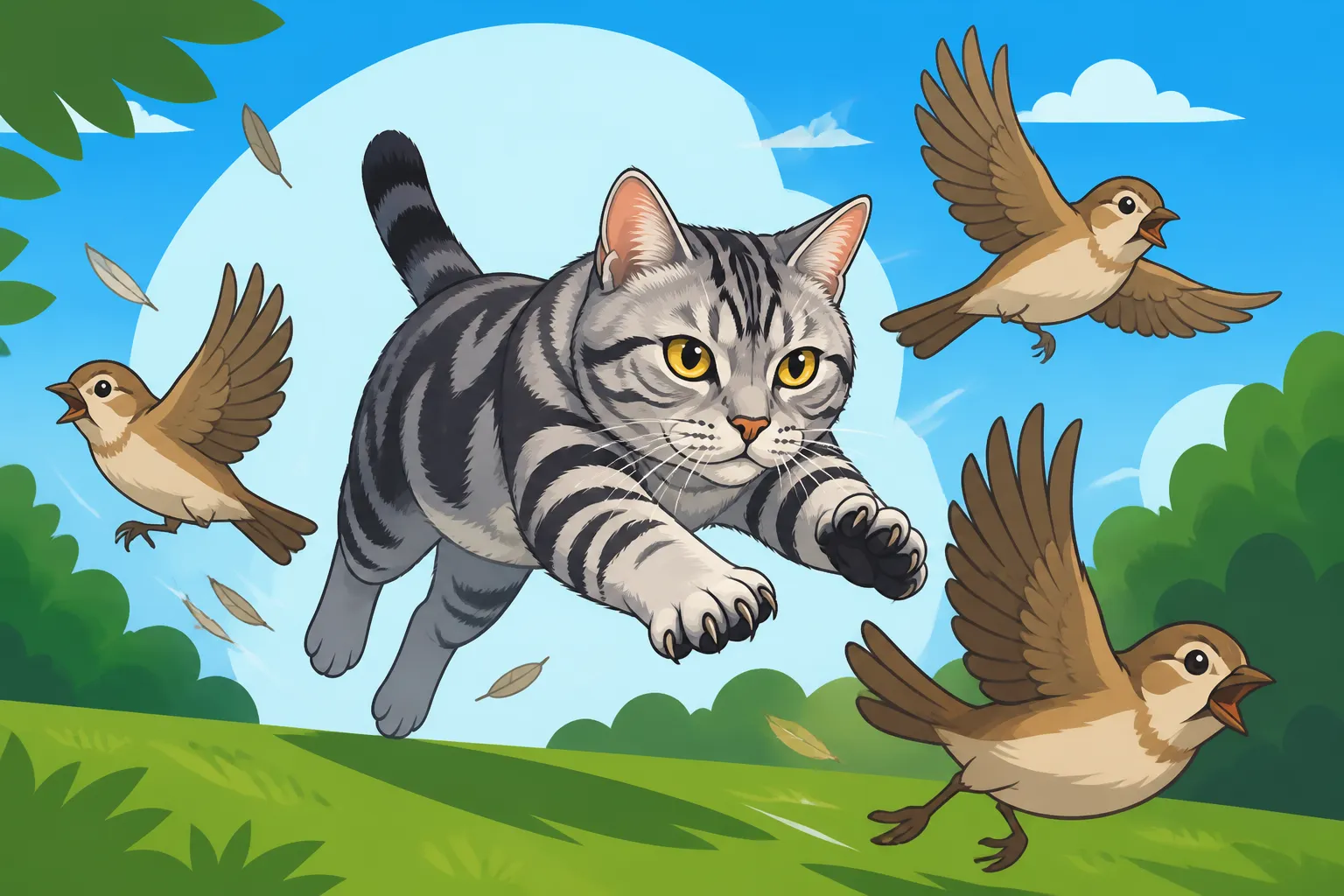
This is often where the biggest misconception lies. Many owners believe that if their cat is well-fed, they won't hunt. While a truly starving cat will hunt for sustenance, the American Shorthair's hunting drive isn't solely dictated by an empty stomach. It's a complex behavioral sequence that involves stalking, chasing, pouncing, and (sometimes) killing, which provides immense mental and physical satisfaction. It's exhilarating for them! Think of it like a human hobby – you might go fishing even if you could buy fish at the store, simply because you enjoy the process.
For an American Shorthair, the thrill of the chase, the strategic planning of a stalk, and the successful capture are intrinsically rewarding. This means that even the most well-fed, loved, and pampered American Shorthair can and will hunt birds if given the opportunity. It's not a sign that you're not feeding them enough; it's simply their nature. The American Shorthair Still Hunts, Whether You Want It To or Not explores this in more detail.
Factors Influencing Bird Predation in Outdoor American Shorthairs
Understanding why your American Shorthair hunts is one thing, but figuring out how much they might hunt is a bit more nuanced. It's not a one-size-fits-all answer, as several factors play into the equation.
Individual Cat Personality and Skill
Just like people, every American Shorthair has a unique personality. Some are more driven, more athletic, and possess a higher prey drive than others. You might have one American Shorthair who is a master hunter, stealthy and efficient, while another might be more of a casual observer, happy to watch birds from a window without much inclination to pursue them. These individual differences can stem from genetics, early life experiences, and even how much they were encouraged to play "hunt" as kittens.
A cat that learned excellent hunting skills from its mother or during its formative months might be more successful and therefore more prolific. Conversely, an American Shorthair that was primarily an indoor cat for its early life and then introduced to the outdoors might be less adept at actual predation, though the instinct will still be there.
Environmental Factors: Prey Availability, Cover, and Time of Day
The environment your American Shorthair roams in significantly impacts its hunting success. A yard rich in dense shrubs, tall grasses, or low-hanging branches provides ample cover for stalking, making it easier for a cat to ambush unsuspecting birds. Conversely, a wide-open, manicured lawn offers little advantage to a hunter, giving birds more time to react and escape.
The sheer abundance of birds in your area also plays a huge role. If your neighborhood is a haven for sparrows, robins, and finches, there's naturally more opportunity for your cat to encounter and hunt them. The time of day is another critical factor. Birds are often most active and vulnerable during dawn and dusk as they forage for food or return to roost. This coincides perfectly with a cat's natural crepuscular (active at twilight) hunting patterns. Why an American Shorthair Hunts at Dusk delves into this natural rhythm.
Owner Management: Outdoor Access and Deterrents
How you manage your American Shorthair's outdoor access is perhaps the most controllable factor. A cat allowed free roam 24/7 will inevitably have more opportunities to hunt than one whose outdoor time is limited or supervised.
Many owners try deterrents like bells on collars. The effectiveness of bells is a topic of much debate. While a bell can warn some birds, especially slower or less wary ones, it's not a foolproof solution. A clever or determined American Shorthair can quickly learn to stalk silently despite a bell, or simply wait for the moment a bird is distracted. Some studies suggest bells might reduce predation by a small percentage, but they certainly don't eliminate it. You can find a variety of cat-safe bells on Amazon, but remember to choose ones that are securely attached and won't snag.
Estimating the Toll: What Research Suggests
It's difficult to give a precise number for "how many birds an outdoor American Shorthair takes" because this isn't data that's collected on a breed-specific basis. However, we can look at broader research on domestic cat predation to get a sense of the scale of the issue.
General Predation Statistics for Outdoor Cats
Numerous studies, particularly in North America, have attempted to quantify the impact of domestic cats on wildlife. These studies often differentiate between owned cats with outdoor access and feral or unowned cats, but both contribute to predation. The numbers are often staggering, suggesting that domestic cats collectively kill billions of small mammals and birds annually. These are broad estimates, often based on complex modeling, citizen science, and direct observation.
For example, some research indicates that owned cats with outdoor access kill between 1.4 and 3.7 billion birds and 6.9 and 20.7 billion mammals annually in the United States alone. While these figures represent the collective impact of all outdoor cats, they highlight the significant ecological pressure domestic felines exert. The American Shorthair, with its strong hunting instincts, certainly contributes to these numbers when allowed to roam freely.
Challenges in Quantifying for a Specific Breed
Pinpointing the exact number of birds taken by a single breed like the American Shorthair is virtually impossible. Here's why:
- Lack of Breed-Specific Data: Most studies don't track predation based on breed. It would be an enormous logistical challenge.
- Variability: As discussed, individual drive, environment, and management vary wildly. One American Shorthair in a bird-rich rural area with unlimited access will have a vastly different "kill count" than one in a suburban yard with limited, supervised outdoor time.
- Unobserved Kills: A significant portion of prey caught by cats is never brought home or observed by owners. Cats often eat their prey at the site of the kill or simply leave it. This "tip of the iceberg" phenomenon makes accurate counting incredibly difficult.
So, while we can't give you a definitive number for your American Shorthair, we can confidently say that if they spend time outdoors unsupervised, they are contributing to the overall predation statistics.
The "Tip of the Iceberg" Phenomenon: Many Kills Go Unobserved
This aspect is crucial for owners to understand. You might think your cat "never" catches anything because you rarely see them bring home prey. However, studies using tracking devices and remote cameras have revealed that cats are far more successful hunters than their owners realize. It’s estimated that owners only observe about 20-25% of the kills their cats make. The majority are eaten, hidden, or simply left where they fell.
This means that even if you only see your American Shorthair bring home a bird once or twice a year, the actual number they've caught could be significantly higher. It’s a sobering thought, but an important one for understanding the true impact of outdoor cat access.
Mitigating the Impact: Responsible Outdoor Access for Your American Shorthair
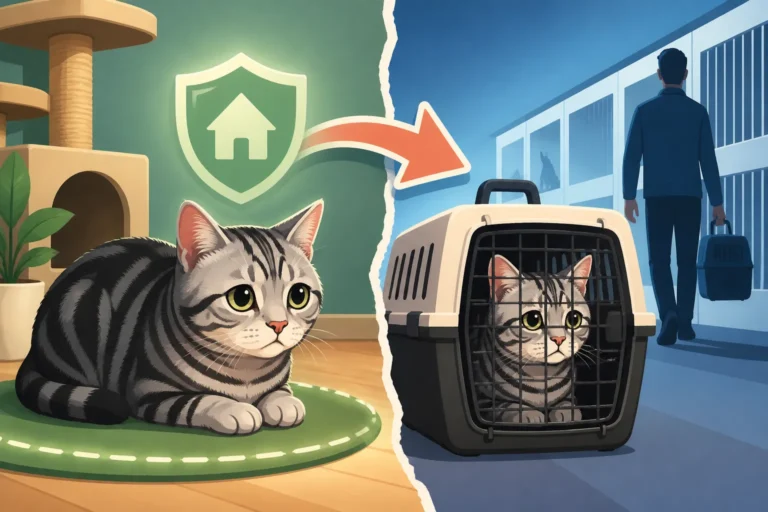
Acknowledging the problem is the first step. The next is to find practical, humane solutions that allow your American Shorthair a rich and stimulating life without becoming a menace to local wildlife. It's about finding that balance.
Limiting Outdoor Time, Especially Dawn and Dusk
One of the most effective strategies is simply to control when your American Shorthair goes outside. As we discussed, birds are most active and vulnerable at dawn and dusk. Keeping your cat indoors during these peak hunting hours can drastically reduce their opportunities to catch birds. If you have a cat flap, consider using a timed lock or a microchip-activated flap (available on Amazon) that only allows access at certain times or only for your cat, not strays.
Even a few hours indoors during these crucial periods can make a big difference. This also protects your American Shorthair from other risks, such as How Road Traffic Shortens an Outdoor American Shorthair's Life or encounters with aggressive wildlife, especially at night.
Enrichment for Indoor Cats: Satisfying the Hunt Indoors
If you're considering keeping your American Shorthair indoors more often or exclusively, it’s absolutely essential to provide ample indoor enrichment. Remember, their hunting instinct is deeply ingrained. If it's not satisfied, they can become bored, destructive, or even stressed. You need to create an environment where they can "hunt" safely indoors.
- Interactive Play: Dedicate time each day for interactive play sessions using wand toys, feather teasers, or other toys that mimic prey. The key is to let them stalk, chase, pounce, and catch the "prey" at the end of the session. Which Wand Toy Reads as Prey to an American Shorthair can help you pick the right ones. Don't just wave the toy around; simulate the erratic movements of a bird or mouse.
- Puzzle Feeders: These are fantastic for making your American Shorthair "work" for their food, engaging their problem-solving and hunting instincts. Instead of simply eating from a bowl, they have to manipulate a toy or dispenser to get their kibble. You can find many different styles of puzzle feeders on Amazon. This taps into their natural foraging behavior.
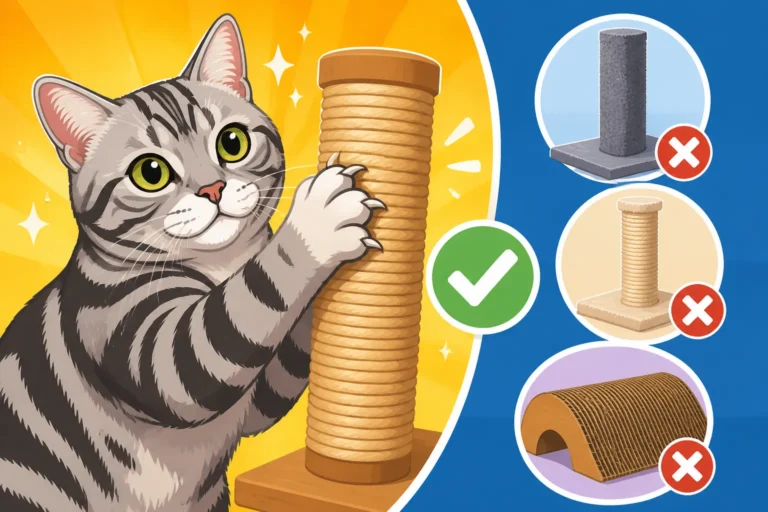
- Vertical Space: American Shorthairs love to climb and observe their territory from a height. Provide cat trees, shelves, or window perches. This gives them a sense of control and allows them to survey their indoor "territory," which is vital for their mental well-being.
- Rotate Toys: Keep their toy collection fresh by rotating toys in and out of use. This prevents boredom and keeps their interest piqued.
What an Indoor American Shorthair Does With a Mouser's Instinct offers more ideas for keeping your indoor hunter happy and stimulated. Providing a rich indoor environment ensures they can express their natural behaviors without harming wildlife. How Many Hunts a Day an Indoor American Shorthair Needs is also a useful read.
Deterrents and Bells: Effectiveness and Controversies
We touched on bells earlier. While they might offer a slight reduction in predation, they are not a guaranteed solution. Some cats adapt quickly, and the noise itself can be annoying to sensitive cats. Furthermore, some bird species, like those with less acute hearing or those already focused on foraging, may not react to a bell.
Other deterrents, such as bright-colored "BirdsBeSafe" collars, are designed to make cats more visible to birds, giving birds more warning. These are generally more effective than bells alone, as birds rely heavily on visual cues. However, like bells, they are not 100% foolproof and require careful fitting to ensure they are comfortable and safe for your cat.
It's also worth noting that some owners find using any kind of deterrent collar problematic, either due to concerns about the cat's comfort or the potential for entanglement. Always ensure any collar is a quick-release safety collar to prevent choking. How Well a Collar Bell Stops an American Shorthair provides more insights.
Catios and Leash Training: Controlled Outdoor Experiences
For many American Shorthair owners, the ideal compromise lies in providing supervised or contained outdoor access.
- Catios (Cat Patios): These enclosed outdoor spaces allow your American Shorthair to enjoy fresh air, sunshine, and the sights and sounds of nature without being able to roam freely and hunt. Catios can range from small window boxes to elaborate multi-level structures. They offer a safe way for your cat to experience the outdoors while keeping wildlife safe. Many designs are available as DIY kits or pre-made units on Amazon, ranging in size and complexity. Whether a Catio Satisfies an American Shorthair's Drive is a great resource if you're considering this option.
- Leash Training: Believe it or not, many American Shorthairs can be leash trained, especially if started when they are young. This allows for controlled walks outside, letting them explore safely under your direct supervision. Always use a harness (not just a collar) designed specifically for cats, and introduce it gradually in a positive way with treats and praise. Start with short indoor sessions before venturing outside.
These methods offer excellent ways to satisfy your American Shorthair's desire for outdoor stimulation without giving them free rein to hunt birds. It requires a bit more effort on your part, but the peace of mind knowing you're protecting wildlife and your cat is often well worth it.
Here's a quick comparison of mitigation strategies:
| Strategy | Pros | Cons | Effectiveness (Bird Predation) |
|---|---|---|---|
| Indoor Only | 100% effective, cat is safest | Requires significant indoor enrichment | High |
| Limited Outdoor Access | Reduces opportunities, protects cat during high-risk times | Still some risk, requires owner consistency | Moderate-High |
| Bell Collar | Easy to implement, inexpensive | Limited effectiveness, can annoy some cats, entanglement risk | Low-Moderate |
| Brightly Colored Collar | Visually alerts birds, relatively easy | Not 100% effective, entanglement risk | Moderate |
| Catio | Safe outdoor access, no predation | Can be costly/time-consuming to build/install, takes up space | High |
| Leash/Harness Walks | Supervised exploration, no predation | Requires training, time commitment from owner, cat tolerance | High |
| Indoor Enrichment (alone) | Satisfies hunting drive safely indoors | Doesn't provide actual outdoor access | N/A (prevents outdoor hunting) |
Conclusion
The question of "how many birds an outdoor American Shorthair takes" doesn't have a simple, definitive answer for any single cat. Their strong, inherent hunting drive, coupled with environmental factors and individual differences, means that any free-roaming American Shorthair will contribute to wildlife predation. The scientific data points to a significant collective impact by domestic cats on bird populations.
However, as responsible American Shorthair owners, we have the power to make choices that mitigate this impact. By understanding their natural instincts and implementing strategies like supervised outdoor access, enriching indoor environments, and considering tools like catios, we can ensure our beloved American Shorthairs live full, happy lives while minimizing their footprint on the local ecosystem. It's about respecting both their nature and the natural world around us.
Disclaimer
This article is for general informational purposes only and does not constitute professional advice. Laws, prices and regulations vary by location and change over time. Consult a qualified professional for guidance on your specific situation.