How an American Shorthair Hunts
Even if your American Shorthair lives a pampered indoor life, lounging on sunbeams and enjoying gourmet meals, there's a primal hunter lurking just beneath that calm, easygoing exterior. This deep-seated instinct can sometimes manifest in ways that puzzle or even frustrate owners, whether it's the insistent batting at your ankles or the inexplicable "gifts" left on your pillow. This guide will delve into the fascinating world of the American Shorthair's hunting prowess, explaining its historical roots, dissecting its innate behaviors, and offering practical ways to satisfy this powerful drive in a safe, enriching manner for both you and your beloved feline.
The Deep Roots of the American Shorthair's Hunting Instinct
The American Shorthair isn't just a pretty face; this breed boasts a rich lineage of working cats, whose survival and value were directly tied to their ability to hunt. Understanding this history is key to appreciating why their hunting instincts remain so strong today.
Centuries of Pest Control
Imagine sailing across the vast ocean centuries ago, with limited space and no refrigeration. Food stores were susceptible to vermin, and the health of the crew could depend on keeping those pests in check. This is where the ancestors of the American Shorthair truly shined. They were the original working cats, earning their passage by relentlessly patrolling ships for rats and mice. This wasn't a hobby; it was a job, and a vital one at that. As European settlers arrived in North America, these intrepid felines continued their pest control duties on farms, in barns, and eventually, in homes across the burgeoning continent. The very characteristics that made them excellent hunters—their intelligence, agility, and keen senses—were the traits that were inadvertently selected for and strengthened over generations. They weren't bred for fancy looks or specific temperaments in the beginning; they were bred for function. Their ability to keep barns clear of rodents directly contributed to food preservation and sanitation, making them invaluable members of any household or farm. This deep historical context explains why even your cuddly American Shorthair still possesses such a strong, undeniable drive. Ships Carried the American Shorthair's Ancestors as Ratters vividly illustrates this crucial aspect of their heritage.
A Body Built for the Job
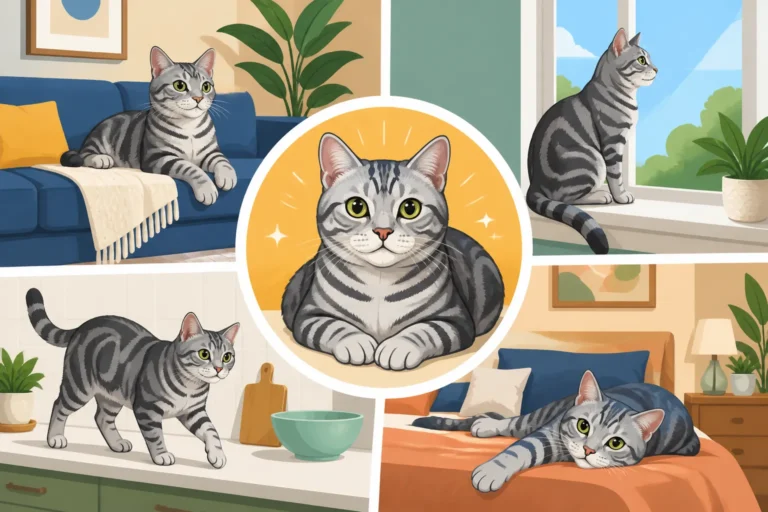
Take a good look at an American Shorthair, and you'll see a cat built for athleticism and efficiency. They possess a stocky, well-muscled frame, a testament to their working-class roots. Their medium-length, powerful legs are designed for sudden bursts of speed and impressive leaps, not for elegant, dainty steps. This build is perfectly adapted for the chase, allowing them to accelerate quickly from a standstill and cover ground rapidly when pursuing prey. Their broad chests house strong lungs, enabling sustained exertion during a hunt, while their sturdy bone structure provides the necessary support for agile maneuvers and impactful pounces. They aren't delicate creatures; they are robust and capable.
Beyond their powerful musculature, an American Shorthair's sensory organs are finely tuned for hunting. Their eyes are large and round, giving them excellent peripheral vision, crucial for spotting movement. Their hearing is incredibly sensitive, allowing them to pinpoint the rustle of a mouse in dry leaves or the scurry of an insect across a floor. And, of course, their whiskers, or vibrissae, are highly sensitive tactile organs that help them navigate in low light and detect even the slightest changes in air currents, aiding in locating prey in confined spaces. Every aspect of their physical being, from their strong jaws designed to hold prey to their perfectly balanced tail for steering during a chase, speaks to their heritage as efficient predators. These are the tools that enable their inherent hunting behaviors, allowing them to excel whether they're tracking a toy mouse or, occasionally, a real one. How Fast an American Shorthair Is Over Short Distances gives you a deeper insight into their speed and agility.
The Stalk, Chase, Pounce, and Kill Sequence
The American Shorthair’s hunting is a ballet of instinct, a finely choreographed sequence that engages their entire being. It's not just random swatting; it's a methodical process that starts long before the actual pounce.
The Art of the Stalk
The hunt for an American Shorthair often begins with the stalk, a phase characterized by intense focus and stealth. You might observe your cat dropping low to the ground, almost slinking, with their body flattened and their tail held low, perhaps twitching just the tip. Their eyes will be wide, pupils dilated, fixed intently on their target – be it a dust bunny, a feather toy, or even a fleeting shadow. Every muscle is tense, coiled and ready, yet they move with incredible fluidity, often freezing mid-step to avoid detection. They utilize any available cover, whether it’s the leg of a chair, the edge of a rug, or a curtain, as they slowly creep closer, minimizing their silhouette. This patience is remarkable; they can remain in this poised state for extended periods, waiting for the perfect moment to strike.
In a domestic setting, this might look like your American Shorthair slowly inching towards a remote-controlled car across the living room floor, or crouching behind a potted plant, utterly mesmerized by a sunbeam-dancing motes of dust. This initial phase is about assessment and positioning, ensuring they get as close as possible without alerting their "prey." It's a fundamental part of their predatory behavior, showcasing their intelligence and strategic thinking. Without the stalk, the subsequent steps lose much of their effectiveness, as it's the foundation for a successful capture. How an American Shorthair Stalks provides more detail on this captivating behavior.
The Burst and the Pounce
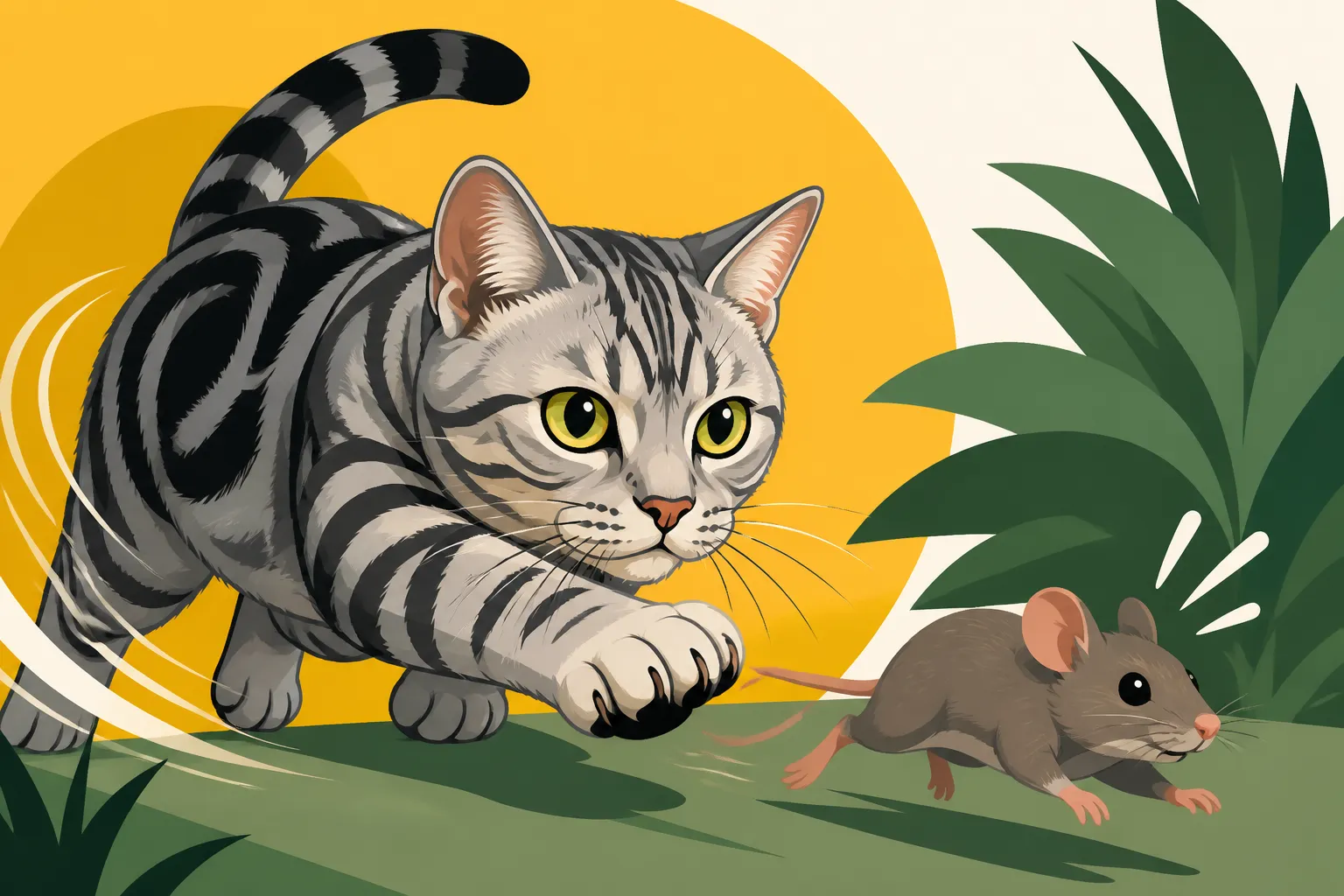
Once the stalk has brought them within striking distance, the American Shorthair transitions into the explosive phase: the burst and the pounce. This is where all that coiled energy is released in a sudden, powerful surge. From their flattened, crouching position, they will launch themselves forward, often with an arched back and all four paws extended, aiming to land squarely on their target. The precision in this maneuver is astonishing, a testament to their innate coordination and excellent depth perception. It's not just a jump; it’s a calculated, acrobatic leap designed to incapacitate the "prey" quickly.
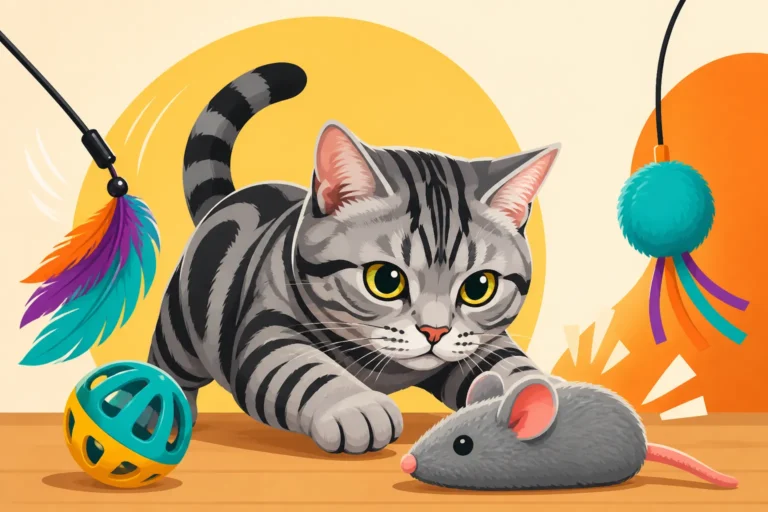
You'll see this behavior clearly during a vigorous play session with a wand toy. After a period of stalking, your American Shorthair will suddenly explode into action, batting, grabbing, and wrestling the toy with impressive force. This isn't gentle play; it’s a full-body engagement, mimicking the real-life struggle of a hunt. The pounce might involve them rolling onto their back to use all four paws, or expertly pinning the toy with their front paws. The satisfaction they get from this successful 'capture' is palpable. It’s a moment of triumph, fulfilling a deep-seated instinct to conquer. How an American Shorthair Pounces further explores the mechanics of this exciting stage.
The "Kill" Bite and Disengagement
Following the dramatic pounce and capture, the American Shorthair instinctively moves to the "kill" bite, a vital part of their hunting sequence, even if the prey is just a fabric mouse. While not a literal kill with toys, they will often deliver a firm, often shaking, bite to what would be the neck of a small animal. This is usually accompanied by a swift kick with their back legs, a natural action meant to subdue struggling prey. It’s a quick, decisive action that signals the end of the chase and the final triumph.
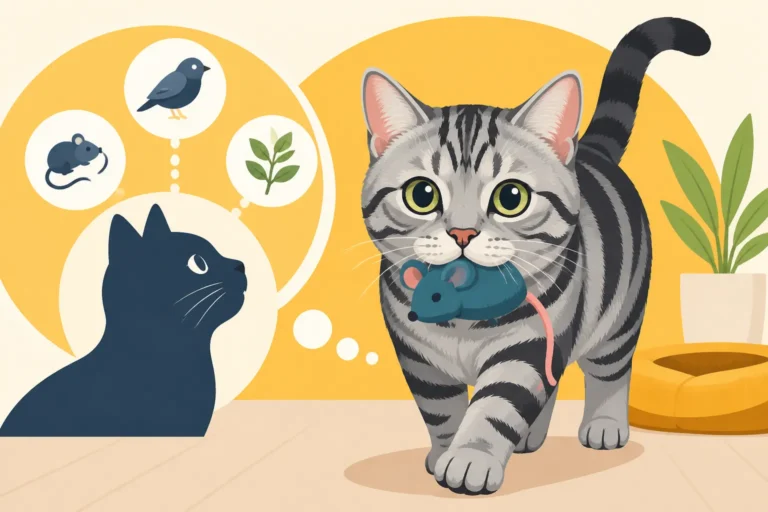
After this "kill," an interesting phenomenon often occurs: disengagement. The cat might hold the toy firmly in its mouth or between its paws for a moment, then, sometimes, simply walk away from it. Other times, they might carry their "kill" proudly to a favorite spot, or even more tellingly, present it to you. This act of bringing you their "prey" is a profound compliment, a demonstration of trust and a sharing of their success. It's their way of including you in their hunting prowess, and it’s important to acknowledge it calmly, without fear or disgust. This complete sequence, from stalk to kill, provides a profound sense of fulfillment for your American Shorthair, tapping into their evolutionary purpose. Why an American Shorthair Brings You Things offers fascinating insights into this unique interaction.
The Indoor Hunter's World
Even without open fields or wild prey, an American Shorthair's hunting instinct remains vibrantly alive, adapting creatively to the confines of a home.
Adapting Instincts to a Domestic Environment
The hunting instinct in an American Shorthair isn't something that simply fades away because they live indoors; it merely adapts. Without real mice or birds to chase, their innate drive redirects itself towards anything that mimics prey. This could be a dust bunny skittering across the floor, a fly buzzing near a window, or even the crinkle of a plastic bag. For an indoor American Shorthair, your living room becomes their hunting ground, the sofa a perfect hiding spot, and a dangling string a tempting target. This redirection is essential for their mental and physical well-being. If this powerful instinct isn't satisfied through appropriate outlets, it can sometimes lead to undesirable behaviors, such as attacking your feet, furniture, or other pets out of frustration.
Understanding this adaptive behavior is crucial for American Shorthair owners. It means recognizing that when your cat is intently focused on a reflection on the wall or patiently waiting for a toy to move, they aren't just "playing"; they are actively engaging in the core behaviors that define their breed's history. Providing structured, satisfying hunting opportunities helps channel this energy positively, preventing boredom and potential behavioral issues. It truly transforms their indoor existence, making them happier, healthier, and more integrated members of your family. What an Indoor American Shorthair Does With a Mouser's Instinct delves deeper into how these instincts manifest indoors.
Common Indoor "Prey"
When it comes to indoor "prey," the possibilities are endless for an American Shorthair, and they have definite preferences. Wand toys, especially those with feathers or crinkly material attached, are often high on the list. The erratic movement of these toys, controlled by you, perfectly mimics a bird or a scurrying rodent. Small, lightweight toys like crinkle balls, spring toys, or plush mice are also popular, as they can be easily batted, carried, and "killed." You’ll often find these types of toys on platforms like Amazon, making it easy to replenish your cat's stash.
However, not all "prey" is created equal. Laser pointers, for instance, can be a mixed bag. While they engage your cat in the chase aspect of the hunt, they inherently lack the "kill" satisfaction. Constantly chasing an elusive red dot that can never be caught can lead to frustration for some American Shorthairs, leaving them feeling unfulfilled. It’s vital that any laser play is ended by directing the beam onto a physical toy that your cat can finally pounce on and "capture," completing the sequence and providing that all-important sense of success. Ultimately, the best indoor prey are those that allow your American Shorthair to perform the full hunting sequence, from stalk to pounce to the final, satisfying capture.
The Drive to Catch and Conquer
For an American Shorthair, the successful completion of the hunting sequence, whether with a real mouse or a toy, provides immense mental and physical satisfaction. It’s not merely about the physical exertion; it's about the deep-seated psychological reward of achieving their inherent purpose. When they finally pin that feather wand or carry off their plush mouse, there’s a visible sense of triumph, a quiet contentment that comes from acting on centuries of instinct. This drive to "catch and conquer" is crucial for their overall well-being. It releases pent-up energy, reduces stress, and strengthens their confidence.
This is why it's so important for interactive play sessions to end with your cat successfully "catching" the toy. Denying them that final capture, especially with toys like laser pointers, can leave them feeling frustrated and agitated, disrupting the natural flow of their predatory instincts. Think of it as reaching the climax of a story – without it, the narrative feels incomplete. For a truly content American Shorthair, aim for several short, intense play sessions throughout the day, ensuring each one culminates in a decisive "kill." This ensures they get the regular opportunities they need to satisfy this powerful, ancestral drive. How Many Hunts a Day an Indoor American Shorthair Needs gives more context on the frequency of these vital play sessions.
Providing Satisfying Hunting Opportunities
Since the American Shorthair's hunting drive is so strong, it's our job as owners to provide safe, stimulating outlets for these natural behaviors. It’s not just about entertainment; it's about meeting their fundamental needs.
Interactive Play Sessions
The most direct way to satisfy your American Shorthair's hunting instinct is through interactive play sessions, particularly with wand toys. Think like prey when you wield that wand. Don't just dangle it in front of them; make it dart, hide behind furniture, pause, then suddenly spring out. Mimic the erratic movements of a small animal trying to escape. Let the "prey" disappear and reappear, tapping into their stalking instinct. Allow them to "hunt" the toy, chase it, pounce on it, and most importantly, catch it. Ending a session without a capture can be frustrating for them, as it leaves the hunting sequence incomplete. Make sure they get to grab, bite, and feel the satisfaction of a successful "kill."
There's a fantastic variety of wand toys available on sites like Amazon, from simple feather teasers to more elaborate ones with interchangeable attachments. Experiment to see what your American Shorthair responds to best – some prefer feathery "birds," others prefer crinkly "mice." Aim for multiple short sessions throughout the day, maybe 10-15 minutes each, rather than one long one, to mirror the natural hunting patterns of a cat. This kind of engaging, interactive play is incredibly bonding and deeply fulfilling for your feline friend.
Puzzle Feeders and Foraging
Beyond direct play, puzzle feeders are another brilliant way to tap into your American Shorthair's hunting and foraging instincts. In the wild, cats don't just get their food handed to them; they have to work for it. Puzzle feeders simulate this by requiring your cat to manipulate the feeder to get their kibble or treats. This transforms mealtime from a passive activity into a mentally stimulating "hunt" for food, which is fantastic for engaging their brains and preventing boredom.
You can start with simple puzzle feeders that just require a paw swipe or a nudge, then gradually introduce more complex ones as your cat gets the hang of it. Many types are readily available online, including on Amazon, ranging from balls that dispense kibble as they roll, to more intricate mazes and treat-dispensing toys. Not only do these devices provide mental enrichment, but they can also help with weight management by slowing down eating and making your cat "earn" their calories. Hiding small portions of their daily kibble around the house in various spots can also encourage natural foraging behavior, turning your home into an exciting landscape of hidden treasures for them to discover. Whether a Puzzle Feeder Satisfies an American Shorthair confirms the benefits of incorporating these into their routine.
Environmental Enrichment
Creating an enriched environment that caters to an American Shorthair's hunting instincts goes beyond just toys and feeders. It involves thoughtfully designing their living space to provide opportunities for observation, climbing, and exploration, all of which are crucial aspects of a natural hunting territory. Cat trees, for example, are much more than just scratching posts; they provide vertical territory, allowing your cat to survey their "domain" from a high vantage point, just as they might scan for prey or threats in the wild. Placing a cat tree near a window can turn a simple view into an exciting "observation deck" for bird and squirrel watching, stimulating their predatory focus.
Window perches offer a similar benefit, bringing the outside world closer for careful observation. For those who want to provide safe outdoor access, a catio (a secure outdoor enclosure) is an excellent solution. It allows your American Shorthair to experience fresh air, natural sights, and sounds, stimulating their senses without the dangers of free-roaming. Within the home, rotating toys regularly keeps things fresh and exciting, preventing boredom. You can find a vast array of environmental enrichment products, from tall cat trees to window hammocks, on platforms like Amazon, making it easy to enhance your cat's indoor hunting grounds. Providing a varied and stimulating environment helps satisfy their intrinsic need for exploration and mental engagement.
Understanding the "Gift" of Prey
One of the most peculiar, yet endearing, behaviors of a hunting cat is when they bring their "kill" to you. It's often misunderstood, but it's deeply rooted in their social and predatory instincts.
Why They Bring You Their Catch
It can be a bit startling to wake up to a toy mouse, a crinkly ball, or even a real insect placed neatly on your pillow or at your feet. For many American Shorthair owners, this is a common occurrence, and it's a profound expression of their natural instincts. There are several theories as to why cats present their "kills" to their human companions. One popular theory suggests they see you as part of their pride or colony and are either sharing their bounty, or perhaps even trying to "teach" you how to hunt, especially if they perceive you as a less-than-competent hunter yourself. They might also be seeking praise or acknowledgment for their prowess, wanting you to admire their successful hunt.
Regardless of the exact motivation, it's essential to view these "gifts" as a compliment, a sign of trust and affection. Scolding or showing disgust can be confusing and damaging to your bond. Instead, a calm acknowledgment, perhaps a gentle "good job" or a soft pet, is the best response. It validates their natural behavior without encouraging more real-life hunting if that's not what you want. Understanding this ancient ritual deepens your appreciation for your American Shorthair's complex inner world. How to React When an American Shorthair Brings You Something offers excellent guidance on handling these unique moments.
Managing Outdoor Hunting Instincts
For American Shorthairs with outdoor access, their hunting instincts can become a more significant consideration, impacting local wildlife and posing risks to the cat itself. While it's natural for them to hunt outdoors, the modern environment often presents dangers that their ancestors didn't face, such as traffic, other predatory animals, and exposure to diseases. The decision to allow an American Shorthair outdoor access is a significant one, carrying responsibilities for their safety and for the local ecosystem. Why Letting an American Shorthair Outside Is a Real Decision is a crucial read if you're weighing this choice.
If your American Shorthair does go outside, there are steps you can take to mitigate their impact on wildlife. Attaching a bell to their collar is a common strategy, though its effectiveness can vary; some cats quickly learn to move in a way that minimizes jingling. Keeping your cat indoors during dawn and dusk, which are prime hunting times for many small animals, can also help. Providing ample enrichment and satisfying indoor hunting opportunities through toys and puzzle feeders can sometimes lessen their drive to hunt live prey outdoors. Regular parasite control is also paramount for outdoor cats, given their increased exposure. Ultimately, balancing an American Shorthair's natural outdoor instincts with responsible pet ownership requires careful consideration and proactive measures to ensure both their well-being and the safety of local wildlife.
Comparing Hunting Engagement Methods
To help you decide the best ways to engage your American Shorthair's hunting instincts, here's a comparison of common methods:
| Method | Simulates Stalking? | Simulates Chase? | Simulates Pounce? | Simulates "Kill"? | Mental Stimulation | Physical Exertion | Pros | Cons |
|---|---|---|---|---|---|---|---|---|
| Wand Toys | High | High | High | High | High | High | Full hunting cycle, great bonding, customizable prey | Requires active human participation, can become boring if not varied |
| Puzzle Feeders | Low | Low | Low | Low | High | Moderate | Engages problem-solving, slows eating, independent play | Doesn't fully satisfy predatory chase instinct, can be messy with certain foods |
| Laser Pointers | Low | High | Low | None | Moderate | High | Great for quick bursts of energy, easy to use | No "kill" satisfaction, can lead to frustration or obsessive behavior if not ended with a physical toy |
| Small, Autonomous Toys | Moderate | Moderate | Moderate | High | Moderate | Moderate | Independent play, mimics small prey, easily carried | Can quickly lose interest, doesn't always engage full hunting cycle without interaction |
| Catios/Window Perches | High (observation) | Low | Low | None | High | Low | Safe outdoor stimulation, natural observation, fresh air | No direct hunting action, requires installation/space, still need indoor enrichment |
Disclaimer
This article is for general informational purposes only and does not constitute professional advice. Laws, prices and regulations vary by location and change over time. Consult a qualified professional for guidance on your specific situation.