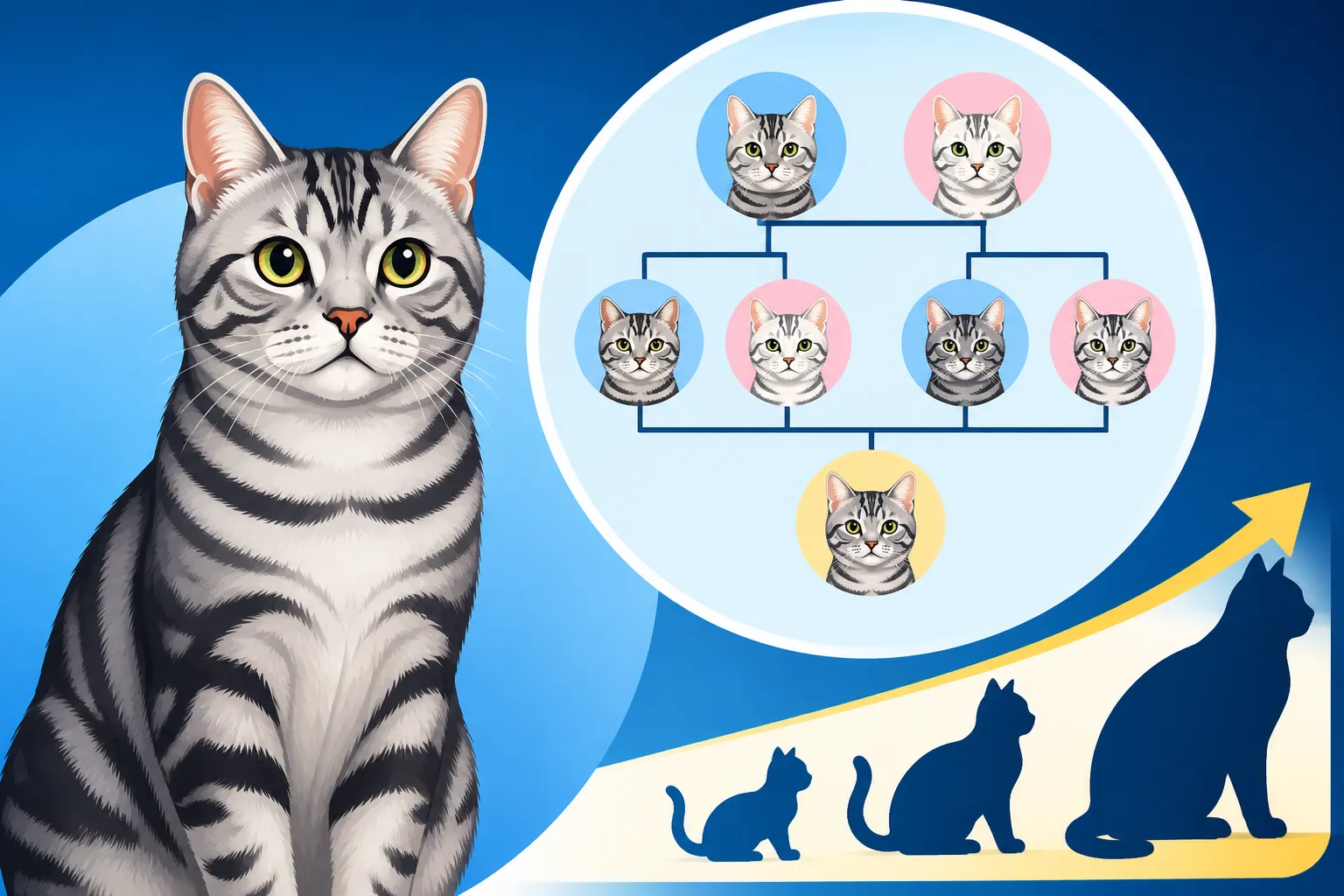
What an American Shorthair Pedigree Predicts About Size
It's a common dilemma for new cat parents: you bring home a fluffy little furball, fall head over heels, and then start wondering, "Just how big is this little creature actually going to get?" With a random-bred cat, the answer is often a shrug and a guess, leaving you to wonder if you'll end up with a petite lap cat or a magnificent giant. But if you’re welcoming an American Shorthair into your home, a pedigree can be a remarkably accurate crystal ball, offering clear predictions about your cat's eventual size and robust build. This guide will walk you through what that pedigree truly means for your cat's physical development.
The Predictability of a Pedigree: Why Size Isn't a Guessing Game
When you choose a purebred American Shorthair with a verifiable pedigree, you're not just getting a name; you're gaining access to generations of careful breeding that adhere to a specific standard. This is where the magic of predictability comes in. Unlike a domestic shorthair whose genetic lottery can produce a vast range of sizes, an American Shorthair's lineage means its growth trajectory is largely charted before it even opens its eyes.
What the Breed Standard Says About Size and Build
The American Shorthair breed standard, set by organizations like the Cat Fanciers' Association (CFA), isn't just about pretty patterns or eye color; it's a blueprint for the entire cat, including its expected size and conformation. Breeders meticulously work to produce cats that fit this ideal. This means a standard weight range, a particular body type – sturdy, muscular, and well-balanced – and a specific overall impression of strength and medium-to-large size. They're built for function, a legacy of their working ancestors.
This focus on a consistent type is what allows a pedigree to offer such reliable predictions about size. When you look at an American Shorthair’s parents and grandparents, you're seeing the genetic potential that’s been honed over many generations. While there will always be individual variation, the range of that variation is much narrower than what you'd find in a mixed-breed cat. What an American Shorthair Looks Like by the Standard provides a deeper dive into these characteristics.
How Breeders Aim for Consistency
Responsible American Shorthair breeders take the breed standard very seriously. They select breeding pairs not just for temperament or color, but also for conformation – how well they embody the physical traits outlined in the standard. This includes size, bone structure, and musculature. They aren't trying to create extremes, but rather to maintain the healthy, sturdy, and well-proportioned cat that the American Shorthair is known to be.
This consistent selection process means that if both parents are good examples of the breed, their offspring are highly likely to follow suit in terms of size and build. You won't typically see a litter from two average-sized American Shorthairs suddenly produce a kitten that grows to the size of a Maine Coon or remains as small as a Singapura. The genetic lines have been established to produce a certain type, and size is a fundamental part of that type.
Contrast with Random-Bred Cats
Think about the difference with a random-bred cat, sometimes simply called a domestic shorthair or a "moggy." Their ancestry is often unknown, a beautiful mix of various genetic contributions. While this makes them wonderfully unique, it also makes predicting their adult size incredibly difficult. You might see a tiny kitten in a rescue litter and have no idea if it will grow into a sleek, medium-sized cat or blossom into a substantial, chunky companion. It's truly a roll of the genetic dice.
With an American Shorthair pedigree, you bypass much of that guesswork. You know, within a reasonable range, the general parameters of your cat's future size. This isn't just about aesthetic preference; it can also help you plan for appropriate litter box sizes, cat trees that can handle their weight, and even how much food to budget for their strong, muscular build.
Understanding the American Shorthair Size Standard
The American Shorthair is often described as a medium-to-large sized cat, known for its robust and powerful build. They are built for strength and agility, a testament to their historical role as working cats. This isn't a delicate breed; it's a cat designed to be effective at its original job.
Typical Weight Ranges for Males and Females
There's a noticeable difference in size between male and female American Shorthairs, which is fairly typical across many cat breeds. Males tend to be larger and heavier, often weighing between 11 to 15 pounds (about 5 to 7 kg), sometimes even a bit more if they are particularly large-boned and well-muscled. Females are usually a bit daintier, though still substantial, ranging from 8 to 12 pounds (about 3.6 to 5.4 kg).
It’s important to remember these are healthy, muscular weights, not figures that suggest an overweight cat. A lean, athletic 14-pound male American Shorthair is a very different animal from an obese 14-pound cat of a more delicate breed. Their bone structure and muscle mass account for a good portion of that weight. How Much a Male American Shorthair Weighs and How Much a Female American Shorthair Weighs offer further details.
Height and Length Expectations
While specific height and length measurements aren't always strictly defined in the breed standard (as they can vary slightly with individual conformation), an American Shorthair presents as a well-proportioned, solid cat. They are not excessively leggy or long-bodied. Their length, from the tip of their nose to the base of their tail, can be quite impressive, especially on a full-grown male.
When they stand, they exude a sense of balance and power. They aren't built for extreme vertical jumps like some lighter breeds, but rather for strong, controlled movements and efficient ground coverage. Their proportions contribute to their overall "square" impression, which speaks to their sturdy and compact nature without being cobby like some other shorthairs.
The "Square" Build and Musculature
The American Shorthair is frequently described as having a "square" build, which refers to its broad chest, well-developed shoulders, and a generally solid, powerful appearance. This isn't just a quirky description; it's a direct reflection of their history as working cats. They needed strong muscles to climb, pounce, and manage their prey. You can truly feel the density of their musculature when you pick one up.
Their head is also broad and full-cheeked, contributing to this square impression. This strong bone structure and well-developed musculature are inherent to the breed and contribute significantly to their overall size and weight. A pedigree helps ensure these traits are passed down, providing a reliable expectation of your cat’s solid conformation. This strong build is what allows them to remain active and healthy for their considerable The Fifteen to Twenty Years the American Shorthair Was Given.
Factors Influencing an American Shorthair's Growth and Final Size
While a pedigree provides a strong prediction, it's not the only factor. Several elements can influence how your American Shorthair fills out and reaches its ultimate size, even within the breed's defined parameters.
Genetics Within a Specific Line
Even within the American Shorthair breed, there can be slight variations in size between different breeding lines. Some lines might consistently produce slightly larger, more substantial cats, while others might lean towards the middle of the breed standard. This is why looking at the parents of your kitten is so important. If the parents are on the larger side of the standard, there's a good chance their offspring will be too. Conversely, if the parents are smaller, their kittens might also mature at the lower end of the weight and size spectrum for the breed.
A reputable breeder will often be able to tell you about the typical adult size of their cats and the specific line your kitten comes from. Don't hesitate to ask to see the parents, or at least photos, to get a visual idea of what your kitten might grow into. This insight from the breeder, combined with the pedigree, gives you the most accurate picture possible.
Nutrition During Kittenhood and Adolescence
Proper nutrition during the crucial growth phases of kittenhood and adolescence is absolutely vital for an American Shorthair to reach its full genetic potential in terms of size and bone development. A diet rich in high-quality protein, essential vitamins, and minerals supports healthy muscle growth and bone density. Skimping on nutrition during these formative months can potentially lead to a cat that doesn't quite "fill out" as robustly as it could, even with a strong pedigree.
Many owners opt for premium kitten foods, knowing that these are formulated to support rapid growth. As your American Shorthair transitions into adulthood, a balanced adult diet, perhaps even one designed for active, muscular breeds, is key. A wide variety of high-quality foods, including fresh, nutritious meals, can support this growth. Remember, How Many Calories a Working Framed American Shorthair Needs a Day can be substantial!
Spaying/Neutering Impact on Growth and Weight
The timing of spaying or neutering can also play a subtle role in a cat's final size and metabolism. While the primary reason for these procedures is population control and health benefits, altering a cat can influence its hormonal balance, which in turn affects growth plate closure and metabolic rate. Some studies suggest that cats spayed or neutered very early might grow slightly taller or longer as their growth plates take a little longer to fuse, though this effect is often minimal and debated.
More significantly, altered cats tend to have a lower metabolic rate, meaning they burn fewer calories. This makes them more prone to weight gain if their diet isn't adjusted. An American Shorthair already has a hearty appetite inherited from its mousing days, so post-neutering weight management is crucial to ensure they maintain a healthy, muscular physique rather than becoming overweight. Obesity, especially as they get older, can lead to numerous health issues.
Activity Levels
An American Shorthair, despite being an indoor cat for many, retains a strong hunting drive and a need for activity. Their muscular build is meant to be used! If an American Shorthair is largely sedentary, lacking sufficient opportunities for play and exercise, it might not develop its full muscle mass. Instead, it could gain excess fat, even if its skeletal frame has reached its maximum size. This can lead to them appearing larger due to fat, but not in the healthy, muscular way envisioned by the breed standard.
Regular interactive play that mimics hunting, access to climbing structures like cat trees, and opportunities to explore can all contribute to developing and maintaining their strong physique. An active American Shorthair will be a well-muscled cat, contributing to the healthy, sturdy size predicted by its pedigree. Feeding an American Shorthair That No Longer Hunts Its Food discusses ways to manage their inherent drive and appetite.
When to Expect Your American Shorthair to Reach Full Size
Understanding the growth timeline of your American Shorthair can help manage expectations and ensure they're developing appropriately. They aren't like some smaller breeds that hit their full size in less than a year.
Growth Timeline: Kitten to Adult
American Shorthair kittens grow quickly, as all kittens do, but they take their time to fully mature. You'll see significant increases in height and length during their first year. By about 12 months, many American Shorthairs will have reached most of their skeletal length and height. However, this isn't the end of their development.
The first year is a period of rapid linear growth, but the "filling out" process, which involves adding muscle and broadening their frame, continues beyond that. They are still very much adolescents at one year old.
The Difference Between Reaching Height/Length and Filling Out
This is a crucial distinction for American Shorthair owners. While a cat might reach its maximum height and length by its first birthday, it will continue to develop its muscularity and mature into its full, powerful "square" build for another two to three years. It's not uncommon for an American Shorthair to still be adding mass and broadening its chest at two or even three years of age.
Think of it like a human teenager; they might hit their adult height fairly early, but their body mass and muscle development continue well into their late teens or early twenties. The same principle applies here. This extended maturation period contributes to their robust and sturdy adult appearance. When an American Shorthair Reaches Full Size explores this in more detail.
Why They Take Longer to Mature Than Some Might Expect
Their working cat heritage plays a role in this extended maturation. Breeds that evolved to be robust and durable often have longer development cycles, allowing their bodies to fully develop the strength and resilience needed for their historical roles. The American Shorthair was never bred for early maturity or delicate features; it was bred for endurance and effectiveness.
This longer developmental period means you shouldn't be concerned if your American Shorthair still looks a bit gangly at a year old. Give them time, consistent high-quality nutrition, and plenty of opportunities for exercise, and they will typically mature into the magnificent, substantial cats their pedigree predicts. Why an American Shorthair Takes Three Years to Fill Out provides further insights into this developmental timeline.
American Shorthair Size Expectations
Here’s a quick overview of what you can generally expect for a healthy, pedigree American Shorthair. Remember that individual variations will occur, but these ranges represent the breed standard.
| Trait | Male American Shorthair | Female American Shorthair |
|---|---|---|
| Weight | 11 – 15+ lbs (5 – 7+ kg) | 8 – 12 lbs (3.6 – 5.4 kg) |
| Height | Medium-to-large, typically 10-14 inches at shoulder | Medium, typically 9-12 inches at shoulder |
| Length | Long, well-proportioned body | Medium-to-long, well-proportioned body |
| Build | Muscular, broad-chested, "square" | Muscular, sturdy, "square" |
| Maturity Age | 2-3 years to fully fill out | 2-3 years to fully fill out |
It’s always a good idea to discuss your cat’s growth with your veterinarian during their regular check-ups. They can help you assess their body condition and ensure they are on a healthy trajectory. How to Judge an American Shorthair's Ideal Weight by Frame can also guide you.
In conclusion, when you invest in a purebred American Shorthair with a documented pedigree, you’re not just buying a cat; you’re buying a certain level of predictability, especially when it comes to its eventual size. While nutrition and lifestyle choices always play a part, the breed standard, upheld through careful breeding, ensures that your American Shorthair will grow into a robust, muscular, and medium-to-large cat, a true testament to its heritage.
Disclaimer
This article is for general informational purposes only and does not constitute professional advice. Laws, prices and regulations vary by location and change over time. Consult a qualified professional for guidance on your specific situation.