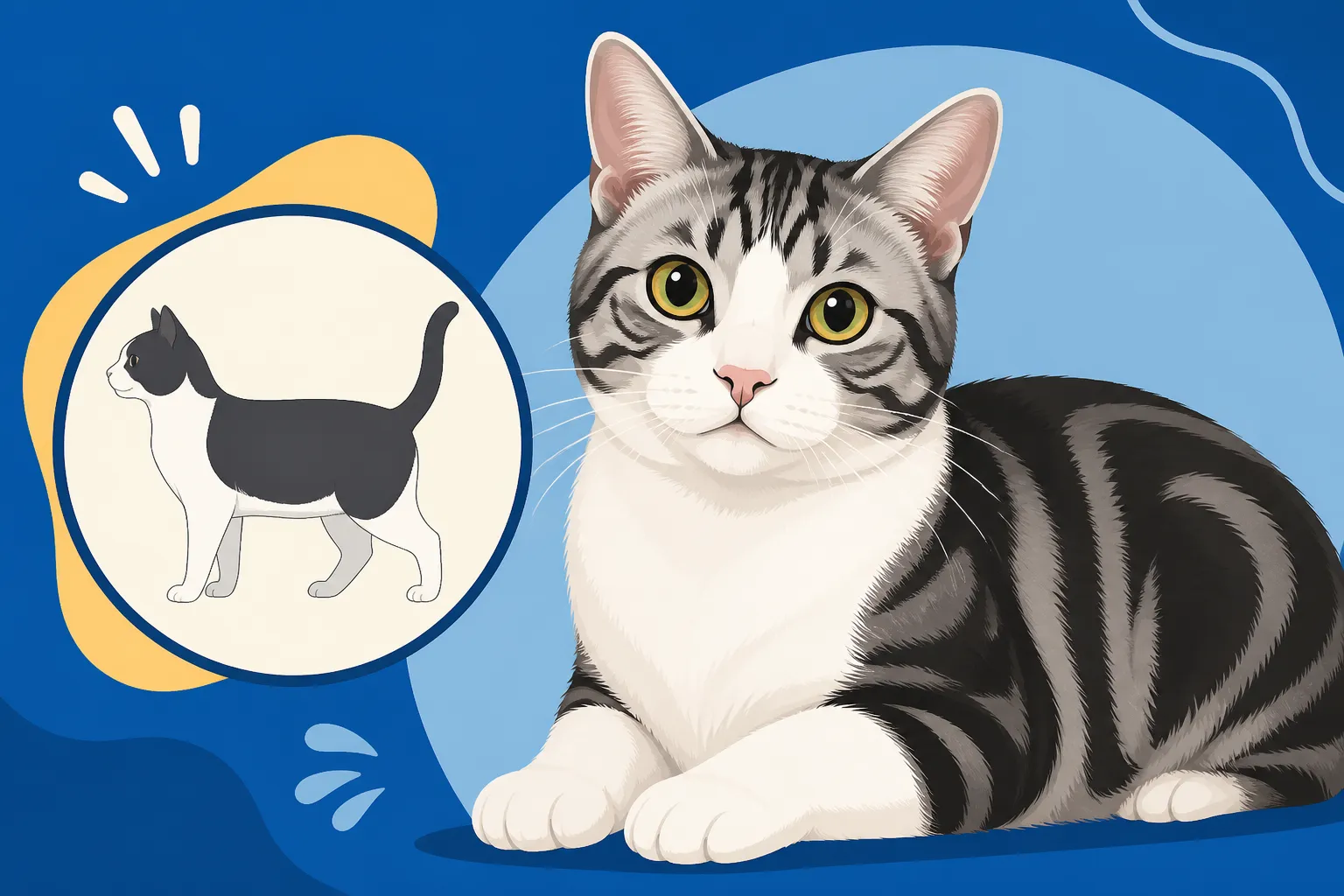
What a Bicolor American Shorthair Is
A cat with white paws, a white chest, and dark patches may look like a bicolor American Shorthair, but coat pattern alone cannot confirm breed. The key is to separate appearance from pedigree, understand what “bicolor” describes, and know which markings are ordinary variation rather than a health concern. This guide explains how to recognize the pattern and what it does—and does not—tell you.
What bicolor means on an American Shorthair
Bicolor describes the coat, not the breed
“Bicolor” generally means a cat has two visibly different coat colors, most commonly white combined with another color. On an American Shorthair, that might look like a dark saddle over the back with a white chest and feet, or larger colored patches against a mostly white coat. The exact distribution can vary from cat to cat.
The term describes appearance. It does not mean the cat belongs to a separate bicolor breed, and it does not tell you whether the cat has a pedigree. A domestic shorthair can have the same white-and-color pattern. If you are comparing coat colors more broadly, Which Colors an American Shorthair Comes In gives useful context about the breed’s range of recognized appearances.
It also helps to distinguish a bicolor pattern from a tabby pattern. “Tabby” refers to markings such as stripes, swirls, or spots, while “bicolor” describes the presence of white alongside another color. A cat may show tabby markings within its colored patches and still look bicolor overall.
How bicolor differs from calico, tuxedo, and van patterns
People often use coat-pattern names loosely, and different registries or breeders may describe particular combinations in slightly different ways. In everyday conversation, “tuxedo” usually means a dark coat with white on the chest, belly, or paws. It is a familiar visual label, not proof that the cat is a particular breed.
Calico cats have patches of three colors, typically white alongside orange and black or their diluted versions. That is different from a simple two-color pattern, although a calico’s white areas can make the coat look partly bicolor at a glance. A van pattern usually describes a mostly white cat with color concentrated around the head and tail. These labels describe the coat’s arrangement, not the cat’s ancestry.
For an American Shorthair, the breed standard matters when discussing show classification. A pattern that looks like a bicolor to a pet owner may be registered or judged under a more specific color-and-pattern category. Which Patterns an American Shorthair Comes In can help clarify the broader pattern vocabulary, while What an American Shorthair Standard Asks For explains why a show description may be more precise than everyday language.
| Coat description | What you may see | What it tells you |
|---|---|---|
| Bicolor | White plus one other coat color | A general description of a two-color appearance |
| Tuxedo | Often a dark coat with white chest, belly, or paws | A common informal pattern name |
| Calico | White plus patches of two other colors | A three-color appearance, not simply bicolor |
| Van pattern | Mostly white, with color concentrated in limited areas | A description of where color appears |
| Tabby | Stripes, swirls, or spots | A marking pattern that may occur within colored areas |
What a bicolor American Shorthair may look like
Common white-and-color arrangements
There is no single outline that every bicolor American Shorthair must follow. One cat may have a white bib and white “socks,” while another has a broad white blaze on the face or a large white patch across the underside. The colored portions may be black, red, blue, cream, or another accepted color, depending on the registry and classification involved.
The contrast can make a cat’s markings look especially crisp in photographs, but lighting and coat condition affect what you see. A blue coat, for example, is a diluted form of black and may appear gray. Red or cream patches can look lighter or warmer depending on the light. A kitten’s coat can also change in clarity as it matures, so a young cat’s markings may not look exactly the same later.
A useful way to describe what you see is to be specific: “white paws and bib with a black tabby back” tells someone more than simply saying “bicolor.” If you are learning the breed’s overall appearance, What an American Shorthair Looks Like by the Standard covers the body and coat together rather than treating color as the only clue.
Coat pattern does not prove American Shorthair ancestry
This is the part that can frustrate people who are trying to identify a cat from a photo. American Shorthairs can have a broad range of appearances, and many non-pedigreed domestic shorthairs share those same colors, patterns, and sturdy-looking features. A bicolor coat is not a visual certificate of breed.
A registered pedigree documents a cat’s lineage. A shelter or rescue may describe a cat as an “American Shorthair type” when the cat resembles the breed, but that wording is not the same as confirmed pedigree. Even a DNA test is not a substitute for registration records when the question is whether a cat is a registered American Shorthair. For a closer look at the distinction, read What a Domestic Shorthair Is Next to an American Shorthair and How to Tell an American Shorthair From a Random Bred Tabby.
If you are choosing a companion rather than evaluating show eligibility, the coat pattern may be the least important part of the decision. Temperament, health history, comfort with handling, and fit with your household are more useful considerations. A shelter cat with the same white-and-color pattern can be every bit as delightful as a pedigreed cat, even though its ancestry is different.
Bicolor markings and health questions
White patches do not automatically mean deafness
A common worry is whether a white coat or white markings mean a cat is deaf. The risk discussion is most relevant to cats that are predominantly or entirely white, particularly those with blue eyes. A bicolor cat with white paws, a chest patch, or a blaze is not automatically deaf because it has white markings.
If a kitten does not react to ordinary sounds, seems unusually startled when approached, or relies heavily on visual cues, ask a veterinarian to assess its hearing. Avoid trying to test hearing with loud noises close to the cat; that can frighten or harm it and is not a reliable home assessment. Whether a White American Shorthair Goes Deaf explains why coat color and eye color can prompt questions without making a diagnosis from appearance alone.
Eye color is another detail that can be misunderstood. A bicolor coat does not determine whether the cat will have green, gold, copper, or blue eyes. Eye color depends on factors beyond the visible white patches, and it is best considered separately from the coat pattern. See Which Eye Colors an American Shorthair Has for a broader overview.
Look at the whole cat, not one patch of color
White areas can make dirt, food residue, or small skin changes easier to notice. That does not mean the white fur itself needs special treatment. A quick, gentle check during regular handling is usually enough: look for irritation, scabs, unusual discharge, or a patch that seems to be thinning. If something looks sore or changes noticeably, contact a veterinarian rather than applying a human product or trying to clean an irritated area aggressively.
Some owners keep a soft brush or grooming glove nearby for brief coat checks. If you are shopping for basic cat supplies, Chewy is one option for browsing brushes and combs, alongside local pet shops and veterinary clinics. Choose a tool that suits the cat’s coat and temperament; a short, calm session is better than forcing a grooming routine because the coat happens to be white in places.
The same practical approach applies to cleaning. A cat that gets food on its chest may need a damp, soft cloth, but frequent bathing is not automatically necessary. If the coat is persistently dirty or the skin looks irritated, ask your veterinarian whether there is an underlying cause. For supplies, Chewy and neighborhood pet retailers carry cat-care basics, but the important part is choosing products made for cats and following professional advice when there is a skin problem.
How to identify and care for a bicolor cat
Use records and context when breed identity matters
If the question is whether a cat is officially an American Shorthair, start with its paperwork. Ask the breeder or previous owner for registration documents, pedigree information, and relevant health records. A responsible breeder should be willing to explain what the documents establish and what they do not. The breed standard describes the ideal type for evaluation, but a pet cat’s coat pattern by itself cannot establish lineage.
For a rescue, missing history is common and does not make the cat less worthy of a home. A rescue organization may have veterinary records, intake notes, or a best estimate of age and background, but it may not be able to confirm breed. The most useful questions are practical ones: Has the cat had a veterinary exam? Is it comfortable around children or other animals? Does it have any known hearing, skin, or grooming needs?
If you are preparing to bring a cat home, focus on essentials such as a secure carrier, appropriately sized litter box, scratching surfaces, and a calm space to settle in. Chewy is one place to compare routine supplies, while a veterinarian or shelter team can help you prioritize what is actually needed for that specific cat. A bicolor coat does not call for a special diet or a special grooming schedule.
Keep grooming simple and pay attention to change
Most shorthaired cats benefit from occasional brushing, especially when they shed more heavily. A few minutes with a gentle comb can remove loose hair and give you a chance to notice changes in the skin. If your cat dislikes brushing, start with brief sessions and stop before it becomes a struggle. Treats and a familiar resting spot can help make grooming feel less intrusive.
White fur may make certain stains more visible, but avoid using bleach, human shampoo, or household cleaning products on a cat. For a minor mess, use a soft cloth and water unless a veterinarian recommends something else. If the cat has recurring staining around the mouth, eyes, or body, or if you notice redness or hair loss, ask for veterinary guidance rather than assuming it is just a color-related issue.
Finally, judge the cat by its individual health and behavior, not by how closely its markings match a photograph or breed description. A well-cared-for pet can have an uneven blaze, a single white sock, or a large patch that does not resemble a show ideal. When you know what “bicolor” means—and what it cannot prove—you can appreciate the pattern without mistaking appearance for pedigree or diagnosis.
Disclaimer
This article is for general informational purposes only and does not constitute professional advice. Laws, prices and regulations vary by location and change over time. Consult a qualified professional for guidance on your specific situation.