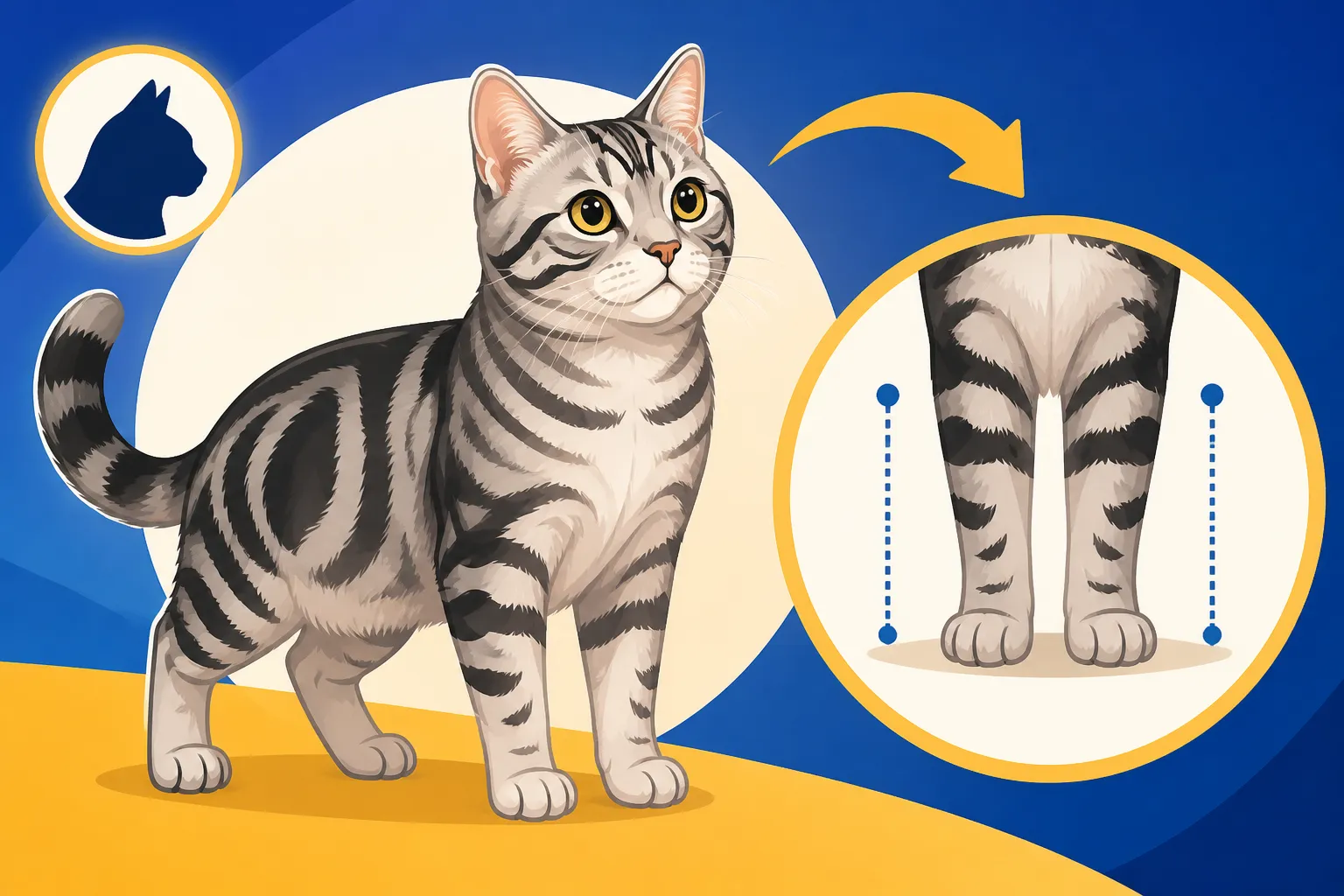
Why an American Shorthair’s Legs Are Medium Length
An American Shorthair’s legs are medium length because the breed is meant to look balanced, sturdy, and capable—not unusually low to the ground or long and fine-boned. That proportion supports its solid, muscular body. Here’s how to recognize the breed’s typical leg shape, tell normal variation from a possible concern, and make your home comfortable for your cat.
What medium-length legs mean in the American Shorthair
The leg length is about proportion, not a ruler measurement
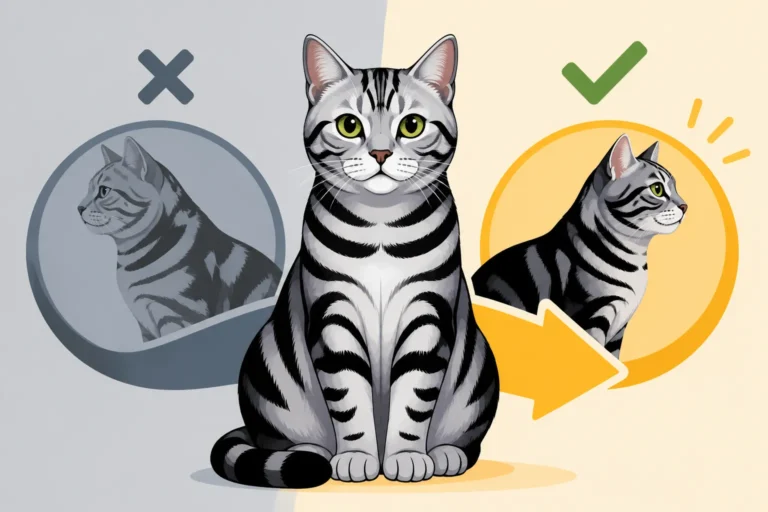
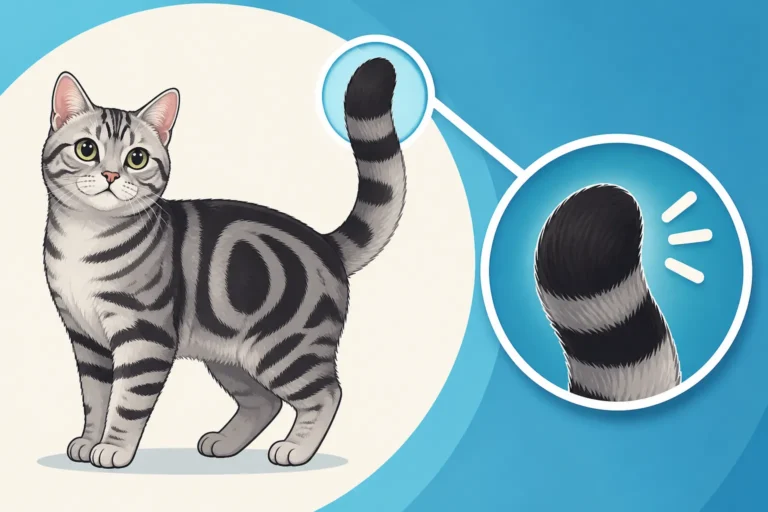
“Medium length” describes how the legs look in relation to the rest of the cat. An American Shorthair should not appear to have the short, low-set legs of a distinctly dwarf-bodied cat, nor the long, slender legs associated with a more fine-boned build. Its legs sit beneath a substantial body and help give the cat an overall balanced outline.
There is no single home measurement that determines whether an individual cat’s legs are correct. A cat’s posture, coat, age, and camera angle can all change how long its legs appear. A crouched cat may look short-legged; one standing tall on a firm surface may seem longer. Breed type is assessed from the whole cat rather than one feature in isolation.
The legs also need to be considered alongside the American Shorthair’s broad chest, muscular frame, and rounded paws. A balanced cat may look compact without actually having unusually short limbs. For a broader description of the breed’s proportions, see Why an American Shorthair Is Built Square.
A sturdy build is different from short legs
American Shorthairs are known for a substantial, athletic appearance. Their legs should look strong enough to support that body, with bone and muscle in keeping with the rest of their frame. The result is a cat that looks capable and grounded, not delicate or spindly.
That sturdiness can make it easy to misread the silhouette. A broad-bodied cat may seem lower to the ground than a slimmer cat of similar height, especially when viewed from the front or while it is sitting. But body width does not automatically mean the legs are too short. Look at the cat standing naturally, with its weight evenly placed, rather than judging from a curled-up nap or a dramatic photo.
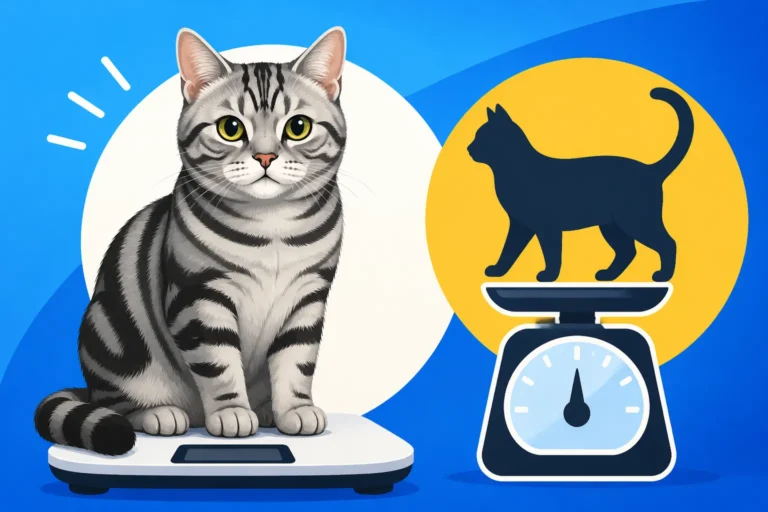
A cat’s weight matters, too. Extra body fat can blur the outline where the legs meet the body, making the limbs look shorter or less defined. That is different from the underlying bone structure. If you’re unsure whether your cat’s apparent compactness comes from its frame or weight, a veterinarian can assess body condition and mobility. How to Tell an American Shorthair's Stiffness From Middle Age also explores why changes in the way a cat moves deserve attention.
How the legs fit the breed standard
Breed descriptions focus on overall balance: the legs should be in proportion to the body, and the cat should look strong without appearing exaggerated. A well-proportioned American Shorthair is not defined by long legs, nor should it be selected for an extreme low-to-the-ground shape.
Judges and breeders assess a range of features together, including the body, head, coat, and general structure. A single characteristic rarely tells the whole story. If you want the wider context, What the American Shorthair Standard Asks For explains how the breed’s features are considered as a whole.
It’s also worth remembering that breed standards describe a target appearance, not a health diagnosis. A pet cat does not need to resemble a show winner to be healthy, and a difference in appearance does not automatically indicate a medical problem. Pedigree and registration are separate questions from whether a cat moves comfortably and uses all four legs normally.
How to recognize the typical leg shape
Look at the cat standing naturally
For a useful visual check, watch your cat stand on a level, non-slippery floor. Its legs should appear reasonably even in length and proportion, with the body supported comfortably rather than sagging close to the ground. Observe from the side and from the front, but avoid drawing conclusions from one snapshot: cats shift their weight and change posture constantly.
Notice whether your cat places weight on all four legs, walks smoothly, and gets up without hesitation. A healthy cat’s movement tells you more than whether its legs look exactly like a breed illustration. If your cat runs, turns, climbs, and settles as usual, a compact appearance alone is less concerning than a new change in movement.
Photos can be particularly misleading. A low camera angle may make legs look shorter, while a high angle can make the body seem broader. Long fur around the body, a curled tail, or a relaxed crouch can also change the outline. When comparing cats, try to compare similar ages and postures rather than relying on carefully posed show pictures.
Compare the whole outline, not only the legs
The American Shorthair’s legs are one part of a coordinated build. Consider the body length, chest, shoulders, paws, and overall muscle alongside the limbs. The cat should look substantial but balanced, with no single feature dominating its outline.
This can help when comparing an American Shorthair with another breed. A British Shorthair, for example, is also robust, and a casual glance may make the two breeds seem similar. Their standards and overall type differ, however, so leg length by itself is not a reliable way to identify either breed. See How an American Shorthair Differs From a British Shorthair for a fuller comparison.
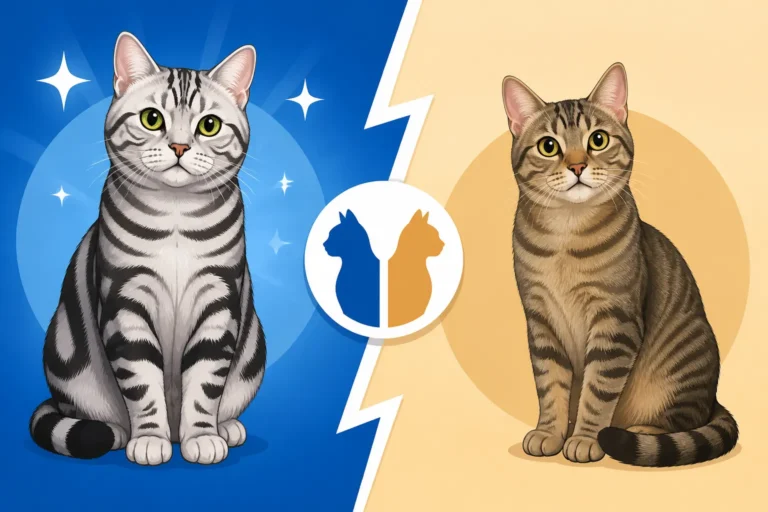
Likewise, comparing an American Shorthair with a domestic shorthair based only on its legs won’t establish whether it is a registered pedigree cat. Many mixed-breed cats have medium-length, sturdy-looking legs. Appearance can suggest a general type, but documentation and responsible identification matter when the question is pedigree. How to Tell an American Shorthair From a Random Bred Tabby covers that distinction.
Kittens and adults may look different
Kittens change quickly as they grow, and their bodies do not always develop in perfectly even-looking stages. A young cat may look leggy for a while, then appear more compact as the chest and body fill out. Individual growth patterns vary, so a kitten’s proportions should not be judged as if they were a finished adult.
American Shorthairs can also take time to develop their full, muscular appearance. As an adult gains body mass, the same legs may look less prominent than they did during a leaner stage. That does not necessarily mean the limbs have changed; the proportions around them have changed.
For a young cat, regular veterinary checkups are a sensible place to ask about growth, gait, and body condition. A vet can tell whether development appears appropriate and whether a particular concern needs follow-up. For more on the breed’s overall size and growth, read How Big an American Shorthair Gets.
When leg length or movement may signal a problem
Normal variation versus a change in gait
There is natural variation between individual cats. One American Shorthair may look a little more compact, another a little taller, while both move comfortably. A difference in appearance that has been present for years is not the same as a sudden change in how your cat walks or jumps.
Pay attention to changes such as limping, favoring one leg, stiffness after resting, reluctance to jump, or taking longer to stand. Cats often hide discomfort, so a subtle shift in routine can be more noticeable than an obvious cry of pain. If the issue is persistent, worsening, or accompanied by distress, contact a veterinarian rather than trying to diagnose the cause from appearance.
A sudden inability to use a leg, severe pain, or an injury after a fall or accident calls for prompt veterinary attention. Even if your cat seems calm, it may be hurting. Why a Limp in a Stoic American Shorthair Is Never Minor explains why a quiet response should not be treated as proof that everything is fine.
Weight, aging, and joint comfort
Because the breed has a solid frame, weight changes may be easy to overlook. Extra weight can make the body seem lower and put more strain on joints, which may affect how readily a cat climbs or jumps. A cat that once moved easily but now avoids familiar spots deserves a closer look, especially if the change is gradual.
In an older cat, reduced jumping can have several possible explanations, including discomfort, declining strength, or changes in vision. It is not simply an inevitable consequence of age. A veterinarian can assess movement and advise whether changes at home or treatment might help. For more on this specific behavior, see Why an American Shorthair Stops Jumping to the Counter.
At home, make everyday routes easier without assuming your cat needs to be carried everywhere. A stable step near a favorite chair or a lower resting spot may help an older cat reach preferred places. If you’re choosing a step, ramp, or other pet-accessory option, retailers such as Chewy can be one place to compare styles; focus on stability and a surface your cat can grip.
Supporting an American Shorthair’s legs at home
Choose stable places to climb and rest
Medium-length legs are not a reason to limit a healthy cat’s movement. American Shorthairs can enjoy climbing, jumping, and exploring, but household furniture should be stable and suitable for the individual cat. A sturdy cat tree with accessible platforms can offer exercise and a comfortable lookout; a very tall or wobbly structure may be a poor fit for a cat that is hesitant or aging.
Think about how your cat already moves through the room. If it jumps from the floor to a favorite window ledge in one go, that route may be fine for a fit adult. If it pauses, misjudges the landing, or starts choosing the sofa instead, add a lower intermediate surface rather than insisting on the old route. Chewy carries different types of cat furniture and steps, but the important features are secure footing, sensible spacing, and a setup your cat will actually use.
Keep floors and landing areas clear where possible. Slippery surfaces can make a confident jump feel less secure, while clutter can force awkward turns. These small adjustments are particularly useful for kittens learning their surroundings and older cats whose balance or confidence has changed.
Keep claws and body condition in mind
Claws that are too long can catch on fabric or affect comfortable footing. Check your cat’s paws routinely, and trim only the sharp tips if your cat tolerates it. If handling the paws is difficult, ask a veterinarian or qualified groomer to show you a safe approach. Chewy is another place owners may look for basic grooming supplies, but the right tool is the one you can use gently and confidently.
Body condition is just as important as limb proportions. A muscular cat can look broad without being overweight, so judging by appearance alone can be tricky. Ask your veterinarian to assess your cat’s body condition and recommend feeding adjustments if needed. Avoid putting a cat on a restrictive diet without professional guidance, especially if weight loss is sudden or appetite has changed.
Finally, keep an eye on movement as part of ordinary care. You do not need to measure your cat’s legs or compare it with every breed photograph. Notice what is normal for your individual cat: how it walks, how it climbs, and whether it continues to use its favorite places. When those patterns change, a veterinary check is more useful than guessing from the shape of the legs.
Disclaimer
This article is for general informational purposes only and does not constitute professional advice. Laws, prices and regulations vary by location and change over time. Consult a qualified professional for guidance on your specific situation.