Whether a Colorpoint American Shorthair Exists
A cat with a sturdy American Shorthair build, blue eyes, and darker ears, face, paws, and tail can look like a colorpoint American Shorthair. The tricky part is that resemblance does not establish breed or show eligibility. This guide explains what colorpoint means, whether the pattern is recognized in American Shorthairs, and how to investigate a cat’s identity without relying on appearance alone.
Does a colorpoint American Shorthair exist
The short answer for breed recognition
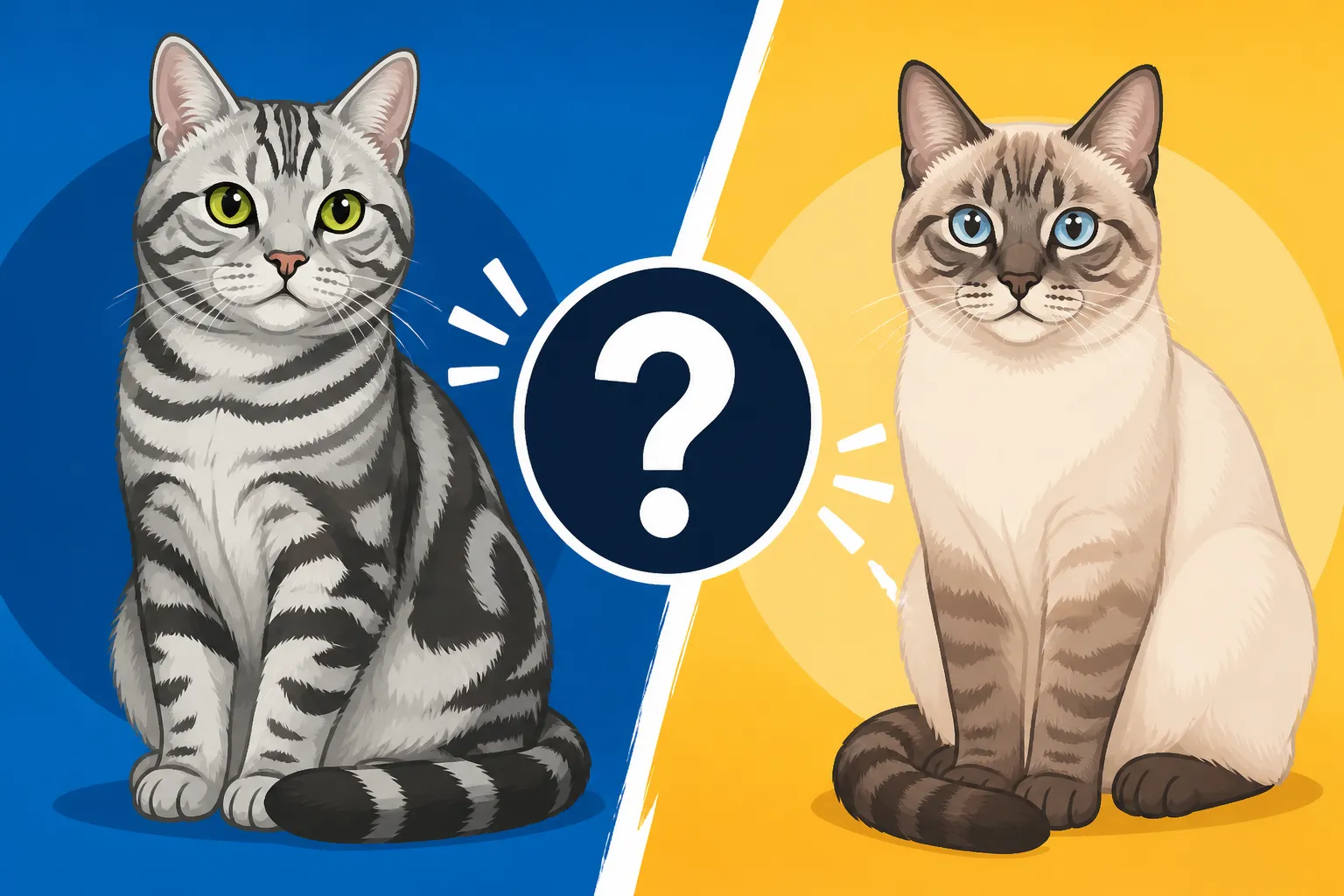
A colorpoint pattern is not a recognized American Shorthair show pattern. In the traditional colorpoint pattern, the cat has a lighter body and darker coloring on the face, ears, legs, and tail. The American Shorthair is recognized in many colors and patterns, but that does not mean every possible feline color pattern is accepted within its breed standard.
That distinction can be confusing because a cat may look very much like an American Shorthair in build and coat texture while having colorpoint markings. Breed identity is not determined by a single visual feature. A registered pedigree and the applicable registry’s rules are more meaningful than a broad head, a dense coat, or a round face.
So, if someone uses “colorpoint American Shorthair” to describe a cat, they may be describing its appearance rather than confirming that it is a pedigreed American Shorthair in a recognized color. The phrase may also be used casually for a mixed-breed cat with a stocky, shorthaired build and pointed markings.
For more on how breed type differs from a general resemblance, see How an American Shorthair Differs From a Domestic Shorthair and Whether a Domestic Shorthair Can Become an American Shorthair.
What makes a cat colorpoint
Colorpoint is a pattern caused by a temperature-sensitive pigment gene. Pigment develops more strongly in cooler parts of the body, which is why the face, ears, paws, and tail tend to be darker than the warmer torso. The eyes are often blue, though eye color alone does not prove that a cat is colorpoint.
Kittens can be born very pale and develop more visible points as they grow. Their coloring may also deepen with age or change with shifts in body temperature and coat condition. A young cat whose points are still subtle may therefore look different several months later. Conversely, dark markings on a face or paws do not automatically indicate the pointed pattern; ordinary tabby markings, white patches, and shaded coats can create visual confusion.
The pattern is inherited. A cat generally needs to receive the relevant colorpoint variant from both parents for the classic pointed appearance to show. That does not tell you which breeds are in a cat’s ancestry, however. The same pattern can occur in cats with different backgrounds, and a pointed coat by itself cannot establish that a cat is Siamese, American Shorthair, or any other breed.
Why a pointed cat can still look like an American Shorthair
American Shorthairs have a broad range of appearances. They are typically sturdy, muscular cats with a short, dense coat, but individual cats vary in head shape, body proportions, and size. Those traits overlap with plenty of non-pedigreed cats, especially domestic shorthairs. A stocky frame and short coat can make a pointed cat look plausible as an American Shorthair even when its pedigree is unknown.
The coat pattern is a separate question from body type. A cat could have the general build people associate with an American Shorthair and still be a domestic shorthair, a mix, or another breed. That is why visual identification can be frustrating: the cat in front of you may seem to fit the breed in several ways, while the distinctive markings do not fit the recognized standard.
A photo or informal description can help identify a likely coat pattern, but it cannot verify pedigree. If you are considering a kitten advertised as a colorpoint American Shorthair, ask what the seller means by that label. Are they describing the cat’s appearance, or claiming it is registered as a pedigreed American Shorthair? Those are different claims and should be supported differently.
Why colorpoint markings may appear in a cat called an American Shorthair
An unusual pattern does not rewrite breed standards
Breed standards describe which traits are accepted for a particular breed in a particular registry. They are not a complete list of every trait that can occur in cats with a related or uncertain ancestry. A pattern can exist in the wider cat population without being accepted for showing as an American Shorthair.
This is one reason a seller’s wording matters. “American Shorthair-type” can mean a cat resembles the breed. “American Shorthair” may be used as a casual label, or it may be a claim of registered pedigree. If the cat is being sold as a registered purebred, request the registration and pedigree documents and confirm the details with the relevant registry. Do not assume that a color description establishes registration status.
If your goal is to understand the accepted breed appearance, What the American Shorthair Standard Asks For and Which Colors an American Shorthair Comes In offer useful background. The standard helps explain why “a color that exists on a cat” and “a color accepted for the breed” are not interchangeable.
Crossbreeding and uncertain ancestry
A pointed kitten may result when both parents contribute the genetic variant associated with colorpoint markings. One possible explanation is that one or both parents have ancestry from a pointed breed or from domestic cats carrying the variant. But coat color cannot tell you exactly which explanation is true. Without reliable family records, guessing at the ancestry from a kitten’s markings is just that: a guess.
It is also possible for a cat to be described as a breed because of resemblance rather than documented lineage. This happens with many popular breeds, not only American Shorthairs. A shelter or previous owner may use the nearest familiar breed name to describe a cat’s build, while a breeder may use the same label to make a more formal claim. The right follow-up questions depend on who is making the claim and what documentation they can provide.
If you want to learn how historical breeding and outcrossing relate to modern American Shorthairs, see Which Breeds the American Shorthair Was Outcrossed To and Whether Outcrossing Is Still Allowed in the American Shorthair. A breed’s history can be complex, but historical outcrossing does not make every unusual coat pattern a currently recognized breed variety.
Pointed, tabby, and white markings are not the same thing
A pointed coat can be confused with other patterns, especially in photos where lighting makes the body appear lighter. A silver or pale tabby may have darker stripes and a lighter background, but the markings are distributed as tabby patterning rather than concentrated at the cooler body areas. A cat with white paws or a white muzzle may simply have white spotting; that is not the same as colorpoint.
Some cats combine patterns, which can make identification more difficult. For example, a pointed cat may also have tabby-like striping in its darker areas. People often call this lynx point. Even then, the presence of point markings does not settle the question of breed or registration. Eye color, coat pattern, and body shape should be considered as separate clues, not as a shortcut to pedigree.
When the distinction matters for a registration, breeding, or show question, a clear description and the cat’s paperwork are more useful than a quick online identification. A veterinarian can help describe the cat’s coat and health, but a veterinary exam is not a substitute for pedigree records.
How to check a colorpoint American Shorthair claim
Ask for records before relying on a label
If a breeder or seller says a pointed cat is a purebred American Shorthair, ask for the cat’s registration documents and pedigree. Check whether the papers identify the cat and its parents, and contact the registry if you need to confirm what the records mean. A pedigree documents reported lineage; it does not turn an unrecognized color into an accepted show pattern.
A seller should be able to explain whether “colorpoint” is simply a description of the kitten’s appearance or whether they are making a specific claim about its registered breed. If the answer is vague, changes during the conversation, or comes with pressure to decide quickly, pause and request clarification in writing. A responsible breeder should be comfortable discussing what their documents do and do not establish.
For more help evaluating paperwork and breeder claims, see Whether an American Shorthair Kitten Comes With Papers and Whether Papers Are the Only Difference an American Shorthair Has. These questions matter whether a kitten is pointed, tabby, or another color.
Use DNA tests carefully
A consumer DNA test may provide information about genetic traits or estimated breed ancestry, depending on the test. It should not be treated as a guaranteed way to certify that a cat is a registered American Shorthair. Breed estimates are not the same thing as registry paperwork, and a coat-color result does not independently prove pedigree.
If you are trying to understand why a cat has pointed markings, a DNA test may seem like an easy answer. But the practical value depends on the test and the question you are trying to answer. For example, knowing a cat carries a particular color variant is different from knowing its full ancestry, and neither necessarily determines whether a registry will accept the cat as an American Shorthair.
A cautious approach is to separate the questions: What pattern does the cat have? What does the pedigree document? What does the registry recognize? Each requires different evidence. Whether a DNA Test Tells an American Shorthair From a Moggy explains why a genetic report should not be mistaken for formal breed confirmation.
A quick comparison of the common claims
| What you see or hear | What it may tell you | What it does not prove |
|---|---|---|
| Dark ears, face, paws, and tail on a pale body | The cat may have a colorpoint pattern | That it is an American Shorthair |
| Blue eyes | The cat may have a trait often associated with colorpoint cats | A specific breed or pedigree |
| A stocky body and short, dense coat | The cat may resemble an American Shorthair | That it is registered as one |
| A seller’s breed label | How the seller describes the cat | That the label is supported by registry records |
| Pedigree or registration documents | Reported lineage and registration details | That every coat pattern is accepted for showing |
| A DNA report | Certain genetic or ancestry estimates, depending on the test | Official breed registration |
What to do if you already own a pointed cat
Focus on the cat, not the label
If your cat has colorpoint markings and you already love living with them, the label may not matter much for everyday companionship. Give the cat the same thoughtful care you would give any other cat: routine veterinary visits, suitable food, clean litter, play, and a safe environment. A pointed coat is not, by itself, a health problem or a reason to assume the cat needs special treatment.
If you are sorting out food or supplies, prioritize the cat’s age, body condition, preferences, and health needs rather than a guessed breed. A retailer such as Chewy may be one place owners look for everyday food, litter, or grooming supplies, but product choice should still fit the individual cat. If your cat has a medical condition or a specific diet, ask your veterinarian before changing foods.
The same goes for grooming. A short coat often needs less upkeep than a long one, but individual cats vary in shedding and tolerance for brushing. Chewy may also carry basic combs and brushes, though you do not need a breed-specific tool simply because someone has called your cat an American Shorthair. Start gently, watch how your cat responds, and keep grooming sessions comfortable.
If you plan to show or breed the cat
If your interest is showing, confirm eligibility with the registry and show organization before making plans. A cat that resembles an American Shorthair may not be eligible as one without the required registration, and a colorpoint pattern may not qualify under the breed’s accepted color rules. Ask the registry directly rather than relying on a seller’s interpretation or a social-media post.
Breeding requires even more care. Do not breed a cat based on appearance or on an unverified breed claim. Confirm pedigree, registration status, health screening, and the rules that apply to the breed and registry. A pointed kitten from two cats does not establish that the parents were both recognized American Shorthairs, and the pattern alone is not a responsible basis for making breeding decisions.
If you are choosing a companion rather than pursuing breed registration, it is perfectly reasonable to choose a cat for temperament, health, and fit with your home. Chewy can be a practical option for routine supplies once you know what your cat uses, but the important decision is matching care to the animal in front of you—not trying to make its coat prove a pedigree.
Disclaimer
This article is for general informational purposes only and does not constitute professional advice. Laws, prices and regulations vary by location and change over time. Consult a qualified professional for guidance on your specific situation.