What a Shaded Silver American Shorthair Is
A shaded silver American Shorthair has a pale, almost white undercoat with dark pigment concentrated toward the ends of its coat, creating a soft silver effect instead of the crisp stripes of a silver tabby. That subtle shading can be hard to identify in kitten photos, so this guide explains the pattern, how it differs from similar coats, and what to look for as a cat matures.
What a shaded silver American Shorthair looks like
The pale undercoat and dark tipping
The defining feature is the contrast between a light undercoat and darker-tipped hairs. Rather than showing clear, dark stripes or swirls across the body, the coat appears softly shaded, with darker pigment forming a veil over parts of the silver-white base. The face, back, sides, and tail may look more strongly shaded than the underside.
The amount and distribution of dark tipping can vary. One cat may look especially pale, while another has a more noticeable dark mantle across its back and flanks. Lighting matters too: a cat standing in bright daylight can look much lighter than the same cat photographed indoors.
“Silver” describes the pale ground color and the way pigment appears on the hair. It does not mean the cat’s coat is metallic or uniformly gray. Individual hairs can have several tones, and the overall impression comes from thousands of hairs working together.
A shaded coat is not a silver tabby
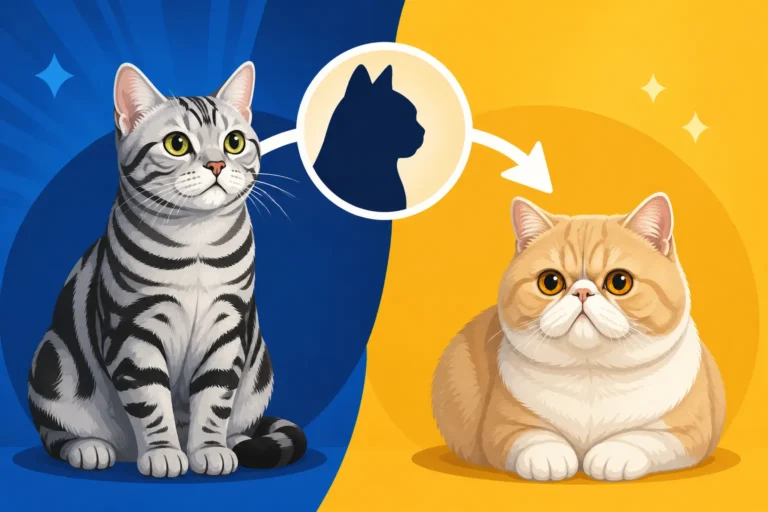
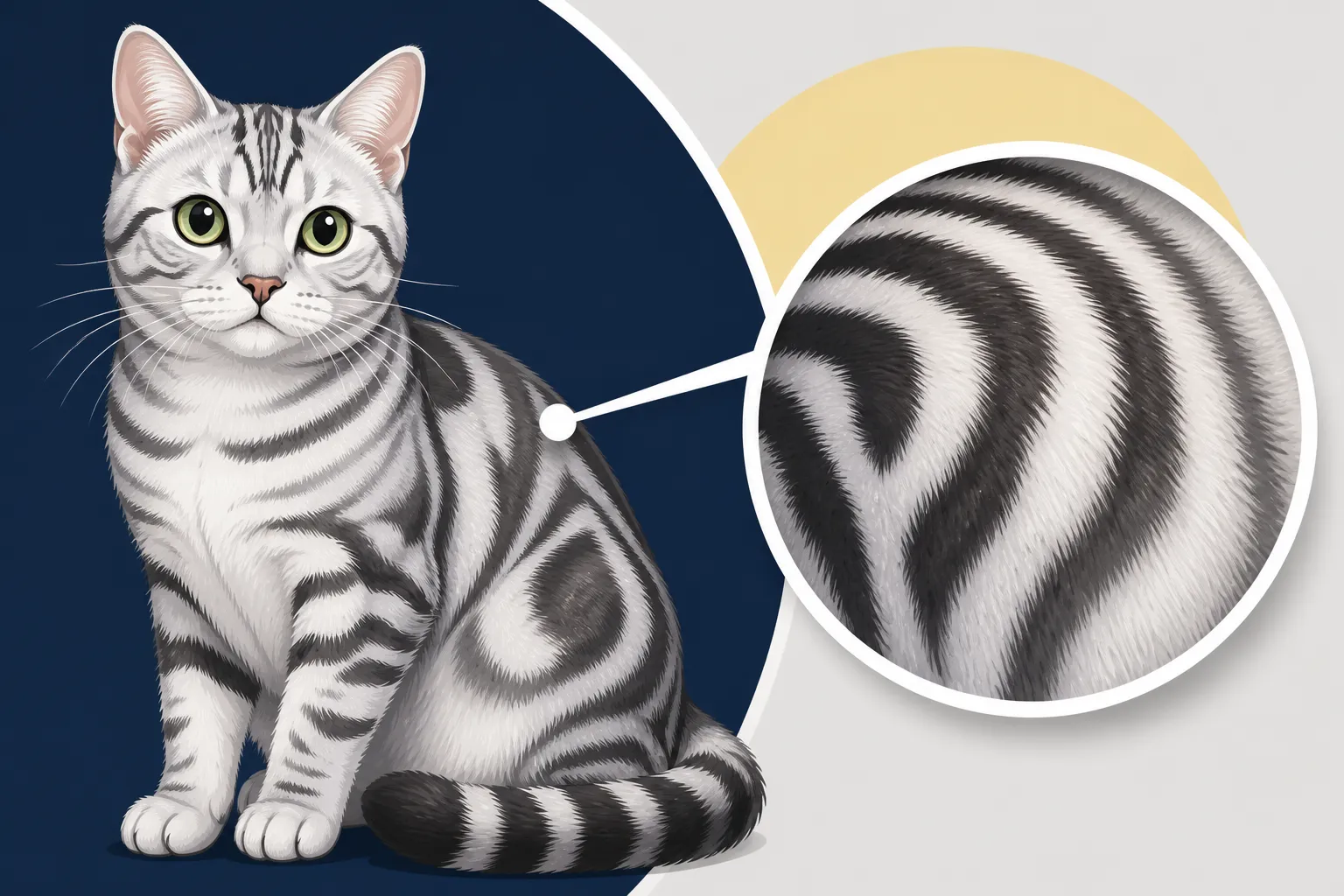
This is the distinction that causes the most confusion in photos. A silver tabby has visible pattern markings: stripes, swirls, or other defined tabby shapes against a pale background. A shaded silver has dark tipping distributed more diffusely, so the coat generally looks softly darkened rather than clearly marked.
| Coat type | What you are most likely to notice | Overall impression |
|---|---|---|
| Shaded silver | Dark-tipped hairs over a pale undercoat, with no strong body stripes | A soft, shaded silver appearance |
| Silver tabby | Clear stripes, swirls, or other tabby markings | A patterned coat with noticeable contrast |
| Silver smoke | Darker-looking coat that can reveal a pale base when parted or moved | A more solid-looking coat at rest |
| Chinchilla silver | Very light coat with dark pigment limited largely to hair tips | A particularly pale, sparkling-looking effect |
These are useful visual comparisons, not a substitute for a registry’s terminology or a breeder’s records. Coat appearance can be subtle, and a single photo may not show the hair bands or pattern clearly. For a closer look at the patterned comparison, see What a Silver Tabby American Shorthair Is.
Where it fits in the breed’s appearance
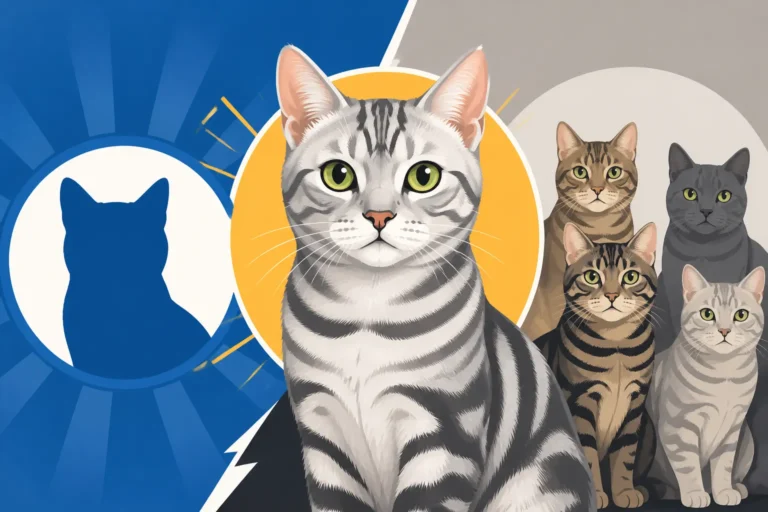
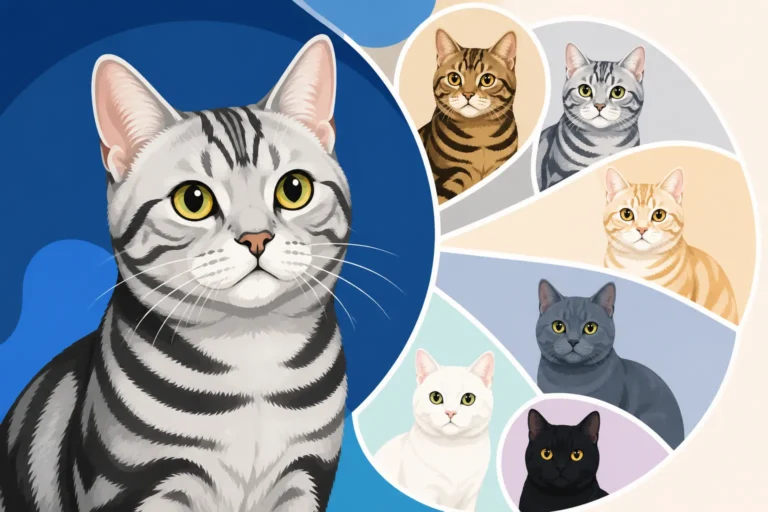
American Shorthairs come in many accepted colors and patterns, and silver is one of the shades people commonly associate with the breed. The familiar silver tabby is especially recognizable, but it is not the only silver coat the breed can have. To see how coat colors fit into the broader range, read Which Colors an American Shorthair Comes In.
A shaded silver American Shorthair should still have the breed’s characteristic overall build and features. The coat color alone does not make a cat an American Shorthair. Breed identity involves documented ancestry and breed type, not simply a silver coat or a resemblance to a picture. What an American Shorthair Looks Like by the Standard offers more context on the breed’s general appearance.
How to tell shaded silver from similar coats
Look at the whole pattern, not just one patch
Start by looking at the cat in natural light, then examine the back, sides, face, legs, and tail. A shaded coat usually creates a gradual darkening effect, with the undercoat contributing to a pale overall appearance. A tabby pattern, by contrast, tends to show clearer lines or swirls that remain visible across the body.
If you can safely do so, gently part the coat to see the hair near the skin. A pale base with darker tips supports the impression of a silver coat. Don’t rely on one small area, though: the coat may be denser or more heavily shaded in one place than another, and grooming or shedding can change what is visible.
Photos can also exaggerate contrast. A dark background, strong flash, or heavy editing may make pale fur look whiter and dark tipping look sharper. When evaluating a kitten or considering a cat from a breeder, ask for several unfiltered photos taken in different lighting, ideally including a view of the coat from the side and back.
Separate coat color from breed identity
A silver shaded domestic shorthair may resemble a silver shaded American Shorthair. That resemblance does not establish pedigree. A registered pedigree and reliable records are the relevant evidence when the question is whether a cat is a pedigreed American Shorthair; coat color is not a shortcut. For more on this distinction, see How to Tell a Pedigree American Shorthair From a Domestic Shorthair.
The same caution applies to breed comparisons. American Shorthairs and British Shorthairs can both have silver coats, but they are separate breeds with distinct standards and histories. A photo showing a round face or plush-looking coat may not be enough to tell them apart. How an American Shorthair Differs From a British Shorthair explains the broader differences.
If you are choosing a pet rather than assessing a show prospect, the practical question may be simpler: do you like the cat’s coat, temperament, and care needs? A particular silver pattern does not guarantee a particular personality, health profile, or level of sociability.
Be careful with labels in listings
Online listings sometimes use “shaded silver,” “silver shaded,” “silver tabby,” and “silver smoke” loosely or interchangeably. A seller’s label may describe their impression rather than a formal color classification. If exact color matters to you, ask how the cat is registered, what the breeder calls the color, and whether the paperwork uses the same description.
A responsible breeder should be comfortable explaining the difference between the cat’s appearance and its documented pedigree. They should also be willing to show clear photos and answer questions without pressuring you to decide based on a coat-color label alone. If the seller cannot explain the terminology, treat the label as an informal description until you have better documentation.
How the coat can change as a kitten grows
Why kitten photos can be misleading
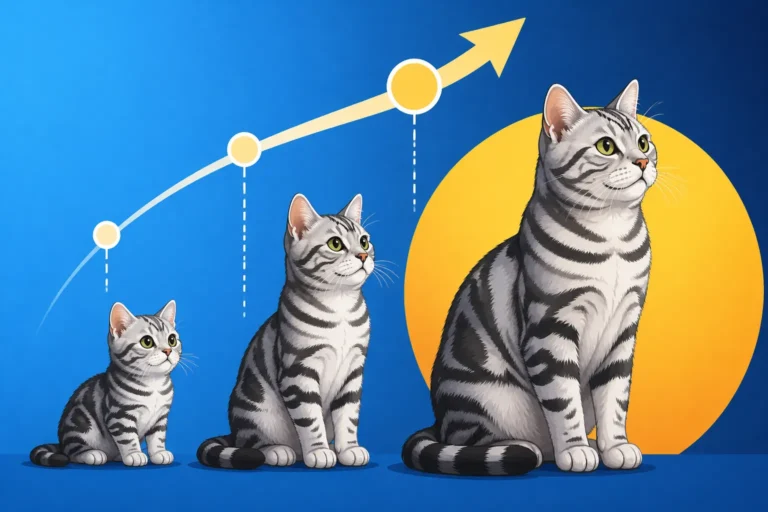
A kitten’s coat is still developing, so its adult shading may not be obvious at first. The overall color can become clearer as the kitten grows and its coat changes from the softer juvenile coat toward an adult coat. Dark tipping may become easier to see, or the balance between pale and dark areas may look different over time.
That does not mean every kitten’s pattern will transform dramatically. Some are recognizable early; others are simply difficult to judge from photographs. A breeder who knows the kitten’s parents and litter may be able to give a more informed description, but even then, a photo taken at one age cannot show exactly how the adult coat will look.
For a related explanation of coat development, read Whether a Tabby Pattern Sharpens as the Cat Matures. It focuses on tabby markings, but the general takeaway is useful: young cats’ coats can look different as they mature, so early appearance is not always the final picture.
Seasonal shedding can change the effect
American Shorthairs shed, and loose hair can make a coat look uneven or less polished for a while. Seasonal changes, indoor heating, and the cat’s individual coat can all affect how much hair you notice around the home. A shaded silver may appear especially different when the coat is shedding, because loose pale undercoat and darker-tipped hairs do not always come away in equal-looking amounts.
Regular, gentle brushing can help remove loose fur and give you a better view of the coat. A basic comb or brush is usually enough for routine home grooming. If you are comparing tools, Chewy is one place where cat owners can browse grooming options, but choose a tool suited to a short coat and your cat’s tolerance rather than buying a product simply because it is marketed for shedding.
Sun exposure and lighting can also influence how the coat appears in photographs. A sunny window can wash out pale areas, while shadows can deepen the appearance of the tipping. For more on color and sun exposure, see Whether Sun Bleaches an American Shorthair's Tabby.
Coat color does not tell you about health or temperament
A shaded silver pattern is a description of appearance, not a health guarantee. It does not tell you whether a cat has been screened for inherited conditions, whether it will be outgoing, or whether it will enjoy being handled. Those questions require separate conversations, records, and observations.
When adopting or buying, consider the cat in front of you: its behavior, living conditions, veterinary history, and the quality of the information being shared. A striking coat can attract attention, but it should not distract from basic welfare questions. Make sure the cat has had appropriate veterinary care and that you understand what support it may need after coming home.
Choosing and caring for a shaded silver American Shorthair
What to ask a breeder or rescue
If you are speaking with a breeder, ask them to explain how they identify the color and whether the description appears in the cat’s registration information. Ask to see the kitten’s parents, where possible, and request recent, natural-light photos. A breeder should distinguish confidently between a coat description and proof of breed ancestry.
For a rescue cat, the precise color label may be uncertain, and that is perfectly fine. Shelters and rescues often describe visible traits rather than make formal breed determinations. If you love the cat and its needs suit your household, a shade label may not matter much. You can still ask about health records, current diet, grooming habits, and any known sensitivities.
Avoid paying a premium solely because a listing calls a cat “shaded silver.” Color descriptions can be subjective, and the value of a companion is not measured by how closely its coat matches a show photograph. If a seller emphasizes color while being vague about records or care, slow down and ask more questions.
Everyday grooming and home care
The short coat is generally manageable with occasional brushing, especially when loose hair becomes more noticeable. Keep sessions brief and calm at first. If the cat dislikes a brush, try a softer tool or use a grooming glove, and stop before the interaction becomes a struggle. Chewy can be useful for browsing ordinary grooming supplies, but the best choice is the one your cat accepts and that removes loose hair without irritating the skin.
A shaded silver coat does not need special dye, whitening products, or frequent baths to keep its color attractive. Avoid using human grooming products. If the coat looks greasy, unusually dull, or patchy, or if the cat develops itching or skin changes, ask a veterinarian rather than trying to fix the appearance with repeated bathing.
It can also help to keep a few well-lit photos of your cat over time. That gives you a realistic record of normal coat variation through shedding seasons and makes a new patch, thinning area, or skin change easier to notice. If you are shopping for a simple comb or brush, Chewy offers a familiar place to compare basic pet-care options alongside local pet stores.
What matters more than the shade
A shaded silver coat can be beautiful, but it is only one small part of living with a cat. Look at the full picture: whether the cat’s temperament fits your home, whether you can meet its veterinary and enrichment needs, and whether the source provides clear, responsible information. Those factors matter far more to a successful match than whether the tipping looks darker on the back or lighter around the face.
The simplest identification rule is this: a shaded silver American Shorthair has a pale silver-white base with dark-tipped hairs that create a soft, diffuse shading effect, rather than the bold, clearly defined markings of a silver tabby. When the pattern is ambiguous, rely on careful observation and trustworthy records rather than a single photo or sales label.
Disclaimer
This article is for general informational purposes only and does not constitute professional advice. Laws, prices and regulations vary by location and change over time. Consult a qualified professional for guidance on your specific situation.