Which Silver Tabby American Shorthair Became a Grand Champion
The silver tabby is the American Shorthair’s best-known look, so it is easy to assume one famous cat made the pattern synonymous with the breed. The historical answer needs a qualification: Cosey is closely associated with early American cat-show fame, but calling her an American Shorthair Grand Champion is not well supported. Here’s what the record does—and does not—establish.
The silver tabby linked to early American cat shows
Cosey is the name most often connected with the story
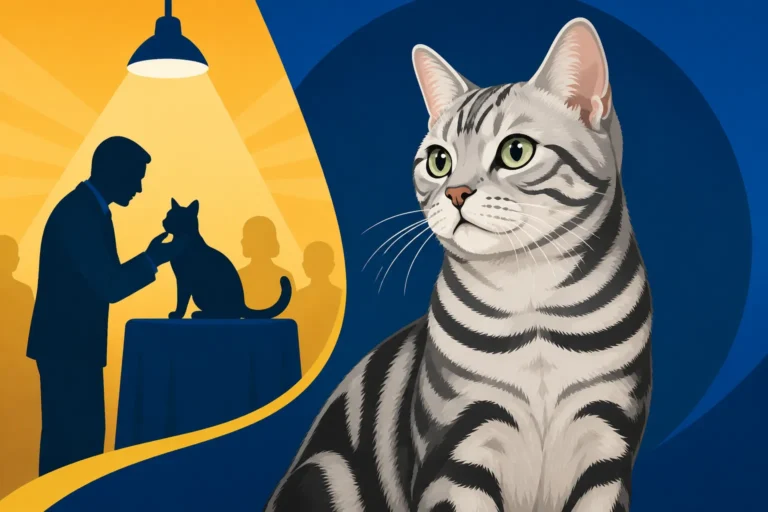
Cosey is often remembered as a celebrated silver tabby from the early days of organized cat shows in the United States. She is associated with the first major American cat show, held at Madison Square Garden in New York in 1895, and is commonly described as its Best in Show winner. That makes her a memorable figure in American cat-show history.
But a famous win and a formal Grand Champion title are not the same thing. Cosey competed before the American Shorthair had its modern breed identity and before today’s registry systems and title pathways were in place. The label “American Shorthair Grand Champion” should not be attached to her simply because she was a silver tabby and a major show winner.
The distinction matters because the breed name came later. For background, What the Breed Was Called Before American Shorthair explains why cats with the breed’s ancestry were once described by a more general name. Cosey belongs to the story of early American show cats; that does not automatically make her a registered American Shorthair by modern standards.
Why “Grand Champion” is a specific title
In contemporary cat shows, Grand Champion is a formal title earned under the rules of a registry. It is not just a descriptive phrase meaning “a very impressive champion.” A cat’s eligibility, competition classes, wins, and title progression depend on the registry and the show system involved.
That creates a historical problem when people try to apply the title backward. A cat may have been admired, awarded a major prize, or called a champion in newspaper coverage without having earned the later, technical title of Grand Champion. Those terms can sound interchangeable in casual retellings, but they describe different things.
So, if the question is asking for the silver tabby who became a Grand Champion in the strict modern sense, Cosey is not a safe answer. If it is asking which silver tabby became an icon of early American cat-show history, Cosey is the name most commonly associated with that story.
| Question | Careful answer |
|---|---|
| Which silver tabby is commonly linked with early American show fame? | Cosey |
| What is she remembered for? | Her association with the 1895 Madison Square Garden cat show and a Best in Show win |
| Is she securely documented as a modern American Shorthair Grand Champion? | That label is not well supported |
| Why does the distinction matter? | The modern breed identity and formal title systems came later |
Why Cosey is not automatically an American Shorthair Grand Champion
The breed name and show rules changed over time
The American Shorthair developed from cats that lived and worked in North America, but a breed’s history is not identical to the history of every cat that resembles it. Early shorthaired cats might share traits with the modern breed without having a documented pedigree or registration as an American Shorthair.
The breed’s formal recognition and naming also took shape over time. The story behind Why the American Shorthair Name Changed in 1966 helps explain why early cats may appear in records under older or broader labels. A show report from the nineteenth century cannot be read as if it were a modern pedigree certificate.
This is why historical descriptions need a little care. “Silver tabby,” “American-bred shorthair,” and “registered American Shorthair” do not mean exactly the same thing. One describes a coat pattern, one may describe a general type or origin, and one indicates formal recognition within a registry.
Show success does not prove breed registration
A cat can win a show without being a member of a formally recognized breed as we understand it today. Early cat shows included cats competing in categories that predated current breed divisions, and the language used in newspapers or later histories may not match registry terminology.
To establish a modern breed title, you would generally want a traceable record connecting the individual cat to a recognized registry, its registered breed, and the title it earned. A striking photograph or a description of a silver tabby coat cannot establish that chain on its own. Nor can the fact that the cat resembles the breed standard.
That distinction is useful beyond Cosey. The modern American Shorthair standard describes a sturdy, balanced cat, but appearance alone is not proof of pedigree. What the American Shorthair Standard Asks For looks at the breed’s expected features, while Whether Papers Are the Only Difference an American Shorthair Has explores why documentation matters alongside looks.
How the silver tabby became the breed’s public face
A recognizable coat pattern made the breed easy to remember
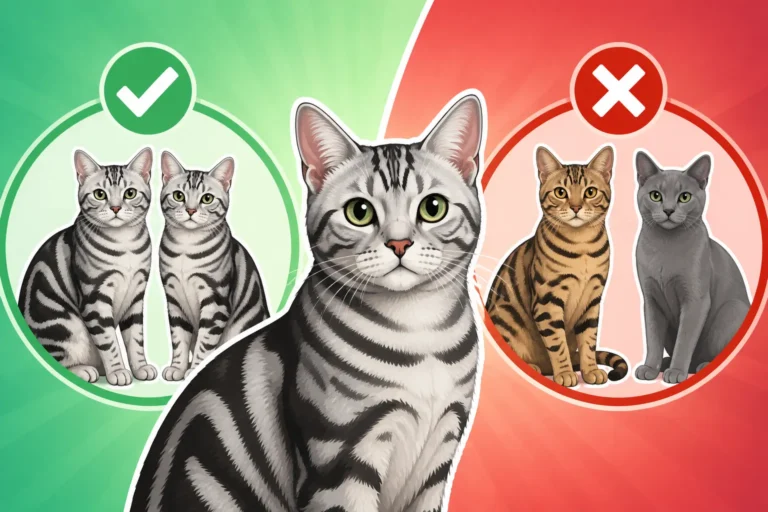
Silver tabby coloring is visually distinctive: a pale, silvery ground color contrasts with darker markings, often forming the familiar classic tabby swirls or stripes. That high contrast photographs well and makes the pattern easy for people to recognize. Over time, it became strongly associated with the American Shorthair in public imagination.
A recognizable pattern can help a breed become familiar, but it does not mean every American Shorthair is a silver tabby. The breed comes in a range of accepted colors and patterns. The history of the famous pattern is covered in The Silver Tabby That Made the American Shorthair Famous, while Which Patterns an American Shorthair Comes In gives a broader view of the breed’s variety.
The silver tabby’s popularity also makes it easy for an individual cat to become a symbol. A memorable show appearance, a well-known photograph, and a distinctive coat can all help a cat stand out. Those factors explain why a silver tabby may be central to breed storytelling without proving that the cat held a particular registry title.
Breed recognition is broader than one celebrated cat
A breed is shaped over generations, through breeding choices, written standards, and recognition by cat registries. One cat can influence public interest or become a familiar example, but a breed’s identity is not created by a single show win. The American Shorthair’s story includes working cats, selective breeding, and the gradual development of a defined show breed.
That wider history is important when considering Cosey. Her place in early show history is meaningful even if the modern Grand Champion label does not fit. In fact, separating what is documented from what is repeated in shorthand makes the story more interesting: she represents a moment when American cat showing was developing, before present-day breed categories and titles were fully established.
For a wider view of that development, The American Shorthair Was One of the CFA's Five Founding Breeds describes the breed’s place in organized cat fancy, and How an American Shorthair Differs From a Domestic Shorthair explains why a familiar shorthair appearance alone does not settle breed identity.
How to assess claims about a historic champion
Look for the exact title and the registry
When a source calls a cat a champion or Grand Champion, check whether it names the registry and provides a record of the title. A precise title is usually tied to a specific show system. If a retelling gives only a name and a colorful description, it may be using “champion” informally rather than documenting a formal award.
It is also worth checking the date. If the cat lived before the breed name, standard, or title structure was established, ask how the label is being applied. Later writers sometimes use a modern breed name to help readers understand an earlier type of cat. That can be convenient, but it is not the same as proving that the cat was registered under that breed.
Finally, distinguish a show award from a lasting title. “Best in Show” describes a result at a particular event. “Grand Champion” is a title earned through a registry’s rules. A cat might have one, the other, both, or neither, depending on the record.
Treat repeated claims with a little healthy skepticism
A detail can appear on many websites because sites have copied the same short account from one another. Repetition alone does not turn a claim into a verified pedigree or title record. When the detail matters, look for a contemporaneous show account, registry documentation, or a reputable breed-history source that explains its evidence.
This does not mean Cosey’s importance depends on a Grand Champion label. Her connection with a landmark early show is already a compelling part of American cat-show history. The more accurate phrasing is that Cosey is remembered as a celebrated silver tabby associated with the 1895 Madison Square Garden show, not that she was definitively a modern American Shorthair Grand Champion.
The short answer: Cosey is the silver tabby most often connected with early American show fame, but the claim that she became an American Shorthair Grand Champion is not established by the historical distinction alone. Her story belongs to the roots of American cat showing; the formal modern title should be used only when registry records support it.
Disclaimer
This article is for general informational purposes only and does not constitute professional advice. Laws, prices and regulations vary by location and change over time. Consult a qualified professional for guidance on your specific situation.