Whether the American Shorthair’s Old Name Is Still Used
People still call American Shorthairs “Domestic Shorthairs,” especially when discussing older cat records, shelter cats, or the breed’s working-cat past. That overlap is confusing, but the names do not mean the same thing today. This guide explains when the old name appears, why it changed, and how to tell a registered American Shorthair from a domestic shorthair cat.
Why the American Shorthair Had a Different Name
The old name described a broad kind of cat
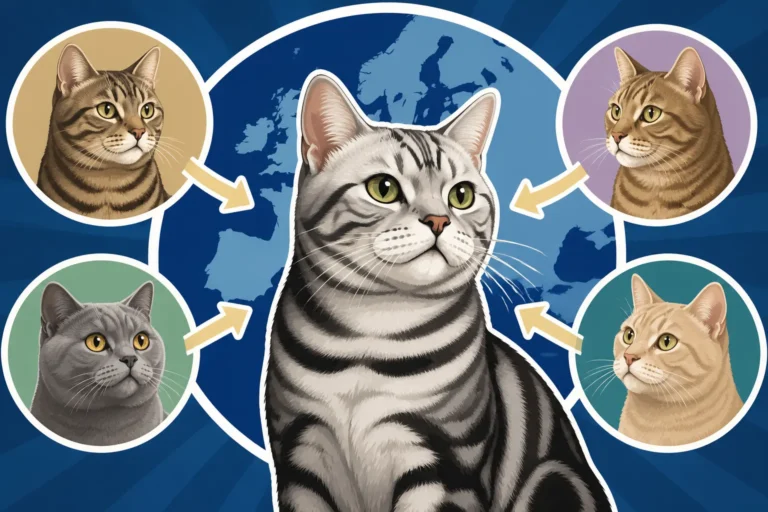
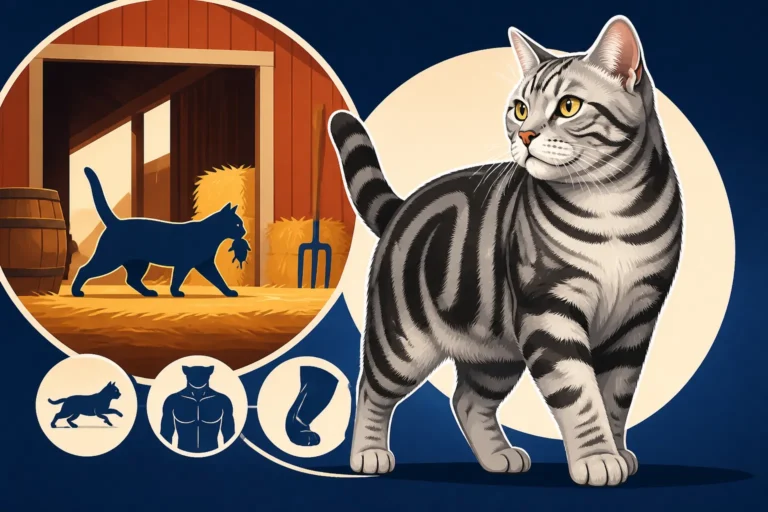
Before “American Shorthair” became the breed’s name, cats in the developing breed were known as Domestic Shorthairs. The label made sense for cats that were short-coated and lived in American homes, farms, and working environments. They were valued for practical qualities, including sound health and an ability to catch rodents, rather than for belonging to a narrowly defined pedigree breed.
But “Domestic Shorthair” was also a very broad description. It could refer to many short-haired cats without a documented family history, as well as to cats being selectively bred toward a recognizable standard. That made the label difficult to use when breeders and cat registries wanted to distinguish a particular pedigree population from the much larger group of mixed-breed cats. For more on the earlier terminology, see What the Breed Was Called Before American Shorthair.
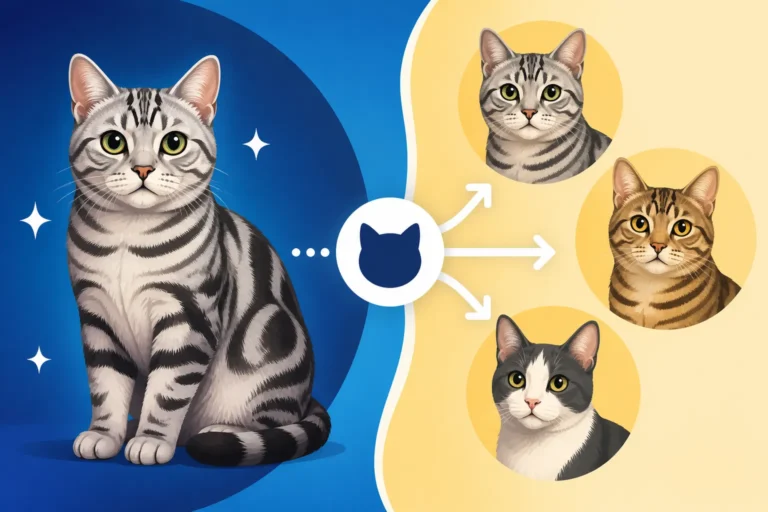
In everyday speech, the ambiguity remains. Someone might call a short-haired shelter cat a domestic shorthair because its ancestry is unknown. In a historical account, the same phrase might refer to the cats from which the recognized American Shorthair breed developed. The context matters: one use describes a general type of cat, while the other belongs to the breed’s history.
Why the name changed
The name changed to make the pedigree breed easier to distinguish from ordinary domestic cats. “American Shorthair” gave the recognized breed a specific identity tied to its development in the United States. It was not simply a cosmetic edit: a distinct name helped communicate that breeders were working with cats selected to meet a standard, rather than applying a breed label to every short-haired cat in the country.
That distinction was important because many registered breeds have names that refer to a lineage, a standard, or a particular breeding program. A coat description alone cannot establish that a cat belongs to one of them. A short coat is common across countless cats, just as a tabby pattern can appear in cats with very different ancestry. The name change is covered in more detail in Why the American Shorthair Name Changed in 1966.
The new name did not mean that the older working cats suddenly became a different kind of animal. It gave the recognized breed a clearer label as organized breeding and registration developed. For a closer look at what did and did not change, read Whether the Rename Changed the American Shorthair Itself.
Is “Domestic Shorthair” Still Used Today
Yes, but usually as a general description
“Domestic Shorthair” is still widely used, especially for cats whose pedigree is unknown or whose ancestry is mixed. It is generally a descriptive category, not a breed name equivalent to American Shorthair. A shelter may use it to describe a short-haired cat without verified breed papers, while a veterinary record may use similar wording to note coat type or general appearance.
That does not mean the cat is somehow less special. Domestic shorthairs can have every imaginable personality, build, and coat pattern. The term simply avoids claiming a specific pedigree when no reliable documentation supports one. In contrast, “American Shorthair” refers to a recognized breed with a defined standard and documented lineage.
The difference is easy to miss when browsing online. Retail and pet-care websites, including Chewy, may discuss cats using familiar breed or coat terms. Those terms can help readers find general care information, but they should not be treated as proof of a particular cat’s ancestry. If you are trying to identify a cat, look for registration and pedigree documentation rather than relying on a label in a general article or product search.
“Domestic Shorthair” can also appear in older records
Older documents can use the term in a way that feels inconsistent with modern usage. A historic cat-show reference, breed account, or family record may call an early American Shorthair a Domestic Shorthair because that was the name used at the time. That does not automatically mean the writer was describing a modern mixed-breed cat.
When reading an old source, check the date and what the document is discussing. Is it referring to a particular registered breed, a cat-show class, or simply a short-haired household cat? Those details help make sense of the label. The phrase’s historical meaning is explored in Whether an American Shorthair's Old Name Is Still Used.
| Where you see the term | Likely meaning | What it does not establish |
|---|---|---|
| A modern shelter listing | A short-haired cat with unknown or mixed ancestry | That the cat is a registered American Shorthair |
| A modern veterinary record | A general description of coat type or cat type | A verified pedigree |
| A historical breed account | The older name used for the developing breed | That the writer means a modern mixed-breed cat |
| A breeder’s documentation | A term that needs clarification in context | Registration unless supported by official papers |
For example, a short-haired silver tabby at a shelter may look remarkably like an American Shorthair. That resemblance can be real, but appearance alone cannot tell you whether the cat has a documented American Shorthair pedigree. A general breed guide on Chewy or another pet-care site can explain common traits, but a guide cannot replace records tracing a particular cat’s ancestry.
American Shorthair Versus Domestic Shorthair
Appearance is a clue, not proof
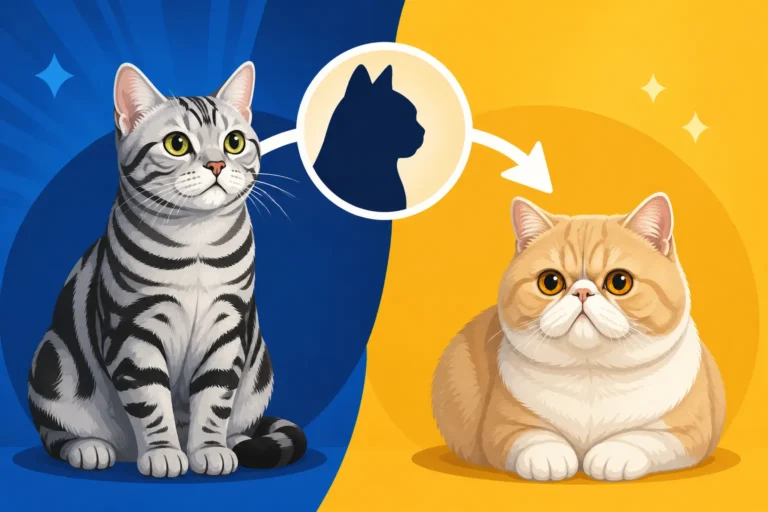
American Shorthairs are often described as sturdy, balanced cats with a strong body, a broad chest, and a rounded head. Their coat can come in many colors and patterns, including the familiar silver tabby. A domestic shorthair may have a similar build, color, and expression. Since both labels include short-haired cats, there is no single visual shortcut that reliably separates every American Shorthair from every mixed-breed cat.
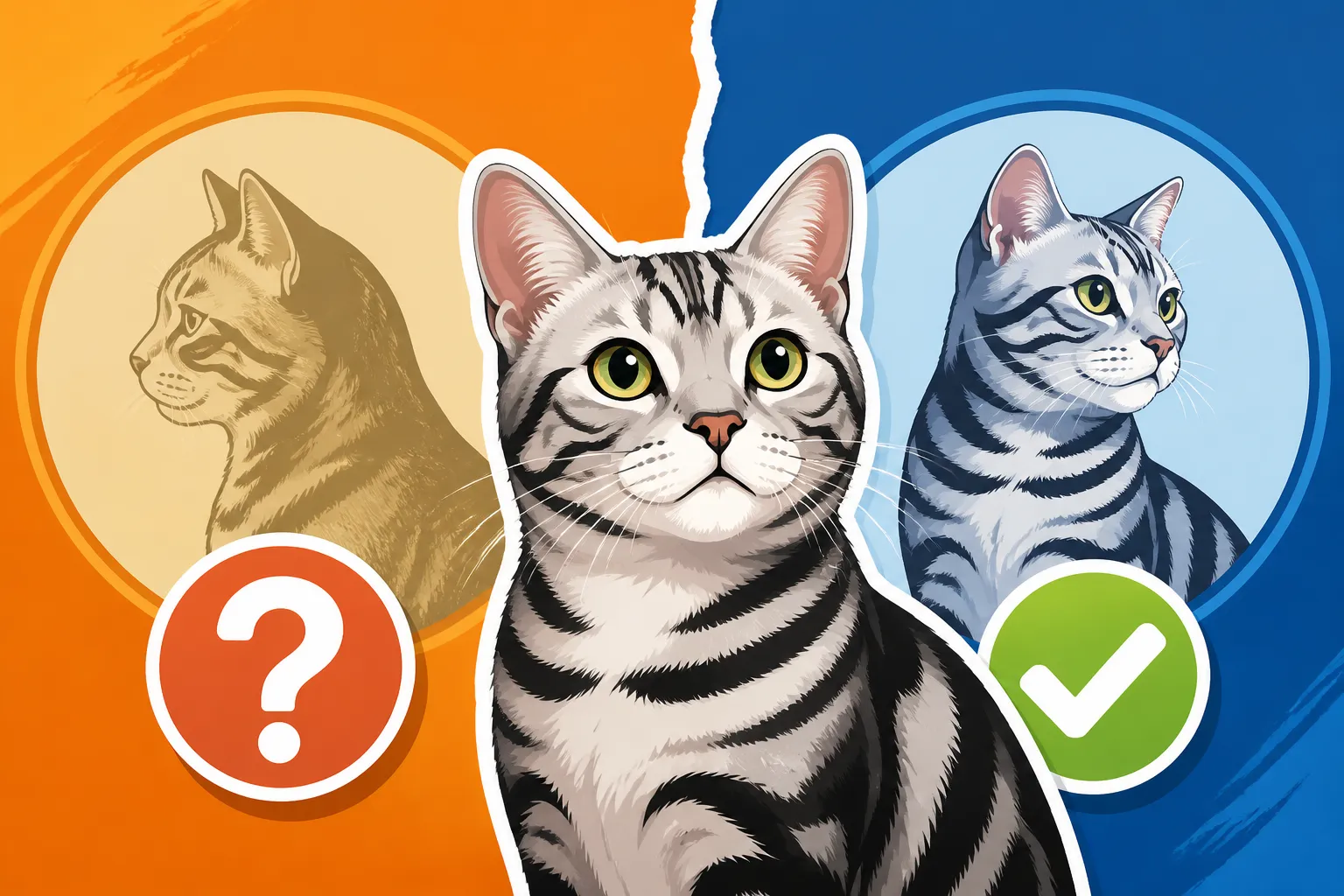
A photo can show resemblance, not lineage. Even an experienced cat person may be unable to identify a cat’s pedigree from looks alone. A domestic shorthair can naturally develop traits that seem very close to a breed standard, while an American Shorthair may not look like the popular mental picture people have of the breed. For a fuller comparison, see What a Domestic Shorthair Is Next to an American Shorthair and How to Tell an American Shorthair From a Random Bred Tabby.
This is why phrases such as “looks like an American Shorthair” are more careful than declaring that an unregistered cat is one. The cat may share physical traits with the breed, and it may make a wonderful companion, but a resemblance does not establish a registered identity.
Pedigree records answer a different question
A pedigree traces a cat’s recorded ancestry, while a visual assessment describes its appearance. Registration documents and a pedigree from a recognized registry can support a claim that a cat is an American Shorthair. The specific paperwork and registration details may vary, so a buyer should ask the breeder what the documents show and confirm that they relate to the kitten being offered.
A DNA test is not a simple substitute for a pedigree. Genetic tests can answer particular questions about traits or health risks, depending on the test, but they do not necessarily verify that a cat belongs to a registered breed. When the question is pedigree, documented lineage is the relevant evidence. For further context, read Whether Papers Are the Only Difference an American Shorthair Has.
This distinction also helps prevent awkward conversations with sellers. If someone advertises a cat as an American Shorthair but cannot explain its registration or provide ancestry records, ask what they mean by the breed label. They may be describing appearance, using the older terminology loosely, or making a claim they cannot document. It is reasonable to ask for clarity before treating the label as confirmed.
How to Interpret the Name in Everyday Situations
If you are looking at a shelter cat
A shelter’s “Domestic Shorthair” label is usually a practical description, not a judgment about the cat’s looks or value. Shelter staff often need a clear way to record coat length and likely general type when a cat’s history is unavailable. Unless reliable pedigree records come with the cat, the safest assumption is that the label describes a short-haired cat of unknown or mixed ancestry.
You can still describe a shelter cat as American Shorthair-like if its appearance reminds you of the breed. Just keep the distinction between resemblance and confirmed pedigree in mind. A silver tabby with a sturdy build does not become a registered American Shorthair solely because the description seems to fit.
It is also worth being cautious with online listings that use breed names as searchable tags. A pet retailer such as Chewy can be useful for general information about care supplies or common breed traits, but shopping or browsing pages do not verify the background of an individual cat. When adoption paperwork uses a broad category, ask the shelter whether any history or registration records are available.
If you are considering buying from a breeder
Ask the breeder to explain how they use the breed name and what documentation they provide. A responsible conversation should cover registration, the kitten’s recorded parentage, health history, and the terms of sale. The point is not to demand elaborate paperwork for its own sake; it is to understand what the breeder is actually promising when they call a kitten an American Shorthair.
Be alert if “Domestic Shorthair” and “American Shorthair” are used interchangeably without explanation. The terms have a historical connection, but that does not make them interchangeable in modern breed identification. A breeder should be able to distinguish a cat’s appearance from its documented pedigree and explain what their records support.
If you are comparing care advice, the name distinction may matter less than the individual cat’s age, health, activity, and needs. General resources from Chewy and other pet-care publishers can help you explore routine topics, but your veterinarian is the right person to advise on your own cat’s health. For breed-registration questions, focus on the breeder’s records and the relevant registry rather than assumptions based on coat pattern or body shape.
Disclaimer
This article is for general informational purposes only and does not constitute professional advice. Laws, prices and regulations vary by location and change over time. Consult a qualified professional for guidance on your specific situation.