Why American Shorthair Breeders Dropped the Old Name
The old name “Domestic Shorthair” made it difficult to tell a recognized, pedigreed breed from the many shorthaired cats found in homes and shelters. Breeders adopted “American Shorthair” to give a distinct breed a clearer identity, not to claim that every American tabby belonged to it. Here’s what changed, what didn’t, and how to understand the name today.
What the old name meant
“Domestic Shorthair” once described a pedigreed breed
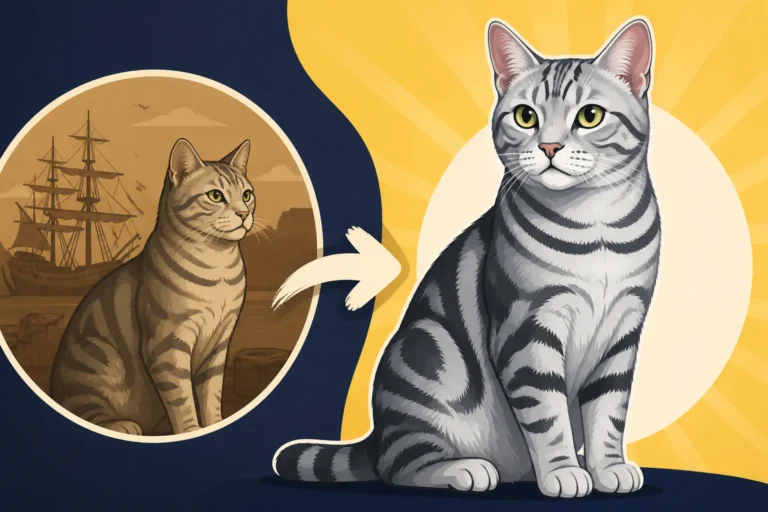
Before the name American Shorthair took hold, the breed was known as the Domestic Shorthair. That wording can sound like a general description of any shorthaired house cat, and today it often is used that way. But in the breed’s earlier show history, it referred to a defined group of cats being selected and bred to a standard.
Those cats descended from the sturdy shorthaired cats that lived and worked alongside people in North America. Their practical build and varied appearances reflected generations of life as household and farm cats. As organized cat breeding developed, breeders began to preserve and present particular traits in the show ring. The old name therefore referred to a breed with a developing identity, even though its everyday wording overlapped with a much broader category of cats.
That overlap created a real communication problem. Someone hearing “Domestic Shorthair” might reasonably think it simply meant a shorthaired pet cat rather than a registered breed. The history of the label is explored further in What the Breed Was Called Before American Shorthair.
The phrase still has a broader everyday meaning
Today, “domestic shorthair” is commonly used for a shorthaired cat whose ancestry is mixed, unknown, or not documented as belonging to a recognized pedigree breed. It’s a useful description, but it doesn’t identify one specific breed with a consistent, documented lineage.
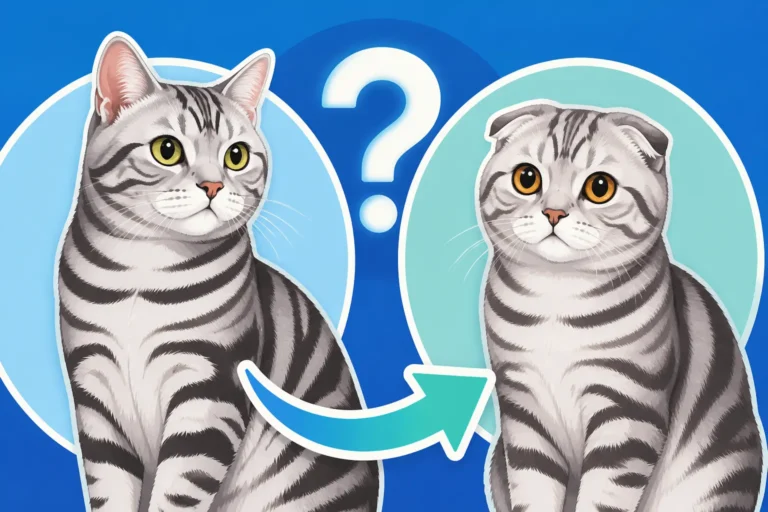
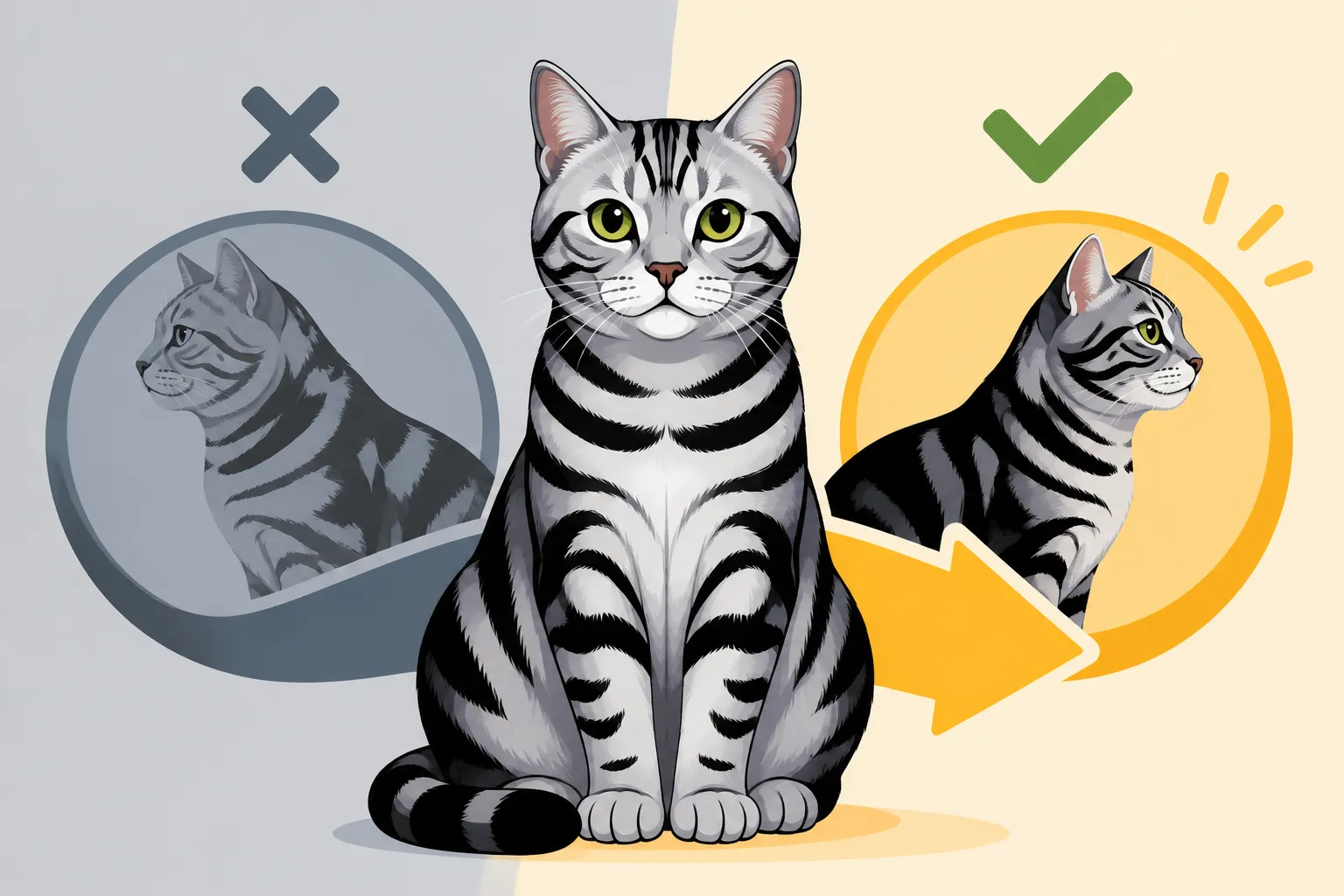
That difference matters when someone sees a shorthaired tabby with a broad face, sturdy body, or silver coat and assumes it must be an American Shorthair. Those features can appear in cats with no verified American Shorthair ancestry. Appearance can suggest a resemblance; it cannot establish a pedigree.
This is why What a Domestic Shorthair Is Next to an American Shorthair is more than a vocabulary question. The two labels can describe cats that look remarkably alike, but they communicate different things about documented ancestry and breed status.
Why breeders chose the name American Shorthair
The new name made the breed easier to distinguish
The change to American Shorthair gave the breed a more specific name. “American” linked it to its development in North America, while “Shorthair” described its coat type. Most importantly, the full name sounded like a distinct breed rather than a general description of a household cat.
A clearer name helps in everyday conversations, too. A breeder can say “American Shorthair” and refer to a cat from a documented breeding program. A shelter worker can say “domestic shorthair” when a cat’s ancestry is unknown. That distinction doesn’t make one cat more deserving of a home than the other; it simply keeps the labels from implying the same thing.
The name change is commonly associated with 1966. For the context behind that date and the motivations involved, see Why the American Shorthair Name Changed in 1966. It’s worth remembering that changing the label did not turn every cat with a familiar look into a registered American Shorthair.
A distinct name helped separate breed identity from appearance
The breed name also helped set a boundary between two ideas: a cat that looks like the traditional North American shorthaired type, and a cat whose ancestry can be traced through a breed registry. That boundary is especially useful because the breed’s appearance is not extreme or unusual. A sound, muscular, shorthaired cat can look like the sort of companion many people have seen in neighborhoods and shelters.
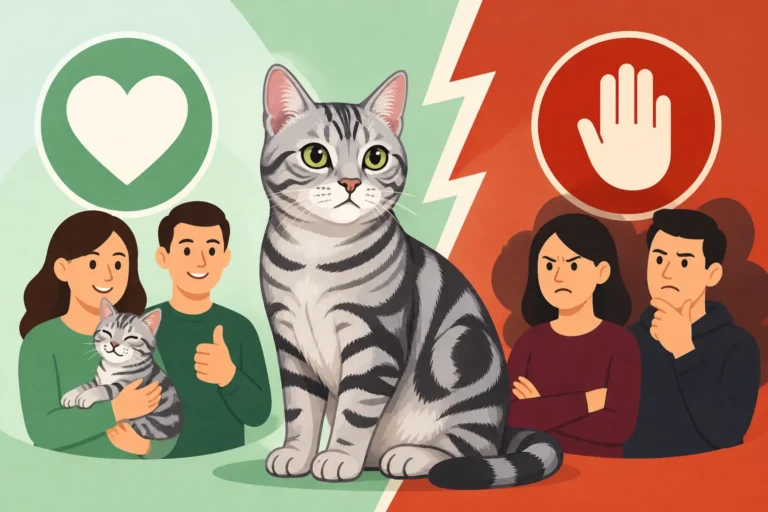
That resemblance can lead to confusion in both directions. A person may assume a pedigreed American Shorthair is “just a tabby,” overlooking its documented lineage. Or someone may call a shelter tabby an American Shorthair based only on its coat pattern and build. Neither conclusion follows from looks alone.
The name was a way to make the breed’s identity clearer—not a claim that the breed had a completely separate origin from ordinary cats. The distinction between documented breed and general appearance is also central to How to Tell an American Shorthair From a Random Bred Tabby.
What the rename changed—and what it did not
The label changed, not the cat overnight
A name change does not instantly alter a breed’s physical traits, temperament, or ancestry. The cats did not become different animals because breeders started calling them American Shorthairs. The new name made the breed easier to identify and discuss, while selection and breeding continued to shape the cats over time.
The breed’s characteristic sturdy build and short coat did not suddenly appear in the year of the rename. Those traits reflect a longer history. At the same time, a registered breed is not frozen in place: breeders select cats according to a standard, and the type can develop gradually across generations. The important point is that this is a separate process from changing what the breed is called.
For a closer look at what remained consistent, read Whether the Rename Changed the American Shorthair Itself. It helps separate the historical act of renaming from the longer story of how breeders developed a recognizable type.
A name alone does not prove pedigree
A cat’s breed status depends on more than a label in a listing, a particular coat color, or a resemblance to a breed standard. Pedigree records and registration information are what support a claim that a cat comes from a documented American Shorthair line. Without that evidence, it may be more accurate to describe a cat as a domestic shorthair or as resembling an American Shorthair.
That can feel disappointing for someone who has adopted a cat they believe looks exactly like the breed. But the distinction isn’t a judgment about the cat’s quality, health, or personality. A shelter cat can be an affectionate, handsome, robust companion without having a verified pedigree. The label is about ancestry, not worth.
Likewise, papers are useful evidence, but buyers should understand what those documents show and check that they correspond to the kitten and its parents. Whether Papers Are the Only Difference an American Shorthair Has explores the role of paperwork alongside the other clues people may consider.
| Question | American Shorthair | Domestic shorthair |
|---|---|---|
| What does the label describe? | A recognized breed with documented lineage | A shorthaired cat without confirmed membership in a specific pedigree breed |
| Does a familiar coat pattern prove the label? | No; appearance alone does not establish ancestry | No; tabby patterns and sturdy builds are common across many cats |
| What evidence helps confirm breed status? | Reliable pedigree and registration records | Usually no breed pedigree is available |
| Does one label mean the cat is a better pet? | No | No |
How to use the names when choosing or caring for a cat
Check records rather than relying on a photo
If you’re considering a kitten advertised as an American Shorthair, ask the breeder what registration and pedigree documents are available. Ask how the kitten’s identity is connected to its parents and what records will be provided. A careful breeder should be able to explain the documentation clearly rather than relying on phrases such as “looks purebred” or “has the classic face.”
It’s also reasonable to ask about the breeder’s approach to raising kittens and to meet the cats in person when possible. A photo can show coat color and general appearance, but it cannot verify lineage or tell you everything about the kitten’s health and early care. For more background on how the breed became established, see Who Started Breeding the American Shorthair to a Standard.
If you’re adopting, the shelter may not know a cat’s ancestry—and that’s normal. Treat a breed label in an adoption description as a tentative visual comparison unless the shelter has reliable records. The cat’s observed behavior, veterinary assessment, and fit with your home are usually more useful for making an adoption decision than guessing at its pedigree.
Let the cat’s needs guide your care
For day-to-day care, a cat does not need to be a registered American Shorthair to benefit from appropriate food, play, grooming, and veterinary attention. If you’re unsure of a cat’s background, start with its individual needs and ask a veterinarian about its health, body condition, and care plan. Breed history may offer context, but it should not replace observing the cat in front of you.
The uncertainty about a cat’s label also doesn’t need to complicate getting ready at home. A carrier, litter box, scratching surface, and food suited to the cat’s age and health are useful whether the cat is pedigreed or not. Some owners find it convenient to shop for everyday supplies through retailers such as Chewy, but supplies don’t verify a breed, and product labels cannot substitute for pedigree records.
If an adoption listing or casual conversation calls a cat an “American Shorthair,” it’s fine to ask what that means in that particular context. The speaker may mean a registered breed, a cat that resembles the breed, or simply a shorthaired domestic cat. A calm clarification prevents a terminology mix-up from becoming an assumption about the cat’s ancestry.
Keep the distinction in perspective
The name American Shorthair exists to identify a particular breed, not to make ordinary shorthaired cats less special. A pedigree describes documented ancestry; it does not guarantee that a cat will have a particular personality, be free of health problems, or suit every household. Likewise, “domestic shorthair” is not a sign that a cat is inferior or that its history is uninteresting.
The old name was confusing because it sounded like a broad description while also being used for a defined breed. Breeders adopted American Shorthair to make that identity clearer. Knowing the difference helps prospective owners ask better questions, read listings more carefully, and appreciate both pedigreed cats and the many mixed-ancestry cats who share their homes.
For a wider look at common misunderstandings around the breed, What People Get Wrong About the American Shorthair is a helpful next read. The practical takeaway is simple: use American Shorthair for a documented breed, use domestic shorthair for a general description when ancestry is unknown, and let the individual cat—not the label—shape your expectations.
Disclaimer
This article is for general informational purposes only and does not constitute professional advice. Laws, prices and regulations vary by location and change over time. Consult a qualified professional for guidance on your specific situation.