How to Move an American Shorthair Onto Adult Food
That moment arrives for every American Shorthair kitten owner: you’ve watched your little furball grow from a clumsy bundle of energy into a sturdy, confident young cat. But with that growth comes the big question – when and how do you transition them from their specialized kitten food to a more appropriate adult formula? It’s a common source of confusion, especially with a breed known for its robust build and sometimes longer maturation, and this guide is here to walk you through every step, ensuring a smooth and healthy dietary shift for your beloved American Shorthair.
Understanding Your American Shorthair's Unique Growth Needs
It's tempting to think all kittens are the same, or that a "kitten phase" is just a few quick months, but with an American Shorthair, you're dealing with a breed that truly takes its time to develop. These cats, with their heritage as working mousers, are built for strength and endurance, not a rapid, delicate growth spurt. This means their nutritional journey is a bit different from many other cat breeds you might encounter.
Why American Shorthairs Mature Differently
Unlike some of the more dainty or faster-maturing breeds, the American Shorthair is designed for a solid, muscular build. Think about their history on farms and ships; they needed to be sturdy and strong, and that takes time to develop. This isn't a race to full size; it's a marathon of building dense bone and powerful muscle. Because of this, many American Shorthairs stay on kitten food longer than you might expect. It's not uncommon for them to continue thriving on kitten formula until they are 10-12 months old, and for larger males, sometimes even up to 18 months, as they slowly fill out and reach their true adult proportions. This extended period on calorie- and nutrient-dense kitten food is actually beneficial, supporting the foundational development of their impressive physique. Trying to rush this process can mean missing out on optimal muscle and bone development, which is so crucial for a healthy, active American Shorthair throughout its long life. You really want to support that natural growth curve. For more on their development, you might find When an American Shorthair Reaches Full Size interesting.
The Nutritional Demands of Growing American Shorthairs
Kitten food isn't just a smaller version of adult food; it's a powerhouse of concentrated nutrition specifically formulated for rapid growth and high energy needs. Young American Shorthairs, with their constant play and continuous development, require significantly more calories, protein, and essential fatty acids than their adult counterparts. These nutrients are absolutely vital for building strong bones, developing healthy muscles, and fueling their boundless energy. High-quality kitten foods are typically richer in protein to support muscle development, contain higher levels of healthy fats for energy and brain development, and include a boosted vitamin and mineral profile to ensure every part of their body grows properly. Without this specialized diet, a growing American Shorthair could miss out on crucial building blocks, potentially impacting their adult health and vitality. This is particularly important for a breed that needs to fill out its distinctive "square" body frame. If you're wondering about the initial stages of feeding, What an American Shorthair Kitten Should Eat offers helpful insights.
Recognizing the Signs Your American Shorthair is Ready for Adult Food
Knowing when to make the switch is just as important as how to do it. Your American Shorthair won't send you an engraved invitation, but they will offer plenty of subtle clues that they're ready to graduate from kitten chow. Paying close attention to both their physical development and their behavior will help you make the best decision for their continued health.
Age and Physical Maturity
The most common guideline for transitioning a cat to adult food is around one year of age. However, for an American Shorthair, this can sometimes be a bit flexible, leaning towards the later end of the spectrum or even a few months beyond for certain individuals. You'll notice they're no longer growing taller or longer at the rapid pace they once were. Instead, they’ll start to "fill out," gaining muscle mass and developing that characteristic stocky, powerful build. Run your hands over their body – you should feel solid muscle and bone, with a thin layer of fat, but no longer the gangly, all-limbs feel of a younger kitten. A good indicator is when their shoulder blades and hips are less prominent, and they have a more rounded, sturdy appearance. This filling out process can continue up to 18 months, especially in larger males. It's vital to ensure they've reached their near-adult size and density before reducing their caloric intake by switching foods. Don't worry about being too late, but definitely be cautious about being too early. For precise body condition assessment, How to Score a Square Built American Shorthair's Body Condition can be a great resource.
Behavioral Cues to Watch For
Beyond the physical, your American Shorthair will also exhibit behavioral changes that signal their readiness for adult food. That frenetic, non-stop kitten energy might start to mellow ever so slightly. While they'll still be playful and active, you might notice they're not quite as constantly 'on' as they were at peak kittenhood. They might spend more time napping, observing, or simply lounging contentedly. Another key cue can be a slight decrease in their ravenous appetite. While they might still enjoy their meals, that desperate, "I haven't eaten in a decade!" intensity can wane. If they start leaving a few kibbles in the bowl or seem less insistent about meal times, it could be a sign their high-growth calorie demands are leveling off. Keep an eye on their litter box habits, too. Consistently firm, well-formed stools are a good indicator of digestive health. Any sudden changes could mean they're not quite ready, or that the current food isn't agreeing with them. These subtle shifts, when combined with their physical development, paint a clear picture of their readiness. How Much an American Shorthair Sleeps can give you an idea of their typical adult rest patterns.
The Gentle Art of Transitioning Food
Once you’ve determined your American Shorthair is ready, the actual transition needs to be a slow, deliberate process. Imagine someone suddenly changing your entire diet overnight – your stomach wouldn't be too happy, right? Cats are no different, and their digestive systems are particularly sensitive to abrupt changes. Rushing the process is a surefire way to upset their stomach, leading to diarrhea, vomiting, or a complete refusal of the new food. Patience is truly a virtue here.
The Slow and Steady Approach
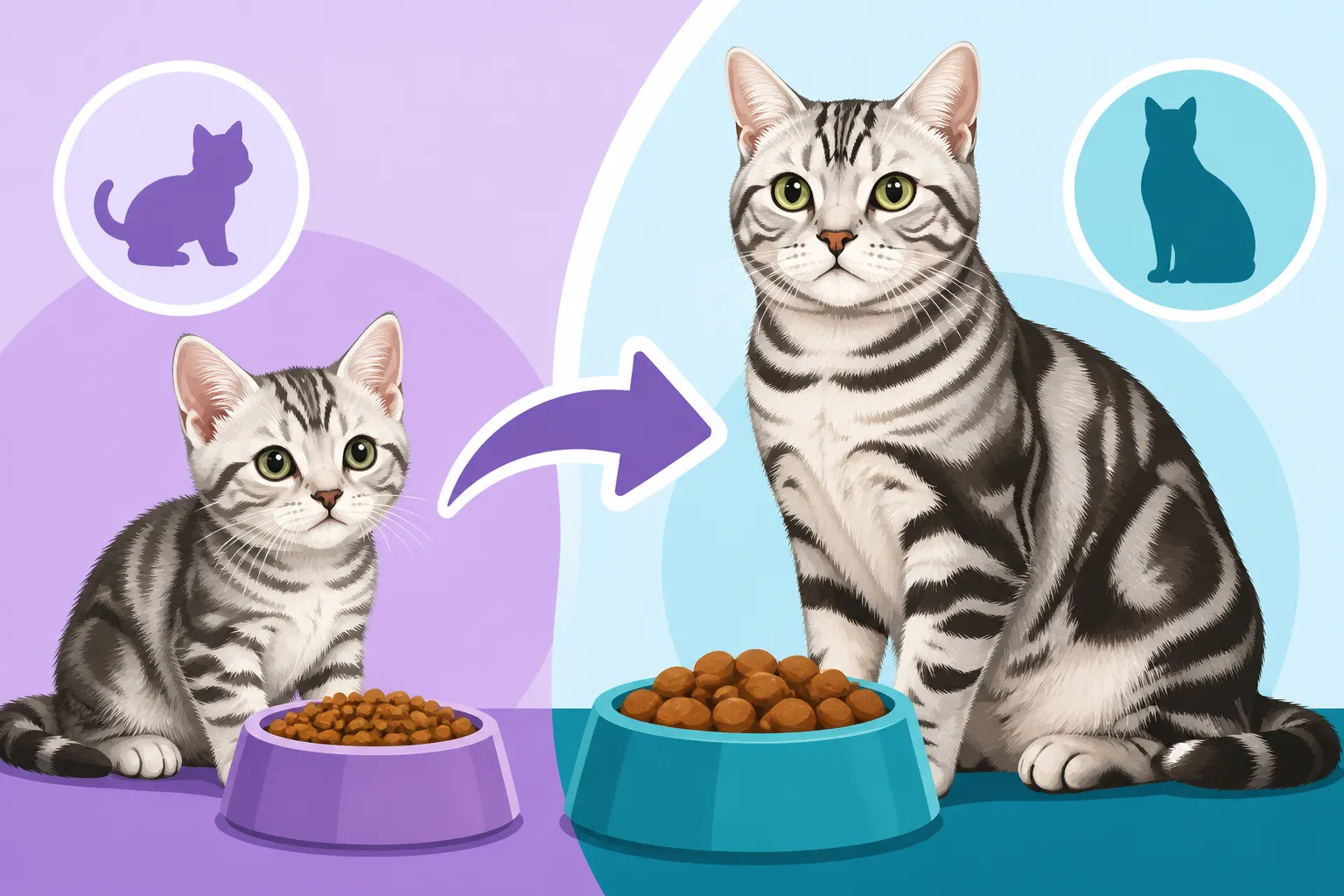
The golden rule for food transitions is gradual introduction. Over a period of 7-10 days, you’ll slowly mix increasing amounts of the new adult food with decreasing amounts of their old kitten food. This gives their digestive system ample time to adjust to the new ingredients, textures, and nutrient profile. Start very slowly; a sudden shift can lead to an unhappy cat and a messier home.
Here's a typical schedule, but always be prepared to extend it if your cat shows any signs of upset:
| Day | Kitten Food Percentage | Adult Food Percentage | Notes |
|---|---|---|---|
| 1-2 | 75% | 25% | Introduce a small amount of the new food. Monitor for any digestive upset or disinterest. |
| 3-4 | 50% | 50% | Increase the new food. Pay close attention to stool consistency. |
| 5-6 | 25% | 75% | The majority is now adult food. Watch for continued acceptance and normal energy levels. |
| 7-10 | 0% | 100% | Full transition. Continue to observe for a few more days to ensure stability. |
If at any point your American Shorthair experiences diarrhea, vomiting, or a loss of appetite, simply hold at the current ratio for an extra day or two until things settle, or even dial back to the previous successful ratio before trying to advance again. Some cats are more sensitive than others, and there’s no prize for finishing fastest. Their comfort and health are the priority.
Choosing the Right Adult Food
Selecting the right adult food for your American Shorthair is crucial. You’re looking for something that supports their muscular build and energy levels without leading to unnecessary weight gain, especially since many American Shorthairs, having lost their "working" role, can easily become overweight indoors. Look for high-quality protein sources as the first ingredient – things like chicken, turkey, fish, or beef. American Shorthairs thrive on a diet rich in animal-based protein, which helps maintain their lean muscle mass. Grain-free options can be good for some cats, but it’s more about the overall quality and balance of ingredients than just avoiding grains.
Consider whether you'll stick with dry kibble, switch to wet food, or do a combination. Wet food can be excellent for American Shorthairs, as it provides much-needed hydration and can be less calorie-dense by volume, helping with weight management. Many brands on Chewy offer excellent, high-protein wet food options. If you're choosing dry, look for formulas specifically designed for adult cats with moderate activity levels, or even indoor cat formulas. Always read the ingredient list carefully and consult with your vet if you're unsure. The goal is to nourish their robust frame appropriately. For those interested in alternative or fresh options, always ensure they meet the specific nutritional needs of an American Shorthair. What an American Shorthair Should Weigh at Its Frame can help you determine ideal body condition.
Monitoring and Troubleshooting During Transition
Once you begin the transition, your role shifts to vigilant observation. Your American Shorthair won't be able to tell you if their stomach feels a bit off, so you need to look for the signs. The first place to check is the litter box. Any changes in stool consistency (soft stools, diarrhea, or constipation) are immediate red flags. Diarrhea is particularly common if the transition is too fast. If you notice this, revert to the previous food ratio for a few days until things firm up again.
Beyond digestion, watch their energy levels and overall demeanor. Are they still playful, or do they seem a bit lethargic? Is their coat still shiny and healthy, or do you notice any dullness? Are they drinking enough water? Sometimes, a cat might just refuse the new food entirely, sniffing it disdainfully and walking away. This can be frustrating, but forcing it won't work. If this happens, try a different flavor or brand of adult food, or try mixing in a bit more of the old food initially. Some cats are simply pickier. Don't hesitate to reach out to your veterinarian if you're experiencing prolonged issues; they can offer tailored advice or rule out any underlying health concerns. This is particularly important for this breed, which generally boasts excellent health but can still have individual sensitivities. Why a Withdrawn American Shorthair Should See a Vet highlights the importance of observing changes in behavior.
Common Pitfalls and How to Avoid Them
Even with the best intentions, it's easy to stumble into some common traps when transitioning your American Shorthair's diet. Being aware of these pitfalls beforehand can save you a lot of headaches, and more importantly, keep your beloved feline companion healthy and happy.
Rushing the Transition Process
One of the biggest mistakes owners make is trying to switch foods too quickly. We're often in a hurry, or we assume our cat will just eat whatever is put in front of them, especially if they've always been good eaters. But as we discussed, an American Shorthair's digestive system needs time to adapt. A sudden change from kitten food to adult food can lead to gastrointestinal upset, manifesting as vomiting, diarrhea, or even a total food strike. This isn't just unpleasant for you to clean up; it can be very uncomfortable and even dehydrating for your cat. Instead of trying to save a few days, embrace the 7-10 day (or longer, if needed) gradual mixing process. Remember, a happy gut equals a happy cat! It also prevents food aversion, where your cat might associate the new food with feeling unwell and refuse to eat it later, even after their stomach has settled. Taking it slow ensures a positive introduction to their adult diet.
Overfeeding or Underfeeding an American Shorthair
Transitioning to adult food often coincides with a shift in your American Shorthair's caloric needs. Kitten food is packed with calories to fuel rapid growth, but once they're reaching maturity, those intense growth spurts slow down. If you simply switch to adult food without adjusting the portion size, you risk overfeeding. The American Shorthair has a hearty appetite, a leftover trait from their working days, and a strong tendency to gain weight, particularly if kept indoors. Why an American Shorthair's Appetite Outlasted Its Job explains this phenomenon well. Overfeeding can quickly lead to obesity, which brings with it a host of health problems like diabetes, joint issues, and a shortened lifespan. On the flip side, underfeeding is also a concern, though less common during this transition. Ensure you're following the feeding guidelines on the adult food packaging, adjusted for your cat's ideal weight and activity level, rather than just filling the bowl. Using measuring cups is essential, and consider breaking their daily allowance into multiple smaller meals to mimic their natural hunting patterns. Brands like Amazon offer a wide variety of portion control feeders that can help manage this. This attention to detail will help maintain their robust, healthy weight and avoid issues like What Extra Weight Does to an American Shorthair's Working Frame.
Ignoring Early Signs of Digestive Issues
It's easy to dismiss a one-off bout of soft stool or a brief period of reduced appetite as "just a fluke," especially if your American Shorthair is usually robust. However, during a food transition, these subtle cues are critical. Ignoring early signs of digestive upset can prolong your cat's discomfort and potentially lead to more serious issues. For example, persistent diarrhea can lead to dehydration, and a prolonged lack of appetite can indicate more than just pickiness. Your cat's litter box is an invaluable diagnostic tool; consistent monitoring is key. If you notice any changes like unusually smelly stools, straining, or changes in frequency, it’s worth pausing the transition and potentially consulting your vet. Catching and addressing these issues early means a quicker recovery and a smoother overall transition. Remember, your American Shorthair is a stoic breed and might hide discomfort longer than other cats. If you see signs like lethargy or a reluctance to eat, especially in males, don't delay in seeking veterinary advice, as issues like Why an American Shorthair Tom Blocks can be emergencies.
Disclaimer
This article is for general informational purposes only and does not constitute professional advice. Laws, prices and regulations vary by location and change over time. Consult a qualified professional for guidance on your specific situation.