How Long Before an American Shorthair Hunts Like an Adult
It's a common misconception that because our American Shorthairs live comfortable indoor lives, often far removed from their barn cat ancestors' duties, their innate hunting instincts simply fade away. But for anyone who's ever seen their sweet, purring companion suddenly transform into a stealthy stalker fixated on a dust bunny or a shadow, you know that the hunter lives on. One of the most fascinating aspects of owning an American Shorthair is watching this primal drive develop and understanding when that playful kitten truly matures into an adult hunter.
The Ancient Roots of the American Shorthair's Hunting Prowess
Your American Shorthair isn't just a pretty face; they carry centuries of genetic programming within them, a legacy of skilled pest control that dates back to their ship-faring and barn-dwelling ancestors. This isn't just a cute quirk; it's a fundamental part of their being, something etched into their DNA. Understanding this deep-seated history helps us appreciate why they do what they do, even when the "prey" is nothing more than a stray crumb.
Inherited Instincts: More Than Just Play
From the moment an American Shorthair kitten is born, the foundations of its hunting abilities are already present. These aren't learned behaviors in the same way a dog learns to sit; rather, they are hardwired instincts that simply need an opportunity to emerge and be refined. Think of it like a human's innate grasp reflex or the instinct to cry – it's there from birth. Even before their eyes are fully open, you might observe tiny, reflexive pawing motions, an early precursor to the coordinated pounce. As they grow, these raw instincts manifest as an insatiable curiosity and an intense focus on movement, setting the stage for their future hunting prowess. The drive is truly a part of their identity.
Many owners might dismiss a kitten's playful batting as mere silliness, but it's actually vital practice. Each swipe, each wriggle, each twitch of the tail is a rehearsal for a skill that, historically, ensured their survival. The rich heritage of this breed means they naturally possess strong prey drive, keen senses, and a robust physical build perfectly suited for the chase. It’s no wonder that even a housecat can exhibit such precision when zeroing in on a fluttering moth. You can read more about this innate drive in Why Centuries of Ratting Left the American Shorthair Its Drive.
The Evolutionary Blueprint: What Made Them Hunters
The American Shorthair's ancestors were specifically selected for their ability to keep vermin populations in check, a role that was crucial for protecting food stores on ships and farms. This wasn't about aesthetics or temperament initially; it was about pure utility. Over generations, the cats most adept at hunting, stalking, and dispatching prey were the ones that thrived and reproduced. This natural selection reinforced traits like their powerful musculature, sharp vision, incredible agility, and the characteristic patience to wait for the perfect moment.
This long history of working for their supper means that the entire "hunt sequence" – search, stalk, chase, pounce, bite, and dismember – is deeply ingrained. Even if your American Shorthair has never seen a live mouse, their bodies and minds are prepared for it. They possess short, dense coats that provide protection and allow for silent movement through undergrowth, and their broad chests and strong legs are ideal for bursts of speed and powerful pounces. They are, quite simply, built for the job, a living testament to their incredible evolutionary journey.
The Formative Years: From Wobbly Kitten to Pouncing Prodigy
Observing an American Shorthair kitten navigate its first few months is like watching a miniature training montage. Every playful interaction, every tentative leap, and every batting of a toy is a critical lesson in becoming a capable hunter. It's a joyful, messy, and absolutely essential period of development.
The Crucial Role of Early Play and Observation
When an American Shorthair kitten is just a few weeks old, much of its world revolves around its littermates and its mother. This early social environment is a classroom where foundational hunting skills are honed through play. They tumble, wrestle, and chase each other, perfecting their balance, coordination, and timing. These aren't just cute antics; they are simulating the pursuit and capture of prey. One kitten might "stalk" another from behind the couch, while another practices a lightning-fast pounce on a sibling's tail. These interactions teach them crucial body language, how to react to movement, and the appropriate amount of force to use.
Furthermore, observation plays a huge role. Kittens watch their mother intently. If she demonstrates how to play with a toy or even if she brings in a small, unfortunate "gift," they absorb these lessons. They learn by doing and by seeing, rapidly integrating complex behaviors into their growing repertoire. This period is a whirlwind of learning that shapes their physical capabilities and their understanding of the world. It’s during these weeks that they start piecing together the puzzle of the hunt.
Refining Motor Skills: Stalking, Chasing, and Pouncing
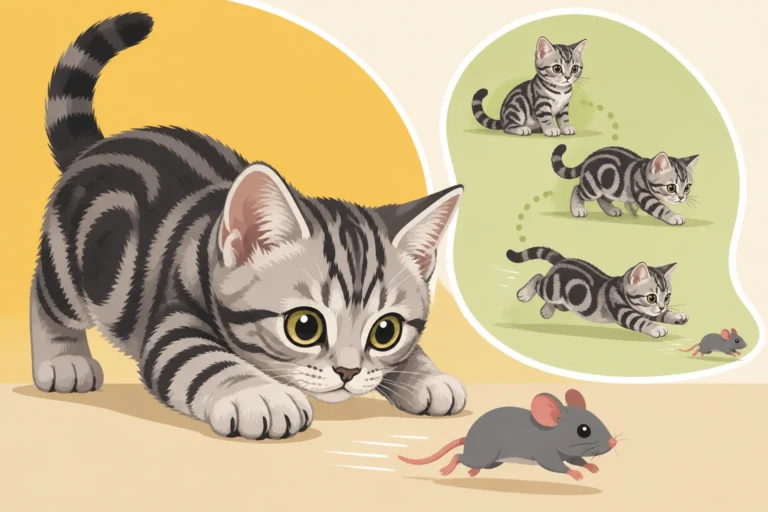
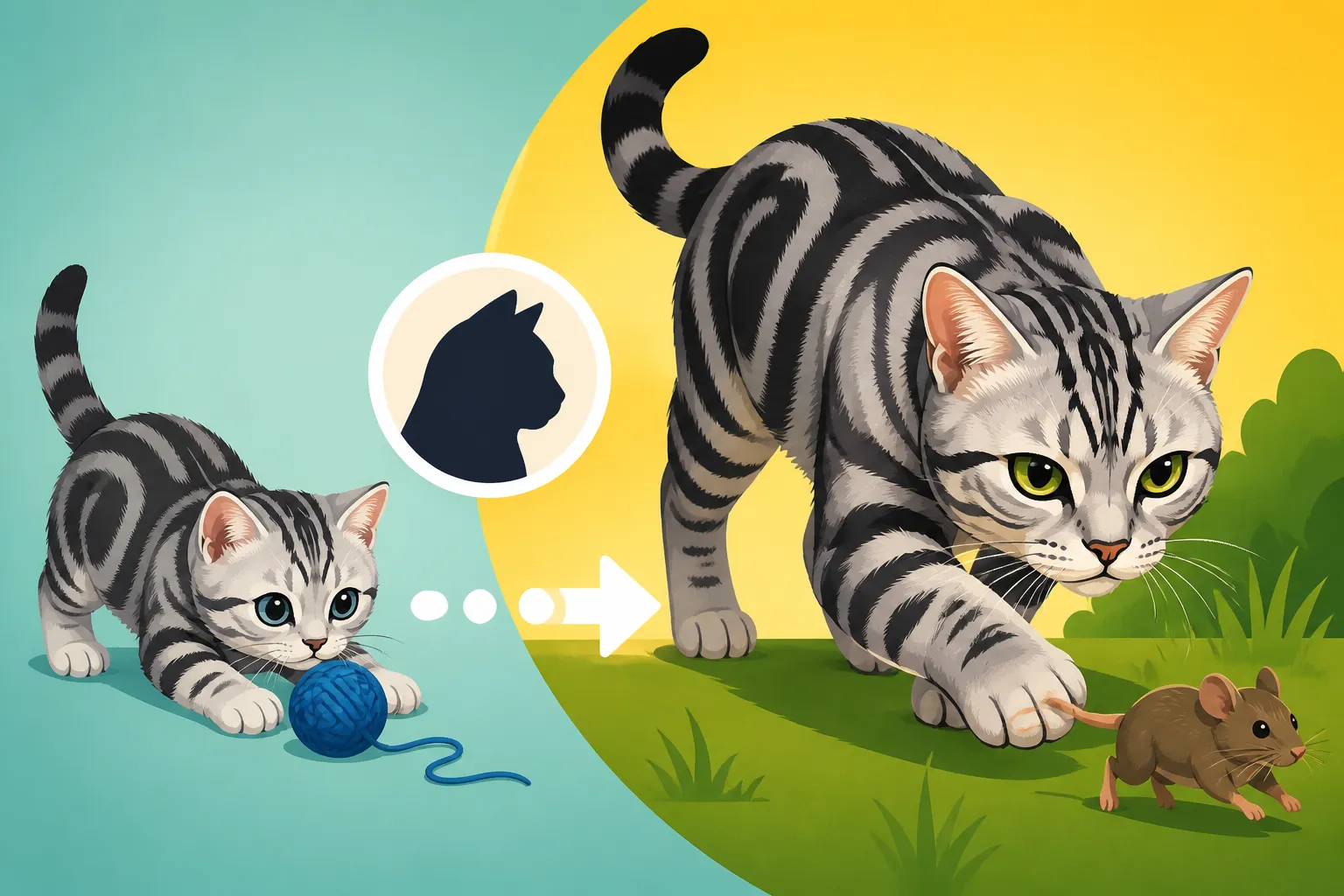
As American Shorthair kittens grow from tiny, awkward fluff balls into more coordinated youngsters, typically between two and four months of age, their hunting movements become much more refined. The clumsy pounces of a month ago transform into more controlled, deliberate actions. You'll start to see them exhibit classic stalking behaviors: low to the ground, tail twitching slightly, eyes locked on their target. Their chase sequences become longer and more agile, with impressive changes in direction and speed.
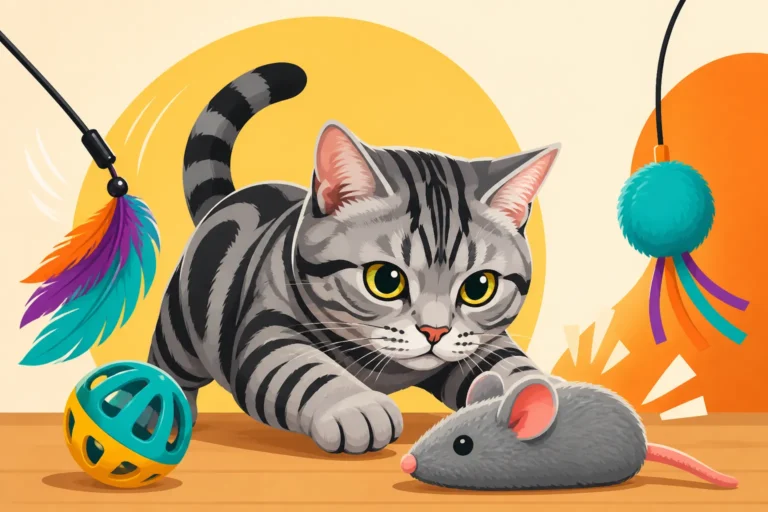
They also begin to perfect the actual "kill bite" action, often gnawing and kicking at toys with their back legs – that famous "bunny kick" that means they're really invested in their hunt. Their precision improves dramatically, meaning fewer missed targets and more satisfying captures during playtime. This is the stage where a simple feather wand from Amazon can become the most exciting thing in their world, allowing them to practice their moves repeatedly. If you're wondering How an American Shorthair Kitten Learns to Hunt, much of it comes down to this intense, repetitive play.
The Mother's Influence: Guided Learning
While much of an American Shorthair kitten's hunting development is instinctual and self-driven through play, the mother cat plays a profound, albeit often subtle, role in guiding this process. She's not typically offering formal lessons in stalking, but her presence and actions provide invaluable learning opportunities. She models appropriate hunting behaviors through her own actions, whether it’s her quiet patience while watching a bird outside the window or how she interacts with a new toy. Kittens are keen observers, and they'll naturally mimic the actions of their primary caregiver.
Beyond modeling, the mother cat also provides a safe and stimulating environment for practice. By engaging in gentle play with her kittens, she allows them to test their limits, refine their pounces, and learn about bite inhibition. She teaches them boundaries and how to interact respectfully within the social structure of the litter. While not every mother actively brings live prey to her kittens in a domestic setting, her role in fostering a secure learning environment and demonstrating calm, confident feline behavior is absolutely critical. For more on this, check out Whether a Mother Teaches an American Shorthair Kitten to Hunt.
Reaching Peak Hunting Performance
The journey from playful kitten to proficient hunter is a gradual one, but there comes a point when your American Shorthair’s hunting skills truly blossom. This isn't just about size; it's about the complete integration of physical prowess, mental acuity, and honed instinct.
Physical and Mental Maturation
An American Shorthair typically reaches physical maturity between one and two years of age, though some may continue to fill out until three. This physical development is directly linked to their hunting capabilities. Stronger muscles, fully developed bone structure, and peak coordination mean they can execute complex maneuvers with greater power and less effort. Think of the difference between a clumsy teenager and a seasoned athlete – both can run, but one does so with far more efficiency and precision. Their senses, particularly sight and hearing, are also fully developed, making them incredibly effective at detecting subtle movements and sounds that might signify prey.
Alongside physical maturation, there's a significant mental component. An adult American Shorthair develops better problem-solving skills, learning from past hunting attempts. They become more strategic in their stalking, understanding angles, cover, and timing. They develop the patience to wait for the opportune moment, rather than just impulsively chasing. This mental sharpness allows them to assess a situation, plan their approach, and execute the hunt sequence with remarkable efficiency.
The Seamless Execution of the Hunt Sequence
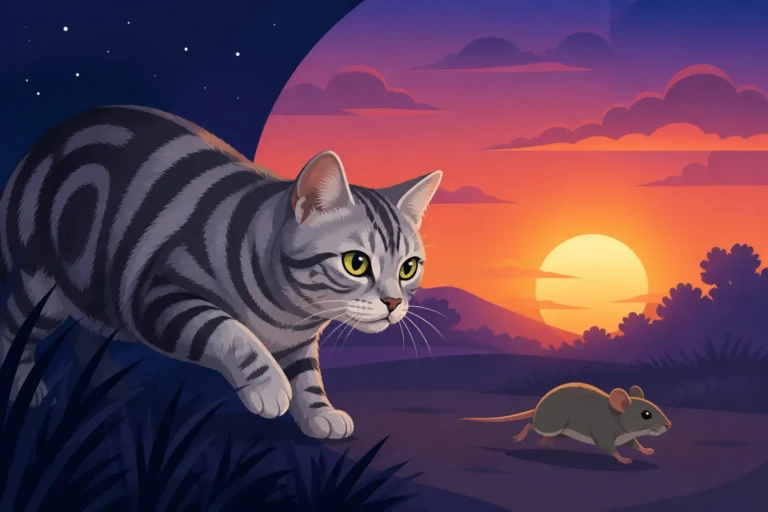
When an American Shorthair truly hunts like an adult, you'll see a fluid, almost balletic execution of the full hunt sequence. It's not just a series of disconnected actions; it's a seamless, integrated performance. They'll scan their environment with focused intensity, using their whiskers and ears to detect the slightest tremor or rustle. The stalking phase is a masterclass in stealth – low to the ground, muscles coiled, moving with deliberate slowness until they are within striking distance. How an American Shorthair Stalks is truly something to behold.
Then comes the explosive chase, often accompanied by quick, precise pounces. And crucially, they'll execute the "kill bite" with efficiency, holding and biting at the "prey" (even if it's just a toy) with conviction. This isn't just roughhousing; it's the culmination of their genetic programming and all their learned skills. An adult American Shorthair understands the rhythm of the hunt, from the anticipation of the initial detection to the satisfaction of the final "catch."
Individual Variation in Hunting Development
It's important to remember that every American Shorthair is an individual, and while general timelines exist, there will always be variations. Some cats might be natural prodigies, showing incredible hunting aptitude at a young age, while others may take a bit longer to fully develop their skills and confidence. Factors like their early environment, how much they played as kittens, the availability of stimulating toys, and even their personality can influence when they reach their peak hunting prowess. A more timid cat might take longer to feel confident in its pouncing, while a bolder one might be performing impressive aerial acrobatics by six months.
Furthermore, the environment they live in plays a significant role. An American Shorthair with ample opportunities for interactive play and environmental enrichment will likely develop more refined hunting skills than one in a less stimulating environment. Think of it like a muscle – if it's not used, it won't develop to its full potential. However, the instinct itself remains, regardless of how much it's practiced. Even a cat that’s never chased a toy might still display that intense, focused gaze when a fly buzzes by.
Fulfilling the Hunter's Drive in a Modern Home
Living indoors, our American Shorthairs don't always get the chance to exercise their natural hunting instincts in the way their ancestors did. This can lead to frustration or misdirected energy if we don't provide appropriate outlets. Luckily, there are many ways to keep their inner hunter happy and engaged.
Simulating the Hunt: Essential Enrichment
Since your indoor American Shorthair isn't actually out there catching mice, it's our responsibility to simulate the hunting experience for them. This means engaging in interactive play sessions that follow the full hunt sequence. Don't just dangle a toy; make it "act" like prey. Let it hide, dart, pause, and then allow your cat to "catch" it at the end of the session. This "capture" is incredibly important; Why an American Shorthair Needs to Catch the Toy is about psychological satisfaction, completing the cycle, and preventing frustration. Without it, they might feel perpetually unfulfilled.
Dedicate at least 15-20 minutes, once or twice a day, to these interactive play sessions. Use wand toys, feather teasers, or fishing rod-style toys that allow you to mimic erratic prey movement. Vary the speed and direction, hide the toy behind furniture, and let your cat stalk it before the grand finale pounce. This consistent engagement is not just for physical exercise; it's vital mental stimulation that keeps them sharp and content. Remember, their minds are wired for this, and providing the opportunity to "hunt" prevents boredom and potential behavioral issues.
The Right Tools for the Job: Engaging Toys
Choosing the right toys is crucial for an American Shorthair. They're not always interested in passive toys that just sit there. They need items that engage their hunting instincts. Look for toys that mimic the size, texture, and movement of actual prey. Feather wands are often a huge hit, as are small, crinkly balls or soft mice that can be easily pounced upon and carried. Some cats love kicker toys that they can bunny-kick to their heart's content, mimicking the dismemberment phase of the hunt. You can find a huge variety of these on Amazon.
Puzzle feeders are another excellent tool for simulating the "foraging" aspect of the hunt. Instead of simply eating from a bowl, your American Shorthair has to "work" for its food, using its paws and problem-solving skills to retrieve kibble or treats. This taps into their natural inclination to search and find, providing mental enrichment and slowing down their eating. For more ideas on how to engage your cat, consider Whether a Puzzle Feeder Satisfies an American Shorthair and Which Wand Toy Reads as Prey to an American Shorthair. A variety of toys kept in rotation will prevent boredom and keep them interested.
Managing Undesired Hunting Behaviors
Sometimes, that strong hunting drive can lead to behaviors we'd rather not encourage, like stalking our ankles, pouncing on our feet under the covers, or even bringing us "gifts" of toys they've "killed." The key is to understand that these aren't acts of malice; they're expressions of their natural instincts. The best way to manage them is to redirect them to appropriate outlets. If your cat stalks your feet, immediately grab a wand toy and engage them in a proper play session. This teaches them that you are the source of the fun, and that feet are not prey.
Providing ample mental and physical stimulation is the best defense against undesired behaviors. A tired, satisfied hunter is less likely to seek out inappropriate targets. Ensure they have enough interactive play, access to window perches for bird watching, and puzzle feeders to challenge them. It's also important never to use your hands or feet as toys during play, as this can inadvertently teach them that human body parts are fair game for hunting. Consistency in redirecting and providing proper outlets will go a long way in shaping their behavior in a way that suits both of you.
Understanding the Lifelong Hunter
The American Shorthair's hunting instincts don't just disappear once they reach adulthood. This drive is a fundamental part of their being, persisting throughout their lives, often revealing itself in surprising ways even in their golden years.
The Enduring Instinct in Senior American Shorthairs
It's truly remarkable how long the hunting instinct persists in American Shorthairs. Even a senior cat, perhaps a bit slower and with less spring in their step, will still display that characteristic focus when a bug flies by or a feather toy is presented. While their physical capabilities might wane with age, the mental drive to stalk and chase often remains surprisingly strong. You might notice an older American Shorthair watching intently out the window for longer periods, still "patrolling" their territory even if it's just from a comfortable perch.
For senior cats, it's even more crucial to provide gentle but consistent opportunities to engage this instinct. Modified play sessions, perhaps shorter and less strenuous, using softer toys or puzzle feeders, can keep their minds sharp and provide essential mental enrichment. It helps prevent boredom and keeps them feeling vital. Just because they're not scaling the curtains anymore doesn't mean their inner hunter has retired. They still crave that mental engagement, that flicker of the chase, even if it's from the comfort of their favorite bed.
Why the Drive Persists, Indoors or Out
The persistence of the American Shorthair's hunting drive, whether they live indoors or have outdoor access, speaks volumes about its deep evolutionary roots. This isn't a learned habit that can be unlearned; it's a core component of their species-specific behavior. Even cats who have never caught a living creature will still exhibit the full range of hunting behaviors during play, demonstrating that the programming is there, just waiting for an outlet. What an American Shorthair Still Hunts When You Give It Nothing is often imaginary prey, or a dust bunny that stands no chance.
For indoor cats, this means that providing adequate enrichment and play is not a luxury, but a necessity for their well-being. Without it, they might resort to "hunting" household items, or even become lethargic and bored. For outdoor cats, the instinct is fulfilled in the wild, though this comes with its own set of risks. Regardless of their environment, understanding and respecting this fundamental aspect of the American Shorthair's nature allows us to provide them with the best possible care, ensuring they live happy, stimulated lives, always with that magnificent, ancient hunter alive and well within them.
Table: Stages of Hunting Skill Development in American Shorthairs
| Age Range | Key Hunting Behavior Development | Needs/Enrichment for Optimal Development |
|---|---|---|
| 0-4 Weeks | Reflexive pawing, mimicking suckling, early exploration. | Mother's presence, warmth, safe environment. |
| 4-8 Weeks | Playful pouncing on littermates, swatting at toys, wrestling. | Soft, lightweight toys; interactive play with mother/siblings. |
| 2-4 Months | Stalking, chasing, mock kills, carrying toys, "bunny kicks". | Wand toys, small prey-like toys, simple puzzle feeders. |
| 4-12 Months | Improved coordination, agility, refined pounce and chase, increased focus. | Varied interactive toys, regular engaging play sessions, vertical climbing opportunities. |
| 1+ Year (Adult) | Full, seamless hunt sequence; strategic stalking, efficient kill bite. | Consistent hunt simulations (daily interactive play), advanced puzzle feeders, environmental enrichment. |
| 8+ Years (Senior) | Reduced intensity, but instinct remains; may prefer shorter, gentler play. | Accessible toys, low-impact interactive play, mental challenges (treat balls). |
Disclaimer
This article is for general informational purposes only and does not constitute professional advice. Laws, prices and regulations vary by location and change over time. Consult a qualified professional for guidance on your specific situation.