Whether Two American Shorthairs Hunt Together
Anyone who shares their home with an American Shorthair knows they're incredibly capable creatures, full of quiet confidence and that undeniable hunting instinct. If you've been lucky enough to have two of these wonderful cats, you might have watched them interact, perhaps even chasing the same toy or staring intently at a bird outside. It's natural to wonder if these intelligent, self-sufficient felines ever truly hunt together in the way we might imagine a coordinated team. This guide will dive deep into the American Shorthair's inherent hunting behaviors, explore how they interact with each other in a shared environment, and help you understand the dynamics of "hunting" when you have more than one of these fantastic cats.
The American Shorthair's Innate Solo Hunting Drive
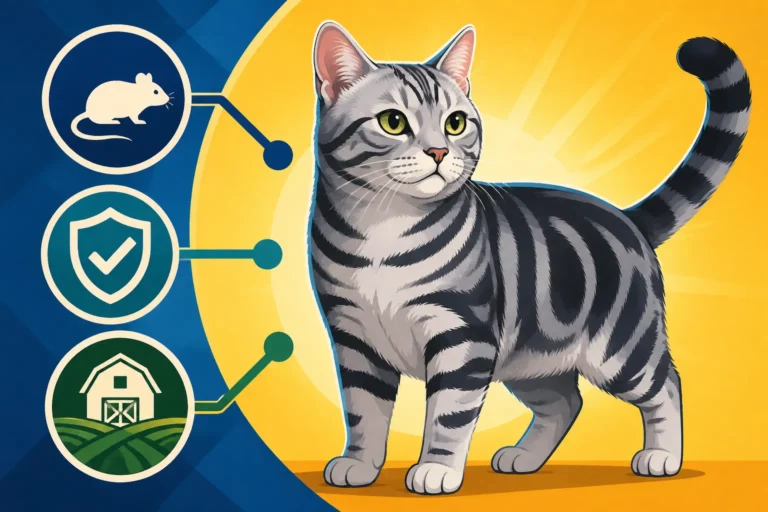
Let's be clear: the American Shorthair, in its heart of hearts, is a solitary hunter. Their ancestors weren't pack animals; they were self-reliant mousers and ratters, sailing on ships and guarding barns alone. This isn't a knock against their sociability – far from it! They are often wonderfully tolerant and affectionate companions. But when it comes to the serious business of the hunt, their programming leans heavily towards individual enterprise.
Origins of the Hunting Instinct
Centuries of ratting embedded a profound hunting drive into the American Shorthair's very being. Imagine a cat on a ship, responsible for keeping vermin at bay. There weren't teams of cats collaborating on a rat hunt; it was one shrewd cat against the swift, cunning rodent. This bred a keen sense of observation, incredible patience, and the ability to act decisively on its own. They developed their broad chest and muscular build not for show, but for the practical purpose of ambushing and subduing prey. This means that while your American Shorthair might enjoy your company, or even tolerate another cat, its core hunting mechanics are designed for solo operation. You can learn more about this by reading Why Centuries of Ratting Left the American Shorthair Its Drive.
The Prowess of the Individual Hunter
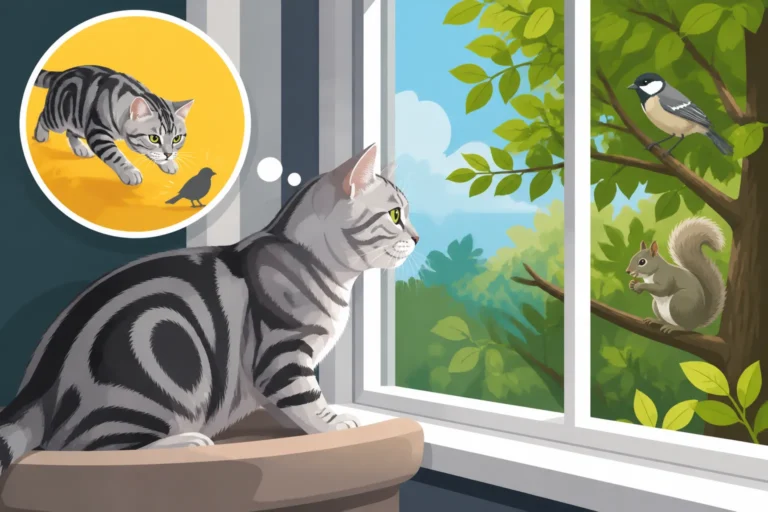
An American Shorthair's hunting prowess is truly a marvel to behold, even in a cozy living room. They are masters of the stalk, the pounce, and the kill bite, all executed with precision. They don't need a partner to flush out prey or to corner it; their senses are finely tuned to detect the slightest movement, and their bodies are built for swift, silent action. If a fly buzzes past, you'll likely see each cat react independently, eyes tracking, bodies tensing. One might pounce, the other might simply watch, waiting for its moment, or another opportunity to arise. This individual focus means that while two American Shorthairs might chase the same moth, they aren't necessarily coordinating their efforts; they're simply both responding to the same stimulus, each trying to be the one to make the catch. How an American Shorthair Hunts provides a detailed look at this behavior.
How American Shorthairs Interact with Each Other
Even though they are wired for solo hunting, American Shorthairs are generally known for their placid and adaptable nature. They often co-exist peacefully, forming strong bonds with their human families and, sometimes, with other feline housemates. However, understanding their social hierarchy and play dynamics is key to deciphering their "hunting together" behavior.
Territorial Instincts and Shared Spaces
Cats, including the American Shorthair, are territorial creatures. While they might share a home, they still maintain individual patrol routes and preferred resting spots. When two American Shorthairs live together, they typically work out a shared territory, often dividing it by time or specific areas. For instance, one cat might dominate the sunny window perch in the morning, while the other claims it in the afternoon. This subtle negotiation of space usually extends to any "hunting grounds," whether that's the living room floor for a toy mouse or the kitchen counter for a stray crumb. They rarely share a hunting spot simultaneously with active cooperation, but rather take turns or engage in parallel pursuits. This can sometimes look like teamwork, but it's more about respecting each other's immediate space while pursuing the same goal. The question of Whether Two American Shorthairs Split the Territory or Fight for It is a common one for multi-cat households.
Play Fighting Versus Actual Hunting
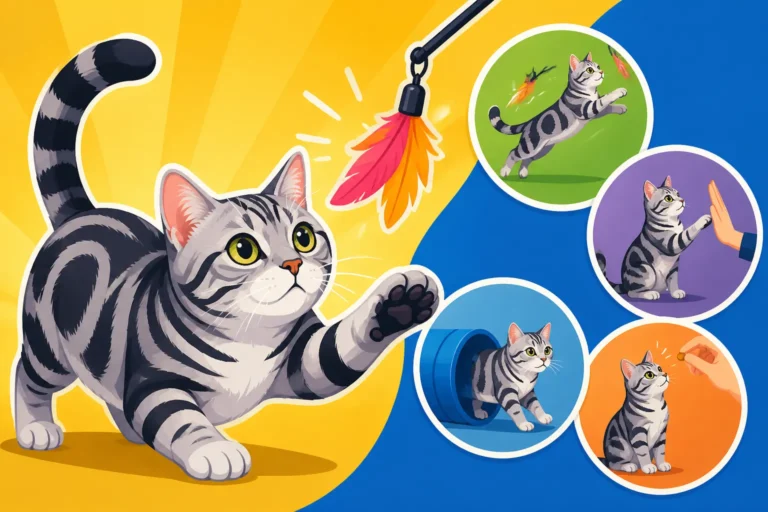
It's easy to mistake rough-and-tumble play for cooperative hunting, especially when you see two American Shorthairs wrestling, chasing each other, or pouncing from behind furniture. This kind of play is absolutely vital for their development and well-being; it hones their reflexes, builds muscle, and helps them practice their hunting skills in a safe environment. However, this is distinct from actual hunting. In play, there's often a clear understanding that it's not real, with inhibited bites and claws, and a reciprocal nature. One cat chases, then the other. When real prey is involved, or even a highly prized interactive toy, the dynamic shifts. The goal becomes the capture, and the individualistic nature of the hunt often takes precedence over shared play. They might chase the same wand toy from Amazon, but each cat will be vying for the final "kill" of the feather.
The Reality of Hunting Together: Cooperation or Competition?
So, do two American Shorthairs truly hunt together in a cooperative sense? In most cases, the answer leans more towards opportunistic concurrent hunting or a reactive chase rather than strategic collaboration. They are not like wolf packs, where roles are defined and actions are coordinated for a shared outcome.
Concurrent Pursuit: Side-by-Side but Independent
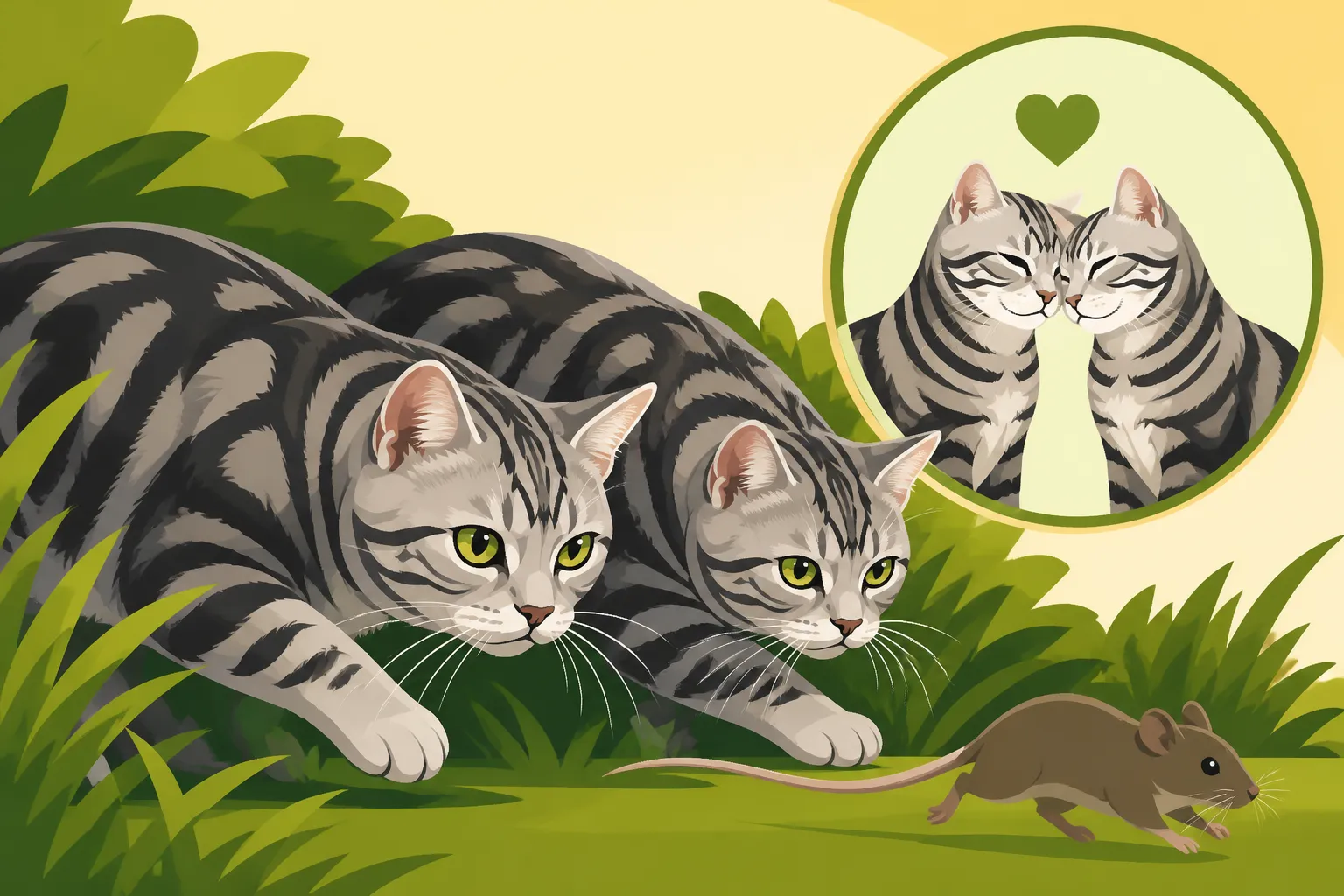
Imagine two American Shorthairs observing a spider crawling up the wall. Both cats will likely lock onto it, their tails twitching, their muscles tensing. They might both stalk towards it, moving in unison, but each will be preparing for its own pounce. If one cat lunges and misses, the other might seize the opportunity, not because they planned it, but because the prey is still there, and the first cat's failure presents a new opening for individual success. It's a "many eyes on the prize" scenario, where each cat is hoping to be the lucky one to make the catch. They are essentially hunting alongside each other, performing similar actions, but not necessarily influencing each other's strategy beyond general awareness. This can lead to exciting, synchronized movements that look like teamwork but are actually individual efforts.
Resource Guarding and the "Catch"
When it comes to the actual "catch"—whether it's a real mouse or the feather at the end of a wand toy—cats, even bonded ones, often revert to a more competitive mindset. The instinct to secure the prey for oneself is strong. If one American Shorthair catches a toy mouse, the other might try to "steal" it, initiating a chase or a playful skirmish for possession. This isn't about sharing the bounty; it's about asserting ownership over the coveted item. While they might engage in a brief tug-of-war, this is still a far cry from cooperative hunting where one cat holds the prey while the other delivers the killing blow. It's more about who gets to claim the "prize" of the hunt. This instinct is a direct legacy of their solitary hunting heritage, where every catch meant survival for the individual.
| Aspect of "Hunting Together" | Description | Typical Cat Behavior |
|---|---|---|
| Observation | Both cats notice the same "prey" (e.g., bug, toy). | Highly likely; cats are observant of their environment. |
| Stalking | Both cats approach the "prey" simultaneously. | Common; parallel stalking, each cat focused on its own approach. |
| Pouncing/Attack | Both cats launch an attack on the "prey." | Often sequential; one cat attempts, if unsuccessful, the other may. |
| Coordinated Strategy | Cats plan and execute a joint maneuver (e.g., flanking, driving prey). | Extremely rare to non-existent in cats; instinct is solitary. |
| Sharing the Kill | Cats divide or share the captured "prey." | Rare; more likely to be a struggle for individual possession. |
| Post-Hunt Play | Joint play with the "kill" after capture. | Common; chasing, batting, or "killing" the same toy in turns. |
Encouraging "Shared" Hunting Play Indoors
While true cooperative hunting isn't typically in an American Shorthair's nature, you absolutely can foster a sense of shared activity and excitement around hunting-style play indoors. This is crucial for their mental and physical well-being, especially for an indoor cat whose natural instincts still run deep.
Multi-Cat Play Strategies
The key to engaging multiple American Shorthairs in "shared" hunting play is often about creating simultaneous opportunities for individual success. Don't rely on one toy for two cats; that's a recipe for competition and potential frustration. Instead, aim for activities where each cat can experience the thrill of the chase and the satisfaction of the catch, even if they're doing it side-by-side.
- Multiple Wand Toys: If you're using a wand toy, consider having two, or even better, two people engaging with the cats. This allows each American Shorthair to have its own "prey" to pursue and "kill." You can find an excellent selection of durable wand toys on Amazon, often with interchangeable attachments like feathers, ribbons, or furry critters. Remember, the goal is for them to Why an American Shorthair Needs to Catch the Toy eventually.
- Scatter Feeding: This is a fantastic way to stimulate their hunting instincts without direct competition. Instead of one bowl, hide small portions of their regular kibble or treats around the house. You can even invest in puzzle feeders from Amazon that require them to "work" for their food. This turns mealtime into a scavenger hunt, engaging their senses and natural foraging behaviors independently but in a shared environment. It also helps manage their weight, as they're not just gobbling food from a bowl.
- Laser Pointers (with a catch!): While a laser pointer can get both cats chasing, it can be frustrating because there's no "kill." Always end a laser pointer session by directing the beam onto a physical toy or treat that they can actually catch and "defeat." This provides the satisfying conclusion to the hunt that their instincts demand. Otherwise, you risk fostering frustration in your otherwise placid American Shorthairs. You can learn Why an American Shorthair Loses Interest in a Laser if it never gets to catch anything.
Individual Enrichment Within a Group Setting
Even in a multi-cat household, individual attention and enrichment remain incredibly important. Remember, each American Shorthair is an individual with its own preferences and hunting style. What one cat finds thrilling, another might only tolerate.
- Dedicated Playtime: Schedule short, focused play sessions with each cat individually, especially if one is more shy or less assertive than the other. This ensures that each cat gets ample opportunity to fully engage its hunting drive without feeling crowded or outcompeted. Even ten minutes of intense play with a favorite toy can make a huge difference in their overall happiness and behavior.
- Vertical Space: Providing ample vertical space, like cat trees, shelves, and window perches, can help alleviate any subtle territorial tension and give each American Shorthair its own "high ground" for observation and launching ambushes. These spaces become extensions of their individual "patrol routes" within the home. A sturdy cat tree can be a significant investment, but many options are available on Amazon to suit various budgets and home sizes.
- Variety of Toys: Offer a wide array of toys that cater to different hunting preferences. Some American Shorthairs love batting at bouncy balls, others prefer crinkly toys they can "kill" with a swift pounce, and still others are obsessed with toys that mimic actual prey. By having a diverse "toy box," you increase the chances that both cats will find something to engage their inner hunter, either alone or alongside their housemate. Which Wand Toy Reads as Prey to an American Shorthair can help you choose the right ones.
By understanding that American Shorthairs are primarily solitary hunters by nature, even when living together, we can provide them with enriching environments that allow their instincts to flourish, fostering a harmonious household where each cat feels satisfied and secure in its territory and its ability to "hunt." This doesn't mean they can't enjoy a shared moment of chasing a sunbeam or a buzzing fly; it just means their cooperation is more about shared experience than a coordinated strategy.
Disclaimer
This article is for general informational purposes only and does not constitute professional advice. Laws, prices and regulations vary by location and change over time. Consult a qualified professional for guidance on your specific situation.