Why a Roaming American Shorthair Must Be Chipped
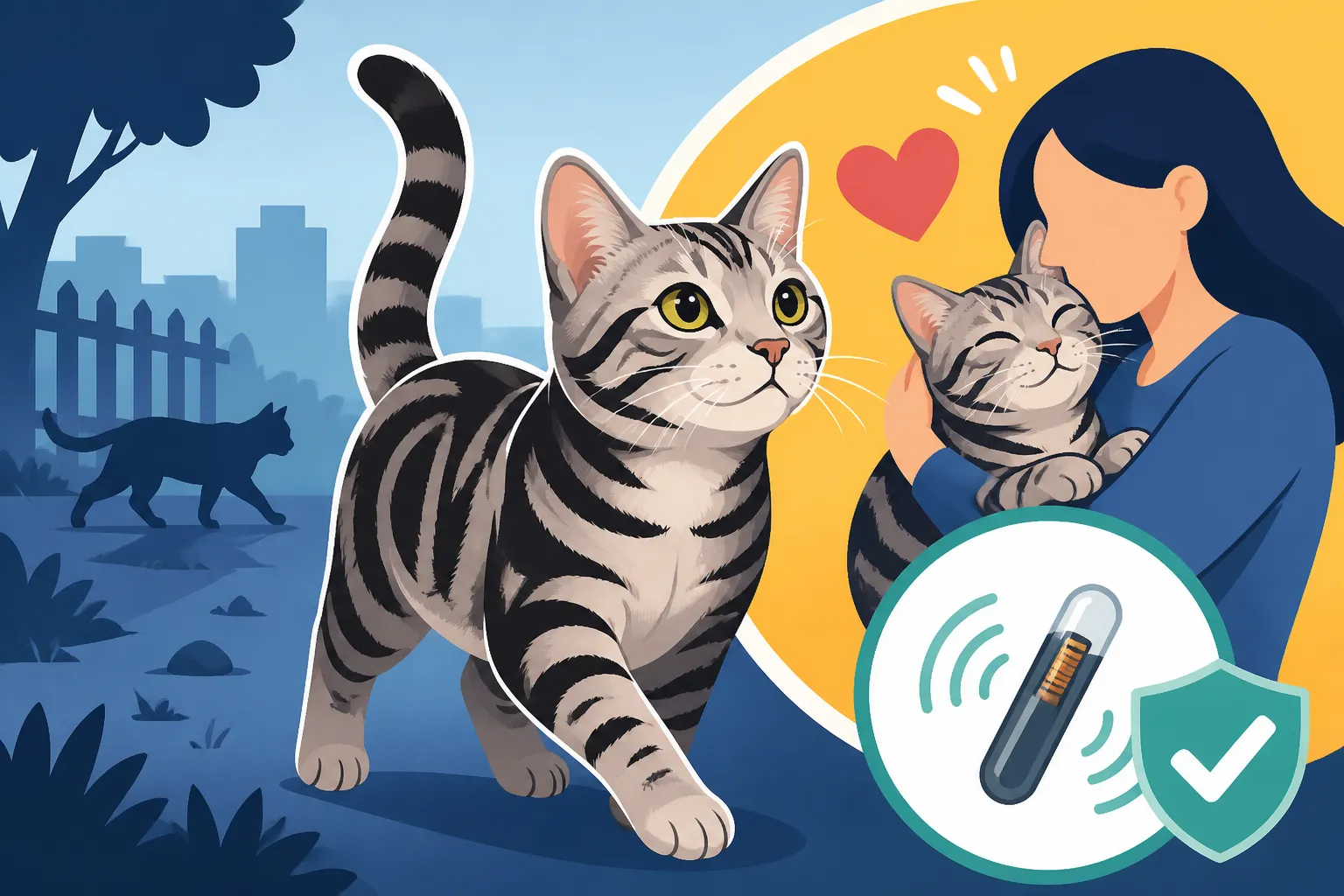
It's a familiar scenario for many of us cat parents: you open the door, and your American Shorthair, with that characteristic confident stride, heads out to explore their domain. While letting our beloved felines enjoy the great outdoors can feel liberating for them, it also brings a host of anxieties about their safety. This guide will walk you through why microchipping isn't just a good idea, but an absolute essential for any roaming American Shorthair, offering their best chance of a safe return should they ever wander too far.
The Realities of Outdoor Roaming for Your American Shorthair
Our American Shorthairs carry a legacy of independence and a strong drive to patrol. For generations, their ancestors were working cats, tasked with keeping rodents at bay, and that instinct hasn't simply vanished because they now share our sofas. This inherent nature means that even the most pampered housecat can feel a powerful pull to explore, and with exploration come undeniable risks.
The Instinct to Explore and Expand Territory
Your American Shorthair is a creature of habit and territory, but that territory might be far larger than you imagine your backyard to be. Their ancestors ranged wide in their mousing duties, and even today, a cat will establish a patrol route that can extend several blocks or even acres, depending on the environment. This isn't just about finding prey; it's about marking their space, investigating new smells, and satisfying that deep-seated curiosity. It's truly fascinating to watch their purposeful movements as they survey their domain, but it's also a stark reminder of how easily they can stray beyond your immediate sight or neighborhood. How Far an American Shorthair Roams will tell you just how extensive these wanderings can be.
This strong territorial instinct, while making them excellent mousers and incredibly confident companions, also means they might follow a scent or a sound much further than intended. They might encounter an unfamiliar cat or another animal and find themselves in a chase, ending up in an area they don't recognize. Or, they might simply be enjoying a leisurely stroll and lose their bearings as dusk falls. For these independent spirits, being outdoors is an extension of their natural existence, a chance to fulfill those primal drives that still hum beneath their calm demeanor.
The quiet confidence of an American Shorthair also means they might not be prone to panic, even when disoriented. They're more likely to assess their situation, try to find a familiar landmark, and slowly work their way back. However, "slowly" can mean days, and in that time, they are exposed to numerous dangers. This makes any form of permanent identification crucial, as their calm nature won't necessarily lead a stranger to believe they are lost and seeking help.
Hidden Dangers Beyond Your Fenceline
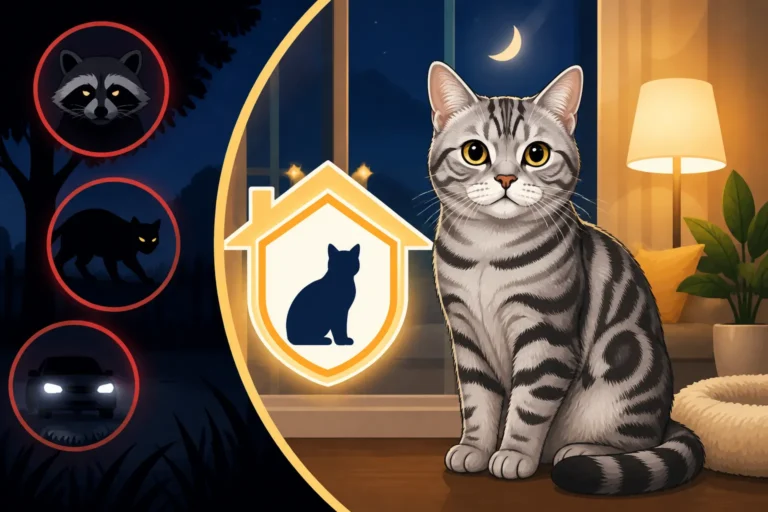
While we want our American Shorthairs to live fulfilling lives, we also need to be realistic about the dangers that exist just outside our controlled environments. Road traffic is, tragically, one of the biggest threats to outdoor cats. A quick dart across a street, a sudden loud noise, or a distracted driver can lead to devastating consequences. The speed and unpredictability of vehicles are simply not something a cat's instincts are equipped to handle perfectly, especially in busy suburban or urban areas. How Road Traffic Shortens an Outdoor American Shorthair's Life details this harrowing reality.
Beyond traffic, your roaming American Shorthair can face threats from other animals. Feral cats, neighborhood dogs, or even local wildlife like raccoons or coyotes can pose a significant danger. Catfights, for instance, are not just unpleasant; they can result in serious injuries, infections, and even transmit diseases like FIV or FeLV. An abscess from a bite wound can quickly become life-threatening if not treated. Which Fight Wounds an Outdoor American Shorthair Comes Home With explores these risks in detail. Then there are environmental hazards like toxic plants, pesticides, antifreeze, or even accidental entrapment in sheds or garages. The world is full of unknowns, and a cat's curious nature can lead them right into trouble.
And let's not forget the risk of intentional harm or accidental displacement. Sometimes, well-meaning individuals might pick up a friendly, seemingly homeless cat and take it in, or even transport it to a local shelter miles away. While their intentions might be good, it further separates your American Shorthair from their home territory, making reunion more difficult. The emotional toll of a missing pet on a family is immense, and for the cat itself, the experience can be confusing, scary, and ultimately dangerous. These are the stakes we face when our independent explorers venture out.
Microchipping as the Ultimate Safety Net for Lost Cats
Given the very real risks, simply hoping for the best isn't a strategy any responsible pet parent wants to rely on. This is where microchipping comes in as a truly invaluable tool, offering a permanent, tamper-proof form of identification that significantly increases the chances of a happy reunion. It's a small step that provides immense peace of mind.
Understanding the Technology Behind the Chip
A microchip is a tiny, rice-sized transponder, typically about 12mm long, encased in biocompatible glass. It doesn't contain a battery, nor does it transmit a signal like a GPS device. Instead, it's activated by a scanner that passes over it, which then reads the unique identification number stored within the chip. This number is your cat's personal identification, like a social security number, but for pets. This number is then linked to your contact information in a secure, national pet recovery database.
The beauty of the microchip lies in its simplicity and permanence. Unlike a collar and tag, which can fall off, break, or be removed, a microchip is safely implanted under your American Shorthair's skin, usually between the shoulder blades. It stays with them for their entire life. When a lost cat is found and brought to a veterinary clinic, animal shelter, or even many police stations, one of the first things they do is scan for a microchip. If one is found, that unique ID number allows them to access the database and get in touch with you, the registered owner. It bridges the gap between a lost, unidentified cat and its worried family.
Think of it as a silent, invisible beacon of hope. Even if your American Shorthair is found far from home, perhaps by someone who doesn't realize they're a pet, a scan will reveal their identity. It’s a vital layer of security that ensures even if your cat is an expert at wriggling out of collars or their tag becomes unreadable, there's still a reliable way to get them back to you. This technology has facilitated countless reunions, turning what could have been a heartbreaking loss into a joyful homecoming.
The Simple Process of Implantation and Registration
Getting your American Shorthair microchipped is a remarkably quick and straightforward procedure, often compared to a routine vaccination shot. The microchip is injected just under the skin using a sterile needle. Most cats tolerate it extremely well, experiencing only a momentary pinch. It's often done during a routine vet visit, perhaps during spaying or neutering, or even as a standalone appointment. Because the American Shorthair is generally a calm and stoic breed, they tend to handle the procedure with minimal fuss, making it easy for both cat and owner. Why an American Shorthair Is a Low Anesthetic Risk reinforces their overall robust nature, so this simple injection is truly minimal in terms of medical concern.
Once the chip is implanted, the critical next step is registration. The microchip itself is just a number; it means nothing unless it's linked to your contact information in a database. Your vet or shelter will typically provide you with the necessary paperwork and guidance on how to register the chip. This usually involves filling out an online form or mailing in documentation to the microchip registry associated with your cat's chip brand. This registration ensures that when your American Shorthair is scanned, their unique ID number immediately points back to your phone number, address, and email.
It's also crucial to remember that registration isn't a one-and-done deal. If you move, change your phone number, or update your email, you must update your microchip registration. This is a common pitfall: a cat is found, scanned, but the contact information is outdated, making a reunion impossible. Make it a point to check your details annually, perhaps around your cat's yearly vet check-up. The efficacy of the microchip as a reunion tool is entirely dependent on having accurate, current contact information tied to that unique identifier.
Beyond Microchips: Layers of Protection for Your Adventurous Feline
While microchipping is paramount, it's just one part of a comprehensive safety plan for your roaming American Shorthair. Think of it as building multiple layers of security, each designed to improve their chances of a safe return. No single method is foolproof, but combining them creates a robust safety net.
Collars, Tags, and Other Visible Identification
A collar with an ID tag might seem old-fashioned next to a microchip, but it serves a crucial and immediate purpose: visible identification. When someone finds a cat with a collar and a tag displaying your phone number, they can often call you directly, without needing to take the cat to a vet or shelter for a scan. This can dramatically speed up the reunion process and reduce stress for both you and your cat. Many people are more likely to approach a cat with a collar, assuming it's a pet, rather than a cat without one.
When choosing a collar for your American Shorthair, always opt for a breakaway or quick-release collar. These are designed to snap open if your cat gets caught on a branch, fence, or anything else, preventing strangulation. Safety is paramount! You can find a wide variety of durable and reflective breakaway collars, as well as customizable ID tags, on platforms like Amazon. The tag should ideally include your current phone number and perhaps a "REWARD" message, which can incentivize people to help. While your American Shorthair is known for its sensible nature, sometimes even the calmest cat can get into a bind, and a breakaway collar ensures they can free themselves.
Some owners also consider adding reflective strips to collars or even GPS trackers. While GPS trackers can be helpful for actively monitoring your cat's whereabouts, they often have battery life limitations and can be bulky for a cat. They are more of a tracking tool than a permanent identification method like a microchip. The visible ID tag remains a low-tech, high-impact solution that complements the microchip beautifully.
Maintaining Up-to-Date Contact Information is Crucial
A microchip is only as good as the information it holds. I can't stress this enough: update your contact details immediately if anything changes. Moved to a new house? Changed your mobile number? Got a new email address? All these changes need to be reflected in your microchip registry. It's often easier than you think – most registries have online portals where you can quickly log in and make adjustments. Some even send out yearly reminders to check your information, which is incredibly helpful.
Imagine the heartbreak of an animal shelter calling an old phone number for a lost cat, unable to reach the rightful owner, even though the cat is chipped. This happens far more often than you'd think. Make it a habit to check your microchip registry details once a year, maybe when you renew your pet's license or during their annual vet visit. It literally takes five minutes, but those five minutes could be the difference between a lifetime reunion and a permanent separation. Don't let a small oversight lead to a devastating loss.
Beyond the microchip registry, it's a good idea to keep a current, clear photo of your American Shorthair readily available, along with any distinguishing marks or features. If they do go missing, this can be invaluable for creating "lost pet" posters or sharing on local social media groups. While your American Shorthair may seem like a common tabby pattern, their specific markings, eye color, and build are unique, and a clear photo can help differentiate them. This comprehensive approach, combining a permanent microchip with visible identification and diligent record-keeping, gives your roaming American Shorthair the best possible chance of always finding their way back home.
| Identification Method | Pros | Cons | Best Use Case |
|---|---|---|---|
| Microchip | Permanent, tamper-proof, internal, globally recognized. | Not visible, requires scanner, dependent on updated registry info. | Essential backup, permanent ID for all pets. |
| Collar & ID Tag | Instantly visible, direct contact for finder. | Can fall off, get caught (use breakaway!), tag can become unreadable. | First line of defense, immediate identification. |
| GPS Tracker | Real-time location tracking. | Battery life, bulky, expensive, not a permanent ID itself. | Active monitoring for known wanderers (secondary to microchip). |
| Tattoo | Permanent, visible if found. | Fades over time, less common now, requires looking for it. | Used historically, less effective than microchip. |
Disclaimer
This article is for general informational purposes only and does not constitute professional advice. Laws, prices and regulations vary by location and change over time. Consult a qualified professional for guidance on your specific situation.