How an American Shorthair Pounces
It's a familiar scene for any American Shorthair owner: one moment your calm, placid cat is lounging, and the next, they're a blur of concentrated energy, launching themselves at a dust bunny, a toy, or, let's be honest, your unsuspecting ankles. While these moments can be startling, they're a powerful reminder that even our domesticated companions carry the deep-seated instincts of their wild ancestors. This guide will delve into the fascinating art of the American Shorthair's pounce, breaking down the mechanics and offering practical ways to satisfy this innate hunting drive in a safe and enriching indoor environment.
The Instinctive Art of the Pounce
Long before they became beloved household companions, American Shorthairs, or their ancestors, were working cats. They earned their keep by expertly dispatching rodents on farms, in homes, and aboard ships crossing the Atlantic. This history is etched into their very being, manifesting in their strong prey drive and the precise, economical movements they employ during a hunt. The pounce isn't just random play; it's a sophisticated, instinctual behavior, honed over centuries of survival.
When you see your American Shorthair stalking a toy, they're not merely playing; they are engaging in a sophisticated behavioral sequence that mirrors a true hunt. This sequence typically involves spotting prey, stalking, a brief period of intense focus and positioning, and then the explosive pounce. Understanding that this isn't just a quirky habit but a fundamental part of their genetic makeup is key to appreciating and appropriately channeling their energy. Without outlets for this powerful instinct, an American Shorthair can become bored, frustrated, or even develop undesirable behaviors. The American Shorthair Still Hunts, Whether You Want It To or Not touches on how pervasive this drive remains.
This deep-seated hunting instinct is part of what makes the American Shorthair such a resilient and capable breed. They weren't selectively bred for extreme looks or delicate temperaments; they were bred for function. This means their bodies and minds are inherently geared towards detecting, pursuing, and subduing prey. Even if your American Shorthair has never seen a mouse in its life, every twitch of its tail, every focused stare, and every sudden leap is a direct echo of its capable ancestors. It’s a beautiful, wild heritage wrapped up in a wonderfully calm package.
Why the American Shorthair Still Pounces
The American Shorthair's lineage is rooted in survival, and the ability to hunt efficiently was paramount. These were cats valued for their pest control, a trait that ensured their place alongside humans. While modern American Shorthairs typically live comfortable indoor lives, far removed from barnyards or ship decks, the neural pathways and physical capabilities for hunting remain fully intact. This isn't something that can be simply bred out in a few generations; it's a core behavioral pattern that has been reinforced over millennia.
Think of it this way: your American Shorthair's brain is still hardwired for that crucial moment of capture. It’s not a choice for them; it’s an imperative. When they see something small and fast, their instincts kick in. The quick decision-making, the muscle coordination, the burst of energy – all of it is part of an ancient program designed to secure a meal. Even if the 'meal' is just a crinkle ball or a feather on a string, the satisfaction derived from "catching" it is real and deeply fulfilling for them. It's a primal reward system at play.
This is why, as responsible owners, we have a duty to provide appropriate avenues for this instinct. Ignoring or suppressing it can lead to problems. A cat that doesn't get to 'hunt' might become lethargic, overeat, or direct their predatory urges towards things we don't want them to, like our fingers or toes. Providing structured play that mimics the hunt, culminating in a successful "kill," is vital for their mental and physical well-being. It allows them to express a fundamental part of who they are, keeping them balanced and happy.
The Hunter's Focus and Stance
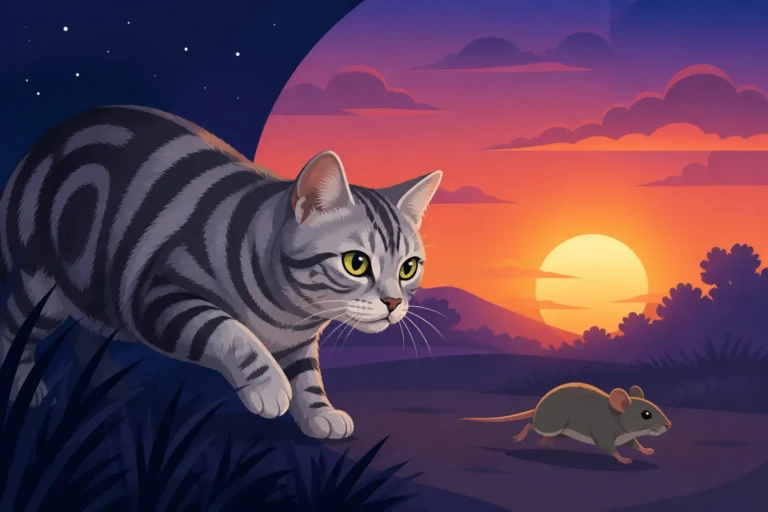
Before the actual pounce, there's a critical phase of intense focus and positioning. You'll notice your American Shorthair’s body language shift dramatically. Their eyes will narrow, pupils dilate, and their gaze will lock onto the 'prey' with unwavering intensity. Their ears might swivel to better pinpoint sounds, and their whiskers may twitch forward, acting like sensory antennae to gauge distance and movement. This isn't just staring; it's an intricate information-gathering process.
During this stage, the American Shorthair often adopts a low, crouched stance, their body language communicating pure readiness. Their rear end might wiggle slightly, a peculiar but common preparation that helps them gauge distance and gather momentum for the spring. This wiggle isn't cute; it's functional. Their muscles tense, coiling like a spring, ready to release that stored energy in a powerful, precise leap. How an American Shorthair Stalks describes this preliminary phase in more detail.
Their tail, too, tells a story during this phase. It might twitch slowly from side to side, or sweep gently, but it's rarely still. This tail movement is often seen as a sign of high concentration and anticipation, much like a dog's tail wag. It's an integral part of their communication and their internal state, reflecting the surge of adrenaline and focus as they prepare for the climax of the hunt. This entire pre-pounce routine, from focus to stance, is a masterclass in predatory efficiency.
The Anatomy of an American Shorthair Pounce
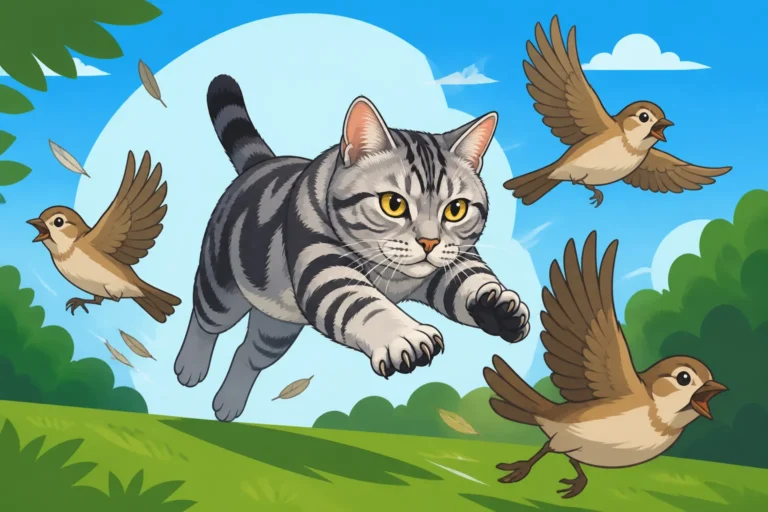
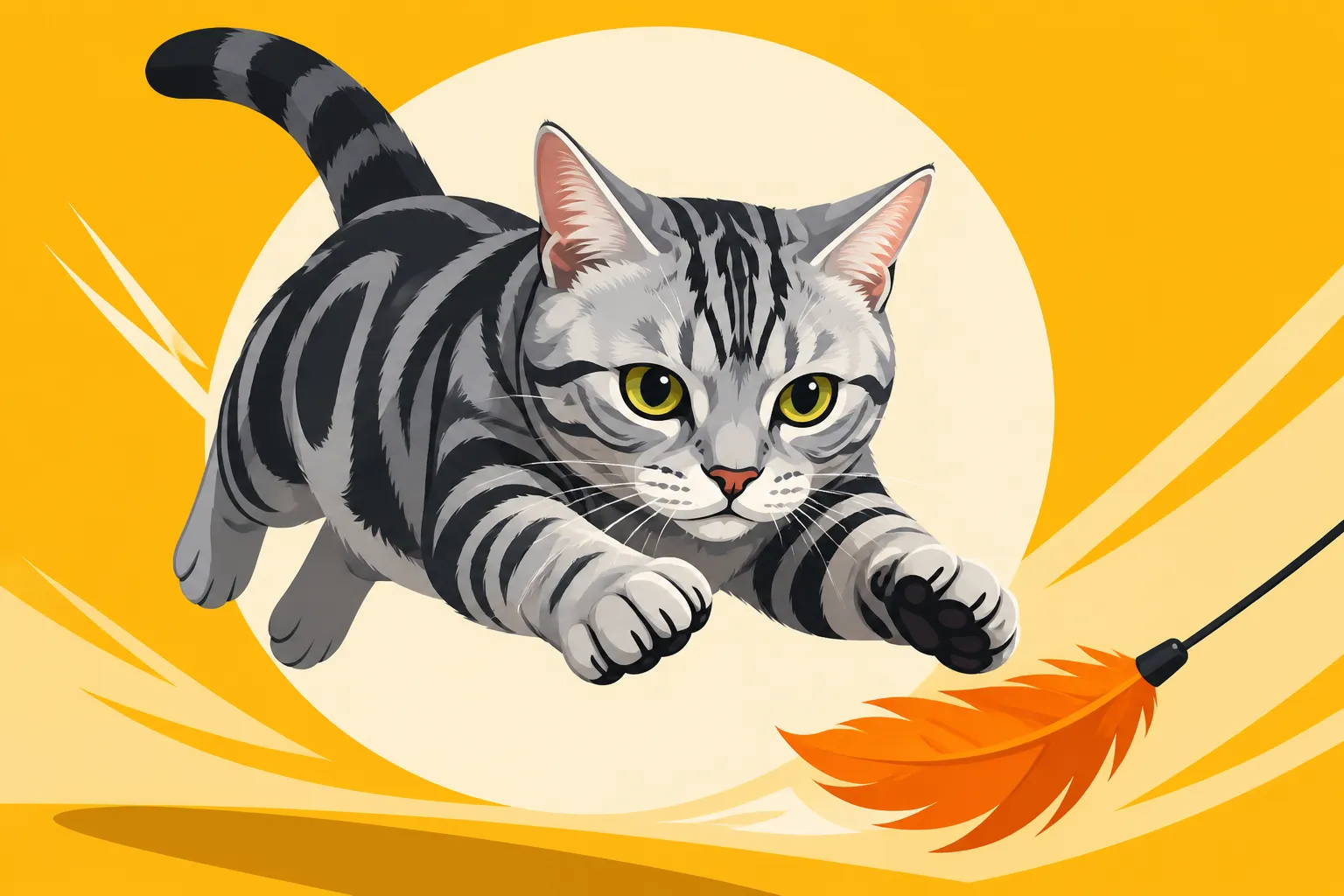
The pounce itself is a marvel of feline athleticism and coordination. It's a rapid, fluid movement, a testament to the American Shorthair's muscular build and innate agility. From a low crouch, they launch themselves forward or upward with incredible speed, aiming to land squarely on their target with precision. This isn't a random jump; it's a calculated maneuver designed to quickly incapacitate their "prey."
Their strong hind legs provide the explosive power, pushing off the ground with impressive force. Simultaneously, their front paws, armed with sharp claws, are extended, ready to grab, pin, or bat the target. The entire body works in concert, with the spine flexing and extending to maximize reach and impact. It happens so quickly that sometimes it's hard to follow with the naked eye, leaving you wondering if you even saw it correctly.
After the initial strike, an American Shorthair will often engage in a flurry of activity, batting, bunny-kicking with their back legs, and even biting the 'prey.' This final phase is about securing the kill, and it’s a crucial part of the full hunting sequence that provides immense satisfaction. Understanding these components helps us appreciate the complexity of their play and how important it is for them to complete this sequence, even with a toy.
The Coiled Spring: Hind Leg Power
The power behind an American Shorthair's pounce comes predominantly from their incredibly strong and muscular hindquarters. These cats have a sturdy, well-balanced build, which is a direct reflection of their working ancestry. When they crouch, their hind legs compress, storing potential energy like a coiled spring. This allows for an explosive release, propelling their body forward with remarkable force and speed.
Imagine watching a professional sprinter at the starting block; every muscle is tensed, ready to burst. It’s similar for your American Shorthair. The power isn't just in the muscles, but in the sophisticated coordination of nerves and tendons that allow for such instantaneous and powerful action. This is why you often see that characteristic "wiggle" right before they launch – it’s not just cute, it’s a physical manifestation of them calibrating their leap, ensuring maximum propulsion and accuracy.
This powerful launch is essential for catching quick-moving prey. Whether it's a scurrying mouse or a dangling feather toy, the American Shorthair needs to cover ground swiftly and decisively. Their broad chests and robust bone structure support this athleticism, enabling them to withstand the impact of landing and to exert powerful control over their target once engaged. It’s a testament to their natural design that they retain such formidable physical capabilities, even generations removed from their active mousing days.
Precision and Control: Front Paw Action
While the hind legs provide the propulsion, the front paws are all about precision and control. As the American Shorthair launches, their front paws extend, often splayed open with claws semi-retracted, ready to encompass or pin the target. This isn't a haphazard swipe; it’s a deliberate action designed to maximize contact and prevent escape. The pads of their paws are incredibly sensitive, allowing them to feel and adjust their grip instantly.
Once they make contact, the front paws become formidable tools. They might bat the toy, simulating stunning the prey, or firmly pin it to the ground, reflecting the final moments of a hunt. Many American Shorthairs will then use their paws to manipulate the 'prey,' tossing it in the air or carrying it off, further engaging their hunting instincts. This entire sequence, from initial contact to manipulation, is deeply satisfying for them.
This dexterity is also evident in how they play with smaller, faster toys. You might see them 'scoop' a toy into their grasp or use quick, delicate taps to keep it moving, mimicking a game of 'cat and mouse.' It's a complex interplay of strength and finesse, showcasing the full range of their predatory abilities. For owners, observing this intricate paw work can be a fascinating window into their cat's inner world, revealing just how much their domestic play still honors their wild heritage.
Providing Healthy Pounce Outlets Indoors
For an indoor American Shorthair, satisfying that deep-seated pounce instinct is crucial for their overall well-being. Without appropriate outlets, they can become bored, destructive, or even target their playful aggression towards humans or other pets. The key is to provide opportunities for simulated hunting that engage all stages of the predatory sequence, from stalking to the final "kill." This means more than just leaving toys scattered around; it requires interactive play and a stimulating environment.
The good news is that American Shorthairs are generally very adaptable and responsive to play, especially when it taps into their natural drives. Establishing a consistent play routine helps them burn off energy, maintain a healthy weight, and strengthens the bond between you. Think of it as a vital enrichment activity, not just entertainment. It prevents behavioral issues and ensures your cat leads a happier, more fulfilled life, even if they never chase a real mouse. What an Indoor American Shorthair Does With a Mouser's Instinct explores this further.
One of the most common mistakes owners make is not letting the cat "win" during playtime. The satisfaction for an American Shorthair comes from completing the hunt, which means they need to feel like they've successfully caught and subdued their prey. Ending a play session by allowing them to capture the toy and maybe even "bunny-kick" it is essential. This completion provides a vital psychological reward, reinforcing positive play behaviors.
The Best Toys for the Pounce Instinct
When it comes to toys that encourage the American Shorthair's pounce, variety is key, but certain types stand out for mimicking real prey behavior. Wand toys are often considered the gold standard because they allow you to control the movement, simulating a fleeing critter. Feather wands, strings with small stuffed animals, or even ribbons can be incredibly effective. The erratic movements, sudden pauses, and quick dashes of a wand toy are irresistible. You can find a vast array of engaging wand toys on Amazon, from simple feathers to elaborate attachments, offering endless ways to keep play fresh and exciting.
Small, lightweight toys that can be batted around and carried are also excellent. Think crinkle balls, soft mice, or small plush toys. The American Shorthair loves to stalk these from afar, pouncing, then batting them around before "killing" them. Interactive puzzle feeders can also stimulate their foraging and hunting instincts, requiring them to "work" for their food, mimicking the effort involved in finding and securing a meal. Which Toys Finish an American Shorthair's Hunt provides more ideas.
Here's a quick guide to choosing pounce-worthy toys:
| Toy Type | Simulates | Engagement Level | Best For | Considerations |
|---|---|---|---|---|
| Wand Toys | Fleeing bird/rodent | High, interactive | Stalking, chasing, jumping, pouncing | Owner interaction essential; vary movements |
| Small Plush Toys | Small animal, mouse | Medium | Batting, pouncing, carrying, bunny-kicking | Easy for cat to "kill"; ensure durable materials |
| Crinkle Balls | Rustling prey | Medium | Batting, chasing, pouncing, auditory appeal | Lightweight, easy to manipulate and carry |
| Laser Pointers | Fast-moving speck | High, frustrating | Chasing, pouncing, high energy expenditure | Must end with a tangible toy catch to prevent frustration |
| Puzzle Feeders | Foraging, problem-solving | Medium | "Working" for food, mental stimulation | Slows eating; good for indoor exercise |
| Kickers/Body Pillows | Larger prey, wrestling | Medium | Bunny-kicking, wrestling, scent marking | Good for solitary play; durable fabric is best |
Remember to rotate toys to keep things interesting and prevent boredom. A cat that sees the same toys every day might lose interest. Store some away and bring them out periodically to make them feel new and exciting again. This keeps their hunting instincts sharp and ensures they remain engaged during playtime.
How to Simulate a Successful Hunt
Simply dangling a toy isn't enough; you need to simulate the natural behaviors of prey to truly engage your American Shorthair's pounce instinct. Start by making the toy appear from behind furniture or doorways, mimicking a creature emerging from cover. Move it erratically – darting, pausing, twitching – just like a real mouse or bird would. Speed up and slow down, occasionally letting the toy disappear and reappear to heighten their anticipation. This encourages the stalking phase and makes the eventual pounce more satisfying.
Crucially, always allow your American Shorthair to "catch" the toy at the end of a play session. Let them pin it down, chew on it, and perform their characteristic bunny kicks. This completion of the hunting sequence is incredibly important for their psychological satisfaction. If the toy always escapes, your cat can become frustrated and might lose interest in playing, or even become overstimulated and redirect their energy aggressively. It’s important to provide a definitive victory. Why an American Shorthair Needs to Catch the Toy highlights this essential aspect of play.
Dedicate specific times each day for interactive play. Short, frequent sessions (10-15 minutes, two or three times a day) are often more effective than one long, drawn-out session. American Shorthairs, like most cats, have bursts of energy, often around dawn and dusk, which are their natural hunting times. Scheduling playtime around these periods can maximize their engagement and ensure their energy is channeled productively. After a good play session, many cats will feel satisfied, groom themselves, and then settle down for a nap, mimicking the post-hunt ritual of their wild relatives.
Addressing Unwanted Pouncing Behavior
Sometimes, the American Shorthair's natural pounce instinct can be directed inappropriately, leading to frustrating or even painful interactions with human family members. Pouncing on ankles, hands, or other body parts can be a common complaint, especially with younger, energetic cats who haven't learned appropriate play boundaries. It's crucial to understand that your cat isn't being malicious; they're simply acting on instinct, often because they haven't been taught what is and isn't acceptable prey.
The key to managing this behavior is redirecting their powerful instincts toward appropriate objects. This isn't about punishing your cat, which can damage your bond and make the behavior worse, but about teaching them what they can pounce on. It requires patience and consistency, but it's absolutely achievable with an American Shorthair, given their intelligence and adaptability.
It's also important to consider if your cat is getting enough mental and physical stimulation. A bored American Shorthair, particularly one with a strong prey drive, is more likely to create its own "fun" by ambushing whatever moves, including you. Increasing interactive play and enriching their environment can often reduce or eliminate unwanted pouncing.
Redirecting Ankle Attacks
The dreaded ankle attack: you're walking across the room, minding your own business, and suddenly your American Shorthair launches out from under the sofa, hooking your ankle with their claws. This is a classic example of redirected hunting behavior. For your cat, your moving foot or leg can easily mimic a fleeing animal, triggering their pounce instinct. The first rule here is: never use your hands or feet as toys. While it might seem fun initially, it teaches your cat that human body parts are fair game for hunting.
When an ankle attack occurs, resist the urge to yelp, pull away dramatically, or punish your cat. Any of these reactions can inadvertently reinforce the behavior by making it seem like a fun, interactive game. Instead, quietly disengage. If your cat has latched on, try to stay still for a moment, and then slowly and calmly remove your foot. Immediately redirect their attention to an appropriate toy. Keep a wand toy or kick toy handy in common ambush zones. As soon as they shift their focus to the toy, reward them with praise and continued play with the toy.
Consistency is vital. Every single time your cat goes for your feet or hands, redirect them. If you sometimes let them play with your fingers, you're sending mixed signals that will confuse them and make the training process much longer. Provide plenty of appropriate play opportunities throughout the day, especially interactive wand play that allows them to chase, catch, and "kill" the toy. This helps drain their energy and satisfy their hunting drive on acceptable targets, making them less likely to target you.
Environmental Enrichment for Pounce Satisfaction
Creating an enriching indoor environment is essential for an American Shorthair, helping them to express their natural behaviors, including the pounce, in positive ways. Vertical space is incredibly important for cats. Cat trees, shelves, or even sturdy wall-mounted perches give them elevated vantage points, which simulate natural perches used for observing prey or surveying territory. From these heights, they can spot a toy moving below and plan their ambush, fulfilling a key part of the hunting sequence. How High an American Shorthair Needs to Get delves into the importance of vertical territory.
Beyond vertical space, think about introducing elements that encourage exploration and activity. Tunnels, cardboard boxes, and paper bags (always remove handles) offer places to hide, stalk, and ambush from. These simple additions can transform a mundane living room into a dynamic hunting ground. You can hide treats or toys in these spots to encourage them to explore and "hunt" for their rewards. Remember, the more stimulating their environment, the less likely they are to seek out inappropriate targets for their energy.
Consider rotating environmental elements as well. Just like with toys, changing up the layout of boxes, or moving a cat tree to a new window periodically, can keep your American Shorthair engaged and curious. This variety prevents boredom and encourages them to continually re-evaluate their territory and hunting grounds. A well-enriched environment, combined with regular interactive play, is the best defense against unwanted pouncing and ensures a happy, healthy American Shorthair.
Disclaimer
This article is for general informational purposes only and does not constitute professional advice. Laws, prices and regulations vary by location and change over time. Consult a qualified professional for guidance on your specific situation.