Why Centuries of Ratting Left the American Shorthair Its Drive
It’s a common misconception that because the American Shorthair looks like a sturdy, everyday tabby, its needs must be simple. Many folks bring home one of these wonderful cats, expecting a placid, low-maintenance companion, only to be surprised by a persistent drive to stalk, chase, and "capture" anything that moves. This isn't just a quirk; it's the deeply ingrained legacy of centuries where their very survival depended on their prowess as hunters. This guide will explore the profound history behind the American Shorthair's powerful predatory instincts and how to embrace and channel this innate drive in your beloved feline friend.
The Deep Roots of the American Shorthair's Hunting Instinct
When you look at your American Shorthair peacefully napping in a sunbeam, it's easy to forget that beneath that calm exterior lies the heart of a highly efficient predator. This isn't a recently developed trait; it’s been honed over hundreds of years through a very specific kind of natural selection. Their ancestors weren't bred for fancy looks or designer traits; they were bred for function, pure and simple, and that function was catching vermin.
Life Aboard the Ships: A Job, Not a Pet
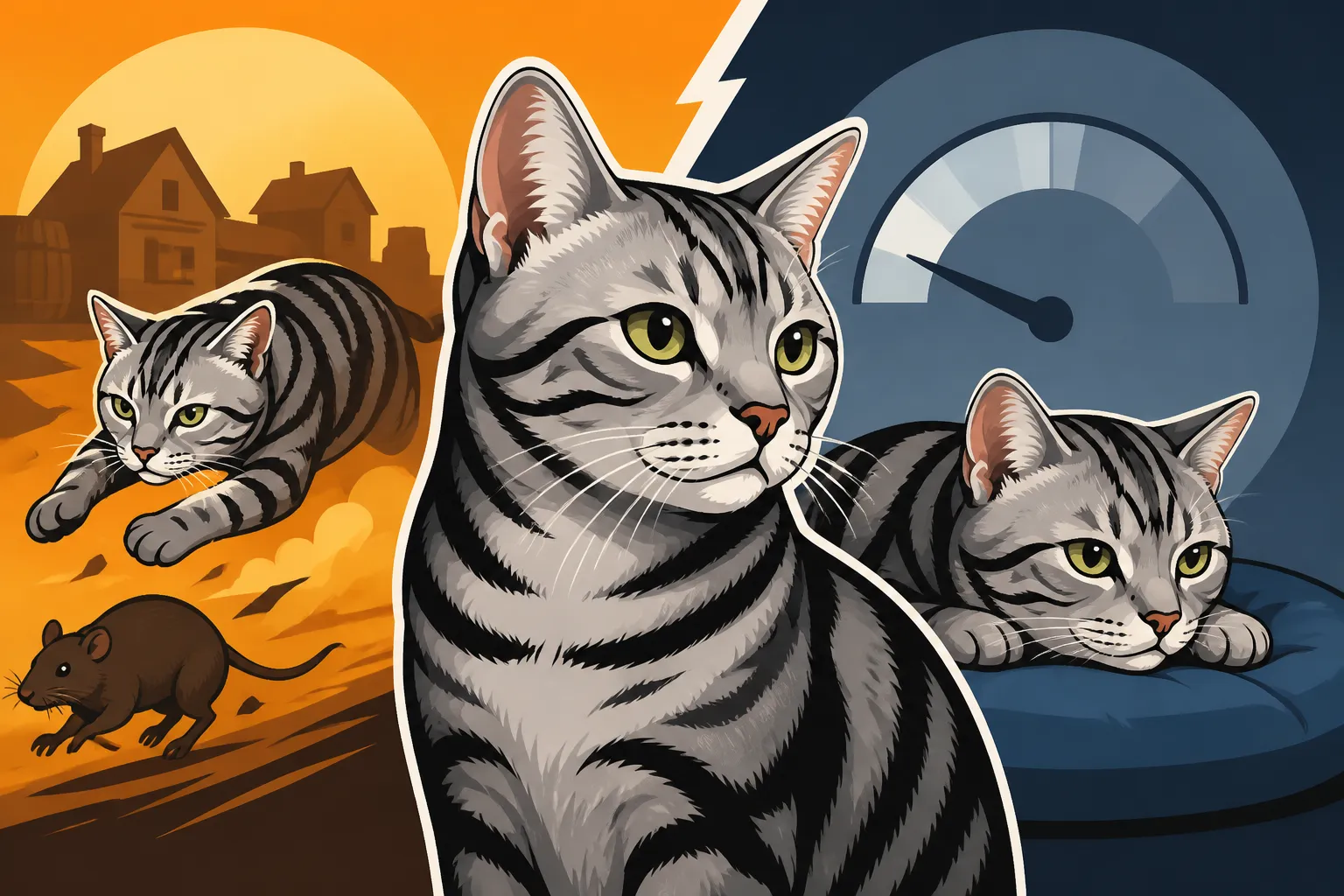
Imagine the cramped, often unsanitary conditions on sailing ships crossing the vast ocean centuries ago. Food supplies were precious, and infestations of rats and mice weren't just a nuisance; they were a threat to the provisions, the cargo, and even the structural integrity of the ship. This is where the American Shorthair's ancestors truly earned their keep. They weren't cuddled pets; they were working crew members. A cat that couldn't effectively hunt and control the rodent population simply wouldn't survive the voyage, let alone be welcomed at the destination.
This harsh reality meant that only the most skilled, most determined hunters made it across the Atlantic. Those with a weaker prey drive, or those too timid to tackle a determined rat, often didn't make it. This constant culling ensured that the genetic line passed down was strong in hunting capabilities. It's why modern American Shorthairs, even those who've never seen a mouse, often exhibit intense focus when a feather wand toy flits past, or how they will methodically pat at a crinkly ball as if it were actual prey. Their very existence is a testament to the effectiveness of their ancestors in this vital role.
Settling the New World: From Ship to Farm
Once these ship cats arrived on the shores of the New World, their job didn't end; it merely changed scenery. Early settlers, carving out lives in untamed wilderness, faced similar, if not greater, challenges with rodents and pests in their homes, barns, and granaries. Just as on the ships, a cat that could protect food stores and keep homes clear of vermin was invaluable. These cats were crucial for survival, becoming an integral part of farm life.
On the farms and in the fledgling towns, the cats continued to self-select for hunting prowess. There were no bowls of kibble readily available; they had to hunt for their meals. This meant constantly patrolling, stalking, and capturing prey to feed themselves and their kittens. The environment was a tough classroom, rewarding vigilance, stealth, and successful kills. This sustained period of reliance on hunting for survival cemented the predatory sequence into the American Shorthair's DNA, shaping their physical build for agility and strength, and their mental faculties for focused attention on potential prey. It's a heritage that contributes to their overall robust health and pragmatic demeanor today, reflecting a life where function was everything.
Natural Selection at Work: Survival of the Fittest Hunter
The American Shorthair's origin story is less about selective breeding by humans for aesthetic traits and more about rigorous natural selection for a specific job: pest control. For centuries, these cats survived and thrived because they were exceptionally good at what they did. This isn't just about catching a mouse; it's about the entire behavioral sequence that leads to it. Why Centuries of Ratting Left the American Shorthair Its Drive is a fundamental aspect of their being.
Consider the factors that would have led to their survival: keen eyesight for spotting movement, excellent hearing to detect scurrying, powerful muscles for quick bursts of speed and a strong pounce, and intelligent problem-solving to outwit clever rodents. Cats exhibiting these traits were more likely to live, reproduce, and pass on their strong hunting genes. Those that were less effective simply didn't make it in the tough environments of ships and early American settlements. This continuous pressure over many generations resulted in a breed with an inherently high prey drive, quick reflexes, and an enduring instinct to seek out and subdue "prey," even if that prey is now just a crinkly ball or a laser dot. This raw, unadulterated instinct is what makes the American Shorthair such a capable and engaging companion, provided their needs are understood and met.
Understanding the American Shorthair's Predatory Sequence
Many people think of "hunting" as simply catching an animal, but for a cat like the American Shorthair, it's a complex, instinctual sequence of behaviors. Understanding this sequence is key to appreciating your cat's actions and providing appropriate outlets for their deeply ingrained needs. It's not about being mean or cruel; it's about fulfilling a biological imperative.
The Unbroken Instinct: Stalk, Chase, Pounce, Kill Bite
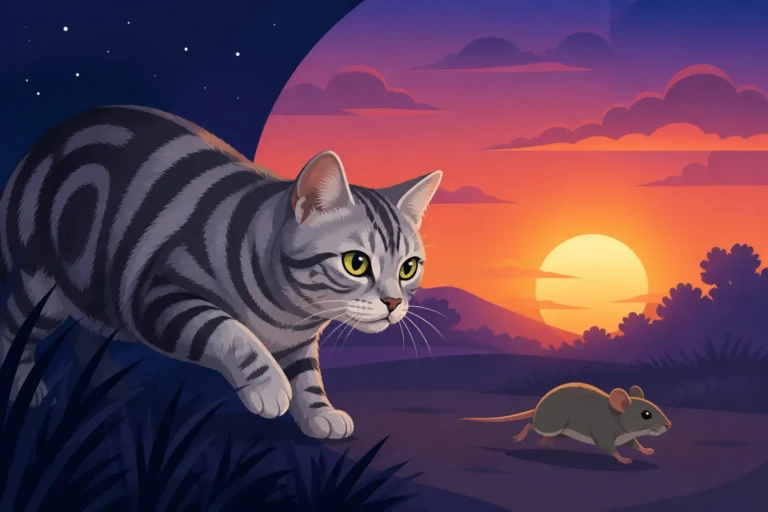
The American Shorthair, even when living a pampered indoor life, still cycles through the full predatory sequence. It begins with the stalk, a low, deliberate approach, often with their body close to the ground, eyes fixed. Then comes the chase, a rapid burst of speed to close the distance. This is followed by the definitive pounce, where they spring onto their 'prey,' often using their front paws to bat and hold. Finally, there's the instinctive kill bite, aimed at the neck or head, designed to quickly incapacitate. You can observe How an American Shorthair Stalks even when they are just playing with a toy.
When your American Shorthair plays with a toy mouse, you'll see them crouch, wiggle their rear end, and then launch themselves forward in a perfect How an American Shorthair Pounces. They're not just batting at it; they're practicing a vital life skill their ancestors perfected. If this sequence isn't allowed to play out completely, especially the "kill bite" and "capture" part, it can leave them feeling frustrated and unfulfilled. This might manifest as them trying to hunt your feet, attacking furniture, or generally being more restless. It's crucial for their mental health to have opportunities to complete this sequence, even if it’s with a fluffy toy or a treat hidden in a puzzle.
Why the "Catch" is Crucial for Mental Well-being
For an American Shorthair, the "catch" isn't just a bonus; it's the culmination of the entire hunting sequence and provides immense satisfaction. If a cat is constantly chasing a laser pointer but never gets to physically capture anything, that predatory drive builds up without release. Imagine always being on the verge of achieving a goal, but never quite reaching it – that's what a cat experiences when they can't complete the "kill" phase of the hunt. This is a common pitfall for owners who don't fully understand their cat's inherent needs.
This unmet need for the catch is a major reason why an American Shorthair might become destructive, anxious, or develop "play aggression." They're simply trying to complete their natural cycle. Providing toys they can actually grab, bat around, and mouth, like robust plush mice or crinkly balls, allows them to feel successful. Without the satisfying conclusion of the catch, the instinct remains unfulfilled, and the drive persists, often leading to undesirable behaviors in the home. It’s also important to remember that Why an American Shorthair Cannot Live With a Bird or Hamster stems from this deeply rooted instinct – they genuinely see these small animals as prey.
Recognizing the Signs of an Engaged Hunter
Your American Shorthair will show clear signs when their hunting drive is engaged. Their eyes will dilate, focusing intently on the "prey." Their ears might swivel to pinpoint sounds, and their body will often flatten, tail twitching slightly before a full-body wiggle. They might even make soft chirping or chattering noises, especially if they spot a bird outside the window. These are all indicators that their ancient instincts are fully online.
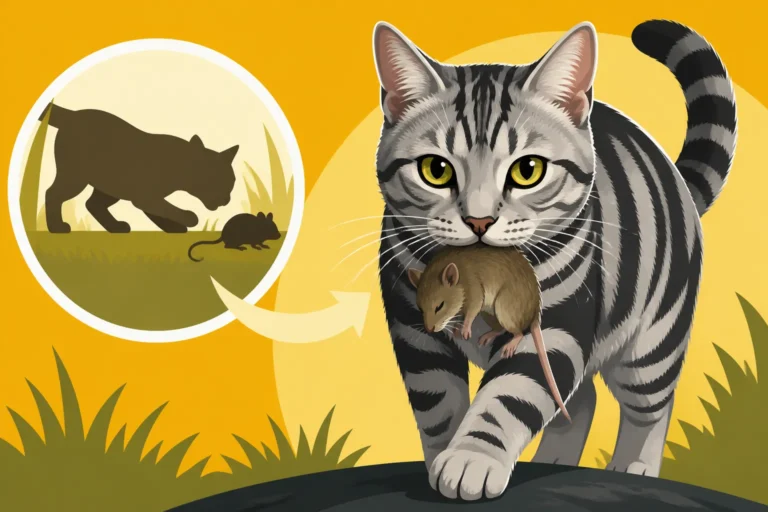
These behaviors aren't just cute; they're serious business for your cat. Even if it's just a dust bunny skittering across the floor, in their mind, it's an opportunity to exercise that powerful instinct. Don't be surprised if your American Shorthair brings you a "gift" after a successful "hunt," whether it's a favorite toy or, if they have outdoor access, an unfortunate critter. This is their way of showing off their prowess, a behavior rooted in their history. Why an American Shorthair Brings You Things is a sign of their inherent desire to share their "kill." Understanding and respecting these signs allows you to better engage with your cat and ensure they have healthy outlets for their innate behaviors.
Channeling That Drive: Meeting Your American Shorthair's Needs
Recognizing your American Shorthair's strong hunting drive is the first step; the next is to proactively channel it in appropriate ways. This isn't about suppressing their natural instincts, but rather providing safe, satisfying, and enriching alternatives that keep them happy and mentally stimulated. After all, a bored hunter is rarely a well-behaved one.
Interactive Play: Simulating the Hunt Indoors
The most effective way to meet your American Shorthair's hunting needs indoors is through interactive play that mimics the predatory sequence. Think of yourself as the "prey," controlling a wand toy or a fishing-pole style toy. Drag it along the floor, hide it behind furniture, make it dart and pause – just like real prey would. Let your cat stalk, chase, and finally pounce on the toy. Crucially, let them catch it and "kill" it by allowing them to hold onto it, bat it, and even give it a gentle "kill bite" before you disengage and restart the game. Toys from Amazon, like the Da Bird or similar wand toys with feather attachments, are excellent for this.
Aim for several short play sessions throughout the day, especially around dawn and dusk, which are their natural hunting times. These sessions should be intense but not overly long, typically 10-15 minutes, or until your cat starts to lose interest. It's about quality over quantity. Allowing them to "win" and catch the toy multiple times helps satisfy that deep-seated need. Which Toys Finish an American Shorthair's Hunt are those they can physically capture and mouth, completing the sequence.
Enrichment and Environment: Providing an Outlet
Beyond direct play, your home environment can be a treasure trove of hunting opportunities for your American Shorthair. Puzzle feeders are fantastic for this; instead of simply eating out of a bowl, they have to "hunt" for their food by manipulating the feeder. You can find a wide variety of puzzle feeders on Amazon that challenge cats to work for their kibble or treats, engaging their problem-solving and predatory instincts. Hide portions of their dry food around the house in different spots – on cat trees, under rugs, in empty paper towel rolls – forcing them to "forage" and "hunt" for their meals.
Vertical space is also incredibly important. Cat trees, shelves, and even clear windowsills provide vantage points from which your American Shorthair can observe their "territory" and scan for "prey" (which might just be a bird outside). A catio, a safe outdoor enclosure, can be an amazing compromise for an American Shorthair with a strong drive, allowing them to experience the sights, sounds, and smells of the outdoors without the dangers of roaming freely. This kind of environmental enrichment helps keep their minds sharp and their instincts satisfied. Whether a Puzzle Feeder Satisfies an American Shorthair is a resounding yes for many, as it directly taps into their need to work for their food.
Here's a quick comparison of natural hunting instincts and how we can best provide for them in a domestic setting:
| Natural Hunting Instinct | Domestic Outlet | Benefits for Your American Shorthair |
|---|---|---|
| Stalking & Hiding | Wand toys moved subtly, hiding behind furniture; cardboard boxes, tunnels | Mental stimulation, stealth practice, exercise. |
| Chasing & Speed | Fast-moving wand toys, rolling balls; laser pointers (with a catch at the end) | Cardiovascular exercise, quick reflexes, energy release. |
| Pouncing & Grabbing | Dangling toys, plush prey; interactive springs | Coordination, strength, satisfying physical exertion. |
| Kill Bite & Capture | Durable plush toys; food puzzle toys (e.g., from Amazon) | Mental closure, prevents frustration, reinforces success. |
| Foraging & Exploring | Hidden treats, puzzle feeders; cat-safe plants | Sensory engagement, problem-solving, prevents boredom. |
| Observation from High Places | Cat trees, shelves, window perches | Sense of security, territorial patrol, mental stimulation. |
Managing the Outdoor Instinct (Even Indoors)
While the American Shorthair's ancestors roamed freely, modern indoor living is safer for them. However, their instincts remain strong. You might notice your cat "patrolling" your home, investigating every corner, or sitting by windows intently watching the world outside. This is their way of exercising their territorial and hunting instincts. While they might occasionally catch a fly or a spider indoors – a clear indicator that How Often an American Shorthair Still Catches Mice is not a thing of the past for them – it’s important to give them other, safer targets.
Consider a rotating selection of toys. Cats, especially hunters, can get bored with the same "prey" day in and day out. Introduce new toys, then put some away for a few weeks before bringing them back out. This keeps their interest piqued. Engage in regular, scheduled play sessions where you are actively involved. This dedicated time fulfills their hunting needs and strengthens your bond. Remember, a fulfilled American Shorthair is a happy American Shorthair. Their rich history as working cats is a gift, providing them with a sturdy build and an engaging personality, but it also comes with the responsibility of understanding and nurturing their incredible predatory drive. Giving them appropriate outlets for their innate behaviors is one of the best ways to honor their heritage and ensure they thrive in your home.
Disclaimer
This article is for general informational purposes only and does not constitute professional advice. Laws, prices and regulations vary by location and change over time. Consult a qualified professional for guidance on your specific situation.