How Often an American Shorthair Still Catches Mice
It’s a common wonder, isn't it? You look at your sturdy, calm American Shorthair lounging on the sofa, perhaps chasing a dust bunny with a lazy paw, and you can’t help but think about their ancestors. Were they truly the prolific mousers of old? Does that deep-seated hunting instinct still burn brightly in their eyes, even if the biggest "prey" they encounter is a feather on a wand toy? This guide will dive deep into the fascinating world of the American Shorthair's hunting prowess, exploring how often they still catch mice and how their innate drive manifests in our modern homes.
The Enduring Legacy of the American Shorthair's Hunting Instinct
The American Shorthair isn't just another pretty face; this breed carries a rich history of utility and purpose. Their very existence is tied to their effectiveness as working cats, a legacy that continues to shape their behavior today, even if the "job" itself has evolved dramatically.
A History Etched in Prey Drive
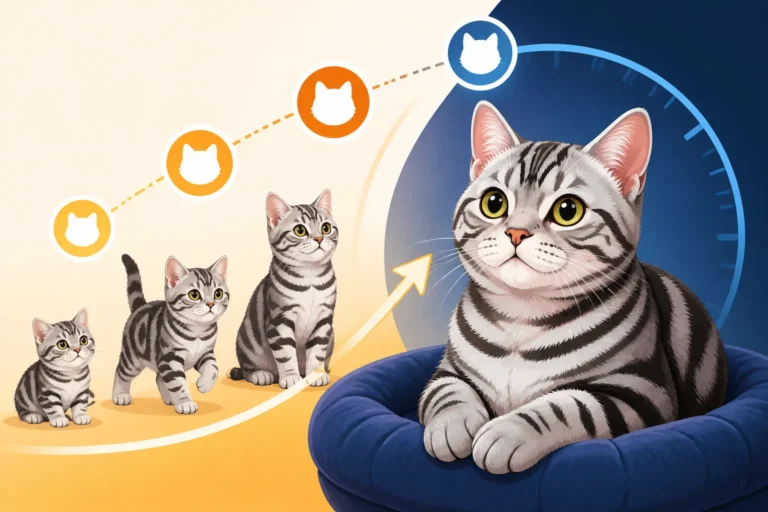
Imagine a ship crossing the vast ocean centuries ago, or a bustling farm in colonial America. These weren't places for pampered pets; cats on these frontiers had a vital role to play. They were the original pest control, keeping rats and mice in check, protecting valuable cargo and precious food stores from destruction. The cats that excelled at this task were the ones that survived, thrived, and passed on their genes. This selective pressure over hundreds of years forged the American Shorthair's robust physique, keen senses, and, most importantly, an undeniable, ingrained prey drive.
Their ancestors weren't bred for delicate features or exotic coats; they were bred for function. Every aspect of their build, from their strong jaws and muscular bodies to their sharp intelligence, was honed by the need to effectively stalk, chase, and capture prey. This isn't a trait that simply disappears with a comfortable indoor life; it's an intrinsic part of who they are. You can truly appreciate how profound this history is when you consider Why Centuries of Ratting Left the American Shorthair Its Drive. It’s a core component of their genetic blueprint, an ancestral memory that whispers through their every twitch and pounce.
Instinct Versus Opportunity
So, the drive is there, no doubt. But what about the opportunity? This is where the modern American Shorthair's life diverges significantly from that of their forebears. An American Shorthair living in a city apartment, never venturing beyond the balcony, simply won't have the same chances to hunt live mice as one on a sprawling rural property. The instinct remains sharp, but the canvas on which it can be expressed changes dramatically.
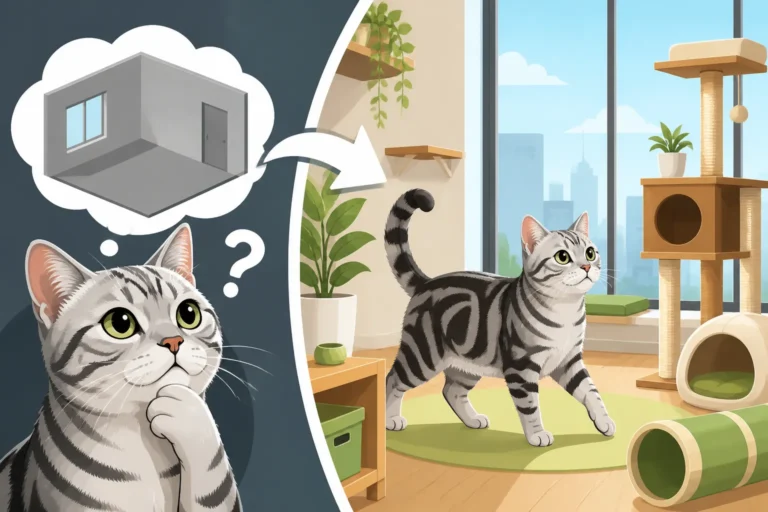
For many indoor American Shorthairs, their hunting grounds are the living room, the hallway, and the occasional forbidden countertop. Their "prey" becomes anything that moves: a dust bunny skittering across the floor, a sunbeam-dancing fly, or the elusive red dot of a laser pointer. While these aren't actual mice, the cat's internal mechanism for stalking, pouncing, and "killing" is fully engaged. It’s a beautiful, if sometimes amusing, display of their natural capabilities, even if the outcome is merely a captured toy mouse rather than a real one. The frustration for some owners is that this instinct is so strong, yet the natural outlets are so few.
Individual Variation in Prey Drive
While the breed as a whole possesses a strong prey drive, it’s also important to remember that every cat is an individual. Just like people, American Shorthairs have their own unique personalities and preferences. You might encounter one American Shorthair who is a relentless hunter, always on high alert for anything moving, while another might be more of a relaxed observer, perfectly content to watch the world go by from a sunny window sill.
These variations can be influenced by a number of factors, including early kittenhood experiences, the temperament of their parents, and even the amount of enrichment they receive in their home environment. A kitten exposed to playful "hunting" games from a young age might develop a stronger, more confident hunting style. Conversely, a cat that was never really encouraged to play or had limited access to stimulating toys might seem less inclined to hunt. However, even the most seemingly laid-back American Shorthair will likely show a flicker of that ancestral spark if a real mouse were to suddenly dart across their path. The deep programming is always there, waiting for the right trigger.
The Indoor American Shorthair and Its "Mice"
Many American Shorthairs live entirely indoors, where they are safe from the dangers of the outside world. But does this mean their hunting instincts wither away? Absolutely not! Their clever minds and agile bodies simply adapt, finding new ways to satisfy that ancient urge within the confines of your home.
Ersatz Prey: Toys and Insects
When real mice aren't on the menu, the indoor American Shorthair becomes a master of imaginative play. Anything can become a "mouse" or a "bird" in their eyes. A crinkly ball rolling across the floor, a stuffed kick toy that feels satisfyingly firm when "killed," or even a stray hair tie can trigger a full-on hunting sequence. They stalk with low-slung bodies, eyes narrowed, tails twitching almost imperceptibly, before launching into a dramatic pounce. This is a crucial outlet for their natural drives.
Beyond manufactured toys, the natural world occasionally presents opportunities even indoors. A buzzing fly becomes a thrilling aerial target, prompting incredible leaps and acrobatic maneuvers. A spider scuttling across the wall is treated with the same intense focus and strategic approach as a real rodent. For these moments, your living room transforms into a miniature savanna, and your American Shorthair is the apex predator. What an Indoor American Shorthair Hunts Instead is a common question, and the answer is: whatever moves! Observing this natural behavior is one of the joys of sharing your home with an American Shorthair.
The "Gift" of the Hunt
One of the most endearing, and sometimes startling, behaviors of a hunting cat is presenting their "kill" to their human companions. For an indoor American Shorthair, this often translates to them dropping a favorite toy, a sock, or even a discarded bottle cap at your feet or in your bed. It’s not just a gesture of affection; it’s a deeply rooted instinct. In the wild, mothers bring prey back to their dens to teach their young how to eat and to contribute to the group's sustenance.
When your American Shorthair brings you a "gift," they are, in essence, treating you as a member of their trusted "colony" or their inexperienced kitten. They are sharing their bounty, perhaps even demonstrating their prowess, or simply seeking your approval for a successful hunt. The best response? Acknowledge their effort with a kind word and perhaps a gentle stroke. Never punish them for bringing you something, as this can confuse and upset them. Understanding Why an American Shorthair Brings You Things helps us appreciate this unique bond.
How Often They "Catch" Indoor Pests
So, the big question: how often does an indoor American Shorthair actually catch a real mouse? The honest answer is, it depends entirely on whether there are any real mice to catch! If your home is truly pest-free, then the answer will be "never," as there's simply no opportunity. However, if a mouse (or a small vole, or a particularly large insect like a beetle or grasshopper) somehow makes its way into your home, your American Shorthair's instincts will kick into high gear.
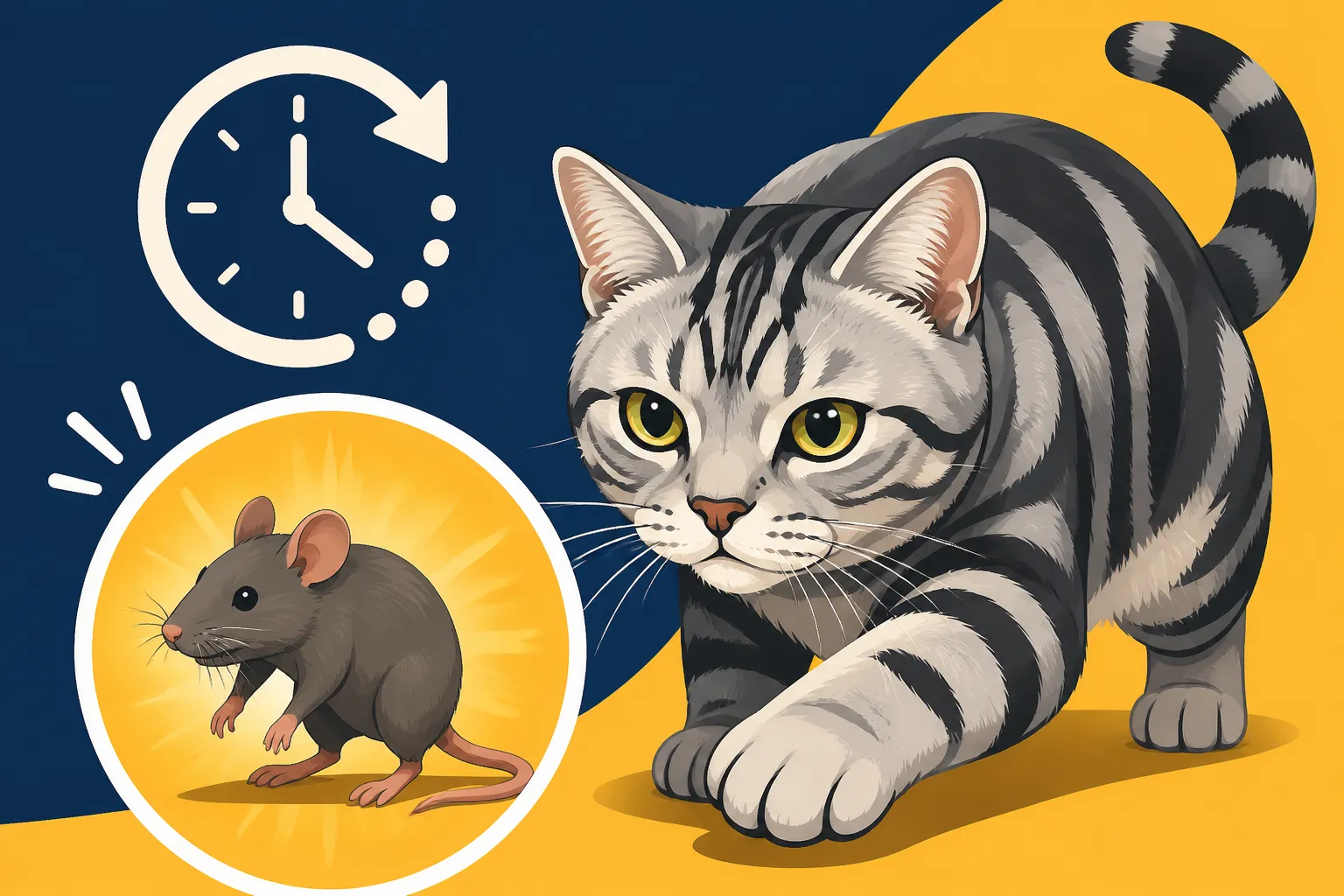
An American Shorthair, even one that has lived exclusively indoors, will recognize a rodent as genuine prey almost instantly. They are incredibly efficient hunters, often much more effective than you might imagine for a domestic cat. Their quiet stalking, powerful pounce, and quick bite are all finely tuned for this task. You might wake up to a "gift" on your mat, or find them intensely focused on a spot under the fridge where the culprit met its end. They are typically very good at their job, and if a mouse is present, it's highly likely your American Shorthair will attempt to "remedy" the situation, often successfully. How Often an American Shorthair Still Catches Mice is really a question of access.
The Outdoor American Shorthair: A True Hunter's Territory
For those American Shorthairs with outdoor access, either supervised or free-roaming, the opportunity to fully engage their hunting instincts is much greater. Here, their ancient programming truly shines, as they patrol their territory and interact with the natural world as their ancestors once did.
Active Hunting in Natural Environments
An American Shorthair with outdoor access transforms into a miniature predator, surveying its surroundings with an intense focus. They'll spend hours meticulously patrolling their territory, whether it's a sprawling backyard, a local park, or even a quiet country lane. Every rustle in the leaves, every chirp of a bird, every scurrying sound beneath the porch sends their senses into overdrive. This is where their hard, weather-resistant coat, sturdy build, and powerful muscles truly come into their own. They are perfectly adapted for navigating various terrains and enduring different weather conditions while on the hunt.
Their natural prey includes not just mice, but voles, shrews, young rats, insects, and occasionally small birds or reptiles. They demonstrate incredible patience, often freezing in place for minutes, perfectly camouflaged and waiting for the opportune moment to strike. This constant engagement with their environment provides immense mental and physical stimulation, fulfilling a deep-seated need that toys, no matter how engaging, can't fully replicate. The American Shorthair Still Hunts, Whether You Want It To or Not is a reality that outdoor owners quickly learn.
Frequency of Real Catches
How often an outdoor American Shorthair catches mice (or other small prey) can vary wildly based on several factors: the abundance of prey in their territory, the season, the individual cat's skill and drive, and the amount of time they spend outdoors. In areas with high rodent populations, such as rural properties, farms, or even gardens adjacent to open fields, a dedicated American Shorthair hunter could easily catch one or more mice a day, or even several in a single night.
During spring and summer, when prey animals are more active and abundant, their success rate tends to be higher. Some cats are simply more adept or more driven than others; a skilled hunter might bring home a "trophy" several times a week, while a more casual outdoor explorer might only catch something occasionally. It’s also worth noting that not every catch will be brought home. Many cats will consume their prey discreetly, leaving no evidence for their humans. This natural behavior highlights their efficiency and connection to their wild heritage.
Managing the Outdoor Hunter's Impact
While it’s fascinating to observe an American Shorthair in its natural hunting element, it’s also important to acknowledge the impact outdoor cats can have on local wildlife populations. This is a significant concern for many environmentalists and responsible pet owners alike. Birds, in particular, can be vulnerable to feline predation.
If you choose to allow your American Shorthair outdoor access, there are ways to mitigate their impact. Equipping them with a brightly colored, breakaway collar bell can alert birds and other small animals to their presence, giving them a chance to escape. Limiting outdoor time to daylight hours, and especially avoiding dawn and dusk when birds and small mammals are most active, can also help. Some owners opt for secure outdoor enclosures, or "catios," which allow their cats to experience the sights, sounds, and smells of the outdoors safely without being able to hunt live prey. Understanding How Much Wildlife an American Shorthair Takes is part of responsible pet ownership, and making informed choices is crucial.
Stimulating the American Shorthair's Hunting Instinct Ethically
Whether your American Shorthair is an indoor-only companion or an outdoor adventurer, providing appropriate outlets for their hunting instincts is crucial for their physical and mental well-being. It prevents boredom, reduces stress, and reinforces their natural behaviors in a safe and constructive way.
Interactive Play Mimicking the Hunt
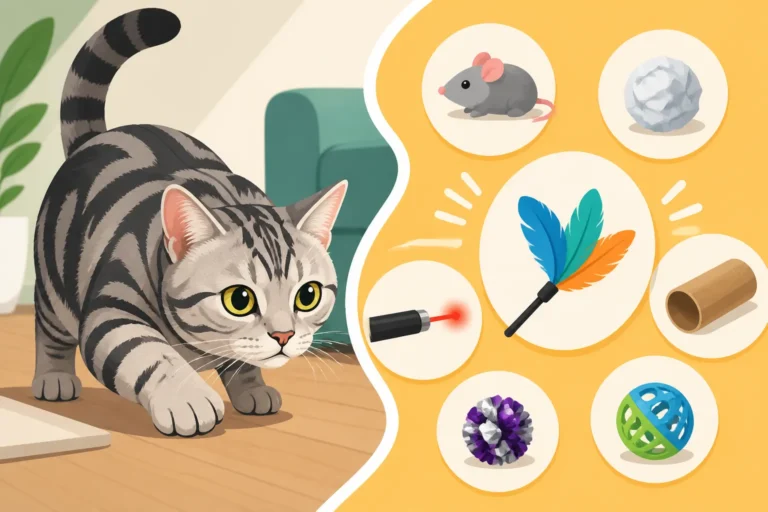
The most effective way to engage your American Shorthair's prey drive indoors is through interactive play that mimics the hunting sequence. This isn't just about throwing a ball; it's about stalking, chasing, pouncing, and finally, "killing" the toy. Wand toys with feathers, fabric strips, or small stuffed animals are excellent for this purpose. Move the toy like prey: scuttle it across the floor, hide it behind furniture, make it "fly" and then "land" erratically.
The key is to let your cat "catch" the toy frequently. If they never succeed in capturing their "prey," they can become frustrated and lose interest. Allow them to pounce, grab, and even "kill" the toy with a vigorous kick with their back feet. This completes the hunting sequence psychologically, providing immense satisfaction. At the end of a play session, always let them have a final "kill" and perhaps even keep the toy for a few minutes before putting it away. This validates their effort and reinforces the positive association with play. Play That Finishes the Hunting Sequence for an American Shorthair is vital for their happiness.
Puzzle Feeders and Foraging
Another fantastic way to tap into your American Shorthair's natural instincts is to make them "work" for their food. In the wild, cats don't just get a bowl presented to them; they have to hunt and forage. Puzzle feeders are designed to slow down eating and provide mental stimulation as your cat figures out how to extract their kibble or treats. These can range from simple balls with holes to more complex mazes.
Hiding small portions of their daily kibble ration around the house also encourages foraging behavior. Place bits in different rooms, on low shelves, or inside empty paper towel rolls. This transforms mealtime into a mini-hunt, engaging their senses of smell and exploration. You can find a fantastic selection of puzzle feeders on platforms like Amazon, offering a wide range of difficulty levels to keep your clever American Shorthair challenged and engaged. This not only satisfies their instinctual need to hunt for food but also helps manage their weight, as it slows down consumption.
Providing Appropriate "Prey"
Choosing the right toys for your American Shorthair is more important than you might think. Look for toys that are durable, safe, and realistically mimic the size and movement of natural prey. Small, soft toys that can be easily batted, carried, and "killed" are often favorites. Textures like feathers, fur (synthetic, of course!), or crinkly materials can add to the appeal.
Avoid toys with small, easily detachable parts that could be swallowed. Regularly inspect toys for wear and tear, replacing them when they become damaged. Rotating toys also helps keep your cat interested, preventing them from becoming bored with the same old objects. A selection of diverse toys ensures that you can always offer something new and exciting to spark their hunting interest, providing endless opportunities for them to express their innate drives in a safe and enriching way.
Why You Might Not Always See the Catch
It's easy to assume that if your American Shorthair does catch a mouse, you'd definitely know about it. After all, isn't that why they bring you gifts? But the reality is, cats are often discreet, and their hunting activities aren't always a public spectacle. You might be surprised at how often they might be successfully hunting without you ever witnessing it firsthand.
The Discreet Hunter
American Shorthairs, by nature, are often very quiet and stealthy creatures. Centuries of evolution taught their ancestors to be incredibly efficient and unobtrusive when hunting, relying on surprise and speed. This means that if a mouse does appear in your home, your American Shorthair is likely to go into full hunt mode with barely a sound. You won't hear a big commotion or a loud chase sequence like you might see in a cartoon.
Instead, they'll stalk low to the ground, using furniture and shadows for cover, moving with an almost eerie silence. The actual pounce and capture often happen in a flash, a blur of motion that's over before you've even fully registered what's happening. Unless you're in the room and actively watching at the precise moment of the encounter, it's very easy to miss the entire event. Their stoic and independent nature means they often don't feel the need to broadcast their successes.
Eating the Evidence
Another reason you might not see the "catch" is because some American Shorthairs, especially those with a strong ancestral connection to survival hunting, will simply eat their prey. This is a completely natural behavior for a cat and is often driven by nutritional needs, even if they are well-fed domestic cats. Small rodents like mice provide valuable protein and other nutrients.
If your cat catches a small mouse or even a large insect, they might consume it entirely, leaving absolutely no trace for you to discover. This means that even if your indoor American Shorthair is an active and successful hunter of any pests that infiltrate your home, you might never know it unless you happen to catch them in the act or if they leave behind a tell-tale, undigested morsel. It's a stark reminder of their wild heritage, even in the comfort of your living room.
Hiding Their Trophies
Cats sometimes cache their prey, either to save it for a later meal or simply out of an instinct to hide their bounty from potential competitors. While your American Shorthair likely doesn't have to worry about another cat stealing their hard-won meal, the instinct can still manifest. This means that a captured mouse might not be proudly presented on the doormat, but rather stashed away in a less obvious location.
You might, for instance, discover a dessicated mouse under the sofa weeks later, or a toy mouse hidden deep within a pile of blankets, completely forgotten. This behavior is just another facet of their complex hunting repertoire, demonstrating their resourcefulness and territorial nature. So, just because you haven't seen any evidence of a catch, it doesn't necessarily mean your American Shorthair isn't still a potent hunter in its own right.
Comparing Hunting Behaviors: Indoor vs. Outdoor American Shorthairs
Let's break down the typical hunting behaviors and "prey" types for American Shorthairs, depending on their environment. This table provides a quick overview of what you can generally expect.
| Feature / Behavior | Indoor American Shorthair | Outdoor American Shorthair |
|---|---|---|
| Primary "Prey" | Toys (wand, stuffed, crinkle balls), dust bunnies, household insects (flies, spiders, moths) | Mice, voles, shrews, small birds, large insects, occasionally small reptiles |
| Hunting Frequency | Daily interactive play sessions; occasional real pest control when opportunities arise | Can be daily, especially in prey-rich environments, varying with season |
| Methods Employed | Stalking, pouncing, batting, chasing, ambushing | Stalking, pouncing, chasing, ambushing, digging (for voles) |
| Evidence of "Catch" | "Gifts" of toys, socks; occasional insect carcass | Live or deceased prey brought home; consumed prey, no evidence |
| Motivation | Play, instinctual fulfillment, boredom relief, mental stimulation | Survival instinct, hunger, territorial defense, natural drive, sport |
| Impact on Wildlife | Minimal to none | Can have a significant impact on local bird and small mammal populations |
| Required Enrichment | Consistent interactive play, puzzle feeders, vertical space, window perches | Access to stimulating outdoor environment, occasional indoor play |
This article is for general informational purposes only and does not constitute professional advice. Laws, prices and regulations vary by location and change over time. Consult a qualified professional for guidance on your specific situation.