Whether the American Shorthair Is Losing Ground to Rarer Breeds
The American Shorthair can seem less visible than breeds with unusual coats, dramatic features, or a strong social-media following. That impression raises a fair question: is the breed actually losing ground, or is it simply quieter in the spotlight? This guide separates visibility from popularity and explains what registration trends, breed preferences, and everyday ownership can—and cannot—tell us.
Why the American Shorthair Can Seem Less Popular
Visibility is not the same as popularity
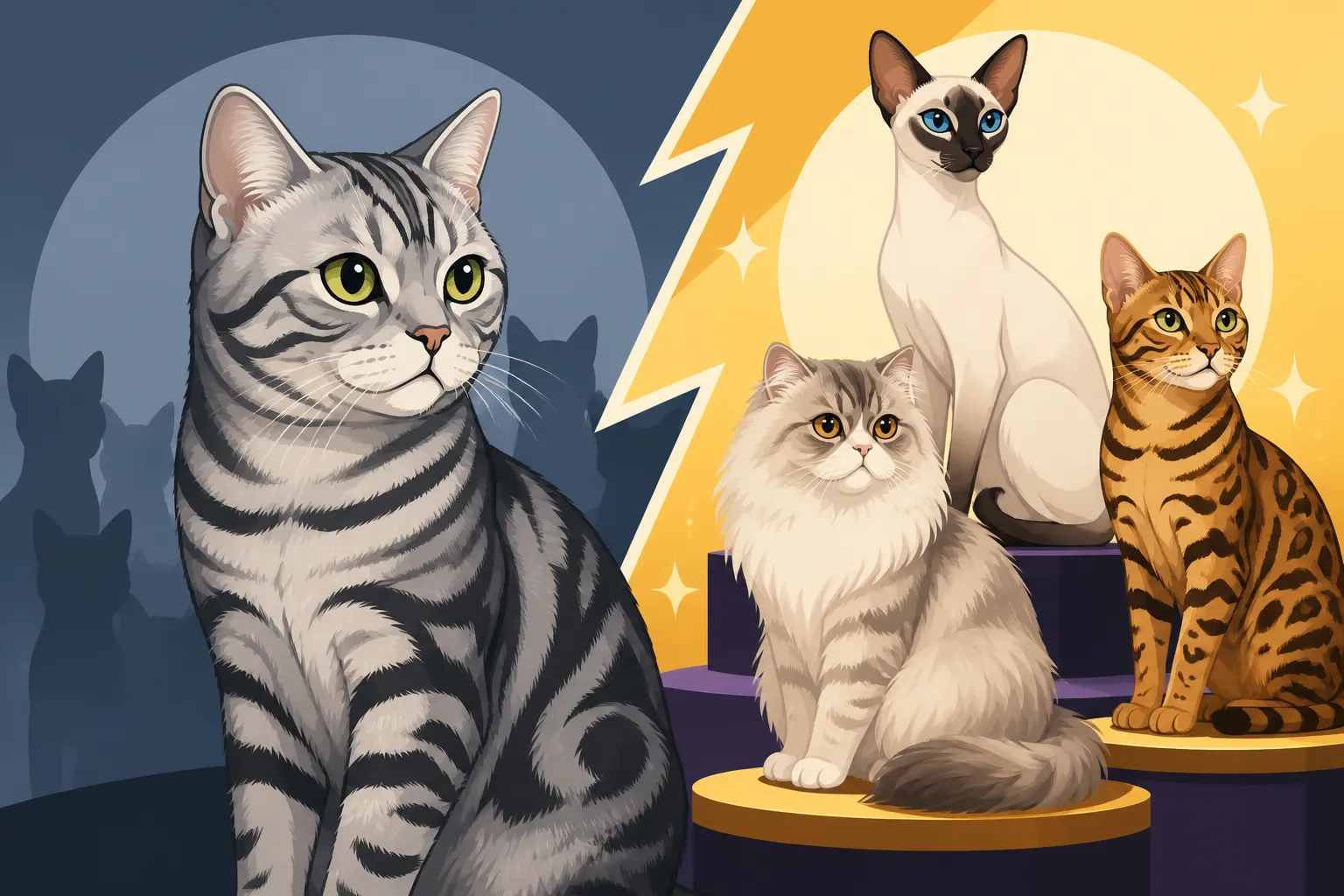
Some breeds are easy to recognize at a glance. A very long coat, folded ears, a flat face, or a strikingly unusual body shape can make a cat memorable in a photo or video. The American Shorthair is handsome, but its sturdy, balanced appearance can look familiar to people who have grown up around domestic shorthairs. That resemblance can make the breed less instantly recognizable, even when people appreciate it.
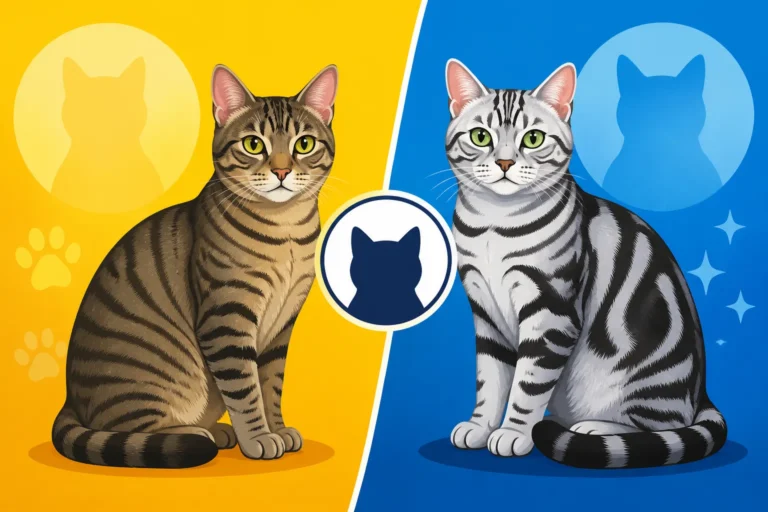
The same thing happens in conversation. Someone may describe a silver tabby as a “classic-looking cat” without knowing it could be an American Shorthair. Another person may assume that any shorthaired tabby with a broad face belongs to the breed. The pedigree distinction is less obvious from a quick glance than it is with breeds whose appearance is more distinctive.
Online attention also favors novelty. A rare color, striking feature, or surprising behavior can draw viewers, while a steady, adaptable companion may be less likely to become a viral sensation. That does not mean the American Shorthair is unwanted. It means public visibility is shaped by what catches attention, not simply by how many people would enjoy living with a particular cat.
For a broader look at the breed’s place among cat fanciers, see How Popular the American Shorthair Is. It helps to separate public recognition from the more practical question of how many people seek out and keep the breed.
The “looks like a tabby” problem
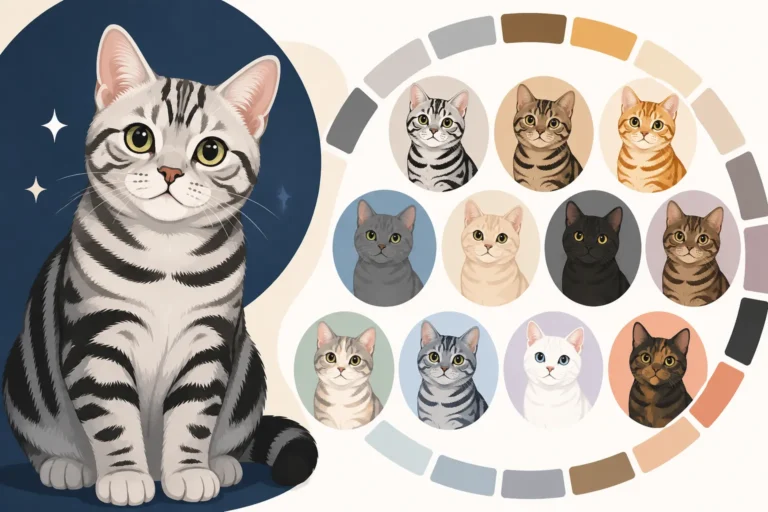
American Shorthairs share familiar features with many domestic shorthair cats: a short coat, an athletic build, and patterns such as tabby markings. That can make the breed’s identity seem less distinct to casual observers. It can also cause people to underestimate the difference between a pedigreed cat and a cat that simply resembles one.
A pedigree is about documented ancestry and breeding records, not just appearance. A shelter cat may look remarkably like an American Shorthair without being registered as one. Conversely, a pedigreed American Shorthair may not have the silver tabby coat many people associate with the breed. The visual overlap makes it harder for the breed to stand out in casual browsing—and harder to measure popularity by photos alone.
The breed’s history contributes to this confusion. For much of its life as a recognized breed, it was associated with the everyday working cat rather than an entirely separate, exotic-looking type. Why the American Shorthair Was Called Domestic Shorthair Until 1966 explores how that identity developed and why the distinction still matters to people trying to recognize the breed today.
How to Judge Whether a Breed Is Losing Ground
Registration numbers tell only part of the story
A decline in popularity is best assessed through consistent evidence over time, not a handful of social posts or a breeder’s impression of inquiries. Registries can provide one useful measure, but they do not capture every cat or every owner. Their numbers reflect cats registered with a particular organization, and different registries may record different populations.
Even when registration totals are available, they need context. A breed could have fewer registrations than another while maintaining a stable community of breeders and owners. A temporary change may reflect litter availability, breeder capacity, or shifts in where people obtain cats—not a lasting loss of interest. Registration figures also do not show how many people have a cat that resembles the breed but is not pedigreed.
| Evidence to consider | What it can suggest | What it cannot prove by itself |
|---|---|---|
| Registrations over multiple years | Whether recorded pedigreed litters or registrations are changing | How many unregistered cats resemble the breed |
| Breed ranking within a registry | How the breed compares with others in that registry | Whether the breed is becoming less valued overall |
| Breeder availability | Whether prospective owners may find it easy or difficult to locate a kitten | Whether demand has risen or fallen independently of supply |
| Search and social-media visibility | Which breeds attract attention online | How many people actually choose those breeds |
| Shelter listings | Whether similar-looking cats are available for adoption | Whether those cats are pedigreed American Shorthairs |
For people who want to understand the numbers, How Many American Shorthairs Are Registered a Year and Where the American Shorthair Ranks in Registrations address two related but different questions. A yearly total and a comparative ranking should not be treated as interchangeable measures.
Popularity depends on the comparison
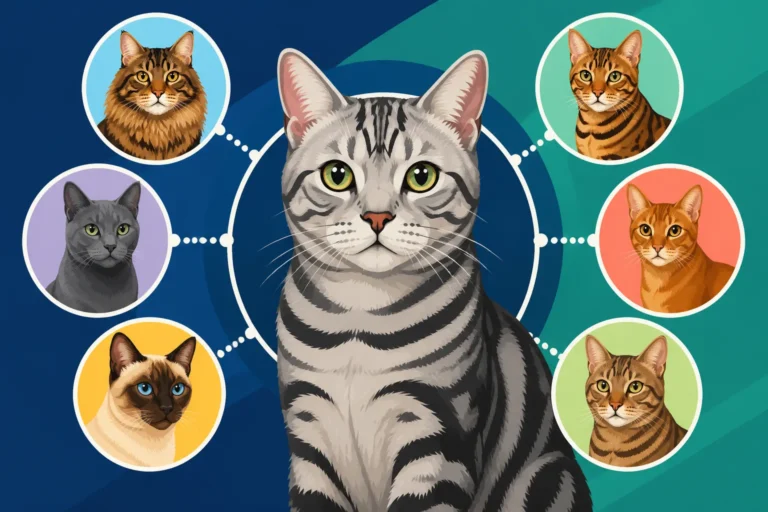
“Losing ground” needs a reference point. The American Shorthair might be less visible than a breed with a dramatic look, while still remaining a familiar and respected choice. It might also have fewer registrations than a highly fashionable breed without being in decline. A breed can be less prominent in popular culture yet continue to suit many households.
Comparisons can also create a misleading picture when the categories are uneven. A rare breed may receive intense attention precisely because it is rare, while a more established breed attracts less novelty-driven coverage. If a few breeders produce limited numbers of kittens, waiting lists may make the breed appear highly sought after. That scarcity does not automatically mean it is gaining broad popularity.
The most useful question is often not “Which breed is winning?” but “Are people still choosing the American Shorthair, and can responsible breeding continue?” Whether American Shorthair Popularity Is Rising offers another way to think about changes in interest, while What People Get Wrong About the American Shorthair can help untangle common assumptions about the breed’s appearance and reputation.
Why Some Breeds Attract More Attention
Distinctive looks can shape demand
People often discover breeds through an image before they learn anything about temperament or care. Cats with immediately recognizable features can become familiar quickly, and that visibility can lead to more searches, more conversations, and sometimes more inquiries to breeders. This is not necessarily a judgment about which cat makes the better companion; it is a reflection of how people encounter breeds.
The American Shorthair’s appeal is less dependent on one dramatic feature. Its qualities are often appreciated in daily life: a solid build, a short coat, and a balanced appearance. Those traits can be excellent reasons to choose a cat, but they may not stand out in a small online image. A prospective owner looking only for a striking silhouette might overlook the breed before considering how well it fits their home.
There is also a difference between a fashionable breed and a suitable breed. A cat that is popular in a particular moment may not be right for every household. Responsible selection should take into account the individual cat’s needs, the breeder’s practices, and the family’s ability to provide long-term care—not simply how often the breed appears in media.
Everyday qualities can be quieter selling points
The American Shorthair is often appealing to people who want a sturdy, shorthaired companion without an extreme physical type. But these practical qualities do not always translate into a dramatic sales pitch. A cat that is adaptable and relatively straightforward to groom may sound less exciting than one marketed around a rare coat or unusual feature, even when those everyday traits are exactly what an owner wants.
This quieter reputation can work both ways. It may mean the breed receives less attention from people chasing the latest trend. It can also help potential owners focus on suitability rather than novelty. A household that wants a sociable companion with a manageable coat might value the American Shorthair precisely because it does not require a highly specialized image or routine.
For someone comparing breeds, it is worth looking past popularity lists and asking what day-to-day life would actually be like. Consider play needs, tolerance for being handled, grooming, health screening, and how the cat might fit with other pets. Online retailers such as Chewy can help owners compare ordinary supplies, including food, litter, and enrichment toys, but the product search itself cannot determine whether a breed is the right match.
What the American Shorthair’s Future May Depend On
Responsible breeding matters more than fashion
A breed’s long-term prospects depend on more than whether it is frequently discussed. A committed breeder community, careful health practices, and continued interest from informed owners can all help sustain a breed. Popularity that rises quickly without responsible breeding can bring its own problems, including pressure to produce more kittens or prioritize appearance over health and temperament.
For prospective owners, a thoughtful search is more useful than chasing scarcity. Ask how a breeder evaluates the health of breeding cats, how kittens are raised, and what support is available after adoption. Be cautious when a seller relies mainly on claims of rarity or fashionable looks but cannot clearly explain the kitten’s background and care. A careful decision supports the welfare of the cat, regardless of whether the breed is currently getting attention.
People considering adoption can also remain open to cats that resemble the breed without assuming they have a pedigree. A shelter tabby may be a wonderful companion, but appearance alone does not establish breed registration. The right choice depends on what the household wants and whether the cat’s needs are a good fit—not on whether its label sounds exclusive.
Owners can broaden interest without turning a cat into a trend
Breed visibility often grows through ordinary, honest accounts of life with a cat. Owners who share the American Shorthair’s personality, play habits, and care needs can help others understand what the breed is like beyond its familiar tabby appearance. That kind of attention is more useful than presenting any breed as perfect or effortless.
If you already live with an American Shorthair, you might describe the details people rarely see in a quick photo: how your cat asks to play, where it likes to nap, what it does when visitors arrive, or how its routine changes as it ages. These everyday stories can give prospective owners a realistic picture. They can also correct the idea that a familiar-looking breed has little to offer.
Ultimately, the American Shorthair may be less conspicuous than some rarer or more visually distinctive breeds, but visibility is not proof of decline. To know whether it is genuinely losing ground, look for sustained evidence from registrations and breeder activity, and interpret those signals alongside the limits of the data. If you are choosing a cat, focus on health, temperament, responsible sourcing, and lifestyle fit. For owners planning the practical side of care, Chewy may be one place to compare routine supplies, while a veterinarian and a responsible breeder can help with decisions specific to an individual cat. Interest built on realistic expectations is more valuable than a short-lived burst of attention, and the American Shorthair’s lasting appeal may lie precisely in its solid, unshowy dependability.
Disclaimer
This article is for general informational purposes only and does not constitute professional advice. Laws, prices and regulations vary by location and change over time. Consult a qualified professional for guidance on your specific situation.