Whether American Shorthair Owners Would Choose One Again
An American Shorthair can be affectionate without being clingy, playful without needing constant entertainment, and sturdy-looking without being maintenance-free. That mix suits many homes, but it can surprise people expecting a lap cat or a naturally slim, effortless pet. Here’s what owners may love, what can wear on them, and how to judge whether they’d choose the breed again.
Why owners often feel they made the right choice
A companion who is present without demanding constant attention
American Shorthairs are often described as adaptable and fairly self-sufficient. In everyday life, that may look like a cat who follows you from room to room, settles nearby while you work, and joins the household routine without needing to be held or entertained every minute. For someone who wants company while reading or cooking, that steady presence can be a pleasure.
The flip side is that affection may not look the way a new owner expects. One American Shorthair may curl up beside a person but rarely climb into their lap; another may be more physically affectionate. Temperament varies from cat to cat, and early experiences and household routines matter. Owners who appreciate a cat with its own preferences may be especially satisfied. Those hoping for a cuddly shadow might need to adjust their expectations.
This independent streak is part of the breed’s appeal for people with busy days, but it does not mean the cat can be ignored. Social contact, play, clean litter, and routine care still matter. If you’re trying to picture the breed’s usual balance of company and independence, How Undemanding an American Shorthair Really Is offers a useful related perspective.
A sturdy companion with a practical, low-fuss coat
Many owners appreciate that the American Shorthair’s short coat does not usually require elaborate styling or frequent professional grooming. A quick brush can help collect loose hair, especially during heavier shedding periods, and offers a chance to check the skin. That can feel refreshingly manageable compared with the coat care some people imagine when they think about pedigree cats.
Still, “low maintenance” is not the same as “no maintenance.” Shedding can leave hair on furniture and clothing, and regular attention to nails, teeth, ears, and overall health is part of responsible care. A cat who seems tidy may still benefit from a gentle grooming routine, particularly as it gets older or becomes less flexible.
Owners may also value the breed’s solid, athletic build. But that build can make weight changes easy to underestimate: a cat can look broad and substantial before an owner realizes it has gained excess fat. What the American Shorthair Standard Asks For explains the intended type, while How to Judge an American Shorthair's Ideal Weight by Frame can help owners think beyond the number on a scale.
A household cat who can fit into different routines
A calm, adaptable American Shorthair may settle into a home with children, visitors, or other pets, provided introductions are thoughtful and the cat has somewhere quiet to retreat. Owners who want a companion that can observe family life without needing to be the center of every moment may find that temperament appealing.
Adaptability is not a promise that every cat will love every situation. Some dislike being carried, some need a slow introduction to a dog, and a busy home can be tiring even for a tolerant cat. A cat’s comfort depends on its individual personality, the way people handle it, and whether it has safe resting places and predictable access to food, water, and litter.
For owners comparing a registered breed with a shelter cat, it helps to remember that a pedigree describes lineage and a breed standard, not a guaranteed personality. Shelter cats can also be affectionate, robust, and easygoing. How an American Shorthair Differs From a Domestic Shorthair explains the distinction without suggesting that one kind of cat is automatically a better companion.
What can make an owner hesitate
Independence can feel like distance
A common mismatch happens when someone expects a cat that constantly seeks cuddles and gets an American Shorthair who prefers to sit nearby. The owner may adore the cat but still feel a little rejected when it hops off a lap or chooses the sunny window instead of the sofa. That feeling is understandable, especially if a person grew up with a very clingy cat.
It can help to notice the quieter ways a cat shows trust: choosing the same room, greeting someone at the door, resting with its back turned, or returning after a brief interaction. These behaviors do not replace the kind of affection an owner hoped for, but they can reveal a bond that is less demonstrative than expected.
Before choosing a kitten or adult cat, ask about its observed temperament rather than relying on breed descriptions alone. Spend time with the individual if possible, and notice how it responds when it can approach at its own pace. A cat who chooses to interact may be a better match than one who is simply being held during a brief visit.
The former mouser still needs something to do
American Shorthairs have a history associated with practical work and hunting. An indoor cat may not be catching mice, but it can still want to stalk, chase, pounce, climb, and investigate. If those urges have nowhere to go, an owner may encounter early-morning activity, batting objects off shelves, or attacks on moving feet. These behaviors can be frustrating when a person has a full schedule or is trying to sleep.
Interactive play helps, especially when the cat has the chance to chase and catch a toy rather than endlessly follow something it can never reach. Rotating toys and using food puzzles can make the environment more engaging. Owners may find it useful to keep practical supplies on hand; for example, Chewy can be one place to look for puzzle feeders or wand toys, while the most important part is choosing items the individual cat actually enjoys.
Play does not need to become an elaborate daily production. Short, consistent sessions can fit into ordinary routines, such as before breakfast or in the evening. A window perch, climbing space, or safe enclosed outdoor area may also give a curious cat more to watch and explore. How Much Simulated Hunting an American Shorthair Needs and Which Toys Finish an American Shorthair's Hunt cover ways to make play feel satisfying rather than random.
Food management and health care take real attention
A sturdy cat can be a persuasive beggar. Owners may leave food available, add extra treats, or assume an active-looking cat will burn off anything it eats. But indoor life is very different from a working life, and excess weight can affect comfort and mobility. Measuring meals, tracking body condition, and asking a veterinarian about an appropriate feeding plan can prevent a gradual change from becoming harder to address.
Health care can also involve costs and decisions that are easy to overlook when someone is focused on the kitten’s purchase or adoption. Preventive care, dental checks, unexpected illness, and age-related needs all deserve a place in a household budget. Keeping basic supplies organized can make routine care less stressful; Chewy may be convenient for replenishing food, litter, or grooming tools, but product choices should still suit the cat and any advice from its veterinarian.
There is no breed that eliminates the possibility of illness. Owners should learn what changes in appetite, drinking, bathroom habits, movement, or energy warrant a veterinary call. For a broader look at typical care responsibilities, How Regularly a Healthy American Shorthair Still Needs Checking is a helpful companion read.
What choosing the breed again may depend on
The owner’s expectations matter as much as the breed
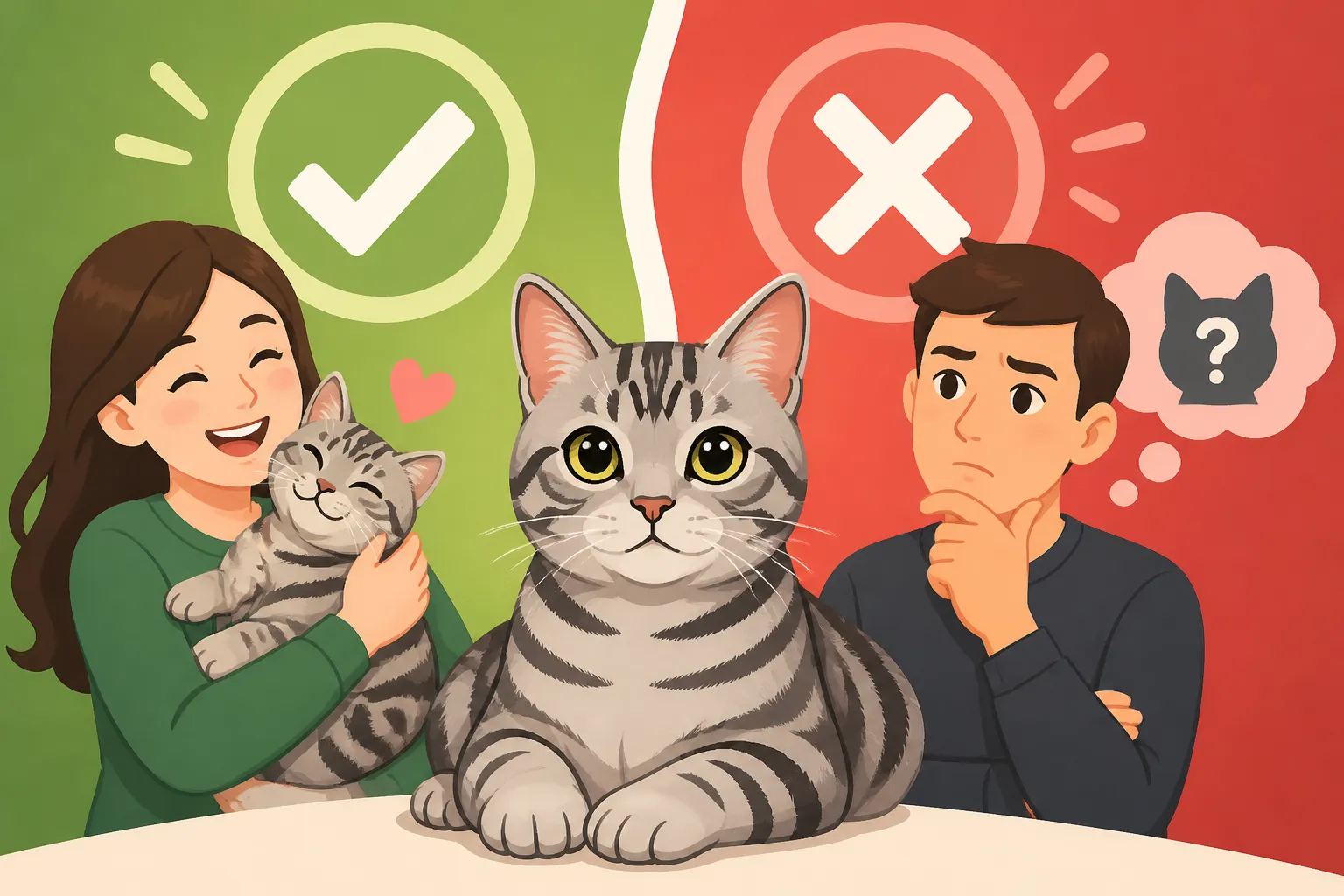
Whether an owner would choose an American Shorthair again often comes down to fit. Someone who values a relatively easy-care coat, a companion who can spend time nearby without constant handling, and a cat with a playful side may feel the breed suits their household very well. Someone seeking a highly vocal, consistently cuddly cat may feel less satisfied, even if the individual cat is healthy and well cared for.
It is useful to separate “I love this cat” from “this breed fits my preferences.” An owner can adore one American Shorthair and still decide that a future pet should have a different temperament or care profile. Likewise, a person may choose the breed again while being honest about the work involved in feeding, play, veterinary care, and keeping the cat mentally engaged.
Before making a decision, write down the traits that matter most in daily life. For example: “I want a cat that enjoys living in a busy home” is more useful than “I want an easy cat.” The first gives you something to ask a breeder, rescue, or foster caregiver about; the second can mean different things to different people.
Consider the individual cat, not just the breed label
A breed description can provide context, but it cannot tell you exactly how a particular cat will behave. Kittens change as they mature, and adult cats may show their personalities more clearly in a stable home. A foster caregiver or breeder who knows the cat’s habits may be able to describe how it handles noise, touch, play, and time alone.
If you are considering a pedigree kitten, ask about the parents’ temperaments, the kitten’s social experiences, and the records and paperwork provided. If you are considering adoption, ask what the shelter or foster home has observed and what is still unknown. What an American Shorthair Pedigree Predicts About Temperament and Whether a Shelter Cat Can Match an American Shorthair can help frame that comparison.
A thoughtful match is more likely to lead to a satisfying experience than choosing based on appearance alone. The silver tabby coat may catch your eye, but daily compatibility is shaped by personality, household routine, health, and the care you can realistically provide.
Use a practical checklist before deciding
If you’re deciding whether an American Shorthair is right for you—or reflecting on whether you’d choose one again—compare your expectations with the day-to-day reality. The table below is not a scorecard; it is a way to spot likely areas of fit or friction.
| What you value | What life with an American Shorthair may involve | Question to ask yourself |
|---|---|---|
| A cat that enjoys company | It may stay close without wanting constant cuddling | Would nearby companionship feel satisfying to me? |
| Simple coat care | The coat is short, but shedding and routine grooming still happen | Am I comfortable with regular brushing and loose hair? |
| A relaxed indoor routine | Play, climbing, and enrichment are still important | Can I make time for interactive play and exploration? |
| A sturdy-looking pet | A broad frame can make weight gain less obvious | Will I measure meals and monitor body condition? |
| A predictable personality | Breed traits are tendencies, not guarantees | Can I choose based on the individual cat as well as its breed? |
| Manageable care responsibilities | Routine and unexpected veterinary needs remain possible | Have I planned for ongoing and unplanned care? |
When a cat is bored, owners can experiment with safe ways to make play and feeding more engaging. A puzzle feeder or a different wand toy may help, and Chewy is one convenient retailer to browse for those kinds of supplies. The cat’s reaction matters more than buying a large collection of gadgets: a simple toy used in a way that invites stalking and catching can be more appealing than an expensive item left untouched.
How to make the decision with fewer surprises
Ask specific questions before bringing a cat home
General questions such as “Is this cat friendly?” tend to produce vague answers. Instead, ask whether the cat approaches unfamiliar people, how it responds to being touched, whether it enjoys play, and where it usually chooses to rest. For a kitten, ask what behaviors have been observed so far and how it has been introduced to ordinary household sounds and handling.
It is also reasonable to ask about care history, veterinary records, diet, and any known health concerns. A responsible source should be willing to discuss what is known and what is not. If the answers feel evasive, pause and seek clarification rather than letting excitement rush the decision.
If you are adopting, the shelter’s description may be based on limited observations, especially if the cat is stressed by a new environment. A quiet cat at the shelter may become more playful at home; a confident cat may need time to settle. Plan for a gradual adjustment and give the newcomer a quiet room, familiar resources, and time to build trust.
Plan for the first months and the long haul
A new cat needs time to learn the home, settle into a routine, and show its personality. Keep food, water, litter, resting places, and scratching options easy to find. Introduce family members and other pets gradually. Resist the urge to interpret the first few days as a complete picture of the relationship.
Long-term satisfaction also depends on the routines that continue after the novelty fades. Regular veterinary care, appropriate meals, play, a clean litter area, and attention to changing behavior are all part of the commitment. Owners may find it useful to keep food and household essentials organized; Chewy can be convenient for reordering everyday supplies, but the right choices depend on the cat’s needs and professional guidance where relevant.
In the end, choosing an American Shorthair again is a personal answer, not a verdict on whether the breed is universally “easy” or “perfect.” Owners who value a steady companion, accept individual differences, and make room for play and preventive care may find the relationship deeply rewarding. Those who want a different kind of affection or a different routine can still love their cat while choosing differently next time.
Disclaimer
This article is for general informational purposes only and does not constitute professional advice. Laws, prices and regulations vary by location and change over time. Consult a qualified professional for guidance on your specific situation.