Which Famous Owners Kept an American Shorthair
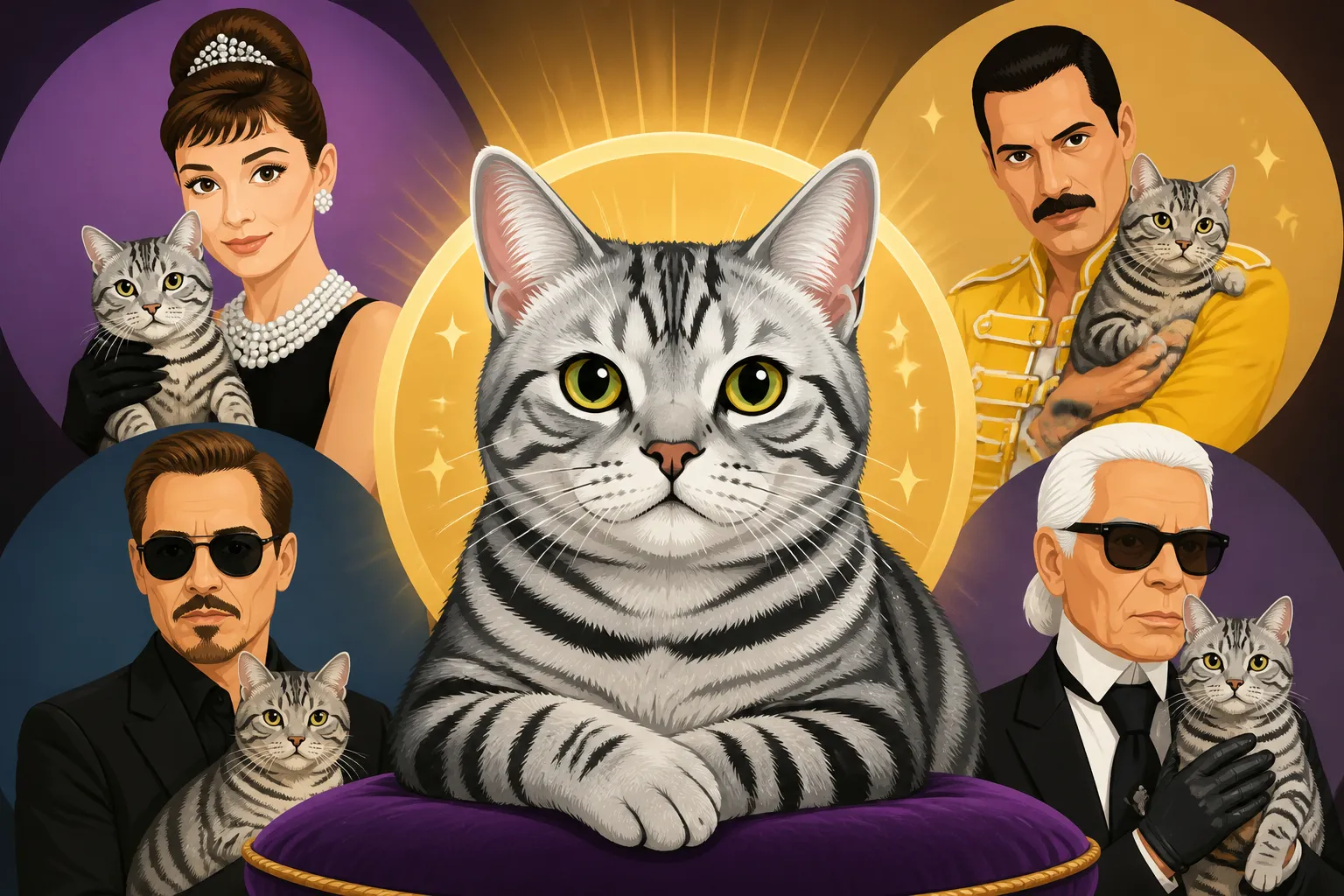
A famous person’s cat is often called an American Shorthair online simply because it has a short coat and a familiar tabby or black appearance. That can make it surprisingly hard to separate a documented breed from a beloved household cat. This guide looks at the best-known examples, what is actually established, and how to judge breed claims without guessing from a photo.
The best-known famous American Shorthair
George W. Bush and the White House cat India
The clearest high-profile name associated with the American Shorthair is India, the black cat who lived with George W. Bush and his family. She was a familiar presence during the family’s time in the White House, and her story is often repeated in discussions of famous cats and American Shorthairs.
There is a small but important distinction in how India’s breed is described. Some breed-focused accounts call her an American Shorthair, while many public descriptions simply identify her as a black cat. Those labels are not equally strong evidence. A cat can look like the breed without having documented pedigree papers, and a photograph cannot establish ancestry.
The sensible answer is that India is commonly associated with the American Shorthair, but the public record does not always present a clear pedigree trail. If you see a confident claim about her exact lineage, check whether it points to actual registration or breeder documentation—or merely repeats a breed label from another article.
Why India’s story is still useful
India’s case shows why famous-owner questions can be tricky. People often want a definitive list: celebrity, cat’s name, breed. But public biographies tend to focus on the cat’s personality, appearance, and role in the household, not on registration records. A short-haired black cat may be described casually as a domestic shorthair, or more specifically as an American Shorthair, depending on the writer.
That uncertainty does not make India’s story less meaningful. It simply means the most careful description is more nuanced than “this celebrity definitely owned a registered American Shorthair.” She is a prominent cat linked with the breed, while the strength of the public evidence for pedigree is less straightforward.
It also helps explain why the American Shorthair’s famous associations can seem sparse. The breed has long shared the visual landscape with ordinary shorthaired cats. Many people have loved cats that resemble the breed without knowing—or needing to know—whether they belonged to a registered line. For the historical background, see The Rename That Separated the American Shorthair From the Alley Cat.
Famous cats often mistaken for American Shorthairs
A short coat does not prove a breed
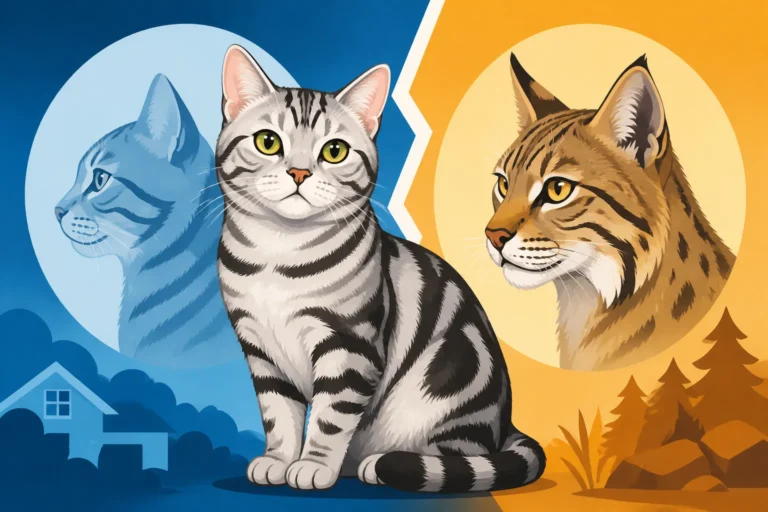
“Domestic shorthair” is a broad description for a shorthaired cat whose ancestry is not documented as a particular pedigreed breed. “American Shorthair,” by contrast, refers to a recognized breed with a defined standard and recorded lineage. The cats can look remarkably similar, especially when both have the familiar sturdy build and tabby markings many people picture.
That overlap encourages guesswork. A photo of a striped cat may prompt someone to call it an American Shorthair, but tabby is a coat pattern, not a pedigree. A black coat, a round face, or a strong body is not enough to establish breed either. Those features can appear in cats with many different backgrounds.
This matters when researching well-known owners because media stories are not always precise about breed terms. A writer may use “American Shorthair” as a visual shorthand for a shorthaired cat, even when the cat’s documented background is unknown. For a closer look at that distinction, read How to Tell an American Shorthair From a Random Bred Tabby and Whether Papers Are the Only Difference an American Shorthair Has.
Morris the Cat and other familiar faces
Morris the Cat is a good example of how easily a popular cat can become attached to a breed label. The orange advertising cat is widely recognized, but the cats who portrayed Morris were not automatically registered American Shorthairs just because they had short coats and a classic cat-like appearance. A famous role is not proof of a particular pedigree.
The same caution applies to film and television cats. Casting decisions often prioritize temperament, appearance, and the animal’s ability to work calmly around people and equipment. A production may describe a cat by color or coat length rather than by registered breed. Even when a breed name appears in a story, it is worth asking whether that information comes from the animal’s documented history or from a resemblance.
If you are interested in famous feline appearances, Which Advertising Cat Was an American Shorthair and Which Films Feature an American Shorthair are useful related topics. They also reinforce the central point: a recognizable cat on screen is not necessarily a pedigreed representative of the breed.
| Cat or public figure | What is commonly reported | What can be concluded carefully |
|---|---|---|
| India, cat of the George W. Bush family | A black cat often associated with the American Shorthair | A prominent breed association, though public descriptions do not always establish pedigree |
| Morris the Cat | An orange shorthaired advertising cat | The role and appearance alone do not establish American Shorthair ancestry |
| Famous cats in films and public life | Often described by coat color, length, or personality | Breed claims need evidence beyond a photograph or casual label |
How to check a claim about a celebrity’s cat
Look for the quality of the evidence
When a story says a famous owner kept an American Shorthair, start by asking what kind of evidence it offers. A reliable account may identify a breeder, registration, or pedigree. A weaker one may simply label a shorthaired cat based on appearance or repeat a description without explaining its origin.
You do not need to investigate every celebrity pet like a historian. But it is helpful to distinguish three levels of confidence: a documented pedigree; a consistent breed identification in reputable profiles; and a casual label inferred from appearance. Those categories should not be treated as interchangeable.
Be especially cautious when many websites repeat the same short sentence without adding new information. Repetition can make a claim feel confirmed even when all the pages may be drawing from one unsourced description. In India’s case, the careful approach is to acknowledge the association while recognizing that public descriptions vary.
Keep appearance, breed, and registration separate
A cat’s appearance can make a breed identification plausible, but it cannot prove it. Breed standards describe features such as body type, head shape, coat, and overall proportions; they do not turn every cat with those traits into a registered example. Registration records and pedigree documents are what support a claim of known lineage.
DNA testing is not a simple shortcut for proving that a cat is a purebred American Shorthair. Genetic tests can offer information about ancestry, but they are not a substitute for documented pedigree. If you want to understand the difference, see Whether a DNA Test Tells an American Shorthair From a Moggy.
This is also why famous cats often remain hard to classify. Their owners and fans may remember the animal’s name, color, habits, or public appearances, while the details needed to verify a breed were never published. A missing record is not evidence that a cat was not an American Shorthair; it just means the claim should be presented with appropriate care.
Why the breed has fewer celebrity stories than you might expect
The American Shorthair resembles the everyday cat
The American Shorthair has a practical, recognizable look: a sturdy body, short coat, and many possible colors and patterns. That appearance overlaps with the huge number of shorthaired cats people see in shelters, homes, and popular culture. Unlike a breed with an immediately distinctive coat or body shape, an American Shorthair can be mistaken for a domestic shorthair at a glance.
That familiarity is part of the breed’s appeal, but it also blurs public recognition. A famous owner may have a cat that looks like an American Shorthair, yet the owner’s biography may never mention a pedigree. Conversely, a pedigreed American Shorthair may simply be described as a “tabby cat” in a news story. The label used in a short article often reflects the writer’s focus, not a careful breed assessment.
For more on the breed’s public image and the assumptions people make about it, see What People Get Wrong About the American Shorthair. Its resemblance to the everyday shorthaired cat is central to understanding why a neat list of celebrity owners is difficult to produce.
Popularity does not always create a paper trail
A breed can be loved by many households without becoming strongly associated with celebrity culture. People may choose an American Shorthair for its temperament, adaptable nature, or familiar look, then share stories about the individual cat rather than its registration. When the cat becomes famous, the details most likely to travel are the memorable ones: a name, a funny habit, or a connection to a public figure.
That means a lack of widely known celebrity examples should not be mistaken for a lack of real owners. The issue is often documentation and coverage. Stories about a famous person’s cat rarely include the kind of lineage information that breed clubs and breeders maintain.
The breed’s history helps put this in perspective. American Shorthairs developed from working cats and were later distinguished as a pedigreed breed, while shorthaired cats remained common in everyday life. Read The Silver Tabby That Made the American Shorthair Famous for another look at how the breed became more recognizable to the public.
What to do if a famous cat inspires you to get one
Choose the cat, not the celebrity association
It is easy to fall for the idea of a breed after seeing a cat connected with a well-known person. But a celebrity pet’s lifestyle or temperament does not guarantee that another cat of the same breed will behave the same way. Individual personality, early experiences, health, and home environment matter enormously.
If you are considering an American Shorthair, focus on whether the cat fits your household. Think about the time you can give to play, how you will manage feeding, whether you have safe indoor space, and how you will handle routine veterinary care. A cat should be a good match for your real daily life—not just a charming extension of a celebrity story.
For practical preparation, Chewy can be one place to compare everyday supplies such as carriers, litter boxes, and scratching posts. Chewy’s product listings can help with shopping, but they cannot confirm a cat’s pedigree. If a cat’s breed matters to you, ask a breeder or rescue for records and clarify what is known before making a decision.
Ask for records and plan for ordinary care
When adopting from a shelter, ask what the organization knows about the cat’s history and how it arrived at any breed description. A shelter may reasonably use “American Shorthair” to describe a cat’s appearance, but that does not necessarily mean the cat has pedigree papers. If you are buying from a breeder, ask about registration, parentage, health history, and the documents that will accompany the kitten.
For supplies after bringing a cat home, Chewy may be useful for comparing options, but choose food and feeding amounts with your veterinarian’s guidance, especially for a kitten or a cat with a medical concern. Chewy can help you source routine items; the cat’s care plan should still be based on its individual needs and professional advice.
In the end, India remains the strongest famous-owner association commonly made with the American Shorthair. The most honest version of the story preserves that connection without treating every repeated breed label as proof of pedigree. That distinction makes the answer more trustworthy—and leaves room to appreciate famous cats for who they were, not only for what breed someone says they were.
Disclaimer
This article is for general informational purposes only and does not constitute professional advice. Laws, prices and regulations vary by location and change over time. Consult a qualified professional for guidance on your specific situation.